Brașov in Romania is amazing, and I can confidently call it one of the most beautiful cities in Romania. I’ve always had a thing for medieval architecture, and when you combine a medieval city layout with preserved houses and narrow streets, I’m in heaven. Add to that the orange hue of the old roof tiles, and I’m in paradise!
Life in Brașov revolves around the Market Square, and that, of course, comes as no surprise. The old, historic part of the city isn’t limited to just its immediate surroundings. The area where the old and most beautiful elements have been preserved is much larger. All thanks to the strategic location of old Brașov. At a time when cities began to expand rapidly and seek space for new residents, standard solutions were not an option in Brașov. In most medieval cities, the old defensive walls were torn down to make room. In Brașov, due to practical realities, this simply could not be done.
Brașov was lucky—the city is nestled among hills, making it pointless to dismantle the fortifications on the hillside. No houses could have been built there anyway. Thanks to this fortunate coincidence, a significant portion of Brașov’s defensive walls has survived to this day and continues to delight tourists, making it another must-see in Brașov. A similar situation occurred in nearby Sighișoara, where the medieval town was built on a high hill.
How much time does it take to explore Brașov?
As a city with roots in the Middle Ages, Brașov is quite compact, and most of the main tourist attractions – the places to see – are within walking distance. That’s why I think that if you set aside one day for Brașov, that will be plenty of time. Although Brașov is also an excellent base for day trips to the surrounding area.
Places to see in Brașov
Brașov would likely be even more beautiful were it not for the events of 1689. On April 21 of that year, the Great Fire destroyed nearly the entire city. What we see today was built after that time. The fire was so large and violent that even the stone cathedral suffered; not only did the flames consume its entire interior, but the exterior facade was also charred to such an extent that the church is still known today as the “Black Church.” I invite you to take a walk through Brasov’s attractions; here are the places worth seeing in Brasov. We’ll stroll through the old streets, but we’ll also drive or walk up to the hill overlooking the city, offering a view of Old Brasov.
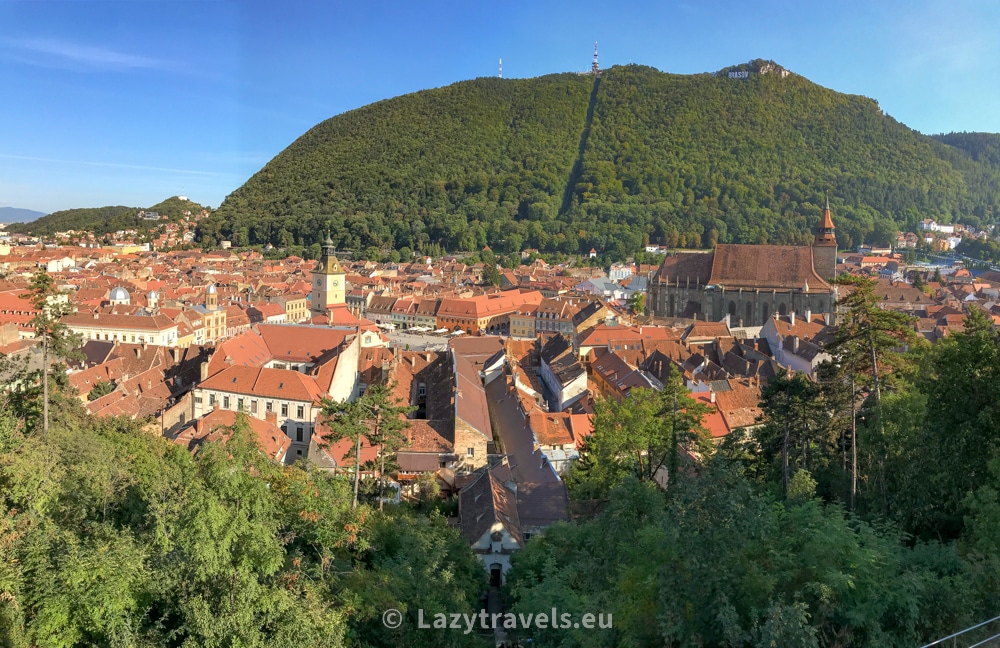
Tampa hill
The best view is from above. And Brașov, like few other cities in the world, has a natural vantage point. Tampa Hill offers a magnificent view of the entire city. From here, you can clearly see how the city has expanded, the layout of the streets, and the locations of the most important landmarks. Good to know: you can reach the top in just a few minutes by cable car, which offers excellent views, but if you enjoy a bit of exercise, there’s a trail leading up the hill behind the Weavers’ Bastion.
Since I wanted to see as much as possible, I chose the cable car instead of hiking up the hill. From this vantage point, you’ll see one of Brașov’s symbols from behind, as it is on this very hill that the giant letters forming the inscription “BRASOV” – towering over the city – are situated. One might say it’s the Romanian Hollywood.
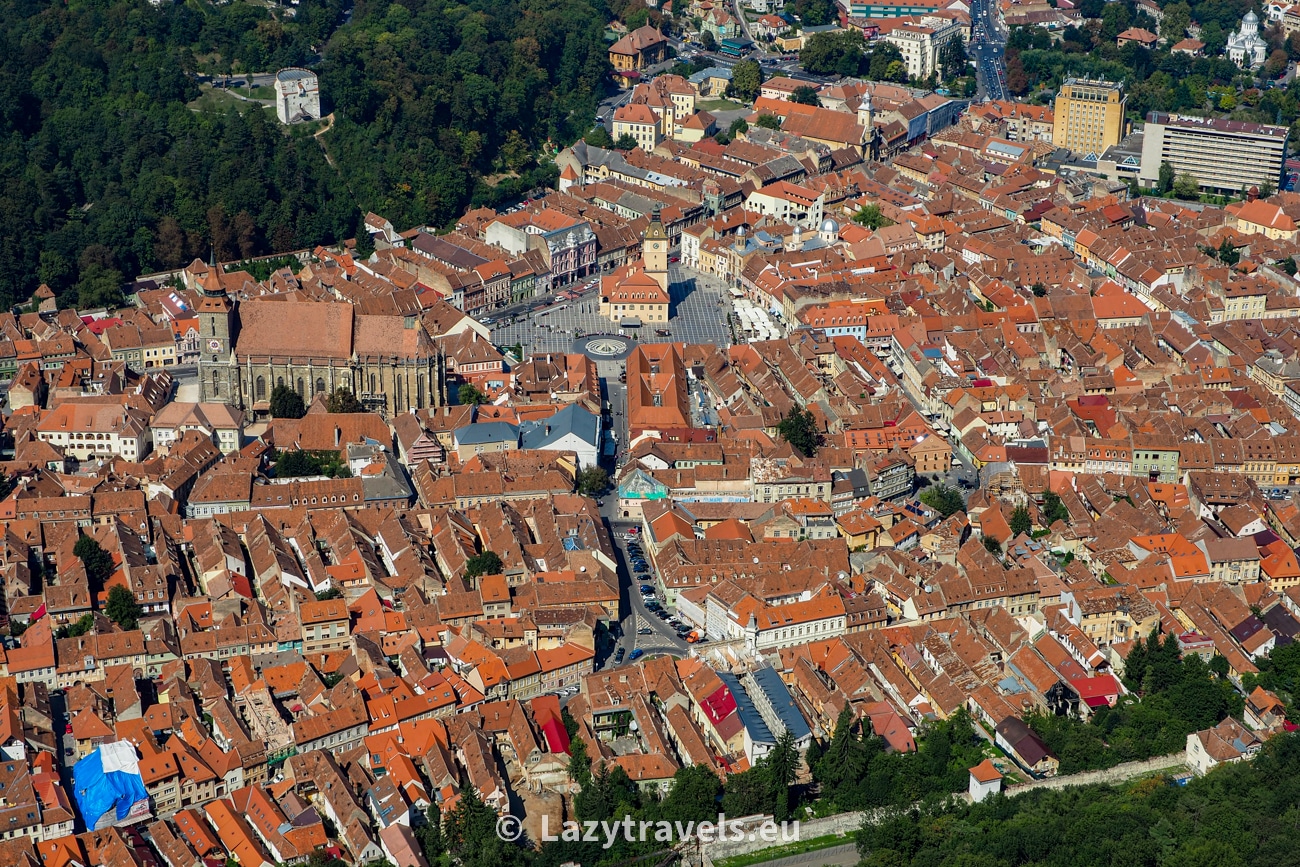
But there is an interesting historical fact associated with this place. It was on this hill that a fact occurred that is as terrifying as it is now captivating to the imagination. And it is connected to Romania’s most famous figure, Vlad the Impaler. It was here that he once again demonstrated his “artistry.” Between 1458 and 1460, his troops captured the city’s citadel, and after breaking through the defenses, 40 merchants who had refused to pay taxes were impaled; their bodies were then displayed on this very hill as a warning to others.
The Market Square and City Hall in Brașov
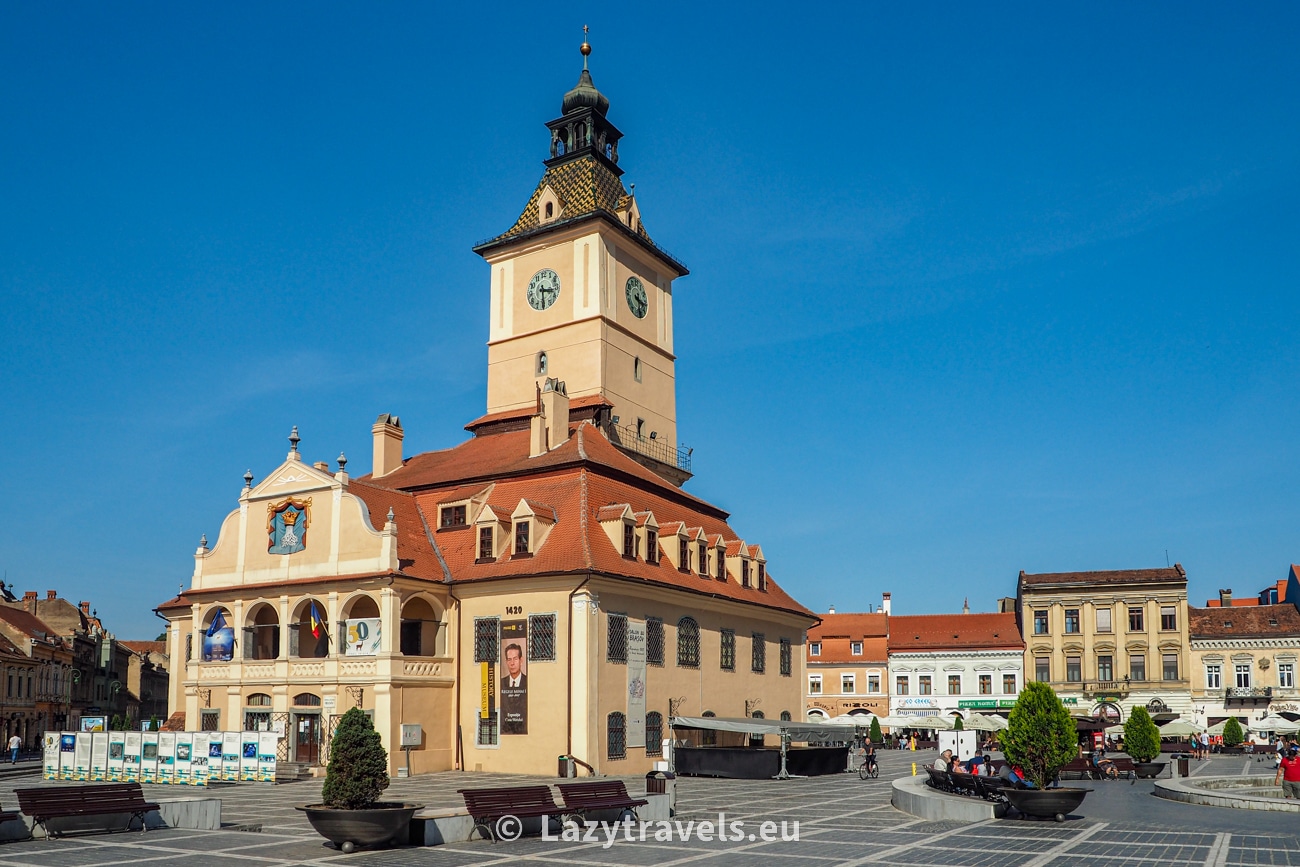
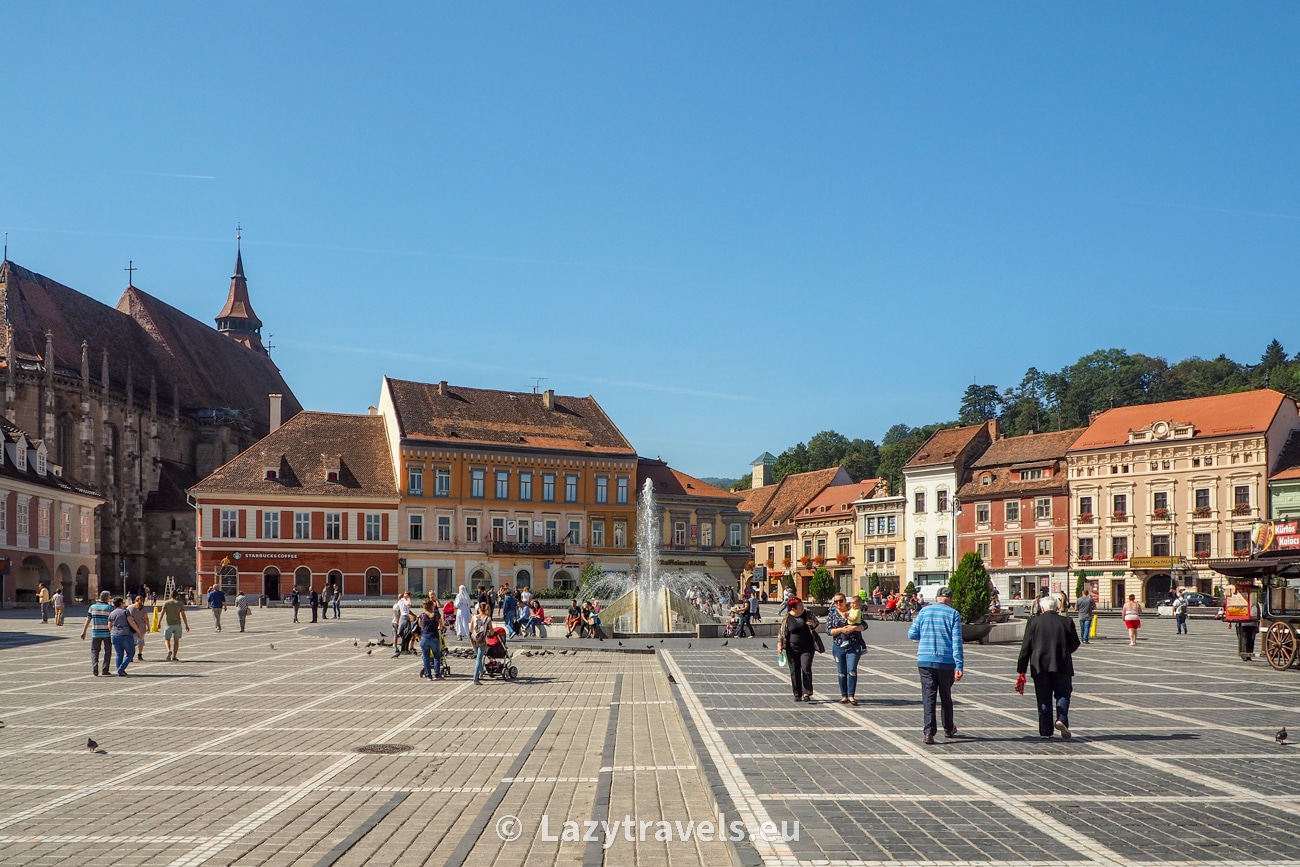
As I mentioned above, the market square is the heart of the city, and this is where you can catch local festivals or simply grab a bite to eat or a drink at one of the many restaurants and pubs. As is often the case in market squares, the town hall takes center stage here, with its tall tower, from which enemies were once scouted and the city’s residents warned of dangers. Hence the tower’s other name: the Trumpeters’ Tower (the structure is 58 meters tall).
Of course, what we see here today is the result of reconstruction following a great fire, as the old town hall burned down just like the rest of the city. In my opinion, what was built is too massive in relation to its surroundings, but… it is what it is. The current town hall sticks out like a sore thumb. Whatever the case, I highly recommend sitting down at one of the restaurants and having, say, breakfast with a beautiful view of the area. Watch the people and the fountain gushing here. And as we watch, we’ll also spot other interesting places worth visiting later.
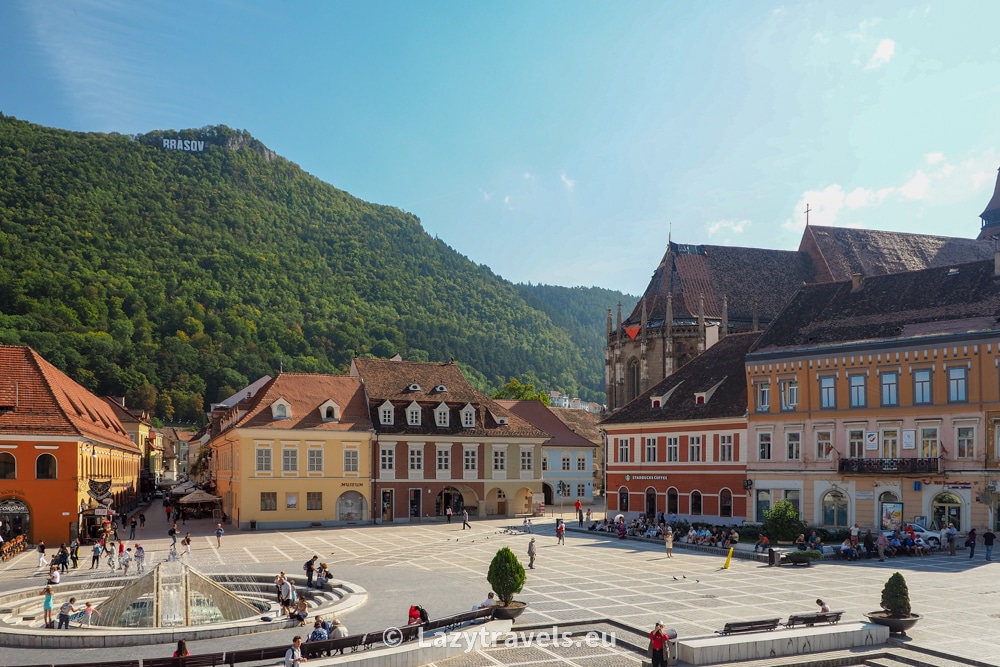
The Black Church
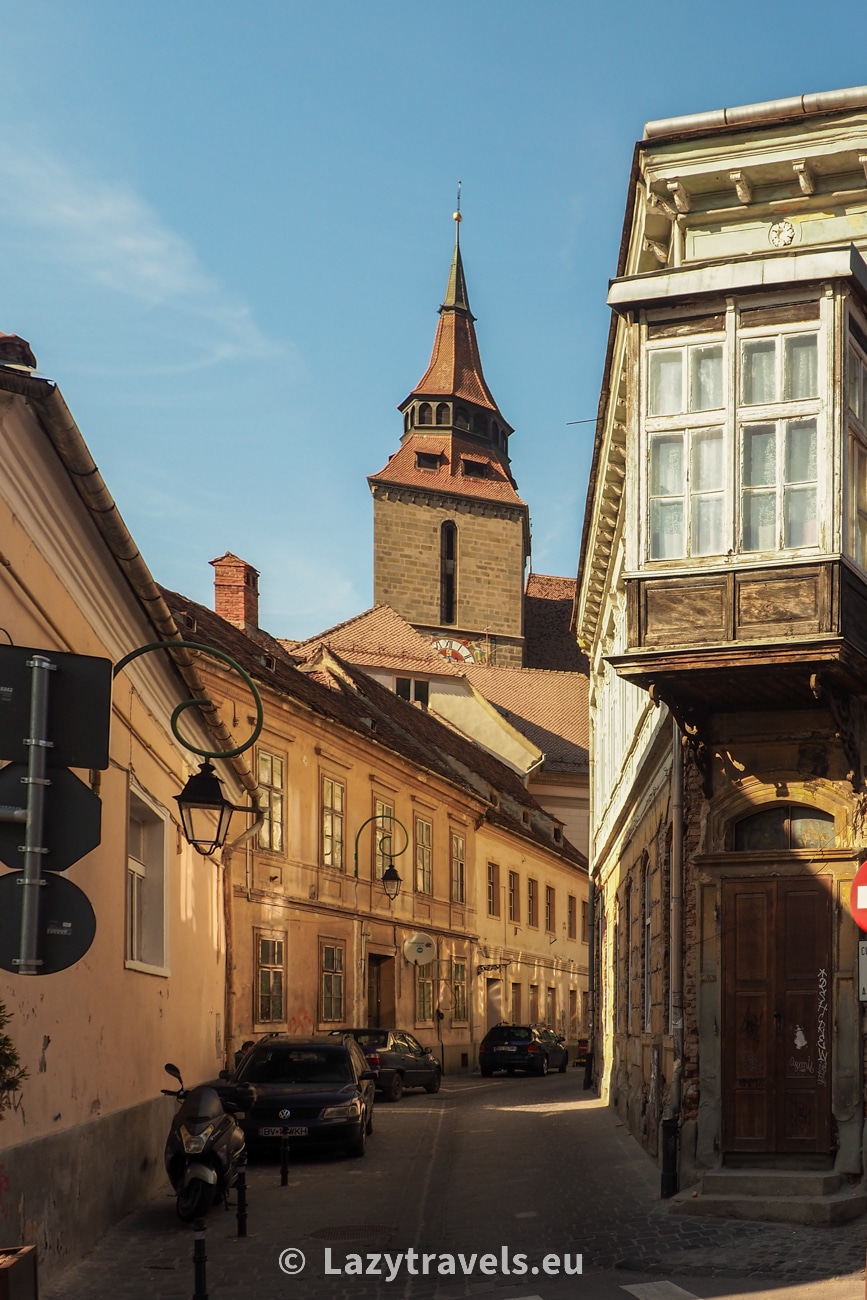
Construction began in 1385, and the plans were very ambitious. Suffice it to say that two towers were planned, but plans are one thing and history has a mind of its own. Due to the Turks invading the area, only one tower was ultimately built. This does not, however, make the church any less impressive. The day of reckoning for the structure came on April 21, 1689, when Brașov was engulfed by a fire – the Great Fire. Everything burned down, including the church.
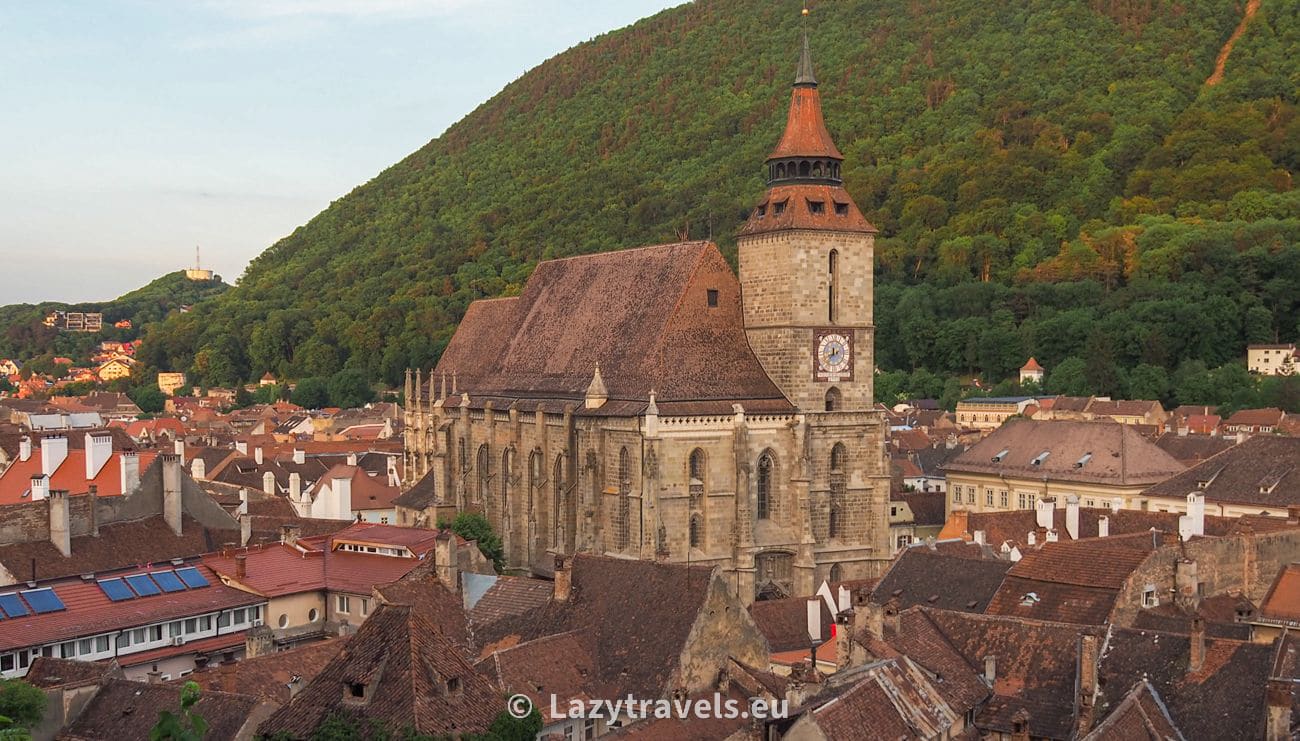
The fire was so powerful that the church walls turned black, thus giving it its new name. After a hundred years of work, the church was rebuilt. What’s more, even the black color faded and was removed, so that to this day it is difficult to find any trace of black.
Inside, you’ll see, for example, a rich collection of Eastern carpets. Unfortunately, photography isn’t allowed inside, so I won’t be able to show you the interior. Interestingly: since everyone likes to be “the best” in some category, the Black Church in Brașov is the LARGEST Gothic church between Vienna and Istanbul. In short: give me a building, and I’ll find a way to make it the MOST something. Okay, but you can’t deny its beauty.
The walls and defensive system of Brașov
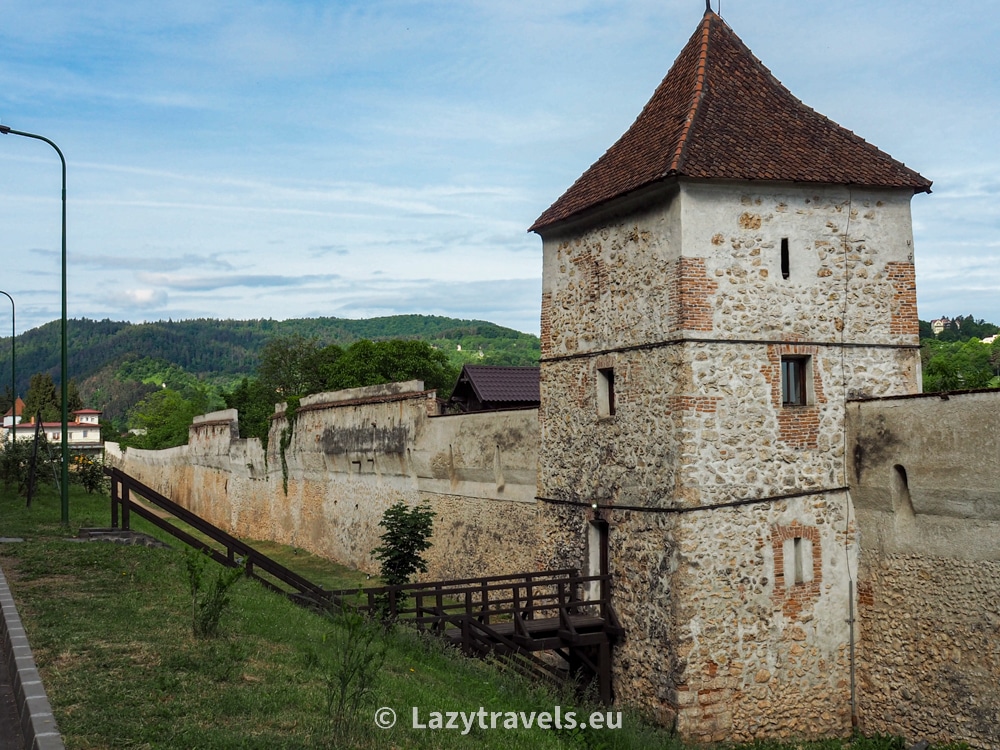
Brașov was lucky enough not to have demolished its old structures. Today, it reaps the benefits of tourism from them—something no one could have anticipated back then, because who would have thought that people from the other side of the world would fly all the way to Romania just to see a medieval city defense system? Surprisingly, a great deal has survived to this day, and for example, if we take a stroll down the promenade from the side of Hill Tampa, we’ll see just what a major hub Brașov once was. And how wealthy, because building and maintaining such extensive fortifications cost a fortune. Of course, the guilds of craftsmen contributed to the upkeep, because, as in any other city, the towers bear names derived from the guild responsible for their defense and maintenance.
Catherine’s Gate: A Fairytale-Like Structure
Just look at this structure. When you see it, doesn’t it remind you of the opening sequences of Walt Disney films? Built in 1559, it is the only city gate that has survived to this day in its original condition.
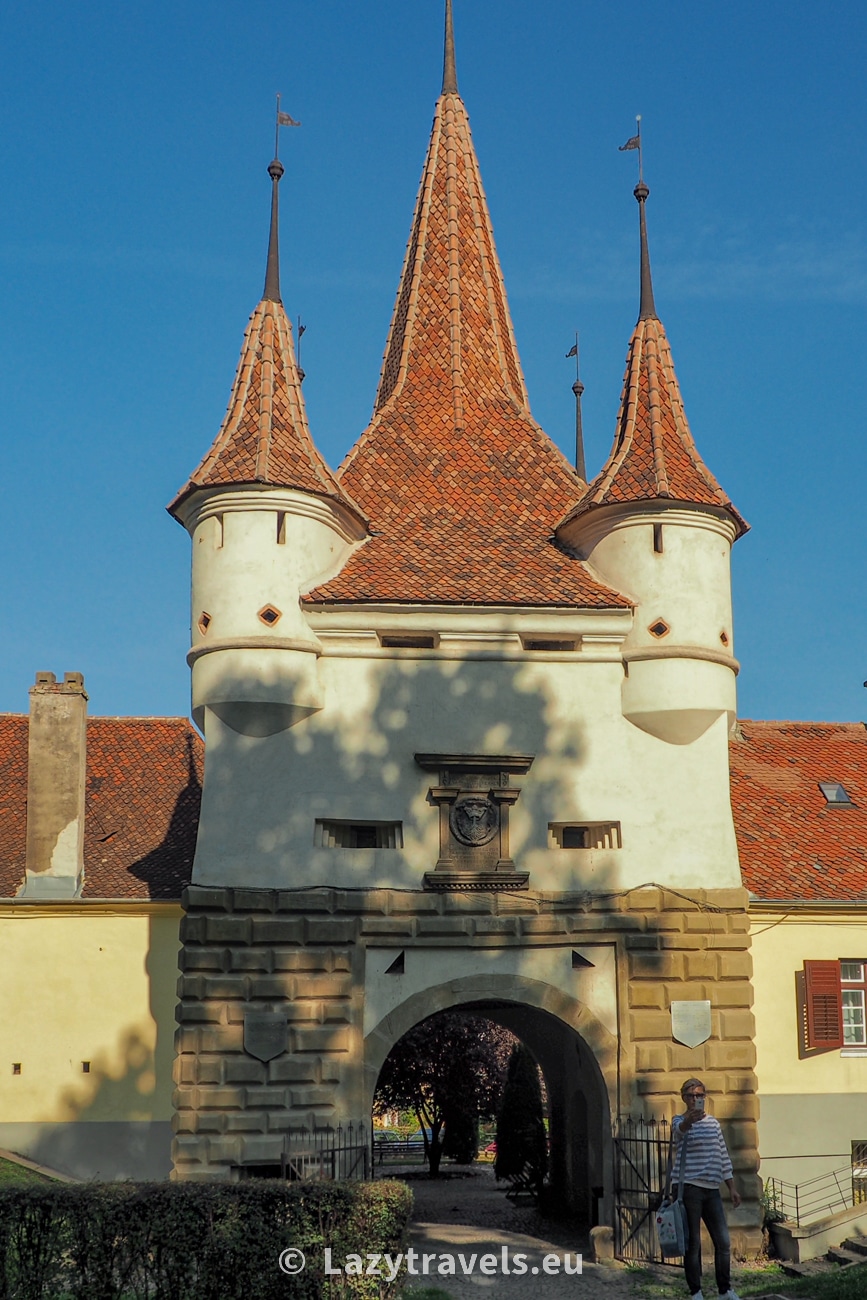
Today, the gate leads nowhere, and people come here simply to take photos. If you’re wondering what those four turrets next to the main tower are for, they symbolized the autonomy of the city council, which could impose the death penalty if necessary. Basically, it’s a warning: Abandon all hope, thieves and criminals who enter here. If you dare to break the law, local justice will catch up with you.
Schei Gate in Brașov
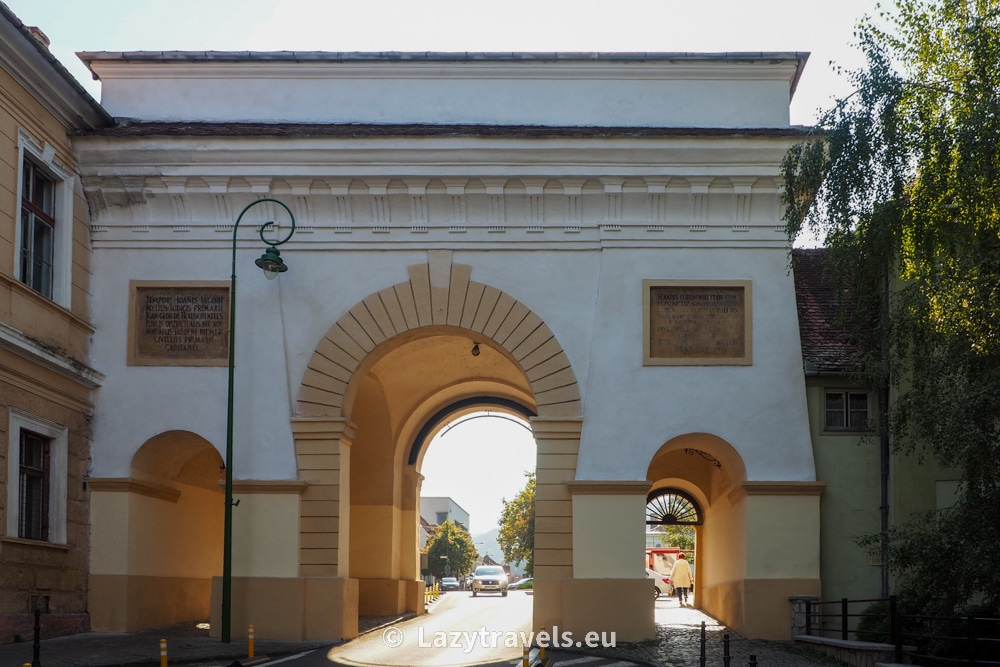
Right next to it is another gate, but a newer one, dating from 1827: the Schei Gate. The name is fairly easy to explain, as the entrance led to the Schei district. But I must admit I don’t quite understand the enthusiasm for it, as it is neither particularly remarkable nor beautifully integrated into the surroundings. It’s just there. The residents of Brașov had to build it—or rather, rebuild it—because the old one was destroyed in a fire.
Weavers’ Bastion
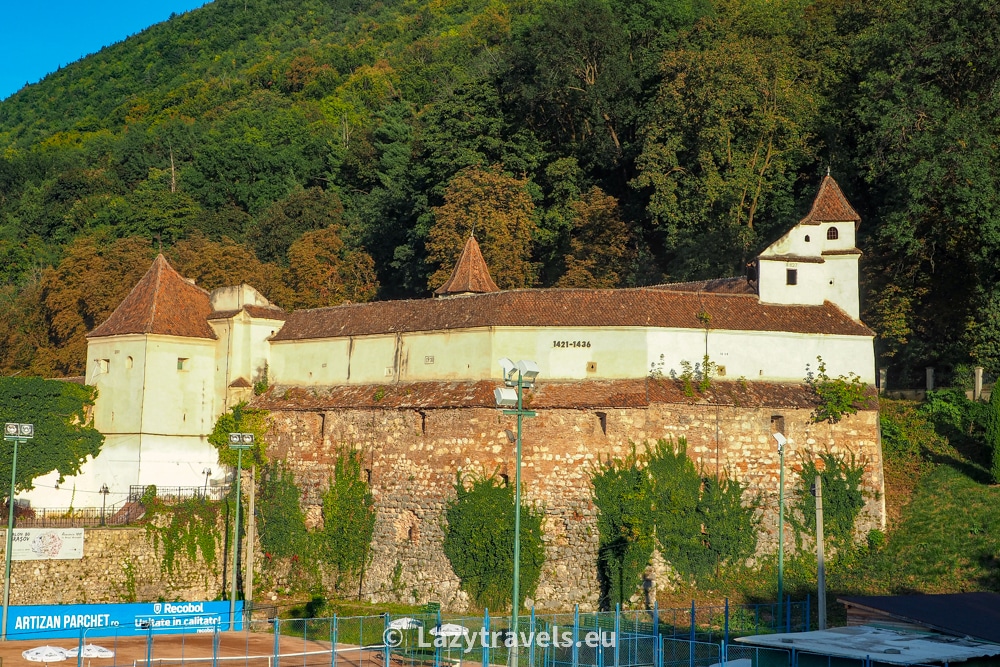
This is probably the most interesting defensive structure that has survived to this day among all of Brașov’s defensive fortifications. The massive structure is located at the foot of Tampa Hill and, as the name suggests, belonged to the weavers’ guild. Today, the building houses a museum, and you can see the wooden structures that allow access to the upper levels, just as they did several hundred years ago.
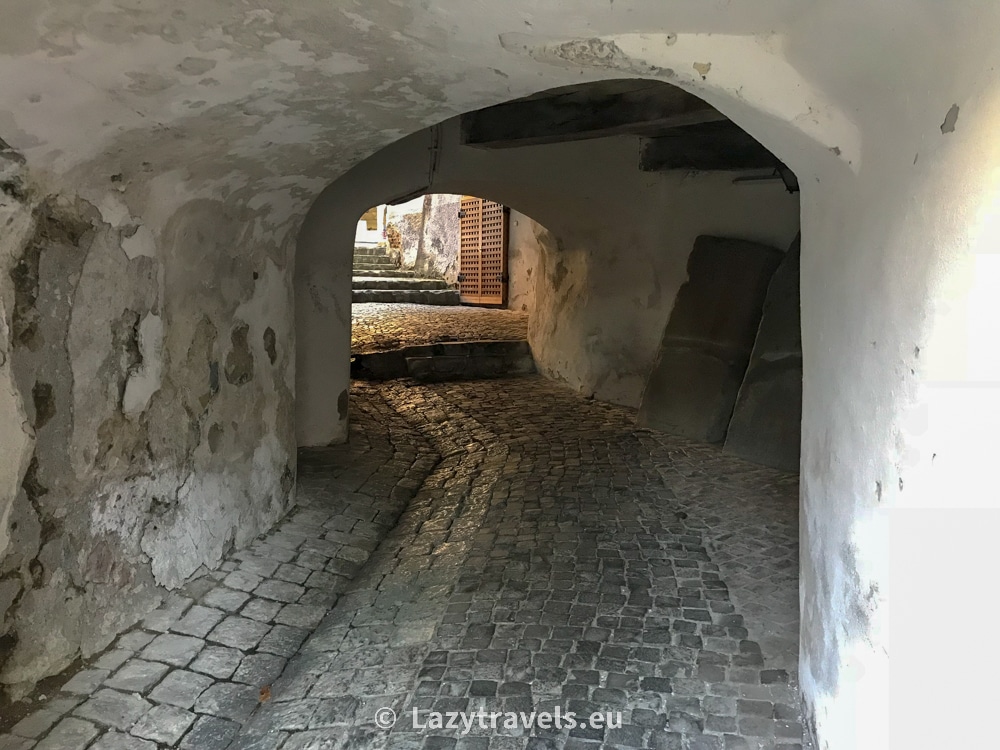
Unfortunately, the entrance was closed, and they expected payment for taking photos—as is often the case in Romania. I decided that was a no-go! But take a look at the entrance to the bastion, because it was deliberately made very low so that no one on horseback could enter, just as they wouldn’t be able to swing a weapon inside. As you can see, everything was designed for defensive purposes.
The Schei District
This is an interesting district, especially because… it wasn’t officially part of the city. In Brașov, only the Saxons were allowed to own buildings, and no one else. This law remained in effect from the 13th to the 17th century. Romanians could only enter the city through this one gate, and interestingly, they always had to pay for it, just as they did for the privilege of selling their goods in the city. Only once a year, in the spring during the Junii Brașoveni festival, could the Romanian population enter Brașov for free.
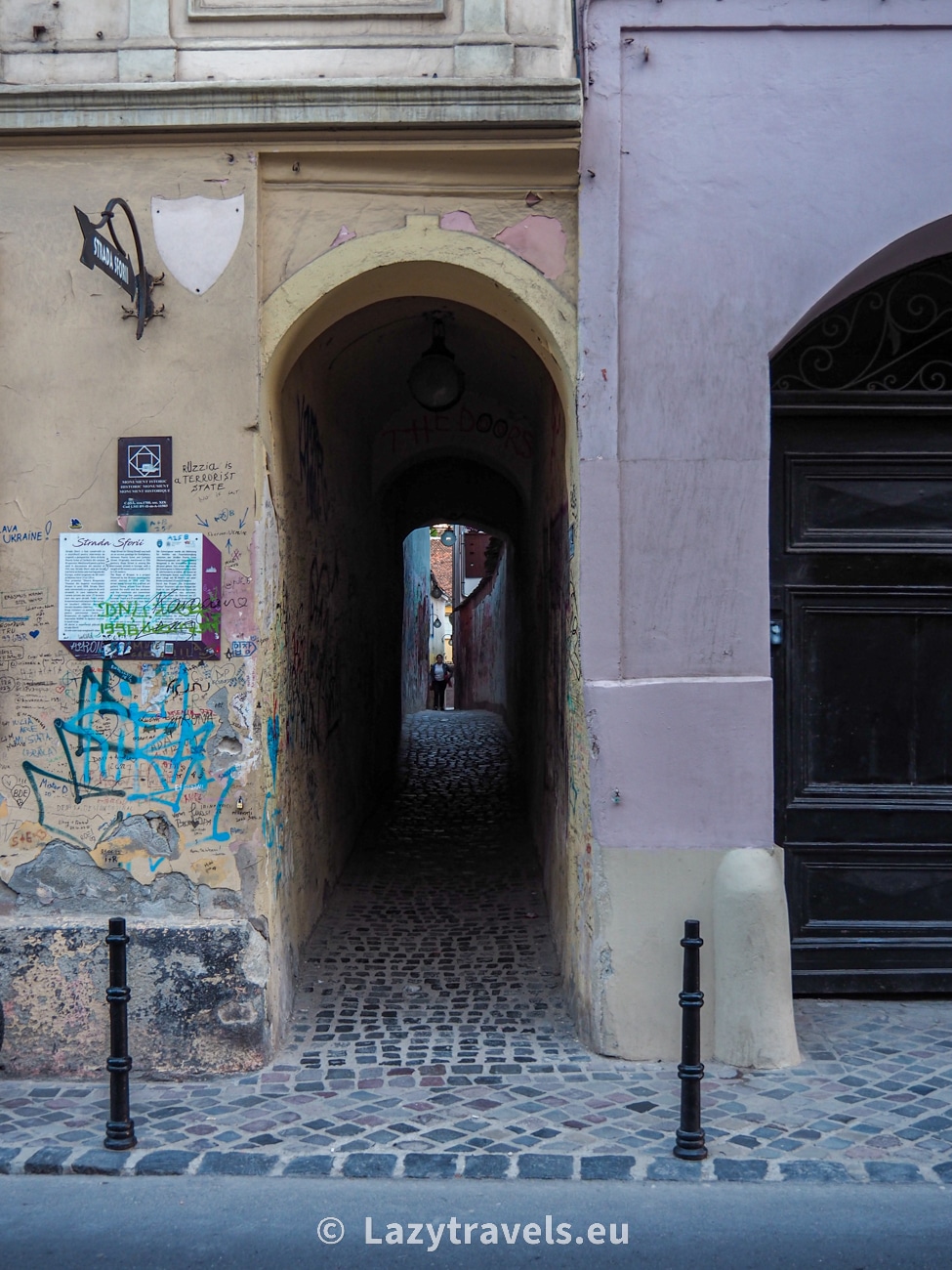
Today, the district is home to one of the narrowest streets in Romania—and perhaps even in the world—as it is about 1.3 meters wide. Unfortunately, during my visit to Brașov, it was under renovation, and the entrance had been boarded up. Fortunately, during subsequent visits, the street had already been renovated. It really is narrow. Right next to the street is the entrance to the Jewish synagogue. If you enjoy this type of culture and architecture, you won’t be disappointed.
The White and Black Towers
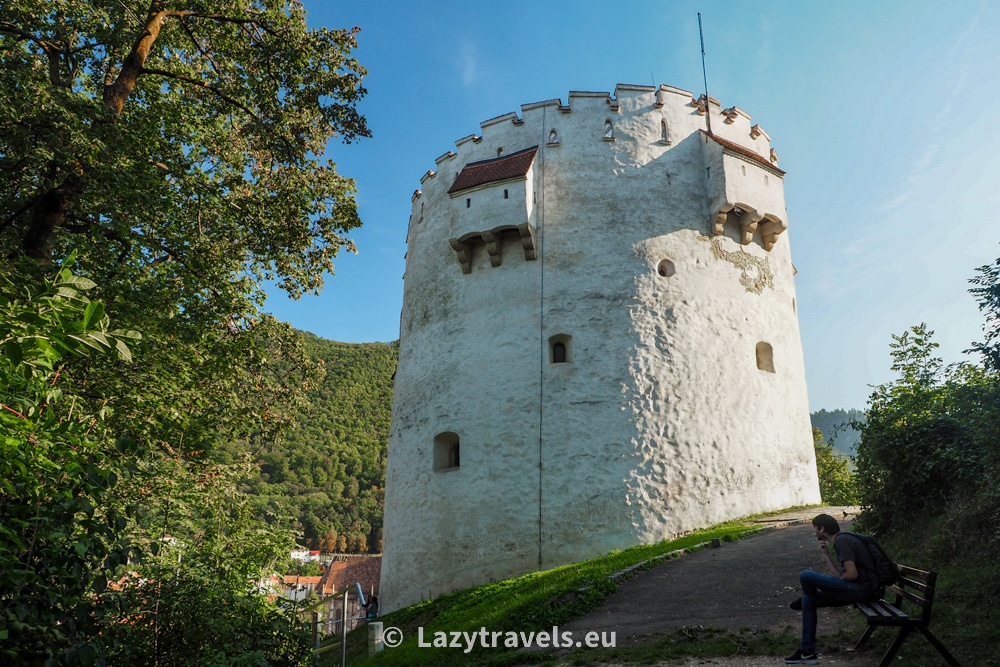
On the opposite side from the one described above stand two towers: the White and the Black. As for the Black Tower, Brașov was unlucky, because the name of this defensive structure, built in 1494, dates back to 1559, when lightning struck the building, causing a massive fire. As you might guess, the name comes from the effects of the fire. Both towers are worth visiting for one reason alone: the view that stretches out from here is simply magical. It’s especially worth coming here before sunset, because you can see the whole of Brașov from here, with its red roofs on the old buildings. Seriously, it’s magical!
If you want to read more about Brașov, learn key dates, and discover various “interesting tidbits,” check out these links (they’re not in Polish). I used them while writing this article. Romanian tourism and Brasov travel guide.
The Brasov Area – day trips from Brasov
Brasov is a great base for exploring the surrounding area. Just a few dozen kilometers away lies Romania’s biggest tourist attraction: Bran Castle. That’s the famous Dracula’s Castle. And everyone who’s been there says it’s the most overrated place. So decide for yourselves if you want to go there. Despite several visits to Romania, I still haven’t visited that castle.
Instead, if you’ve come by car, you can head out into the countryside and visit one of the peasant castles. That’s a Romanian specialty. For example, you can go to Rupeia.
But the magnificent and imposing Rasnov Castle is also nearby. Although I wholeheartedly recommend a visit to Sinaia to see Peles Palace—the most beautiful castle in Romania.
Brașov is also a great starting point for one of the most spectacular mountain routes in Europe. If you set out in the morning, you can drive the entire Transfăgărășan Route. It’s impossible to describe—you have to see it and experience it for yourself.
Accommodation in Brașov
Within the old town of Brașov, there are traffic restrictions, and there aren’t many parking spots available. Therefore, when looking for a hotel, make sure it has parking. Alternatively, you can book a place to stay a bit further away so that parking is included in the price. If you don’t have that option, you’ll have to use paid parking.
While staying in Brașov, we booked the Safrano Palace hotel right next to the market square. It actually overlooks the market square. Plus, breakfast was included in the price. The downside was the lack of parking, but we left the car further away in a free lot. Luckily, there were spots available.
If parking is important to you, it’s worth booking the Boutique Hotel Casa Chitic. It’s right next to the main attractions. Important: if you’re arriving by car, let the staff know so they can reserve a spot for you.