I thought one day would be enough time to explore „things to do in Zamość” and the city’s most interesting places. But how naive I was when I came here for a long weekend. I assumed there weren’t many historical sites or attractions here. Yet you can easily spend two full days in Zamość. If you wonder if Zamość is worth visit yes, it is.
Let’s start with an interesting fact related to Poland, which is part of Polish culture. In Poland, we have a term called “Swedish table,” which refers to a buffet where you can take whatever you want to eat. But it also implies self-service. And this saying is connected to Zamość. During the Swedish Deluge (the Swedish invasion of Poland) in 1656, Charles X Gustav conquered nearly the entire Polish-Lithuanian Commonwealth. The entire country-except for a few fortresses. Zamość was one of those unconquered and perfectly fortified ones. The Swedish king wanted to capture the city and outwit Zamość’s owner – Jan Sobiepan Zamoyski. He proposed that his troops withdraw from the siege, but first he wanted to share a meal with his army and the defenders within the fortress walls. Doesn’t that remind you of the ruse from mythological Troy?
The ruler of Zamość was aware of the Swede’s plan, but decided not to refuse hospitality. However, the tables were carried outside the walls of Zamość. They were lavishly set, but no chairs, stools, or even a wooden log were placed there. The Swedes had to feast while standing. Hence the name “Swedish table.” That is the explanation of the legend. Oh, and as for capturing the Zamość fortress, the aggressors were also left empty-handed in this regard. The fortress did not surrender.

So, in short: what to see in Zamość. First, the Great Market Square and two other market squares. You can also explore the underground tourist route, the former military casemates, and the citadel with its grim history. In addition, there is a beautiful cathedral and a view from the nearby bell tower. For those who love museums and beautiful frescoes, there’s a museum housed in Armenian stones. There’s also an anchor in Zamość… even though the sea is far away. You can see several old gates, a beautiful park, and interesting courtyards and streets. And as the icing on the cake, I’ll also mention the synagogue, where you can see a Torah scroll—a real rarity! It’s impossible to get bored in Zamość. Even while having lunch in the market square, you can admire the beautiful town hall and ornate townhouses.

How Zamość Came to Be
Zamość was founded because a former Polish magnate had a whim to do so. Yes, rich people have always been able to do whatever they wanted. And the very, very rich are limited by nothing. In this case, a powerful ego, a brilliant architect, trust, vast funds, and the defensive needs of the Polish-Lithuanian Commonwealth at the time all came together. The city’s founder, Hetman Jan Zamoyski, possessed a massive ego and equally massive funds. It was he who placed his trust in Bernardo Morando, an architect from Padua who was, if not a genius, at least an outstanding talent. The fact that there were no fortresses in the area capable of halting the advance of enemy troops in the event of war was also not without significance. Zamość was like a lonely island amidst the plains. It was meant to defend itself and block the path into the heart of the Polish-Lithuanian Commonwealth.
On April 10, 1580, Jan Zamoyski issued the charter establishing the new city of Zamość! Zamość is a rare case where a powerful magnate entrusted an architect—in this case, Bernardo Morando—and, trusting him, allowed him to design the city from scratch!
But I’ve written more about the history of Zamość below.
Besides, on the internet and in public discourse, if you’re looking for information about Zamość and its attractions, you’ll often come across terms like “the pearl of the Renaissance” and “the Padua of the North.” But that’s just meaningless drivel. Zamość is no pearl; it has its pros and cons, just as it is no Padua. Zamość is Zamość, and that’s why it’s beautiful. It doesn’t have to pretend to be anything else to be worth visiting, admiring, and exploring. Zamość is beautiful not because it resembles another city, but because it is unique.
First impressions while strolling through Zamość
The Market Square in Zamość is the city’s showpiece, and most of you have probably seen photos of the Town Hall building with its distinctive staircase leading up to the entrance. At 8:30 a.m., there are still few tourists here, and just as few locals. The latter, in particular, have no reason to be here in the morning, unless, of course, they work here. And that’s why, in the morning, you don’t have to share the space with crowds and can admire the colorful, beautifully restored townhouses in peace.
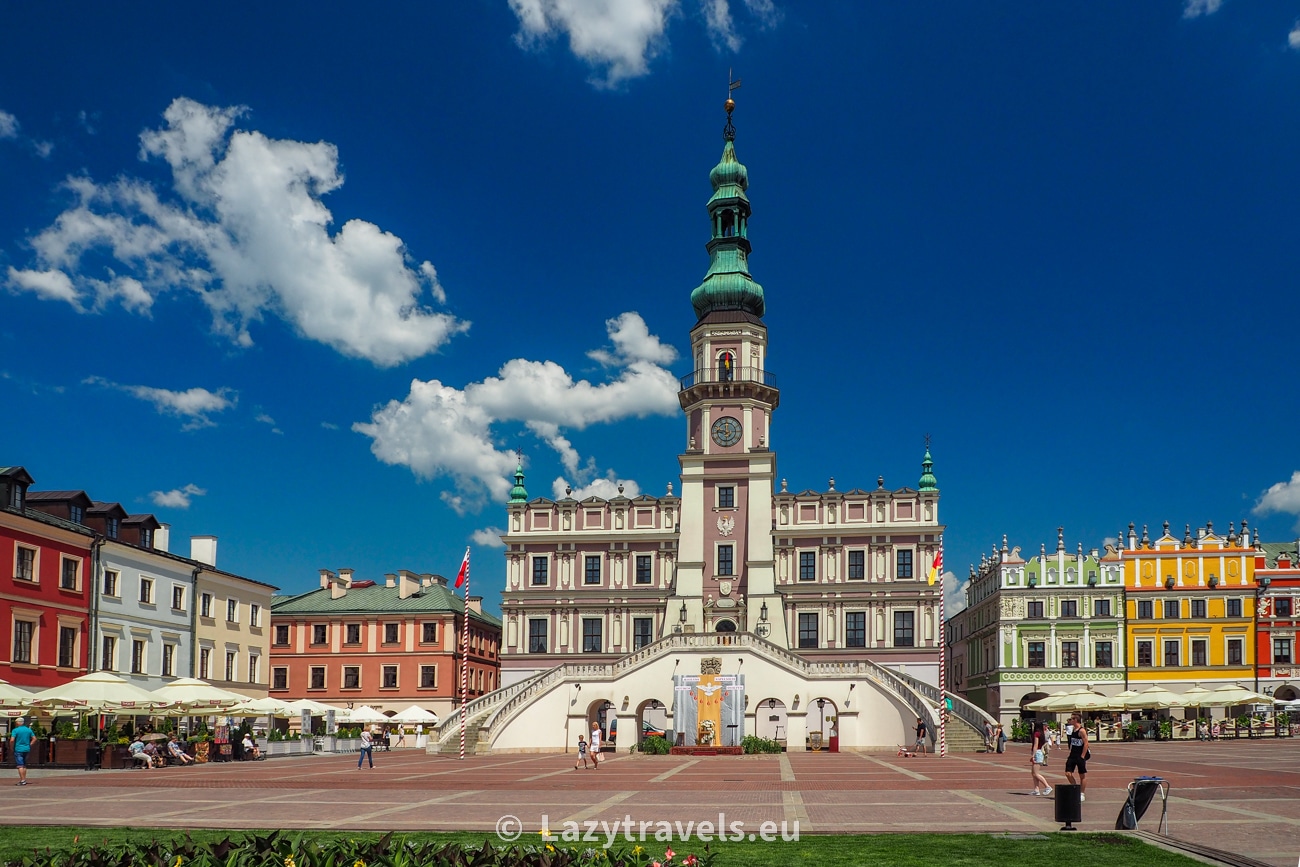
You will likely pay special attention to the facades on the northern side (the Armenian tenement houses), as they are brilliantly decorated. This is what most townhouses used to look like, but unfortunately, the Russians, who ruled this city during the partitions, stripped away the decorations or allowed the buildings to fall into such disrepair that the stucco began to crumble and fall off the facades.
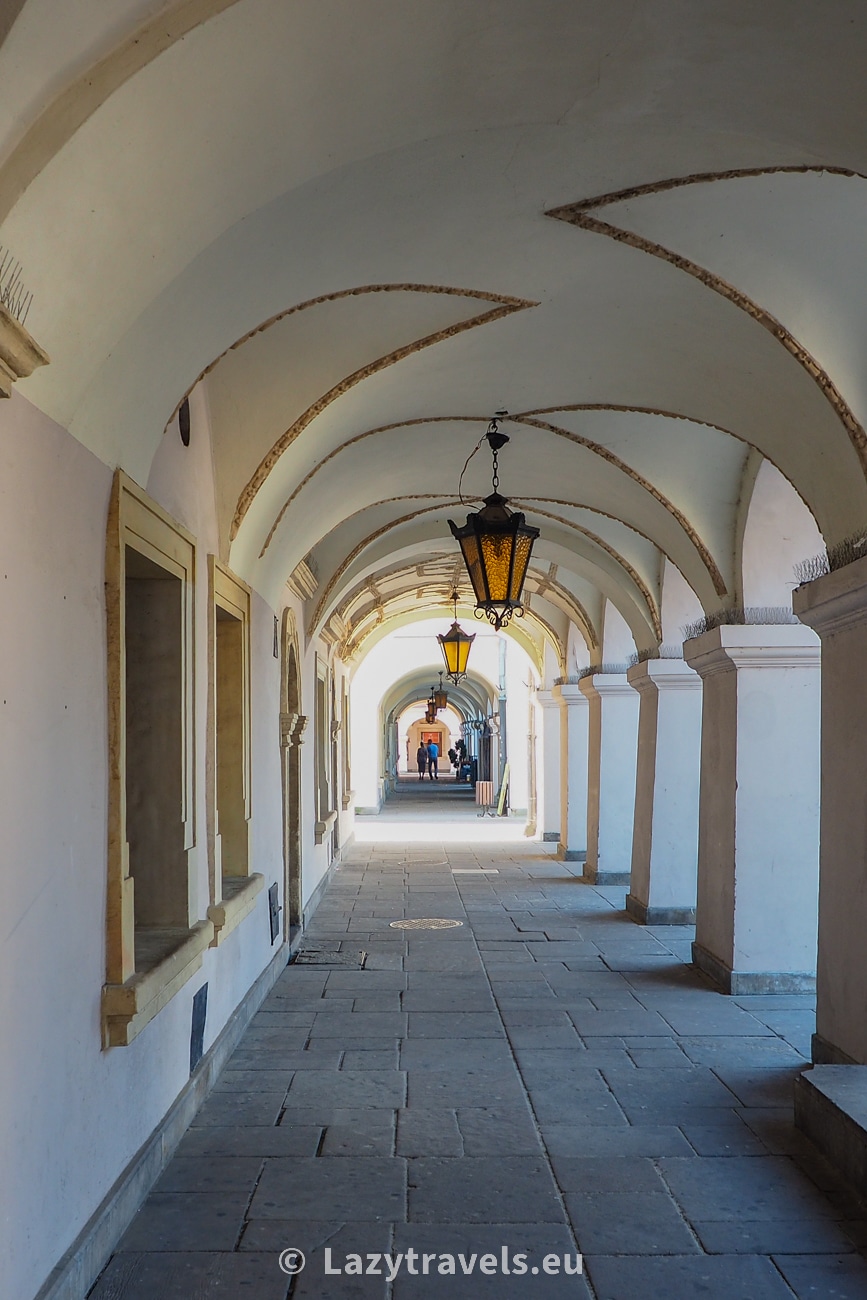
Another important aspect of the square’s appearance is the fact that, aside from the Town Hall, you can walk around the entire square through arcades. On a sunny summer day, they seem unnecessary, but during rain or in winter, they offer shelter. On a sunny day like the one I experienced in Zamość, tourists were sitting in outdoor cafes. When walking through the arcades, the only thing you need to watch out for are the waiters and waitresses, who are bustling about like crazy to serve the guests. And of course, it’s also worth paying attention to the doorways leading into the houses. Not all of them, of course, but some are absolutely beautiful!
Things to do in Zamość
And then I did something that changed my perspective on Zamość. I went to the tourist information office to ask what there was to do here as a tourist. What are Zamość’s attractions, what to see, and why. After a moment, it turned out that one of the attractions is a 45-minute guided walk through the Town Hall’s underground passages, followed immediately by another group setting off on a roughly three-and-a-half-hour tour of Zamość – also with a guide. And you know what I did? I took advantage of both options.
The second option was particularly interesting because the price for the guide was reasonable and split among all group participants, but no more than 15 people. I just love meeting and listening to people who are passionate about their hometowns. So the day I’d planned to spend just wandering around the city ended up being spent sightseeing and following tour guides. Especially since the female guides were so engaging that I simply had to return to Zamość. And whaMedium
t you’re reading is the result of those two trips, condensed into a single account.
The Market Square and City Hall
The market square and city hall are the heart of every city, and Zamość is no exception. Although there are more market squares here—in addition to the main square, the 100-by-100-meter Great Market Square, architect Bernardo Morando designed two smaller ones. These are more functional squares: Salt Market Square and Water Market Square.
Of course, the main city life takes place on the Great Market Square. Here, for example, I had the opportunity to attend a concert in honor of John Paul II. Unfortunately, this had a downside, as the large stage was set up right next to the Armenian tenement houses, which spoiled the appearance of the square. But what can I do? The residents of Zamość want to have fun too, and it’s hard to stop them.
Armenian Townhouses
Standing in the middle of the square, you’ll notice the beautiful, colorful townhouses on the northern side mentioned above. There used to be more of these beautiful townhouses, but today only these remain to delight the eye. These are the Armenian townhouses. The name comes from their first owners, the Armenians. Jan Zamoyski brought to the city everyone who could contribute to its development. And in those days, the Armenians engaged in trade on a large scale. Hence their presence in the newly founded town of Zamość. Today, three of them house the Zamość Museum.

But a few more words about the townhouses.
- The yellow townhouse at 22 Ormiańska Street is called “Pod Madonną” or “Sołtanowska.” Where does the name come from? On the facade, the Virgin Mary is trampling a dragon!
- The blue townhouse at 24 Ormiańska Street is called “Pod Małżeństwem” (Under the Marriage) or is also referred to as “Szafirowa” (Sapphire, from its color). The name comes from the bas-relief of a woman and a man on the facade.
- The red tenement house at 26 Ormiańska Street is called Pod Aniołem, Pod Lwami, or the Bartoszewicz Tenement. On the facade, there are bas-reliefs of a lion and a winged dragon, and in a niche stands the Archangel Gabriel.
- The dark yellow tenement house at 28 Ormiańska Street is the Rudomiczowska Tenement House. Its decor is unremarkable, hence it has no nickname (other than its color)
- The green tenement house at 30 Ormiańska Street is the Wilczkowska tenement house. It is located on the corner of Solna Street. And it is on this corner that the decorations are found. On one side is John the Baptist baptizing Jesus, and on the other, the Virgin Mary.

The Zamość Museum and its historic interiors
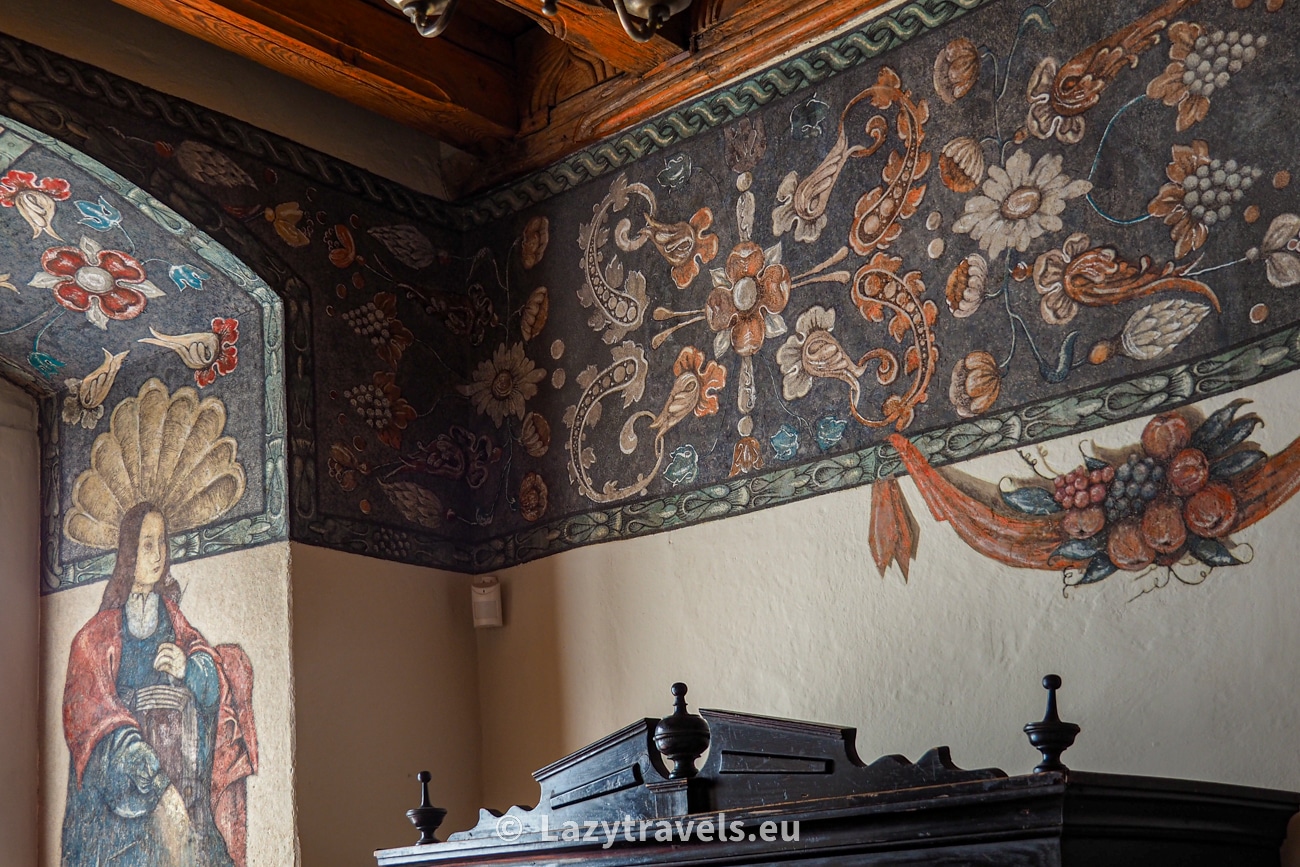
As for the museum, which is housed in three townhouses, it’s worth going inside to see more than just the beautiful exhibits. Above all, it’s worth visiting for the preserved and reconstructed interiors. There, you’ll see, for example, ornate stone-carved window portals, as well as the entrance portals to the rooms. Add to that decorative frescoes on the walls and cornices, and wooden ceilings. And of course! They’re decorative too!
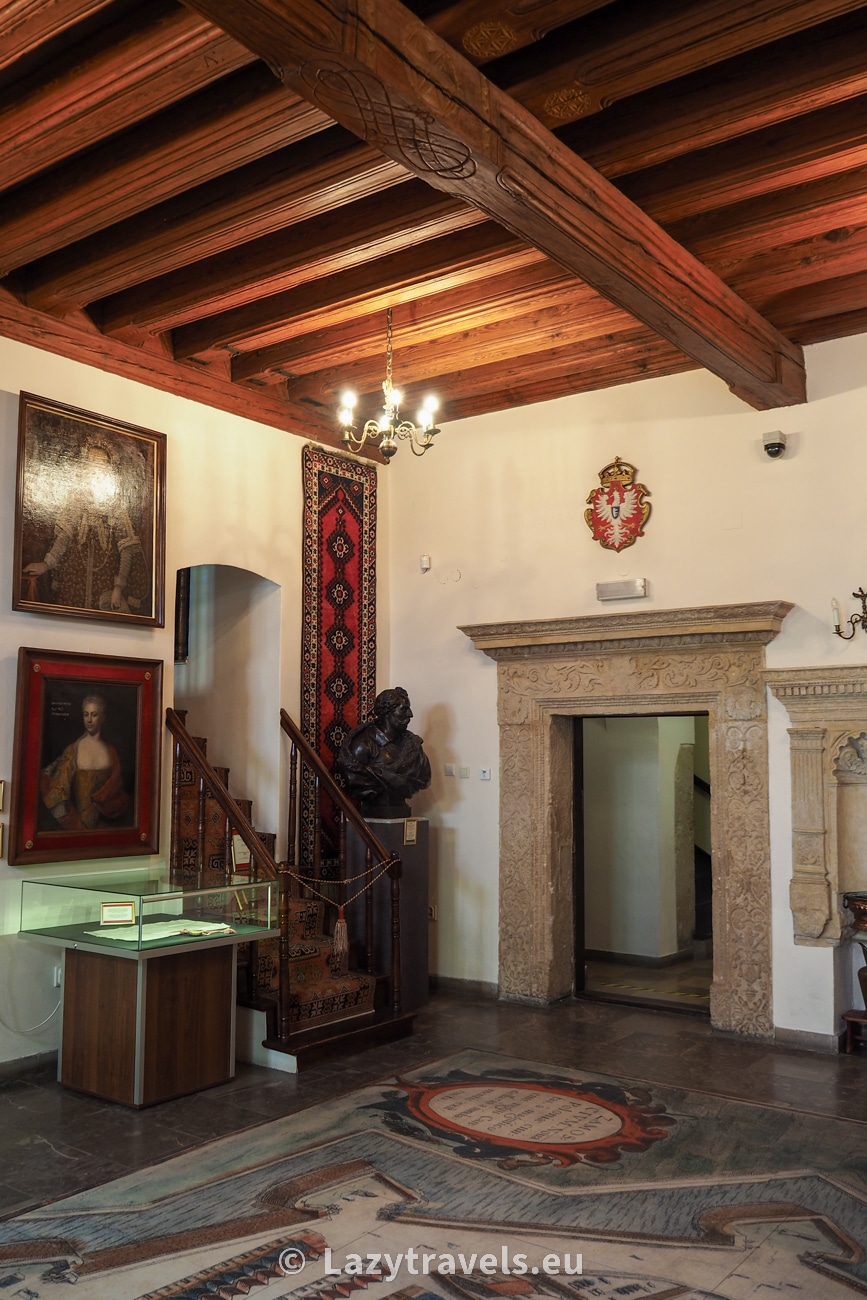
Additionally, the exhibition features the gilded scepter of the Zamoyski Academy, as well as a model of old Zamość—the city as it was designed and built by its founder. For example, the Zamoyski Palace stands on the model. Today, it no longer exists. The original burned down, and what was rebuilt has since been remodeled and no longer resembles the original.
And when you’re walking through the market square for the umpteenth time, notice that all the rows of buildings, except for the one with the town hall, have eight tenement houses in a row. And it’s here that the tenement house where the city’s designer—Bernardo Morando—lived stands; the address is 25 Staszica Street, right on the corner of the market square. Yes, it doesn’t stand out in any particular way. But if you take a stroll through the arcades of the townhouses around the market square, you’ll see several very nice entrance portals. They’re worth spending more than just a moment on.
The Town Hall in Zamość – the city’s landmark
Typically, the town hall has been and remains the most magnificent building in the city. However, this was not the case during the time of Jan Zamoyski. After all, the owner’s palace was supposed to be the most beautiful! Zamość was, after all, a private town. For this reason, the town hall was not originally so grand. Suffice it to say that those monumental stairs, which today are almost a symbol of Zamość, were not built until the second half of the 18th century. Before that, the town hall’s facade on this side was on the same level as the rest of the townhouses. What’s more, it served not only administrative but also commercial functions! Pure pragmatism! If it can pay for itself, why not take advantage of it?
Additionally, the town hall is distinguished by a tall tower, measuring 52 meters. Unfortunately, you can’t climb it. What a pity.
It’s worth climbing the aforementioned stairs. At the entrance to the town hall, you’ll see some plaques. One commemorates Zamość’s inclusion on the UNESCO list in 1992, and next to it is a memento of John Paul II’s pilgrimage to Zamość. To the right, you’ll see the Third-Class Grunwald Cross, which the city was awarded during the PRL era. (PRL stands for the Polish People’s Republic – the official name of Poland before 1989, when it was in the Soviet sphere of influence behind the Iron Curtain)
The oldest of these is a bas-relief depicting St. Thomas the Apostle holding a shield with three spears.

And now a fun fact: although the town hall appears to be perfectly symmetrical, it isn’t. The left side is 130 cm wider than the right. But architecturally, it was done so skillfully that you can’t see it at all. Take a look at the photo I posted above.
I recommend coming to the Main Market Square at 12:00 p.m. during the summer season. That’s when the bugle call rings out from the town hall tower. Interestingly, it’s played in only three directions. According to legend, this is because Jan Zamoyski forbade the bugle call from being played toward Kraków. King Sigismund III Vasa was living in Kraków at the time, and Zamoyski fundamentally disagreed with him. Just another interesting fact about Zamość.
Underground Tourist Routes
Officially, there is only one underground tourist route, located beneath City Hall. But the unofficial one runs inside the former Bastion VII, where we can explore the massive fortifications of the old fortress.
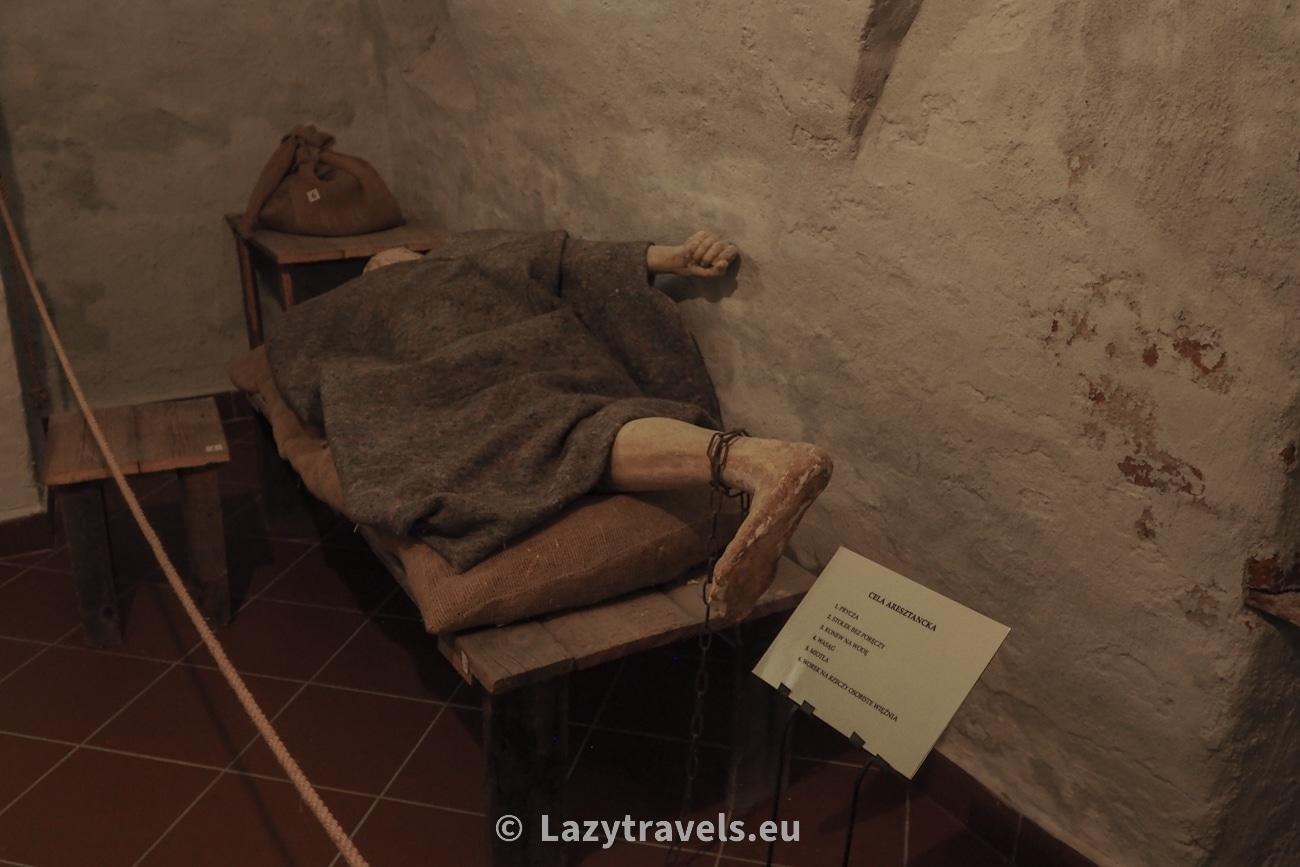
So let’s start with the first one, running beneath City Hall. There, we’ll see the results of archaeological discoveries from the 19th and 20th centuries. But before that, we’ll walk around City Hall with our guide and hear about the city’s history, because without that context, it’s hard to understand what will be shown underground.
After descending below ground, we’ll see, for example, a reconstructed prison, as one existed in the underground for some time. But to keep things from getting too gloomy, we’ll also take a look at a water cistern and a 19th-century well. Overall, it’s nothing to write home about, and the guide’s story is the most interesting part.
Underground Fortification Route
Tourist Route Bastion VII, or the outer bailey. This route is also not available for self-guided tours. Those interested gather at the ticket office, and then, as a fairly large group, we set off on the tour. First, the guide tells the history of the city, and then comes the main part. We pass through the gate in the former bastion and enter the casemates.

In the summer, this is a very pleasant tour because, even though it’s sweltering outside, it’s pleasantly cool in here. As we make our way through the route, we follow the paths that soldiers once walked. We see firing positions for soldiers who could see the fortress’s foreground from here. There’s also a room with an artillery position.
The place reminded me very much of the fortress in Srebrna Góra, because there the guide also mentioned that almost all the artillerymen went deaf. Well, firing a cannon in a closed room was bound to end that way.
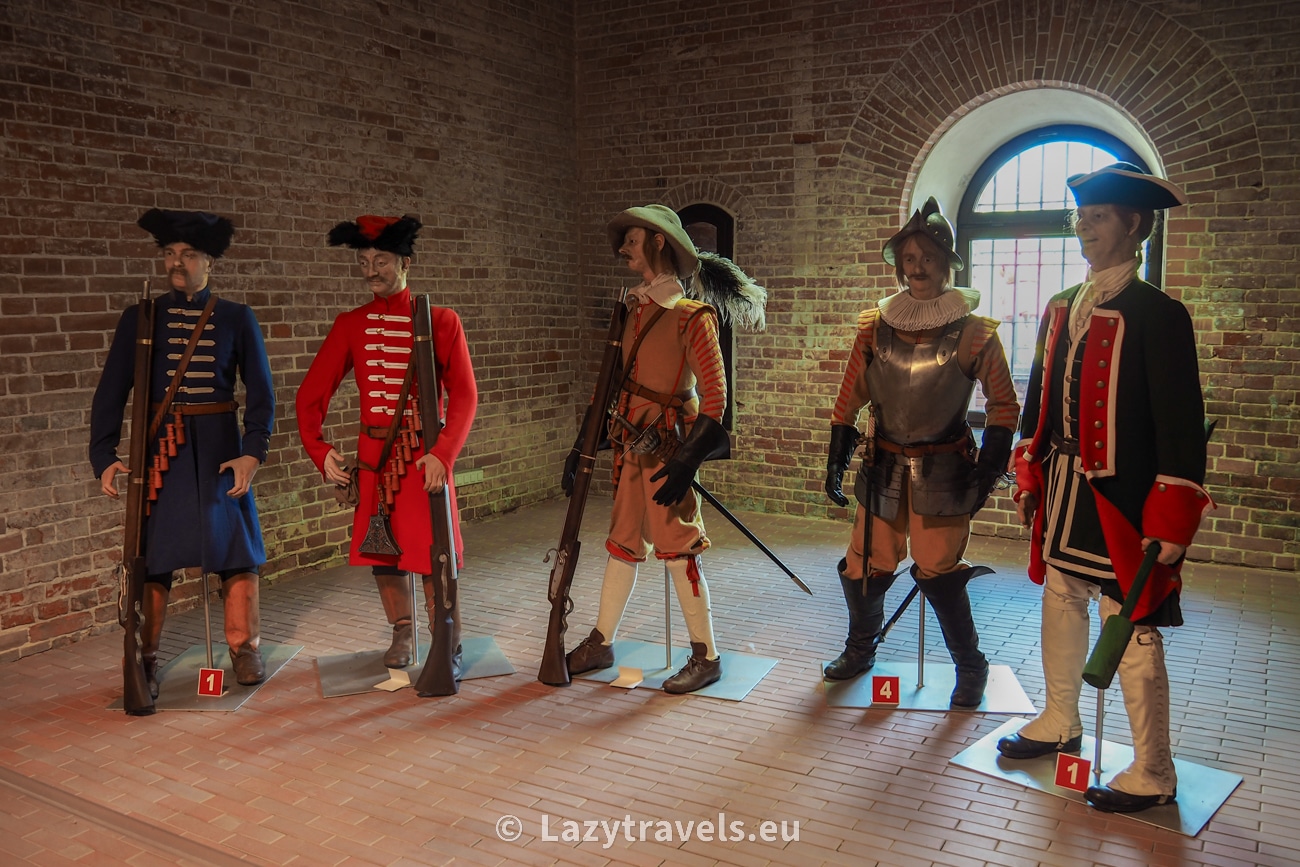
The tour lasts about an hour. It ends on the platform of Bastion VII, where a military camp has been set up. Here you can (for a fee, of course) fire a cannon, shoot a bow and arrow, and so on.
Cathedral. The Zamoyski Cathedral
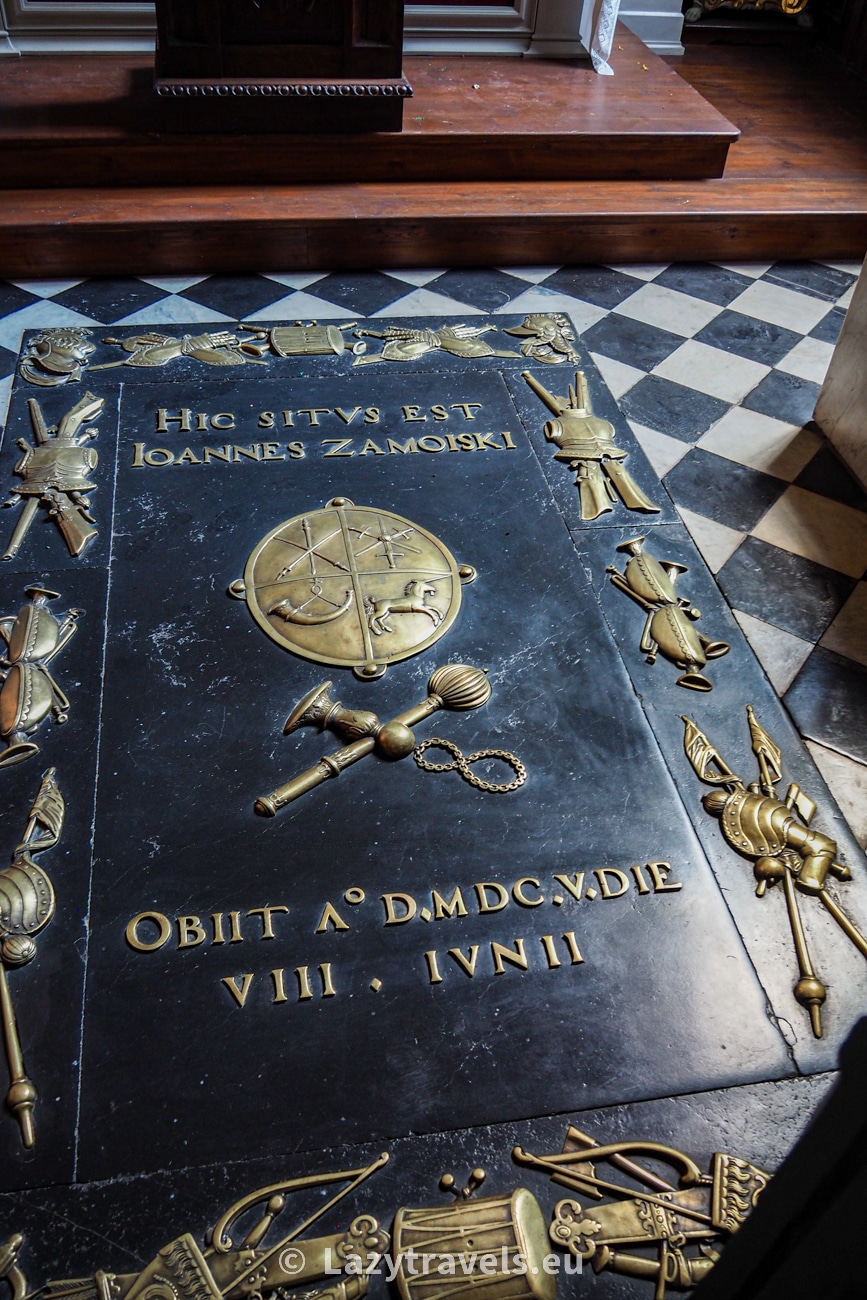
First, a brief explanation: this church has only recently been designated a cathedral, since 1992. Before that, it was an ordinary collegiate church. Although the word “ordinary” should be taken with a grain of salt here. Because while the church is quite squat from the outside (measuring 45 by 15 meters), the interior is perhaps not spectacular, but rather light and pretty. The church is of the basilica type. It has three naves—the main one and two on the sides. It was built in the Lublin Renaissance style, and its dimensions reflect those of Zamość at the time, though on a scale 15 times smaller. Inside, we can see nine chapels, the most important of which is located on the right when facing the altar. The Zamoyski Chapel of the Transfiguration.
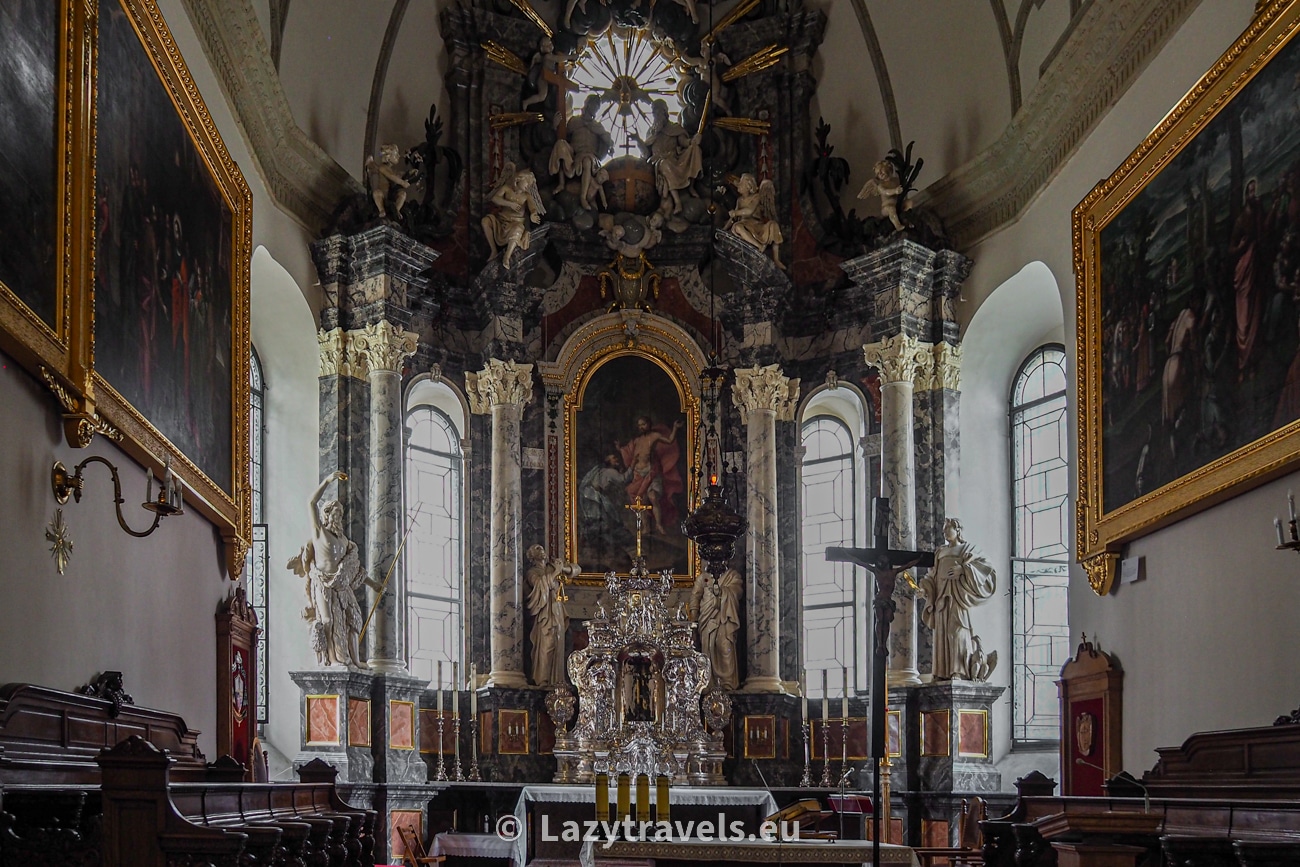
It is here, embedded in the floor, that a black marble tombstone lies. The tombstone of the founder of Zamość—Jan Zamoyski. The entire collegiate church can be described as the burial chapel of the Zamoyski family, as they were buried in the cathedral’s crypts. But let’s return to the tomb of Tomasz Franciszek Zamoyski, as it is one of the most beautiful sculptures I have ever seen.
In Zamość, Tomasz lies in a death pose, with one hand hanging naturally and the other on his chest. A child leans over him… or, according to other interpretations, an angel, showing him the way to heaven. I like this tombstone. For its naturalness and a certain peace that radiates from it. Non omnis moriar – I shall not die entirely, even if only a monument remains of me.

And as I wrote, the collegiate church was an important place for the Zamoyski family for centuries; it was here that they swore an oath of fidelity to the entail. It was also here that they were laid to rest. And in the crypt beneath the floor, you can see the coffins in which they met the final end of their earthly journey. There is an admission fee to enter the crypt—I’ll just mention that for the sake of historical accuracy.
But let’s leave the underground and head into the church to look up. It used to be more ornate, but in the 19th century, at the behest of the Russian authorities, some of the decorations that attested to the temple’s votive character were removed. After all, Jan Zamoyski fought effectively and successfully against Russia. But it’s still worth looking up. If only to see the decorative rosettes. There are 85 of them, and according to legend, the stonemason who crafted them bet that none would be exactly like the rest. And he almost succeeded—almost, because two turned out to be identical. That’s why, as the legend goes, the artist chiseled away one of the rosettes. So here’s a test of your observation skills: can you spot the empty spot? I couldn’t.
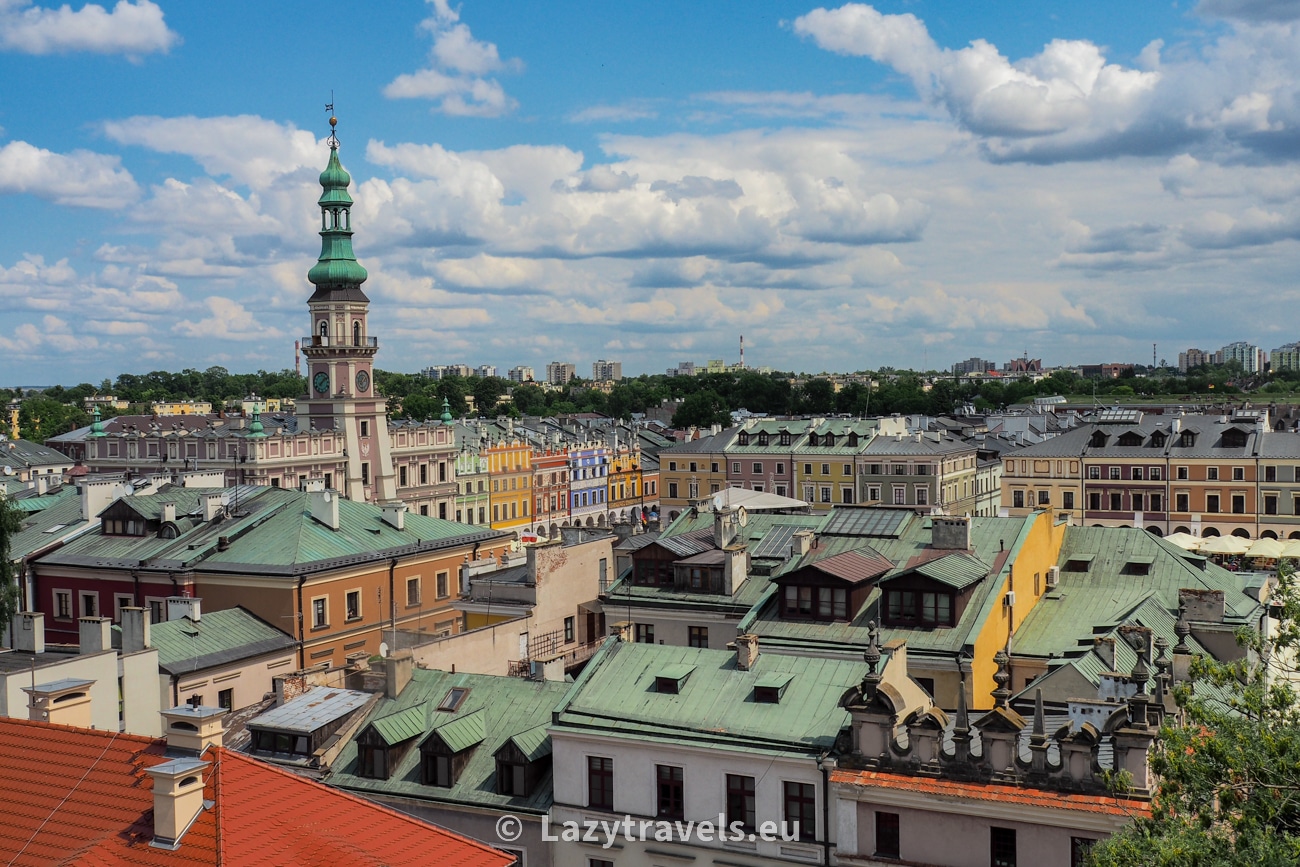
There’s also a spot in the city where you can look down on Zamość from above. I’m talking about the church bell tower. You can climb it and take a bird’s-eye view photo of Zamość. Okay, maybe it’s not the most beautiful panorama I’ve ever seen, but I still don’t think it’s a waste of time or money. Interestingly, I felt the same way after climbing the Opatowska Gate in Sandomierz. I guess I’ve become too demanding in my old age.
The Zamość Rotunda. Place of martyrdom
The Zamość Rotunda, sometimes also referred to as the citadel, is one of the city’s fortifications, built between 1825 and 1831. The Rotunda is located about 500 meters from the old city walls (from Bastion II) and, as a gun emplacement, was intended to protect the city’s outer defenses. At the same time, it was connected to Zamość by a road hidden in a trench and protected by moats.

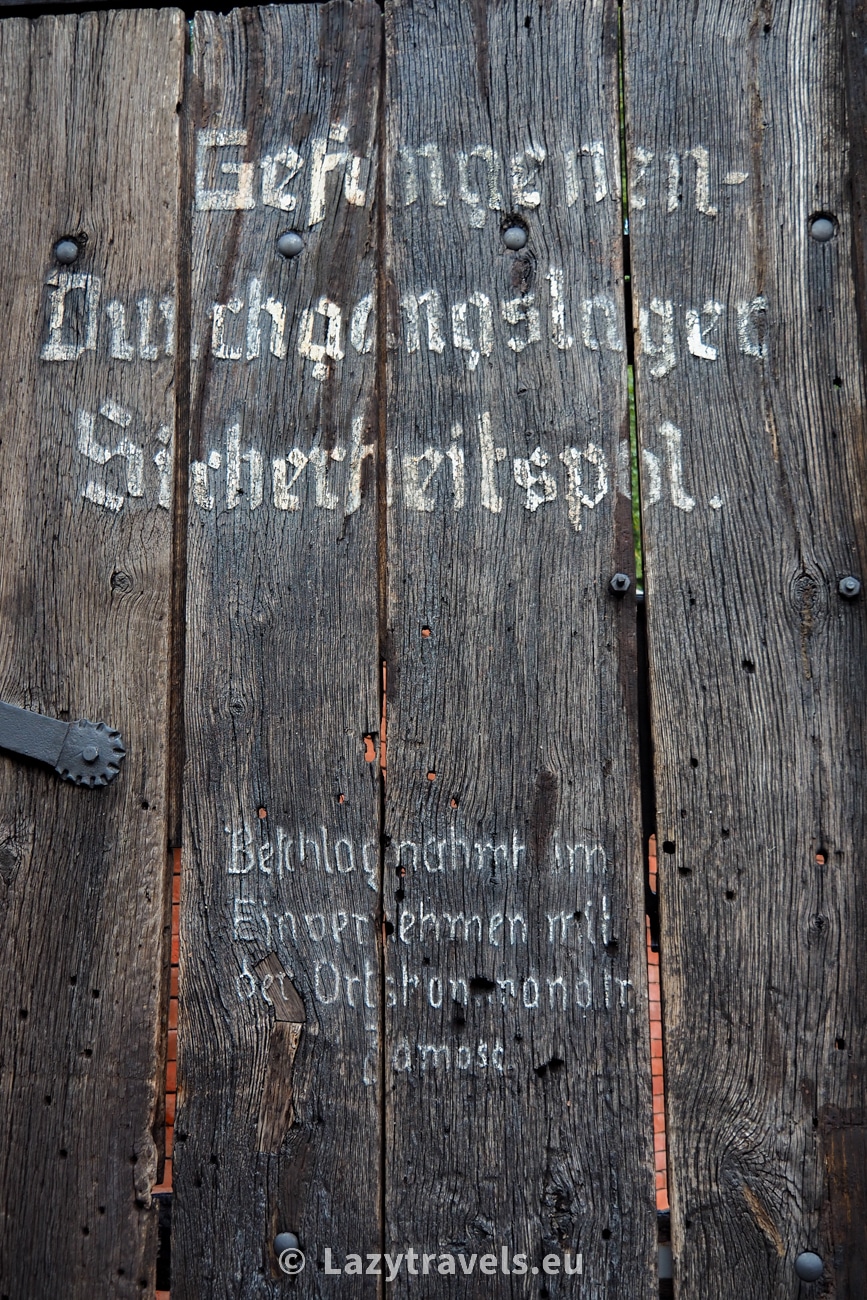
The tragic history of this former fortification began with the German occupation of Zamość. In June 1940, the Germans established a transit camp in this former gun emplacement for people arrested as part of Operation AB (the liquidation of the Polish intelligentsia and resistance movement). Today, as we pass through the gate, we see old wooden doors bearing a white inscription in German: Gefangenen Durchgangslager Sicherheitspol, which translates to German transit camp for Security Police prisoners.
Prison cells were created in the former artillery spaces. Executions were carried out on site, as that was the easiest way. This was done to the left of the entrance, where these crumbling walls stand. It is estimated that the Germans killed between 6,000 and 9,000 people here. The corpses had to be disposed of somehow, so the bodies were burned on a pyre in the middle of the courtyard, and the ashes were poured into the small river flowing nearby. After the camp was liberated, when the area was excavated, it turned out that fat had seeped into the ground to a depth of over a meter. Yes, it was human fat. From the burned bodies.

It is a grim place. Here, no one really speaks loudly as they tour the various cells, walking through the rotunda’s interior and viewing the exhibits. And the exhibits, of course, deal with the era of wartime crimes and the martyrdom of the Polish nation.
A Brief History of Zamość
As I mentioned at the beginning of this article, a brilliant architect and a generous patron came together and decided to create a masterpiece that would outlive them both. Now it’s time to delve into the details of this collaboration. Zamość was built on a plain, nestled between two rivers, which, together with the marshes, provided it with good defensive conditions. It was established here also because the country needed fortresses where the local population could take refuge, but which would also stand in the enemy’s way. There were few such fortresses in the east of the former Polish-Lithuanian Commonwealth. There were, of course, distant fortresses in Chocim and another in Kamieniec Podolski, and there was also nearby Lviv, but this was still not enough to protect the country.
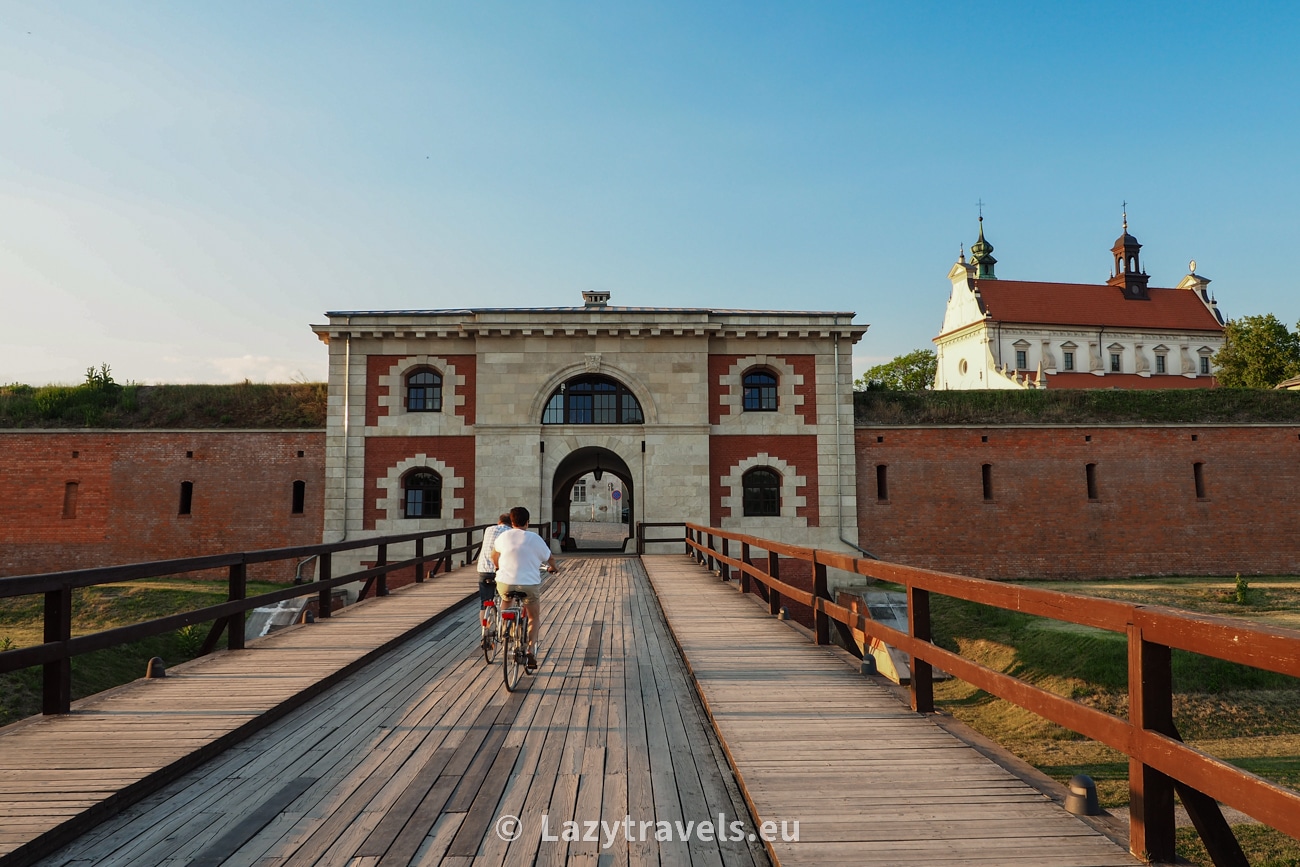
In 1580, under the watchful eye of Bernardo Morando, construction began on Zamość. A fortress, but also a city. Designed as an ideal city, a concept in urban planning that was fashionable at the time. In theory, the city was supposed to be symmetrical, but the architect was no fool and adapted Zamość’s layout to the terrain, for example, by positioning the walls along the river and marshes. However, symmetry reigned within the walls.
A grid of streets was laid out over an area of 600 by 400 meters. Around it, construction began on townhouses and public buildings. Important functions such as commerce were not forgotten either, as this was to be the lifeblood of Zamość. After all, the plan was to create a perfect city… and as we know, it had to have a head, a spine, a heart… And Morando designed these functions along with specific buildings.
Zamość: The Perfect City
That is why the enormous Great Market Square—the city’s central square measuring 100×100 meters—was created. But it was intended for major events, such as the fair held three times a year, as was the city’s right. Two smaller squares, the Water Market and the Salt Market, served for everyday trade. Of course, space was also allocated for churches, with the cathedral at the forefront (although, as I wrote above, the church only recently attained cathedral status).
Initially, it was planned that only Catholics could live in Zamość, but… it turned out that greater profits and gains could be achieved by introducing religious freedom in the city. And that is why, to this day, we can admire the beautiful, ornate, and fabulously colorful Armenian townhouses on the Great Market Square. They can safely be considered the city’s second symbol after the town hall!
The city was also built with great flexibility. Buildings and spaces could change functions. A prime example is the stock exchange in Zamość. It was intended to generate income for Jan Zamoyski, but unfortunately, there were no takers willing to conduct business there. Therefore, in its place, a… church was built. Another example of the city’s ability to accommodate multiple functions is the building of the Zamość Academy.
Initially, it wasn’t part of the plan, but Jan Zamoyski had far-reaching ambitions. Investing in knowledge and science has long been considered a good idea among the wise and educated. Admittedly, this excellent institution fell into decline fairly quickly, and the standard of education was no longer as high. Without an enlightened patron, the institution survived until 1784, when it was closed.
A Fortress (Initially) Unconquerable
Zamość was a mighty fortress that was constantly being modernized. Rather than building ever-stronger walls, the areas outside the city were fortified. The advent of artillery required repelling the enemy far into the open field. The fortifications helped, because during the Swedish Deluge mentioned at the beginning, the enemy failed to capture the city. And only a few cities of the Polish-Lithuanian Commonwealth remained unconquered at that time: Jasna Góra, Gdańsk, and the fortress in Łańcut.
But as the saying goes, “Even Hercules is no match for a horde of enemies.” That is why Zamość was eventually captured as well. This happened during the Northern War, and unfortunately, the city suffered greatly at that time.
An interesting fact is that Zamość was also captured by storm… by the Poles! Yes, in 1809, the troops of the Duchy of Warsaw attacked the Austrian garrison stationed in the fortress. Poland, I remind you, was under partition at the time and did not exist as a state.
The last interesting episode in Zamość’s history as a fortress took place during the November Uprising. After the city was captured, it became a staging ground for Polish insurgents targeting Russian troops stationed in the area. Well, it didn’t last long, because as we know, we lost the uprising. It’s worth mentioning, however, that Zamość was the last to surrender.
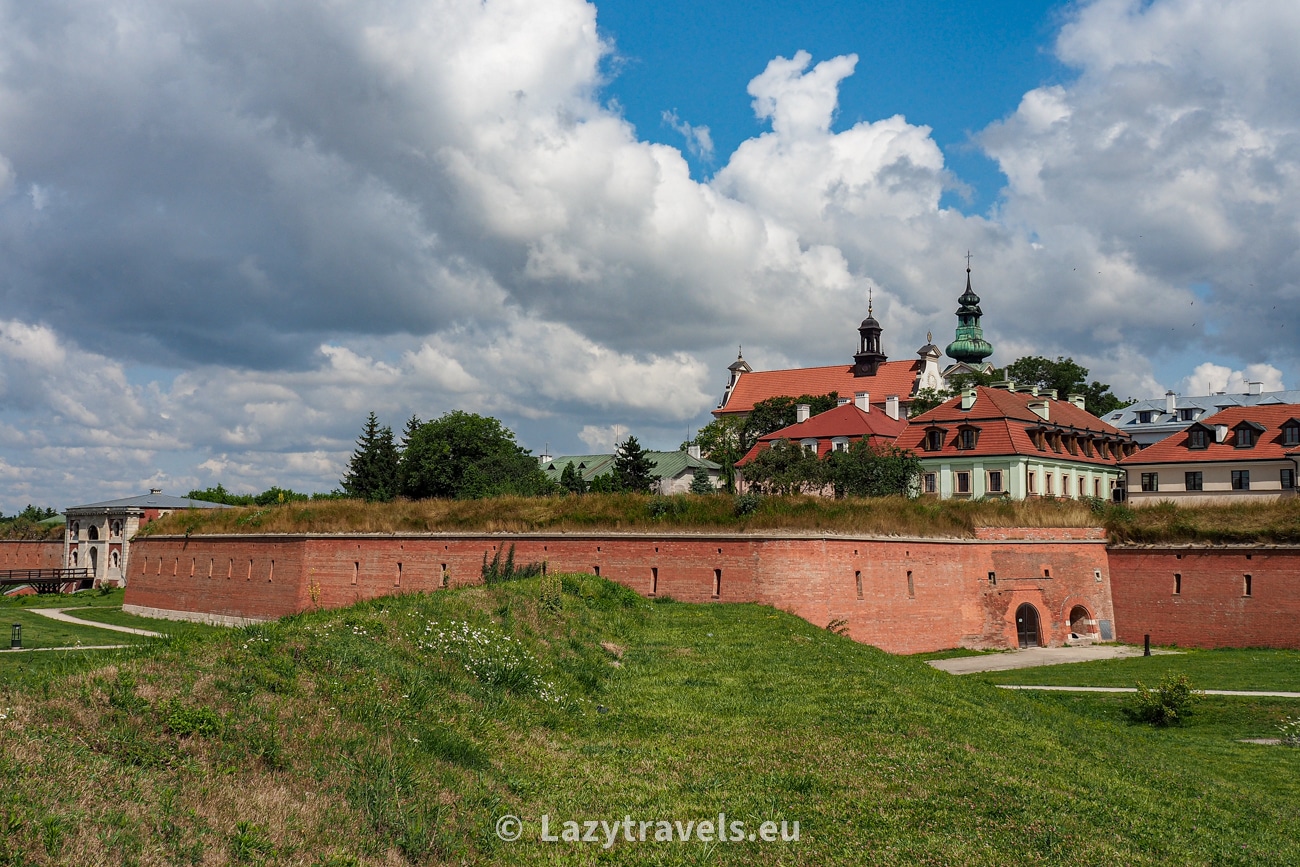
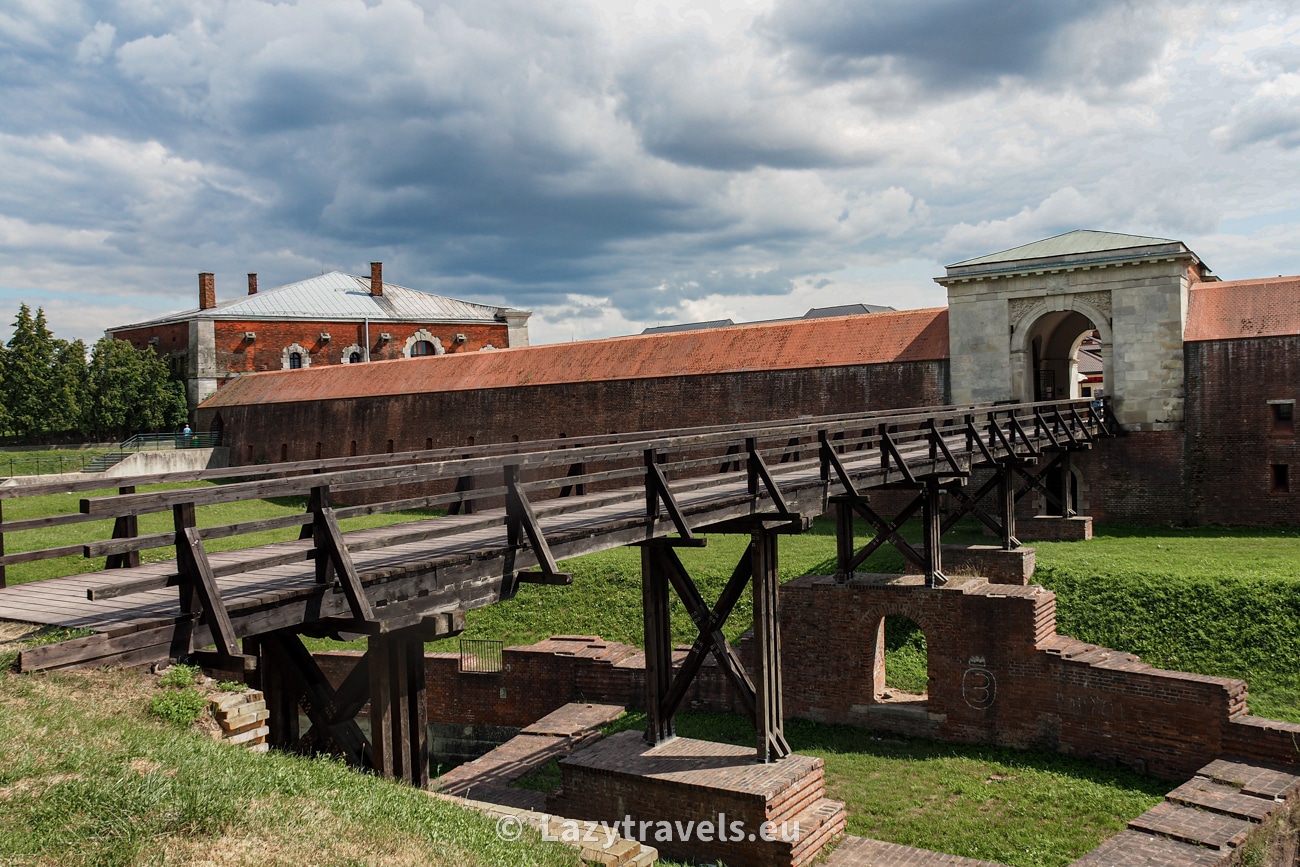
But even so, I think a walk around the red walls of the Zamość Fortress is a must. Only then will you fully appreciate the craftsmanship of the fortifiers. And in the evening, illuminated by the lights shining on the brick walls, the whole thing looks simply fabulous.
The Arsenal. An interesting military museum
The Arsenal—or, more specifically, my desire to visit it—was one of the reasons I returned to explore Zamość.
The museum consists of three parts. The first is a multimedia presentation on the city’s history. It takes place several times a day, and you’ll find out the exact time when you buy your ticket. We enter a small room resembling a movie theater, the lights go out, and… the story of the most important facts from Zamość’s history begins. Start your tour and walk through the attractions with this; it will make it easier for you to choose what you want to see and in what order.
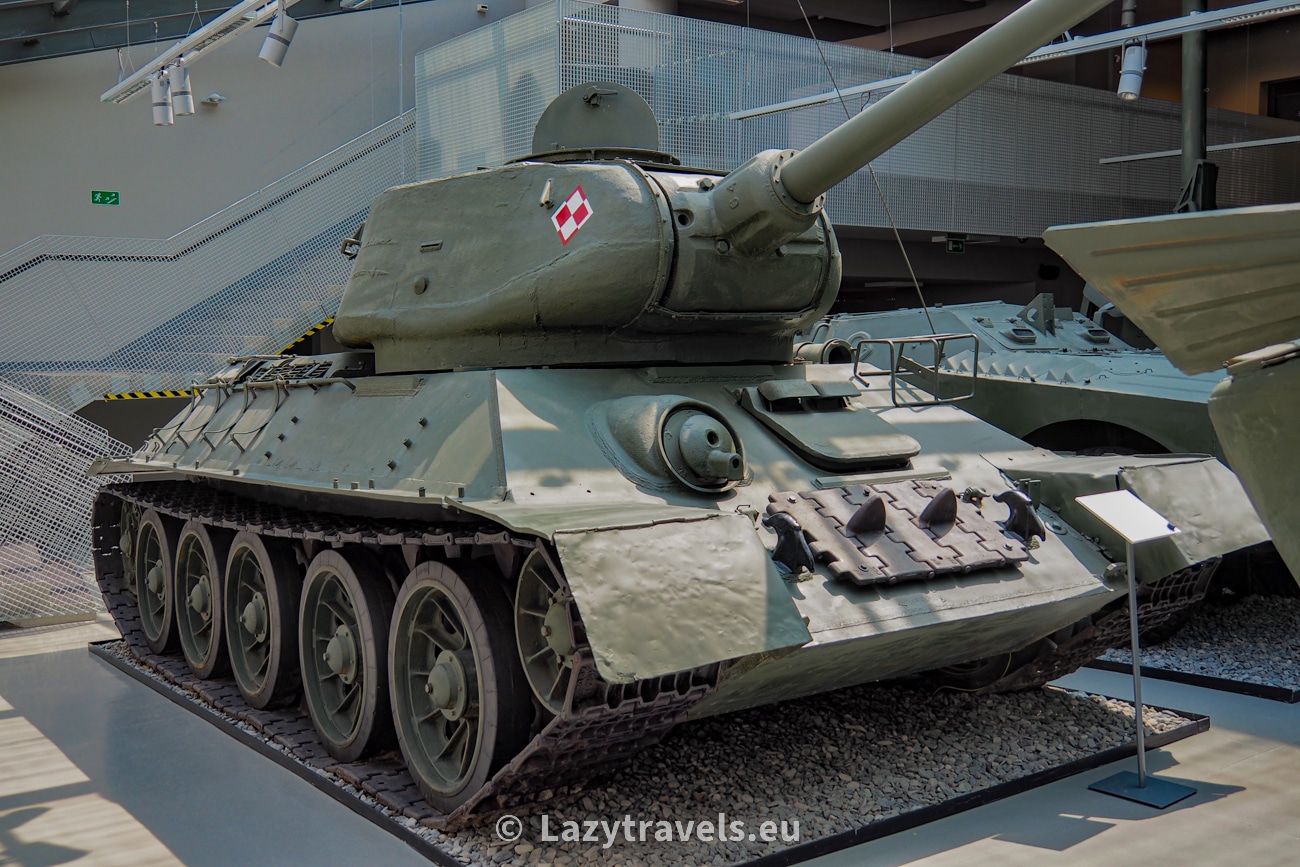
Another part of the Arsenal Museum is an exhibition spread across two floors of a former ammunition depot. Here, you’ll see old uniforms and weapons. All in all, it’s a museum like many others in Poland, so I probably wouldn’t go back a second time.
However, I really liked the part of the Arsenal housed within the old defensive walls. Here, under a transparent roof, dozens of pieces of military equipment from a more recent era have been gathered. There’s a Mi-2 helicopter here, but right next to it stands the famous T-34 tank in the 1985 version.

In addition to these, there’s also a whole host of cannons of various calibers. Plus, there are cross-sections of bunkers and trench-style defensive positions. This offers a truly fascinating look at military technology and the conditions on the battlefield. Of course, only in theory.
More on the Arsenal Museum website.
Zamość in the evening and at night
The Zamość Fortress is no longer there, but now that the fortifications have been restored, they are once again impressive. Today, they no longer need to deter the enemy; no one will launch assaults here. Instead, I highly recommend you venture outside the walls, especially from the side of the so-called Great Floodplain—the area where the marshes and water reservoir that once surrounded Zamość were located. The moats defending the city were filled from this reservoir. The red bricks, viewed from the steep embankments that are part of the fortifications, look incredibly romantic, and if we add the illuminated church buildings to this, it becomes a sight worth lingering over.
What’s more, the city has invested in making the area even more attractive. A footbridge was built over the railway line, which cuts into the old fortifications and crosses them. It’s called the Lovers’ Bridge, as the name suggests. The city panorama from here is also picturesque, though it’s slightly obscured by trees.
Although in the evening, the city’s life revolves around the Great Market Square. Here, hundreds of tourists and locals sit under umbrellas enjoying dinner, a drink, or a beer. And even when I arrived in Zamość on a Thursday night, I had no trouble finding a place that was still open. Which, after my experience in Kazimierz Dolny, wasn’t a given for me. There, by 10 p.m., they were practically rolling up the pavement. Here, in many bars, waiters were still taking orders and bustling between tables. But if you don’t feel like eating or drinking anything, you can simply sit on the edge of a flower bed and admire the town hall building, beautifully illuminated at night.
The synagogue in Zamość and a rare attraction
The synagogue in Zamość deserves a separate section in an article about the city’s attractions. The synagogue is interesting if only because, despite World War II and the genocide committed by the Germans against the Jews, the building survived. It’s true that the Nazis turned it into a stable, but that’s still better than blowing it up. And that fate befell countless Jewish buildings during World War II. Today, now that it’s been renovated, it looks quite decent. But it deserves special attention for another reason. You see, this synagogue houses a copy of the Torah.
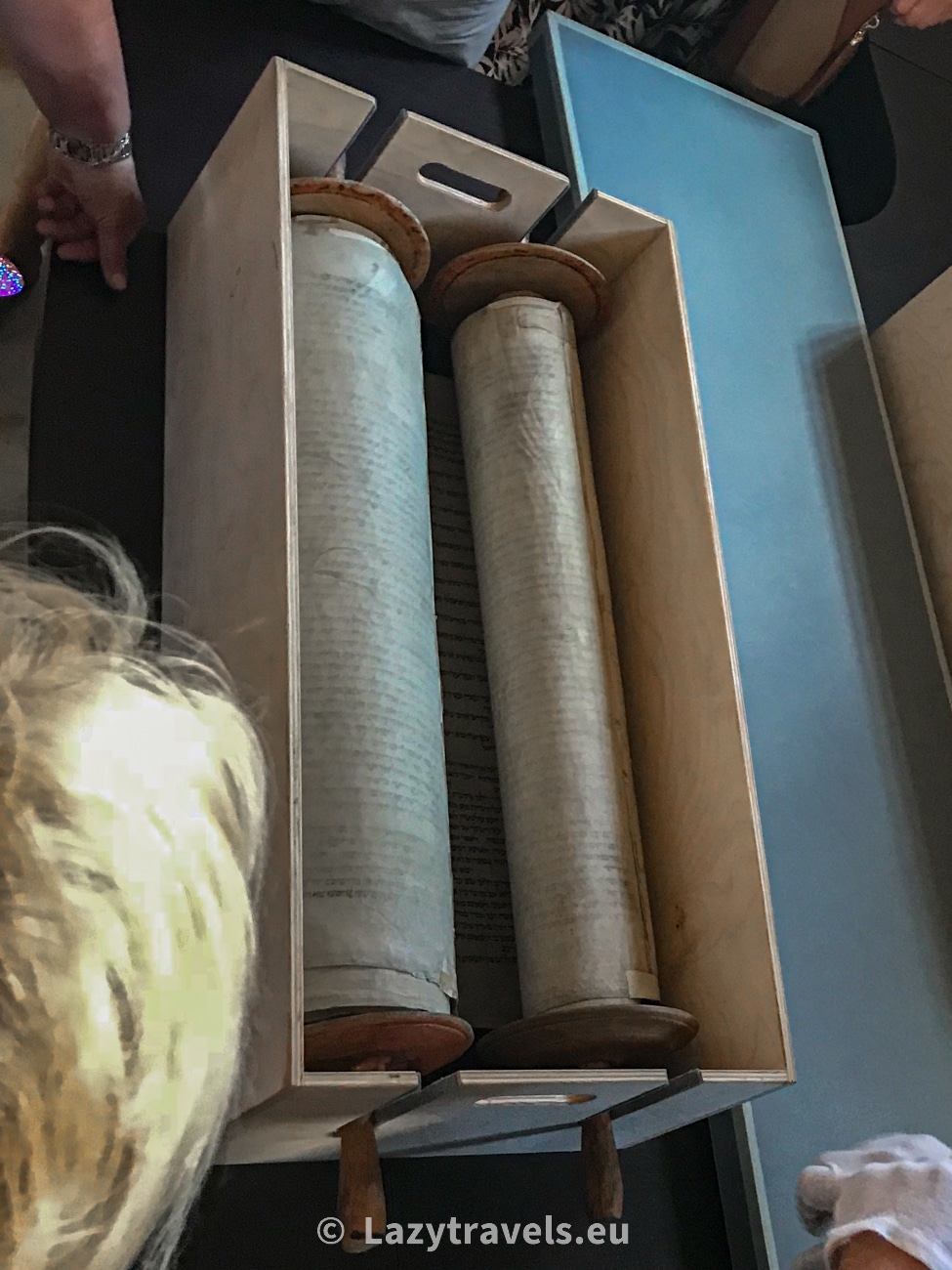
The staff doesn’t make a big deal out of it, but when I came here on a guided tour, our guide asked for the scroll to be taken out and shown to us. Believe me, a treat like that doesn’t come along often.
If you come here on your own, you can visit the multimedia kiosks, where you’ll learn about the history of the synagogue and the Jewish community in Zamość.
And, of course, you’ll get to see the interior decorations.
Restaurants and coffee shops in Zamość
Let’s start with restaurants. I highly recommend a place called Centralka. If you’re looking for a spot for lunch or dinner during the season, head to Rynek Wodny. There, Centralka has a nice outdoor seating area where you can relax away from the hustle and bustle. The prices are reasonable, the service is excellent, and on top of that, they make really good drinks! I’ve visited them several times and have never been disappointed.
If you’re looking for a place for coffee, they serve excellent coffee right next to the synagogue. Look for the MAZAGRAN café. Excellent coffee, and you can also stop by for cake or breakfast.
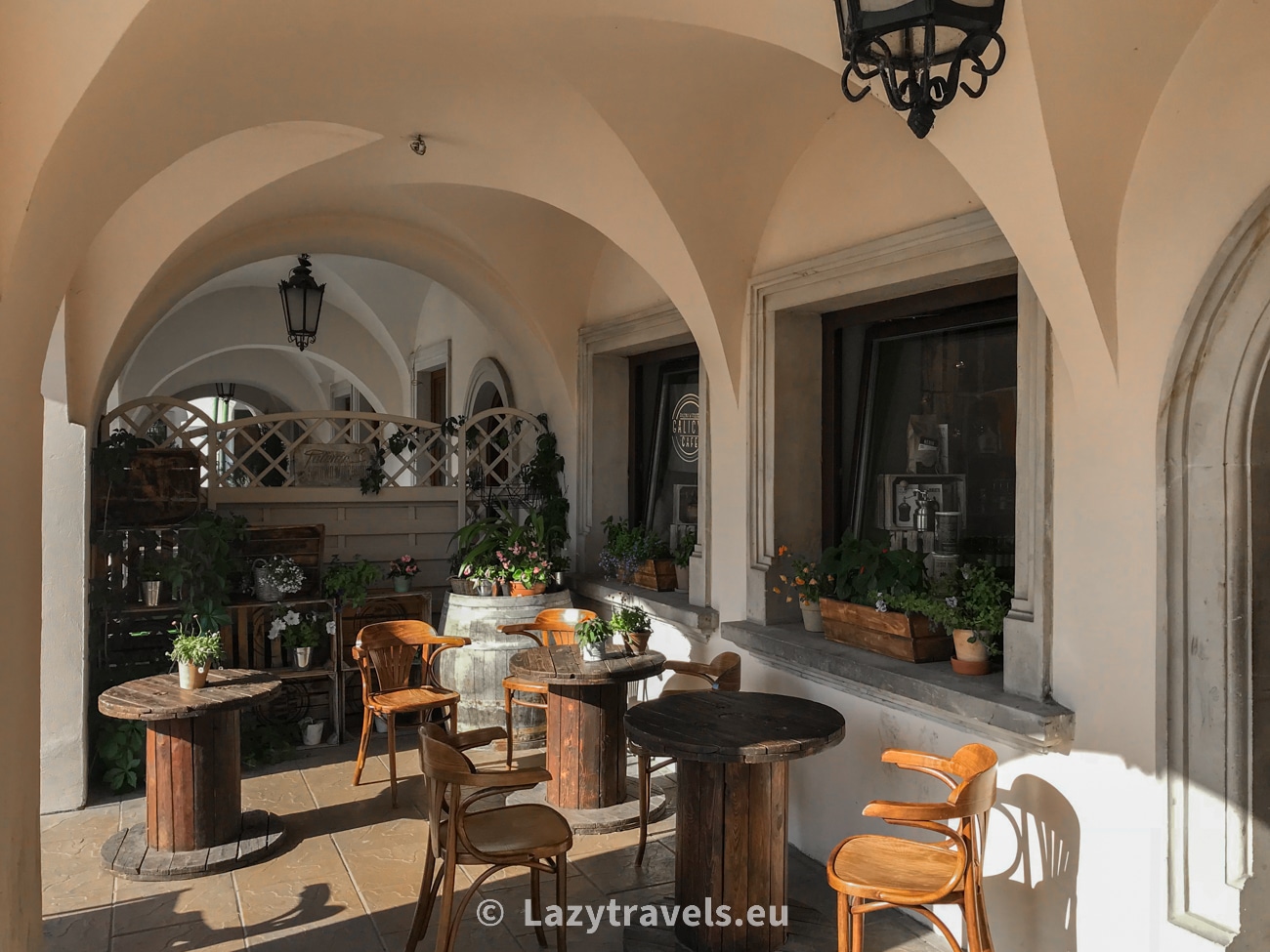
Another great spot for coffee is Rynek Solny, home to Galicya Cafe. It’s both a coffee roastery and a café. The double espresso was to die for! Plus, there’s a very pleasant outdoor seating area.
In addition to the places mentioned above, I also tried the coffee at the Arabesca café. The coffee is top-notch, although the interior is more modern. But maybe that’s a plus for you. Oh, and this café also has excellent cakes!
Hotels in Zamość
While in Zamość, I stayed in two different types of accommodations. Once in a fairly budget-friendly place located far from the tourist center. The second time, I stayed in the old town. For a place to spend two nights, I chose Hotel 77, located in a former mikveh. A cozy, nice room with a clean bathroom and excellent value for money. I recommend it!
And if you’re looking for something very cheap, the budget option I stayed at is the ALEX Conference and Hotel Center. Clean and pleasant. Although it’s a bit of a walk to the center. (about 2 km)
As the icing on the cake, I’ll save the accommodation on the Main Market Square—in the heart of the city, where life goes on until late at night. Hotel Arte offers higher-standard accommodations. Of course, with a delicious breakfast
Getting to Zamość and where to park your car
Of course, the most convenient way to get to Zamość is by car. As is often the case in Poland, Zamość is no exception, and the city is designed around cars. That’s why you won’t have any trouble finding a parking spot. In my opinion, the best and largest parking lot is the one at the Szczebrzeska Gate. It’s free. It’s located right next to the Old Town, literally just a few dozen meters from the Arsenal.
Of course, if you prefer, you can get to Zamość by bus. The downside is that it’s quite a long walk from the bus station to the Old Town—about 2.5 km. But you can take a taxi or use public transportation. Unfortunately, I can’t tell you which bus number goes from the bus station to the Old Town. I walked the route because I like to walk.
You can also get to Zamość by train. There’s one direct train daily from Warsaw Central Station to Zamość. You can also take a direct train to Zamość from Wrocław via Kraków. Five trains also run daily from Lublin to Zamość.
Just remember to get off at the PKP „Zamość Starówka” train station. After all, why walk a long way when the train station is right next to the Old Town?