

I have a fondness for Lublin, but not because I grew up here or went to school here. It’s just that when I was a child, I lived about 100 km from Lublin, although it was in a different province. However, I didn’t visit Lublin at that time and I didn’t explore it, nor did I have much idea what tourist attractions Lublin had to offer. Finally, the moment came when I got on a train and went there.

It’s a bit strange that I hadn’t been to Lublin before, because I even went to high school in a town in the Lublin province. Most of my friends went to study in Lublin. I was always drawn to Warsaw. So, since I wasn’t going to study there, one day I got on a train and simply went to Lublin for the weekend. To see the sights and drink beer, because I can’t help it, Browar Zakładowy is one of my favorites. So much for the interesting facts from my private life. Now it’s time to go out and explore! Although, chronologically speaking, I started my tour at the open-air museum, i.e. the Lublin Village Museum. Yes, I’m also becoming increasingly fond of open-air museums. However, you can read about this place in another article.
If you’re wondering whether Lublin is worth visiting, this article presents attractions and the most interesting places to visit. From curiosities to must-sees.
Lublin is alive all day (and night)
I will start my story about Lublin from the middle, because there will be time to describe what is worth visiting and what tourist attractions there are. I arrived on a warm August weekend. The city was full of tourists, but there were just as many locals walking around. And I don’t mean just the Old Town, because I admit that in the evening I deliberately went outside the traditional tourist center. I visited Wielokaran, a wonderful pub owned by Browar Zakładowy. This place was also full, and the later it got, the more people came and filled the room, lining up at the bar to order another mug of amber liquid.
The stone of misfortune
Lublin can be explored in the classic way, starting with the biggest monuments and places, but I suggest starting your tour in an unusual way. Let’s start with the “stone of misfortune,” a place that is worth seeing from a distance, because you never know if the power of the stone is still active. The history of the stone dates back to the Middle Ages and is related to its very useful shape.
The stone is flat. According to legend, this made it perfect for use as a base for the executioner’s block! And it was in connection with the executioner’s work that the stone acquired its ominous power. Apparently, once upon a time, the executioner beheaded an innocent person. The axe cut off the convict’s head, but the force of the blow was so great that the axe also cut through the entire oak stump and chipped the stone. This was considered a bad omen and the stone was removed from under the next stump.
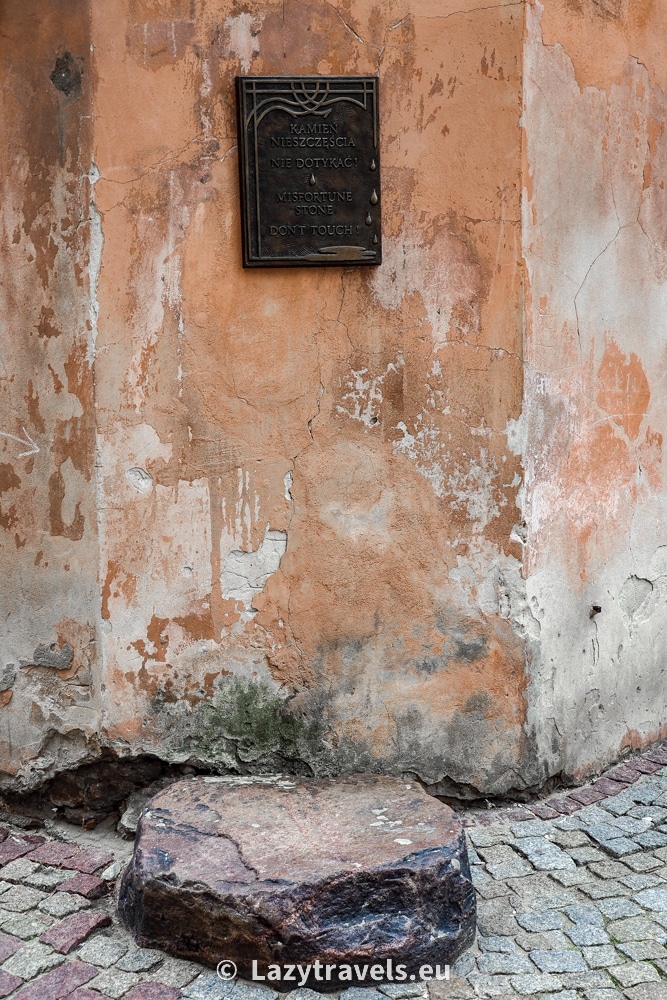
The stone was taken by a baker, who placed it as part of his oven. And here again, bad luck struck: his wife fell in love with an apprentice, left him, and he, by some unfortunate coincidence, fell into the oven and ended his life. An attempt was also made to break the spell on the stone by placing it in a church that was being built. But suddenly, the church ran out of funds! The stone showed its power once again.
The stone was therefore taken out of the city and built into the walls of a powder magazine. No wonder, then, that the powder magazine exploded shortly thereafter.
The stone was then placed on Jezuicka Street near the Trinitarian Tower. Of course, it was carefully avoided by the townspeople, who knew the dangers of touching it. But even here, the boulder showed its destructive power. It was this area that suffered the most during World War II. Today, no one moves it, it lies peacefully and undisturbed, perhaps slowly losing its power…
Carnival of Magicians
In my opinion, the Carnival of Magicians is Lublin’s most famous marketing brand. For several days, the city becomes one big happening. I don’t even know how to describe it properly, because I admit that I have never participated in the event. I’ve only seen lots of photos and videos. The Carnival of Magicians is a multitude of events involving circus arts, alternative arts, street performers, stilt walkers, tightrope walkers, and everything else associated with such playful art.

To be honest, I’m getting more and more eager to experience this atmosphere for myself. Take a look at the video below.
Because a taste of this event is actually still in the air. Literally! Here, on Grodzka Street, an unusual sculpture of the Seeker from Lublin is balancing on a rope! Of course, this is a reference to the character from the book of the same title written by Nobel Prize winner Isaac Bashevis Singer. During the festival, real acrobats balance on a thin rope in the air.
The fountain and the legend of the devil’s paw
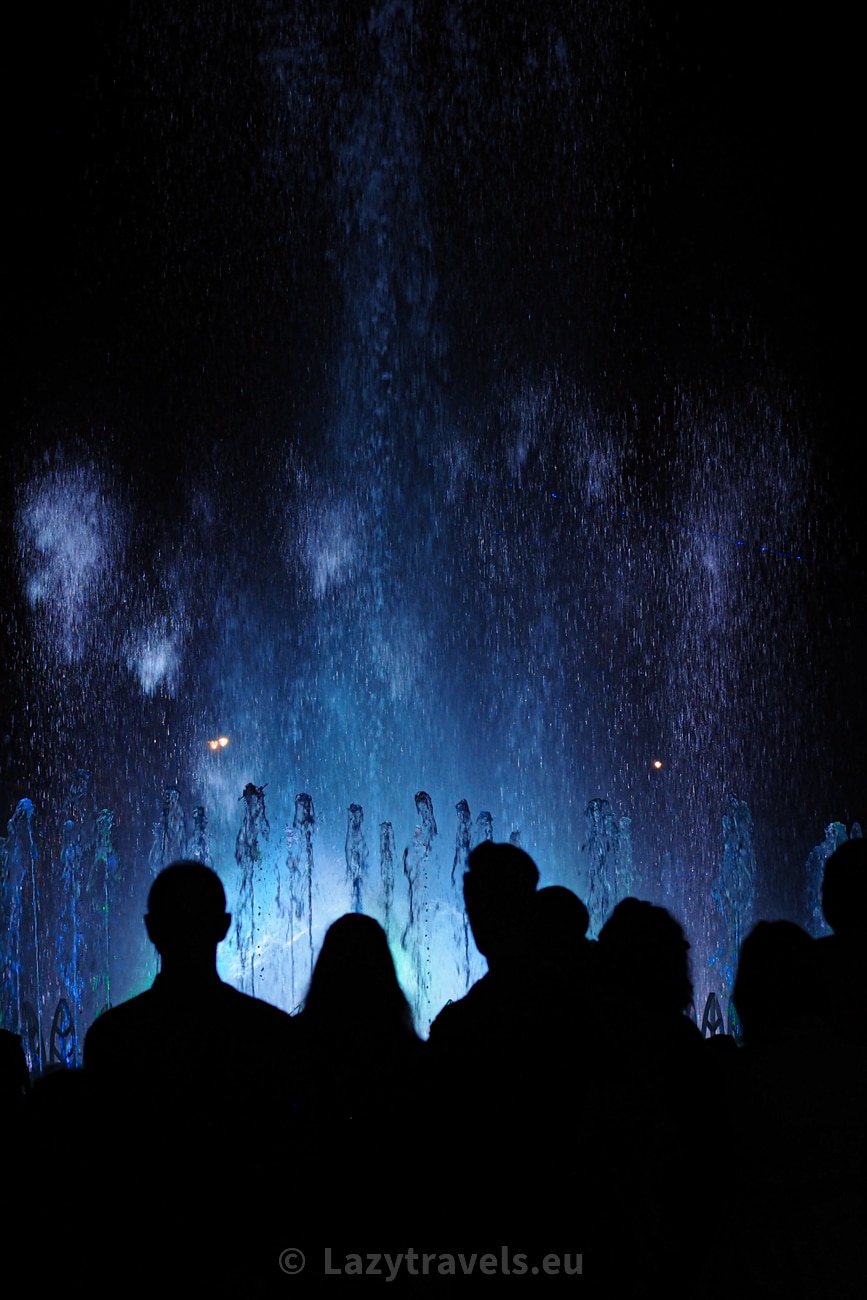
During the summer season, a light and sound show takes place at the fountain on Litewski Square. Lasers draw colorful figures on the water curtain, and the story is told through loudspeakers. And what could be more Lublin than the famous story of the devil’s paw? For several minutes, we listen to the story and watch the outlines of the characters projected above the water mirror. In short, the legend goes like this:
A poor widow did not want to sell her property to a nobleman. He offered her a scandalously low amount for her property. Therefore, in order to get rid of the woman, he set her hut on fire with the help of his servants. The woman took the case to the court in Lublin. However, the judges were bribed by the defendant. The witnesses who testified against the widow were also bribed. The verdict was passed, and it stated that the plaintiff had set her house on fire herself. In a gesture of despair, the woman shouted, “Even the devil would have passed a fairer verdict!”
And then, during the night, unusual things began to happen. Carriages pulled up to the Crown Tribunal, and mysterious figures got out. They opened the locked building, entered the courtroom, and resumed the trial. They presented evidence, recalled the testimony of both parties, and passed sentence. This time, it was favorable to the injured woman. And when they signed the verdict, one of the judges took off his glove and placed his hand on the table. There was a hissing sound, and the smell of smoldering wood filled the air – the devil’s paw had left its mark on the table. According to the widow’s prophecy, the devils had come to deliver a just verdict. Seeing that the devils had proved to be more just than humans, Christ, hanging on the cross in the hall, turned his gaze away. And so, we can now see the table in the castle museum, and the crucifix hangs in a nearby church.

If you come to see the fountain show and listen to the stories, it is worth knowing that crowds come here. So you have to come early to be closer to the fountain. Especially if you are with children, because they may not be able to see everything from a distance. It is worth coming, because I had a great time. You will probably have a great time too.
Brama Krakowska (Krakowska Gate) – city museum
An interesting fact that surprised me is that Lublin had only two city gates! Okay, it had a few more gates, but usually large cities had more gates. But it made sense, because a gate is always the weakest element in city fortifications. The second city gate of Lublin is the Grodzka Gate, also known as the Lower Gate, which means that, as you can easily guess, the Krakowska Gate was the Upper Gate. The names were derived from their location, there is no deeper meaning here.
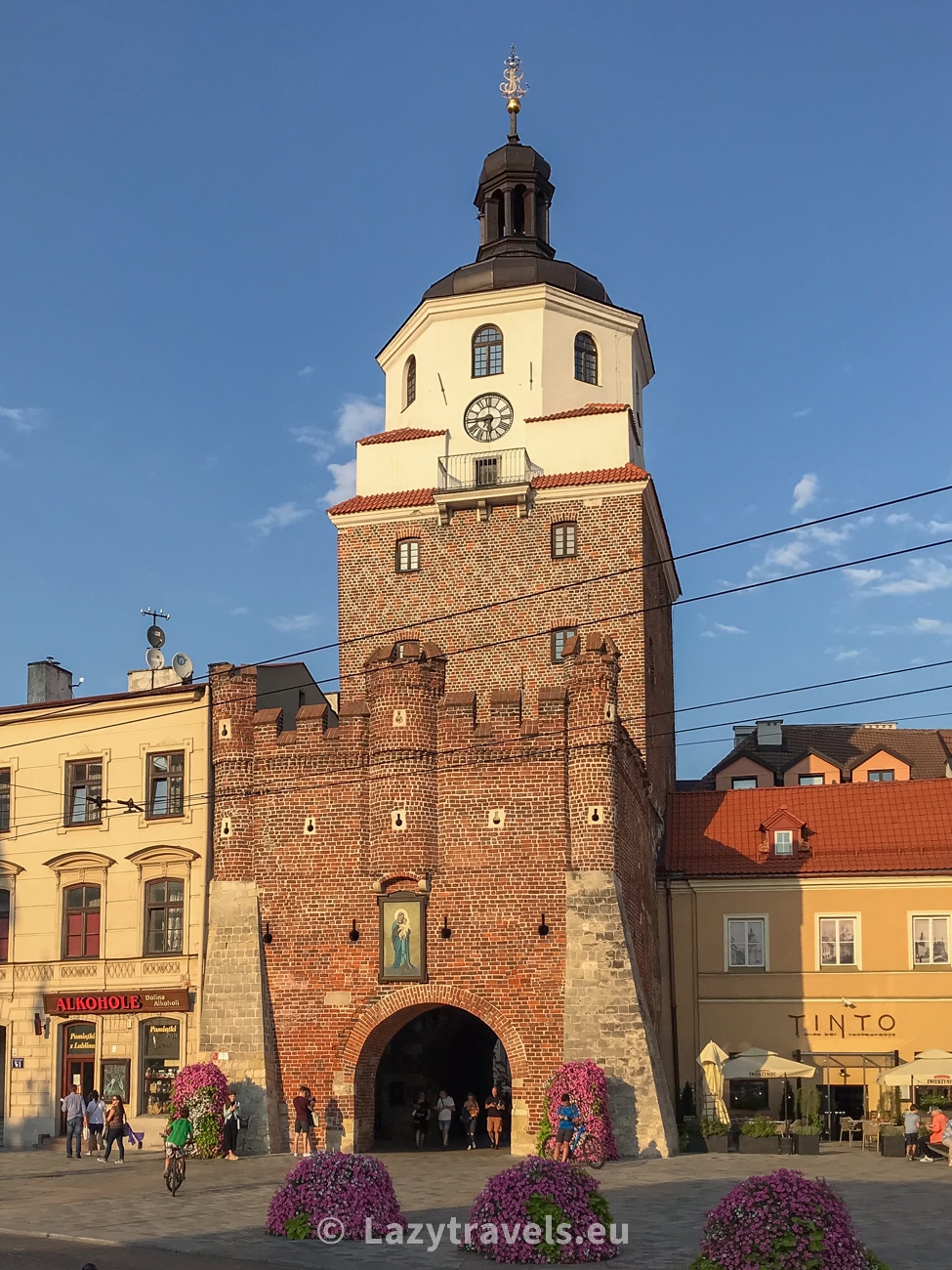
In my opinion, the Krakowska Gate is a symbol of Lublin – you see it in a photo and you know that it is Lublin and not another city. Its appearance is, of course, the result of many reconstructions over the centuries. Initially, it was quite simple, but then it underwent further changes. This is how it acquired an octagonal tower, but also a foregate. But this does not change the fact that if something is not renovated, it deteriorates. This is what happened to the city walls of Lublin.
They were not strong enough, but the garrison stationed in the city was also not strong enough to resist Bohdan Khmelnytsky’s army when an uprising broke out in the eastern territories of the vast Polish-Lithuanian Commonwealth. The city did not defend itself but accepted the terms of surrender. However, the worst was yet to come – the so-called Swedish Deluge (a period when Swedish troops invaded the territory of the then Polish-Lithuanian Commonwealth and completely devastated it) and the associated looting destroyed not only Lublin but almost the entire Commonwealth. The Swedes failed to capture only a few places: the heavily fortified Zamość, Jasna Góra (now it’s a part of Czestochowa city), Gdańsk, and Łańcut. As far as I know, the well-fortified Baranów Sandomierski also escaped their plunder.

But let’s return to the Krakowska Gate, because today it is simply a tourist attraction that can be visited. Interestingly, it is not very popular, because during the half hour I spent viewing the exhibitions, there was only one other tourist besides me. Is the exhibition interesting? If you like looking at display cases, photocopies of old documents, and artifacts that have survived the conflagration of centuries, then it is worth coming here. Here, you can see, for example, the mechanism of an old clock that was mounted on the gate tower for a long time. There are old sewage pipes, because in 1506, the city signed a contract with a pipe master to build waterworks!
There are also stories from the war years – World War I and World War II. And if you like views, you can see Krakowskie Przedmieście and the New Town Hall from here. Although the view is not particularly spectacular.
Panas Alley
It’s a strange name for a staircase, but let it be. In any case, Panas Alley is one of the most charming places in Lublin. It is located in the tourist center, but still a bit off the beaten track. The alley, or the aforementioned staircase, leads from Plac po Farze towards Podwale and St. Adalbert’s Church. Going down the left side, you will see a brick wall and the walls of tenement houses, and in front of you, a view of Lublin Castle.
And why this name? It is in honor of Władysław Panas – a professor, literary scholar, and great lover of Lublin.

One of the curiosities of Lublin is the Lantern of Remembrance standing at the bottom of the stairs. Lit in 2004, it never goes out. It is meant to commemorate the Jews murdered by the Germans during World War II. A community that constituted one-third of the inhabitants of Lublin. And the lantern itself? It is a pre-war original, once lit by gas, today powered by electricity. You can read about the history of old Lublin and the Jews who lived here below.
Lublin Castle. A beautiful place with a terrible history
The origins of Lublin Castle are estimated to date back to around the 12th century, when earth and wooden fortifications were built for the needs of the local castellany. During the reign of Casimir the Great (one of the most famous and best Polish kings), a solid brick structure was built here. What’s more, it was built together with a chapel, which you can read about below.

Over the next few hundred years, the castle was rebuilt and lost its defensive functions, becoming a representative place. This happened in 1520 when King Sigismund the Old began rebuilding it into a royal residence. A significant date in the history of the castle is 1569, the year of the Union of Lublin. Yes, the Sejm (parliament) deliberated at the castle in Lublin, and as a result, the largest state in Europe at that time was created. It was also one of the strongest (until then, however).
Unfortunately, wars followed, especially the so-called Swedish Deluge, and the castle suffered colossal damage. Only the chapel and the keep survived. Several new buildings were then erected, but the real change came in 1823-1826. At that time, a completely new architectural complex was built here: a prison! And this function continued for over 100 years.
The castle under German occupation
And it is with this chapter that the darkest stories of the Lublin castle are associated. The tsarist invader (for 123 years, Poland was not on the map of Europe, having been divided between three neighboring countries) set up a prison here for Poles fighting for liberation from occupation. That is why many participants of the January Uprising of 1863 were imprisoned here. After regaining independence, the castle continued to function as a prison in the reborn Poland. In addition to criminals, communists, for example, were also held here.

The darkest chapter in the history of the new castle began with World War II and the arrival of the Germans. The occupiers set up a torture chamber in the prison, where members of the Polish underground and all those suspected of belonging to the resistance movement were imprisoned. Over 40,000 prisoners passed through its walls and cells. A significant number of them were murdered. We can read about how this happened while visiting the keep. On one of the floors, there is an exhibition explaining in detail how the Germans operated and murdered people. For example, we can read the account of a man who miraculously survived. During the execution, the German simply missed his shot and assumed he had killed him. Along with other corpses, the would-be victim was taken outside the prison grounds. There, he was saved.
But this is one optimistic story. The rest is just death… The climax was the day of Lublin’s liberation. The Germans accelerated the executions. They hurried to kill as many prisoners as possible. Fortunately, they did not succeed, and the SS officers murdered “only” about 300 people. Most survived and were liberated. Unfortunately, after 1944, another occupier arrived, this time the USSR. Until 1954, there was a prison here for the Polish anti-communist underground and all those who were considered “enemies of the people.” Again, several hundred people lost their lives here.
Since 1957, there has been a museum here. Unfortunately, during my stay and visit to Lublin, whether due to the COVID-19 pandemic or some other reasons, the exhibitions were closed. Well, it will be a reason to come back to Lublin again. I only managed to visit the keep, which is an excellent vantage point overlooking old Lublin, and the Holy Trinity Chapel.
Holy Trinity Chapel in Lublin
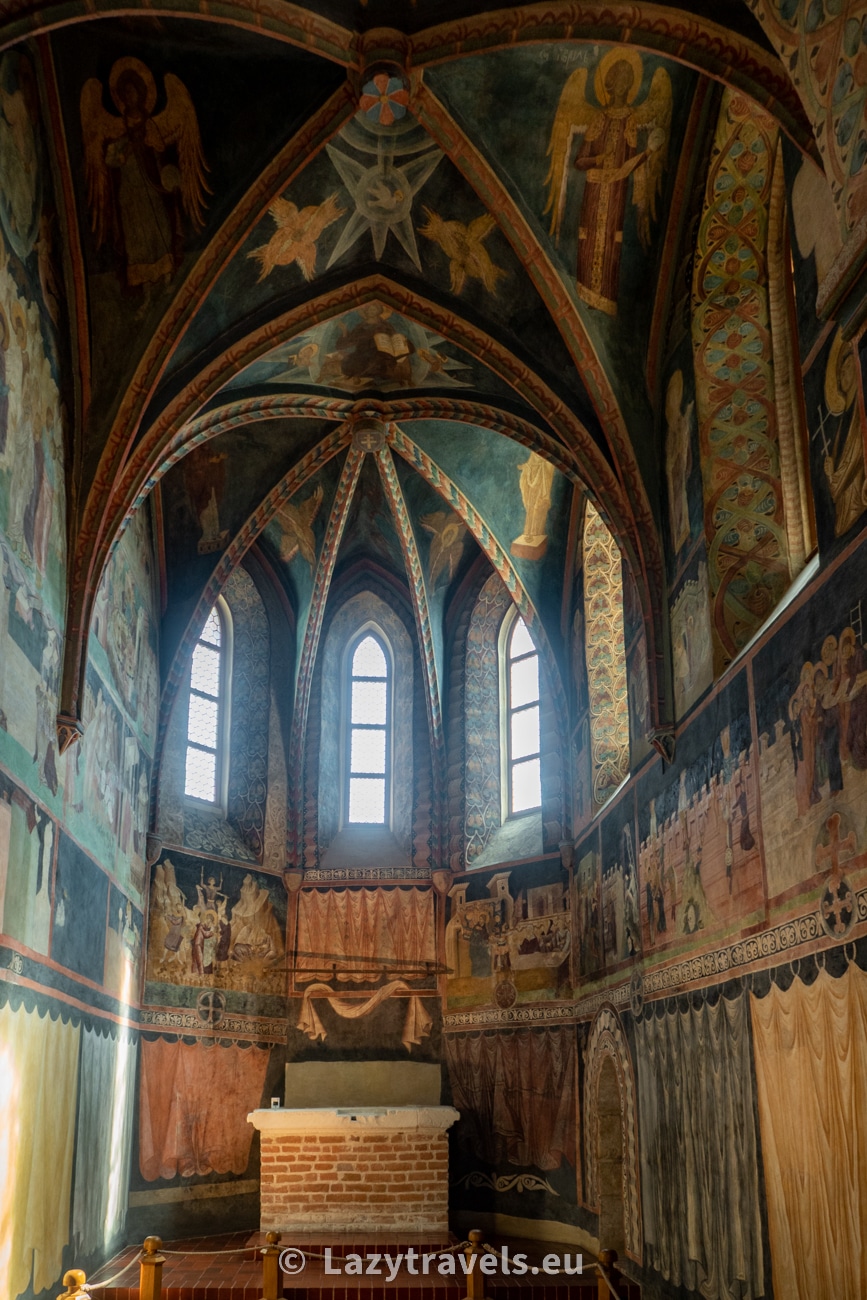
The chapel is one of the most valuable and oldest monuments in Poland. The chapel building was founded by Casimir the Great, but what causes such admiration today is thanks to King Władysław Jagiełło. I am talking about the frescoes that covered the walls and ceiling of the temple on his orders. Believe me, it is something that is absolutely worth seeing with your own eyes. Decorations worthy of crowned heads! Because, of course, it was a royal chapel!
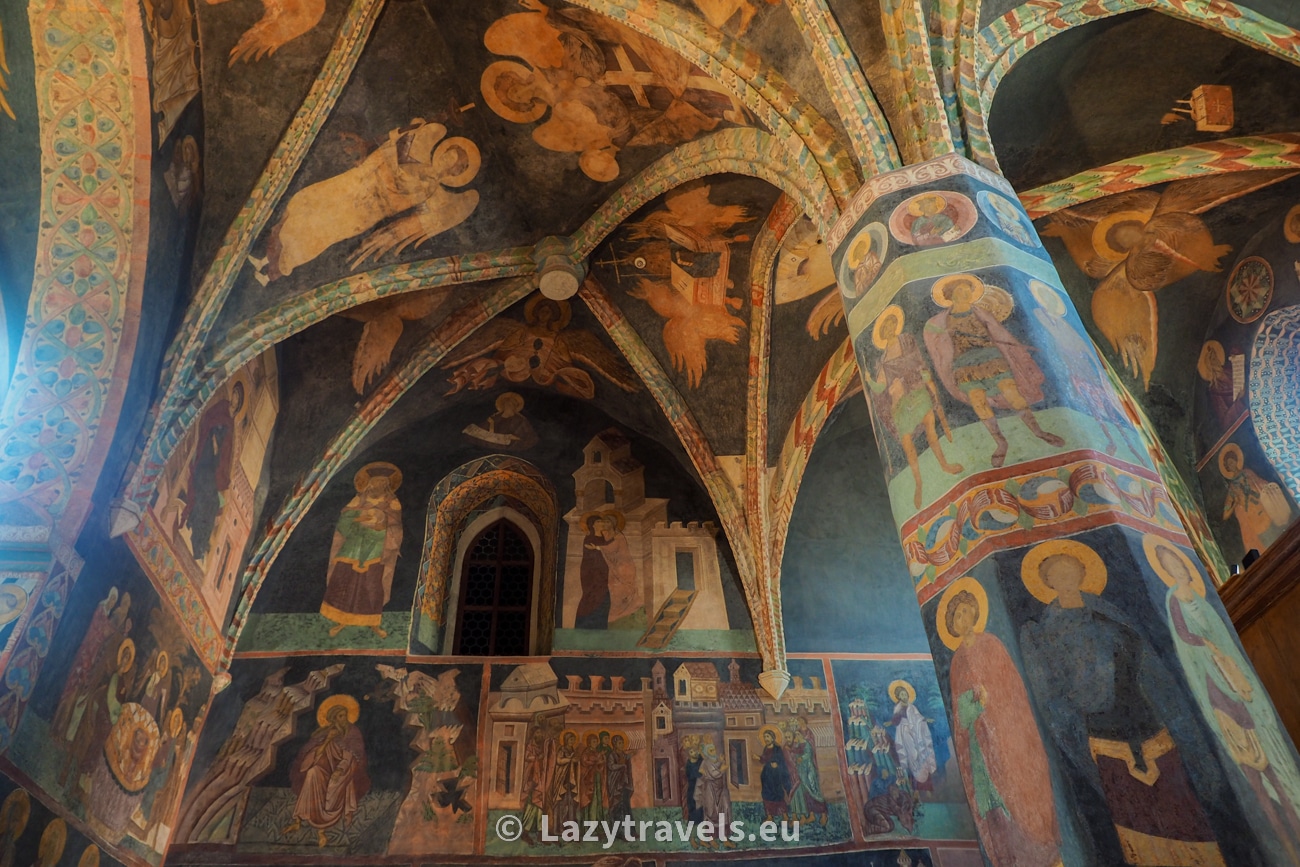
Frescoes are just frescoes, you might say. Maybe… but I will tell you that something painted in 1418 deserves admiration. Anyway, the fact that the polychromes have survived to this day is also a miracle. And yet, at one point, they were plastered over and whitewashed. Fortunately, they were rediscovered, and today, after several decades of renovation, we can once again see scenes from the life and death of Jesus. Angels and archangels hover above our heads, and of course the Holy Spirit in the form of a dove.
Jewish Lublin. The story of half the city that was murdered
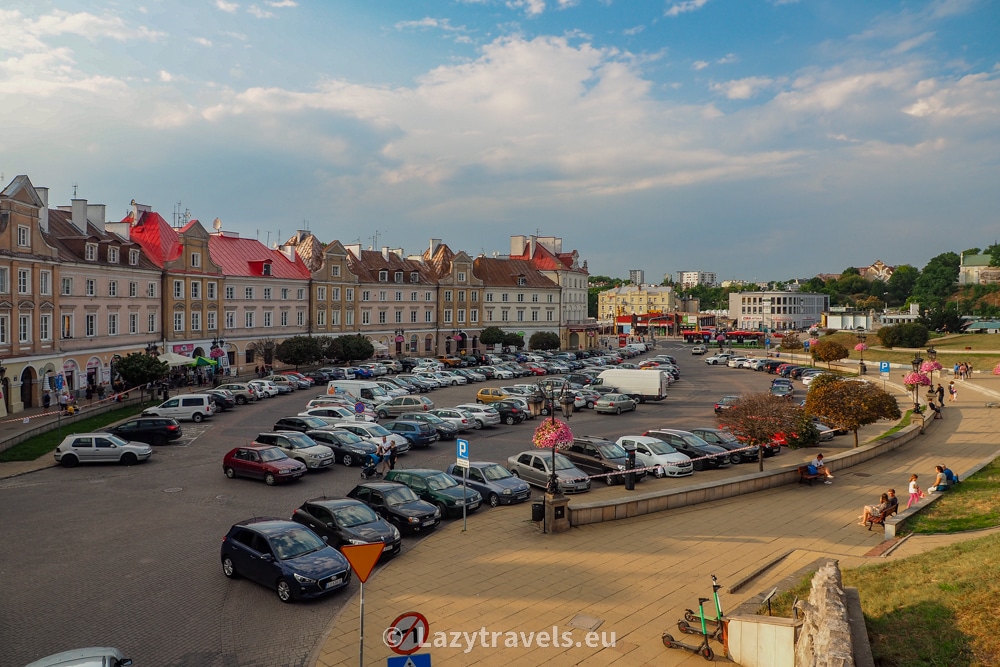
And while we’re at the castle, when you leave it, you’ll see an empty space in front of you. Although it would be better to say: you’ll see a huge parking lot. Before World War II, this was the location of the Jewish quarter. It may surprise you, but immediately after World War I, over 50% of Lublin’s inhabitants were Jewish. Later, the Jewish population fell to almost 35%, as shown by the 1931 Polish census. That 35% amounted to 38,937 inhabitants.
Because Lublin, as a city located on trade routes leading deep into the eastern territories of the Republic of Poland, was intercultural. Jews had been settling here since the 14th century. Of course, initially they lived on the outskirts, which is why the above-mentioned district was established. It was only in 1862 that they were allowed to live in the city. The elite began to move to the Old Town. It must be said that Lublin was an important Jewish cultural center for centuries. It was here that Hasidism flourished. The famous rabbi, Jakub Izaak Horowitz, known as the Lublin Sage, lived and was buried in Lublin. To this day, his grave is a destination for Jews from all over the world.
Then the Germans came and murdered the entire Jewish community in the nearby concentration camp in Bełżec. To ensure that no trace of the Jews remained, their homes, shops, and synagogues were demolished. And so ended the centuries-old history of Lublin’s great community. If you want to learn more about Jewish Lublin, you can read about it on the NN Theater website. (Website in Polish)
Trinity Tower
The Trinity Tower is one of the best vantage points in Lublin. From here, you can see a panorama of the entire city. And to be honest, it’s not a spectacular view – unless you like looking at blocks of flats. I don’t.
But it is worth mentioning its history for a moment, because you should know that what is now a tower was once just a monastery gate. It was not until 1627 that it was raised and became the bell tower of the nearby cathedral. And where does the name come from? From the Trinitarian order, who managed the monastery for some time. The monks left, but the name remained.
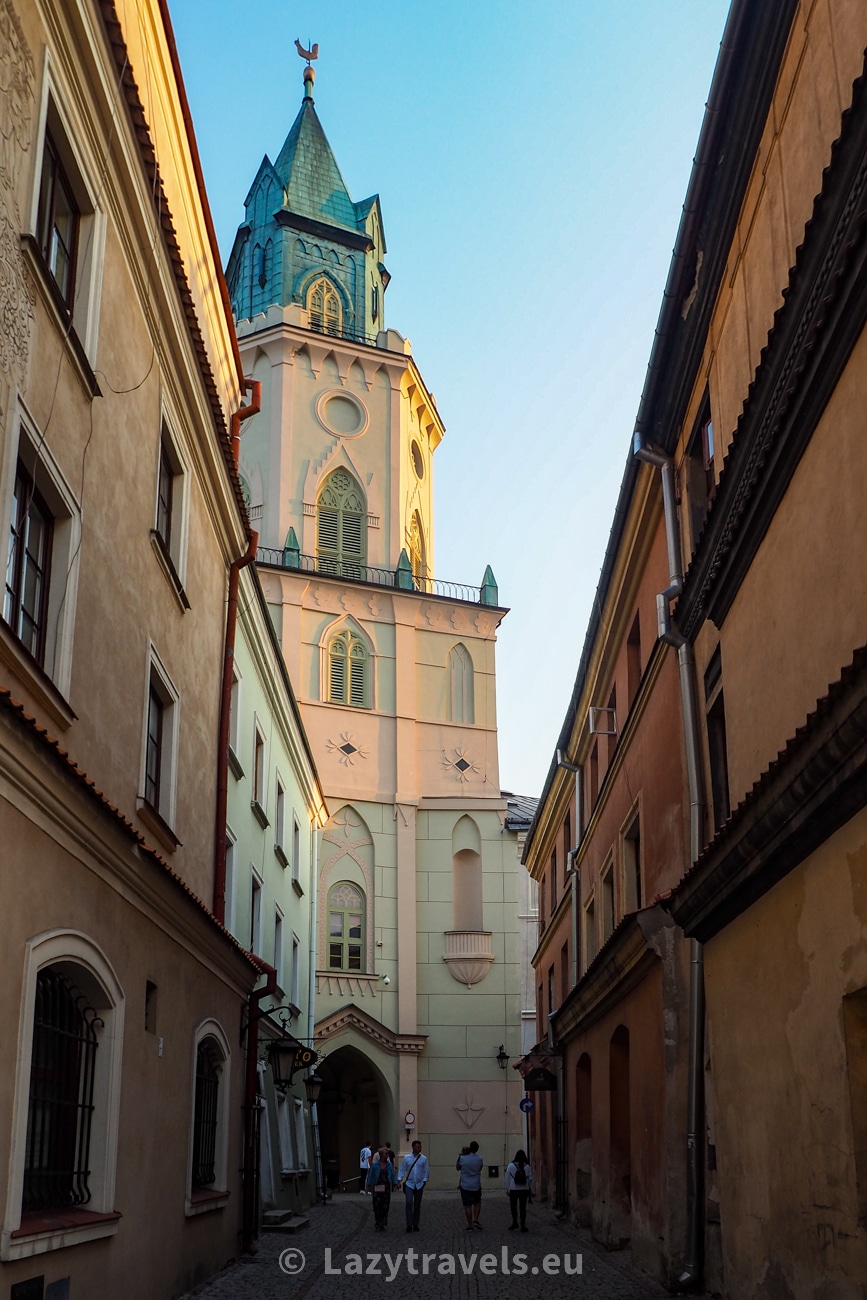
It is worth mentioning that during World War II, the Trinitarian Tower was seriously damaged, but it was rebuilt shortly after the war. The work was completed in 1952 and it is still enjoyed today. It is here that the largest bell in Lublin hangs, which, as is customary for the largest bells, only rings on the most important occasions.
On your way to the viewing platform, you will pass through a rather interesting museum. That is, of course, if you are interested in sacred art.
Center for the Meeting of Cultures
It is an interesting building with an interesting history, because it was built as a result of procrastination. The completion of the “Theater Under Construction,” whose unfinished structure stood here earlier, was postponed for so long that part of the unfinished building had to be demolished. In 2012, construction began on the Center for the Meeting of Cultures, or CSK. The work was completed at the end of 2015.
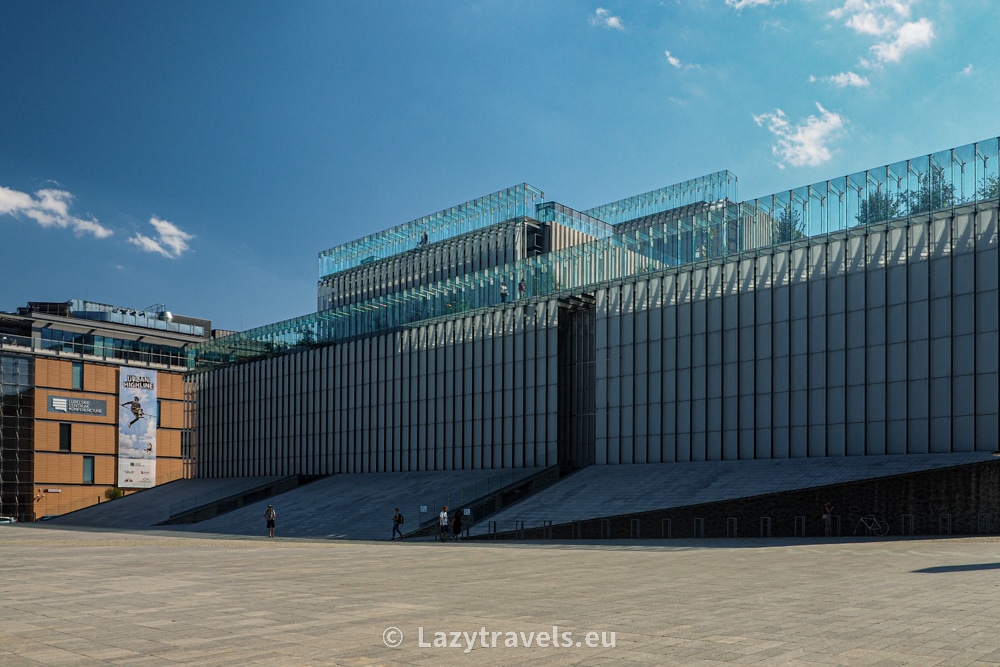
Those who know me know that I don’t like concrete and simply avoid concrete buildings. But the Centre for the Meeting of Cultures has something about it. I like this building. I like it for its glass and concrete curves, for the razor blades on the facade and for the greenery on the roof.
Be sure to go inside and take a walk around. Even if you are not coming to the theater or the concert hall, a walk through the spacious interiors will be interesting.
But the most interesting part is upstairs.
The fourth and fifth floors house gardens and an apiary! Admittedly, in August, when I was visiting Lublin’s attractions, the grass was dry, as were the trees and shrubs. However, it must be beautiful here in spring. Maybe not as beautiful as on the roof of the BUW, i.e., the University of Warsaw Library, but certainly interesting. Although this place in Lublin has an advantage because of the bees that can be observed in the apiary.
And if you are here, don’t forget that one of the best pubs in Lublin is located on the side wall of the CSK. Wielokran Browaru Zakładowego serves many specialties from its own brewery.
A walk around Lublin
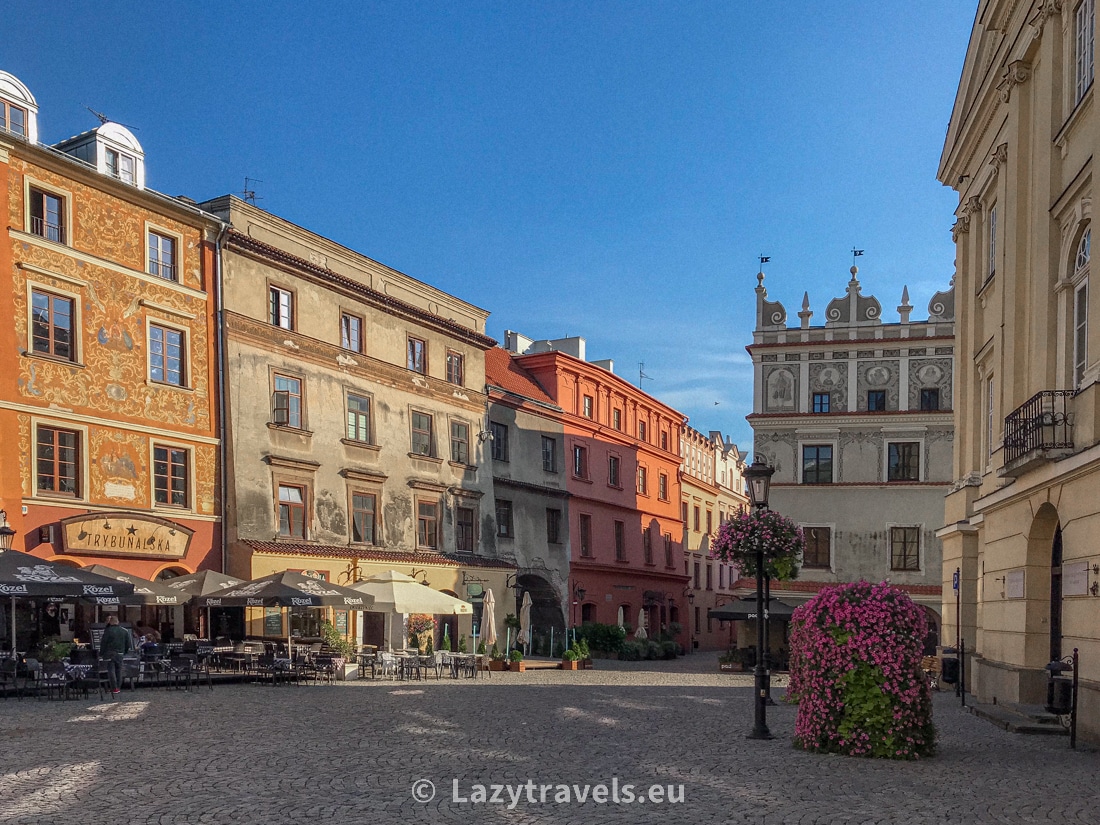
I must admit that although I like people, sometimes my introverted soul speaks up and I like to be alone. Alone with the monuments. That’s why, during my stay in the city, I got up early, around 6 a.m., to see the attractions of Lublin without the crowds of tourists. That is, without visitors like me. The city looks fascinating then. Beautiful colorful tenement houses, still remembering the kings of Poland, are not hidden behind the umbrellas of pubs and restaurants. Well, not all the tenement houses have been renovated, but that’s probably just a matter of time.
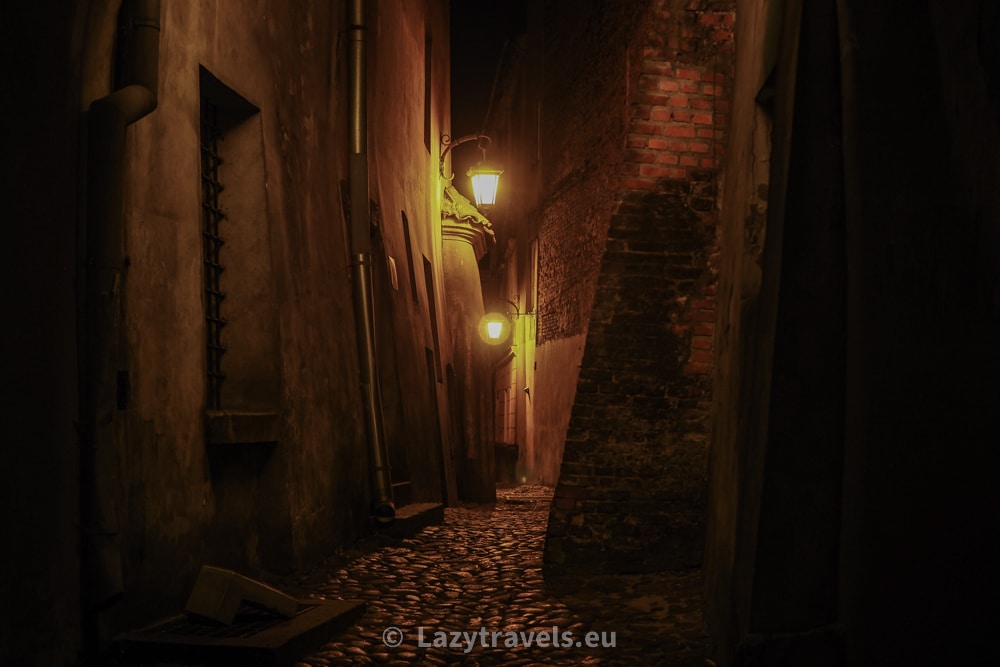
When I went to bed just after midnight, the Market Square in Lublin was bustling with life. The restaurants were packed. In the morning, there is no trace of them, except for the occasional employee rushing to open cafes and restaurants. Rarely, there are those returning from parties that lasted until dawn. That is why I can view the not-so-attractive Crown Tribunal building in peace. This is where the underground tourist route in Lublin begins. But I use the morning to explore the narrow streets intensively. Of course, it is not the most beautiful old town I have seen, but that is only because nothing can compete with Lviv. However, I place Lublin’s Old Town at the top of my list of favorites.
I regret that the Trinitarian Tower is closed and I will not be able to see Lublin from this perspective. However, I can take my time to look at the model of St. Michael’s Church on… Plac po Farze. It is interesting that in Catholic Poland, the temple was in such poor condition that it was decided to demolish it! Today, on Plac po Farze, we can see the outline of the church. Then, I walked through Zaułek Panasa towards Podwale Street and, right next to the market, I reached the Archcathedral and then the Dominican monastery. I took my time, because I had no reason to rush.

I calmly returned to Trybunalska Street, where I stayed at a hotel for the night. An excellent breakfast with a beautiful view of the former Crown Tribunal. The carriage with devils to judge me for my too short stay in Lublin did not arrive at the tribunal. Because the “verdict on Lublin” is fair: the city is absolutely worth visiting for a weekend! I would even add that it could be a long weekend! There are plenty of attractions here
Hotels and accommodation in Lublin
I have always said that, if possible, it is worth staying in the center or right next to it. That is why, during my trip to Lublin, I stayed at Trybunalska. It is both a hotel and a restaurant. It is located on the Market Square, opposite the Tribunal, i.e. the old town hall. The rooms are clean, with a bathroom, at a competitive price. But Lublin is a tourist city, so there are many hostels and hotels here. Cheap and more expensive, and even very expensive ones with a high standard. Everyone will find something to suit their budget. I chose the golden mean. Of course, as always, I warn you that if you book at the last minute, you may not find something reasonable and in the center. That is why I recommend booking in advance, if possible. You can book here, for example.


