Czerwińsk on the Vistula River is one of the small towns that few people have heard of in Poland, let alone abroad. Yet we can see frescoes from the 13th century there. And it was here that Polish knights and troops crossed to one of the greatest battles of the Middle Ages. I mean the Battle of Grunwald. Here’s what to see in Czerwińsk nad Wisłą.
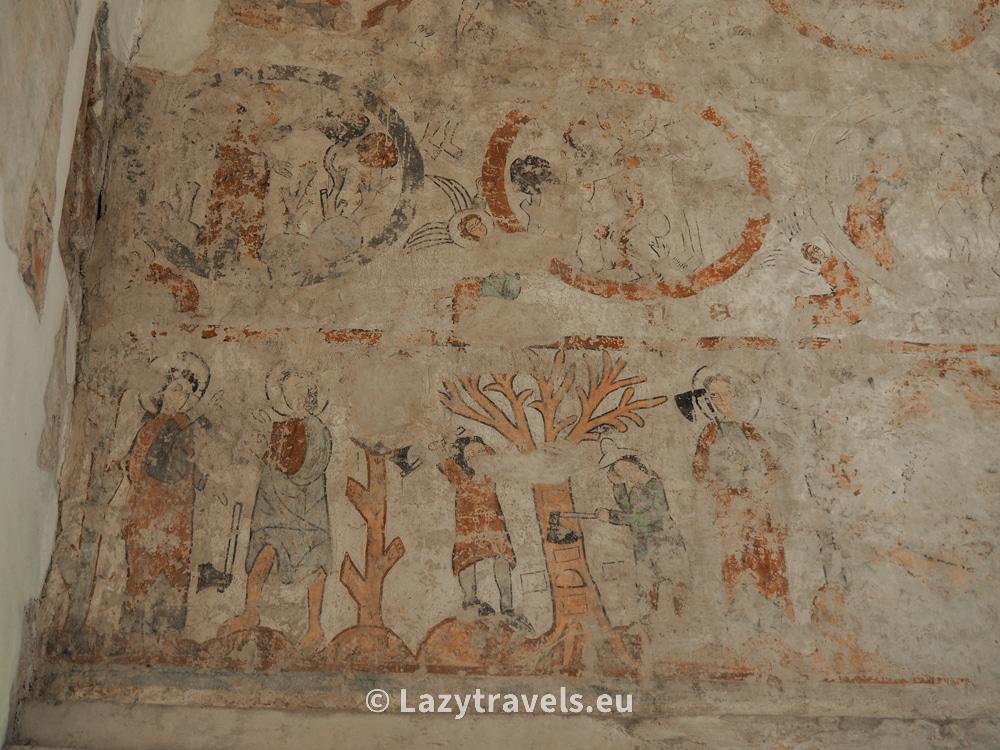
Czerwińsk on the Vistula is not a well-known town in Poland. It’s a pity, because the polychromes in the local church are a unique monument on a national scale. And we probably wouldn’t have won the Battle of Grunwald if it weren’t for one miracle of contemporary engineering thought, which was created right next to the town. Czerwińsk on the Vistula is located about 60 km from Warsaw, but despite such a small distance, there are no crowds of tourists here. Is it due to the poor promotion of the town, or perhaps a lack of interest in history from the two-million city? I cannot judge that. But you should know that the local monastery is unique on a national scale, and there are very few similar places. What is so unusual about it? Above all, the well-preserved 13th-century frescoes. A masterpiece of ancient masters, which has survived to this day beneath layers of subsequent paintings and whitewashing. One could say it is a miracle, as the church has been ravaged by fires.
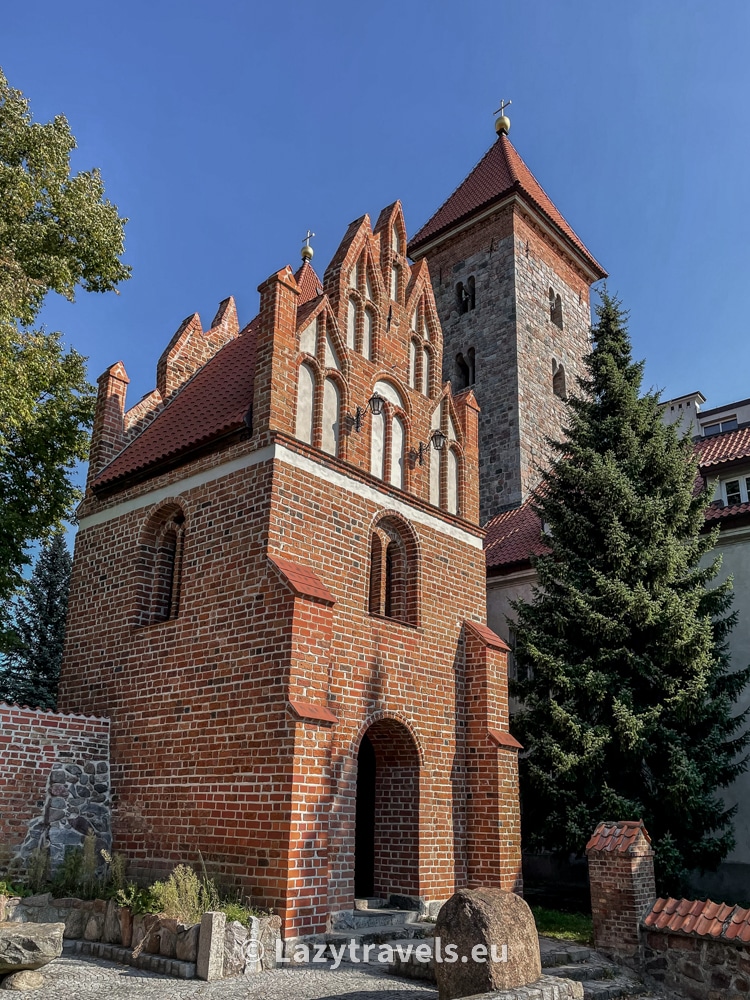
In addition to the monastery and the Romanesque church, it is also worth knowing that on the way to Grunwald, King Władysław Jagiełło crossed the Vistula with his troops in the vicinity of Czerwińsk. And all this happened thanks to a 500-meter crossing built on boats! More on that below.
The Church and Romanesque Polychromes
When I arrived by car in front of the monastery complex, it was already clear that there would be no crowds of tourists. Not that I was complaining. I like to have places all to myself. I was only worried about one thing: whether the interior of the church would be accessible. After all, such a unique site cannot just be open to everyone. And yet it was! I pressed the door handle of the church and entered.
Romanesque Portal
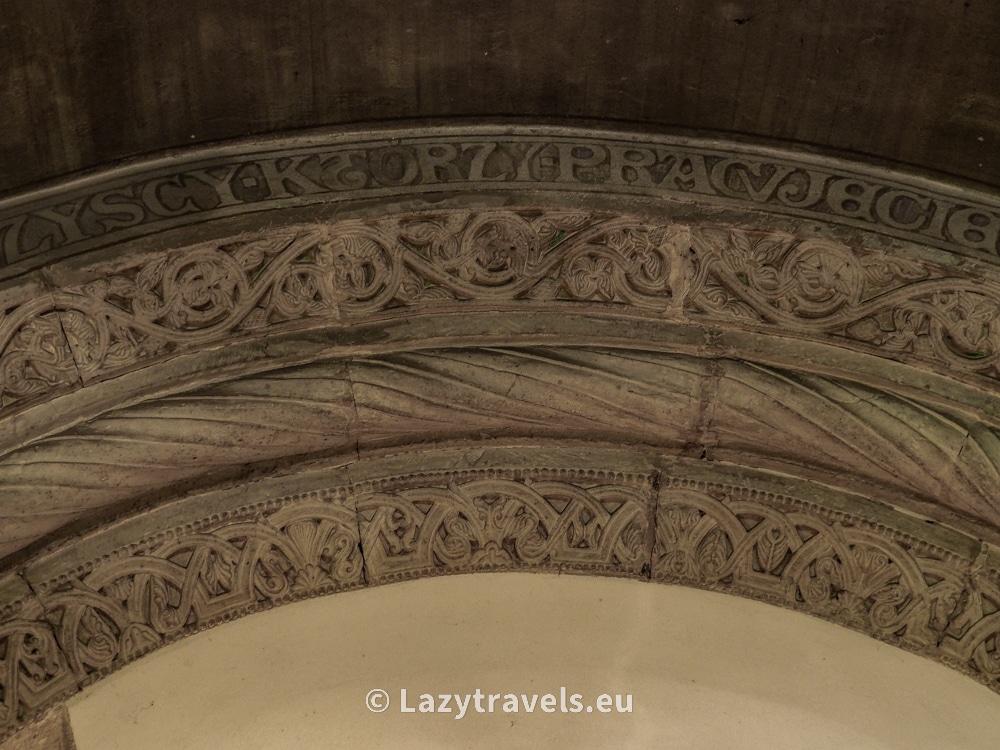
The first surprise is already in the porch, as it is a kind of lapidarium. Here, ancient stone decorations that have beautified the temple for centuries are gathered. Then I headed into the interior of the church. But hold on… not so fast! What is beautiful is visible before leaving the porch. Before me is a late Romanesque stone portal, reconstructed in the early 20th century.
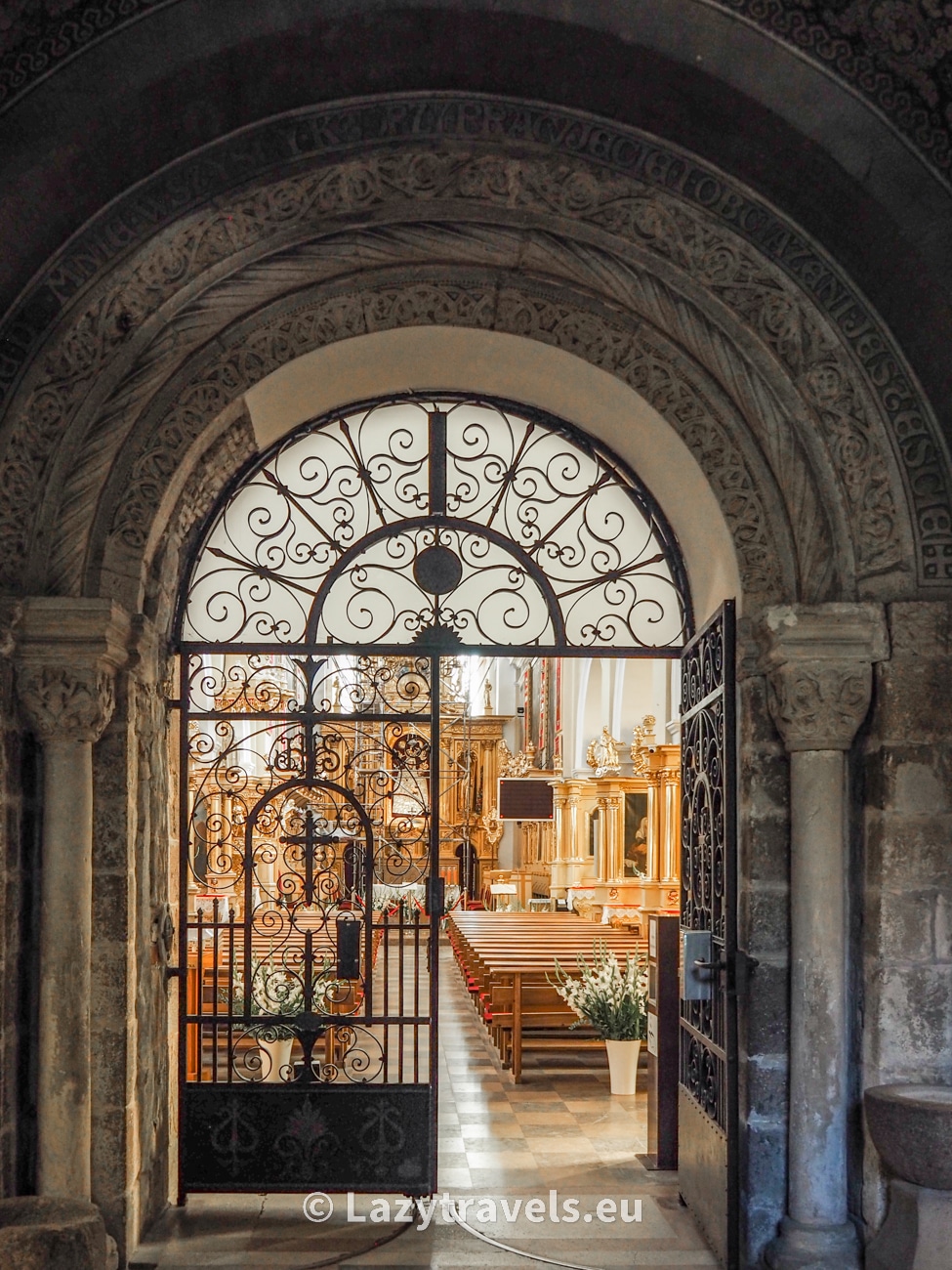
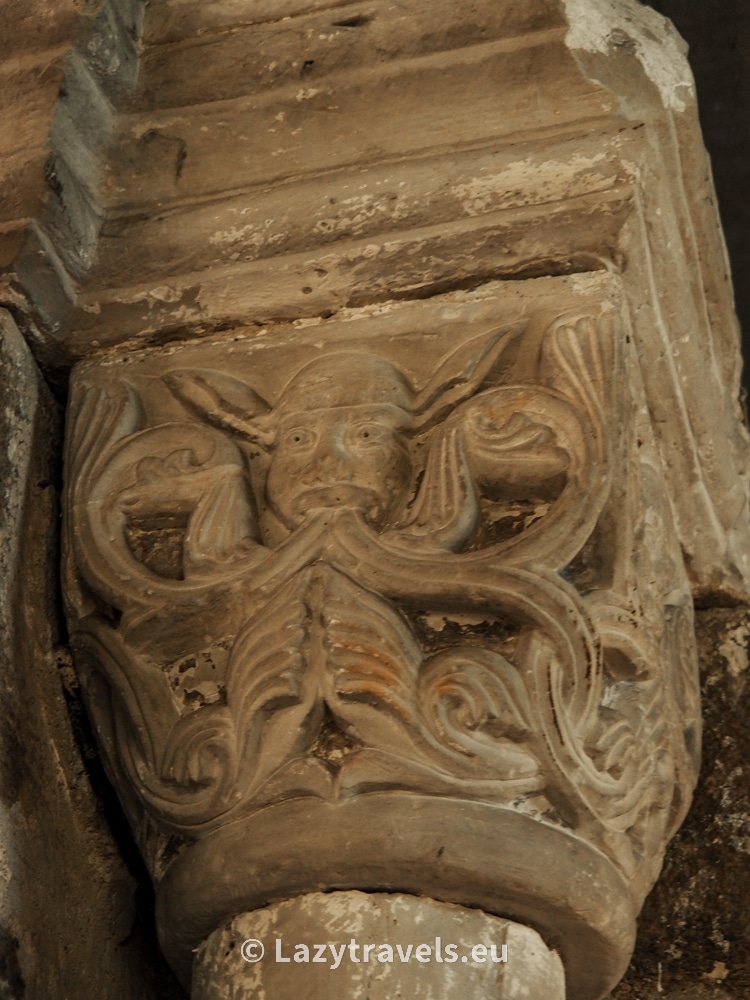
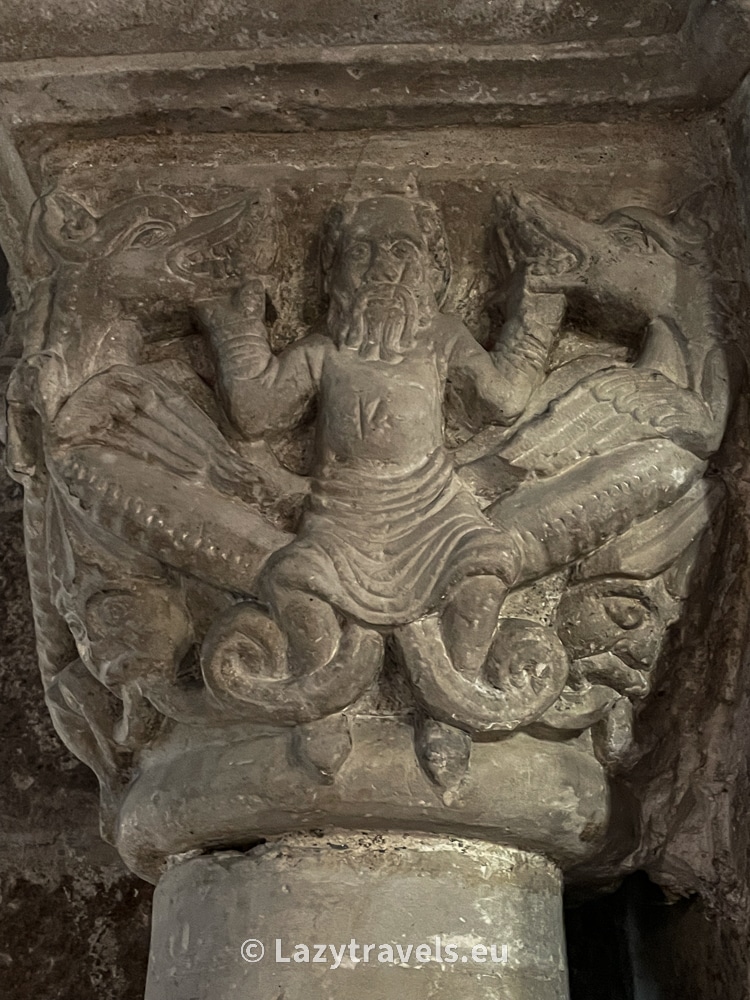
It’s a pity that it hasn’t survived in its entirety, as it must have been spectacular. But even what has survived is impressive. The decorations of the capitals deserve the most attention. On the one on the left, some hero is battling dragons, holding their jaws in his hands. The opposite capital is adorned with the head of a man with donkey ears. The archivolts with vine and cord ornaments are also original, a testament to the craftsmanship of ancient stone masons! The portal was, of course, much richer, but simply did not withstand the test of time. After all, it dates back to the mid-12th century! In the peculiar lapidarium at the entrance, you can see two figures of apostles. They were also originally part of the unique stone portal leading to the Romanesque church in Czerwińsk on the Vistula.
13th century frescoes
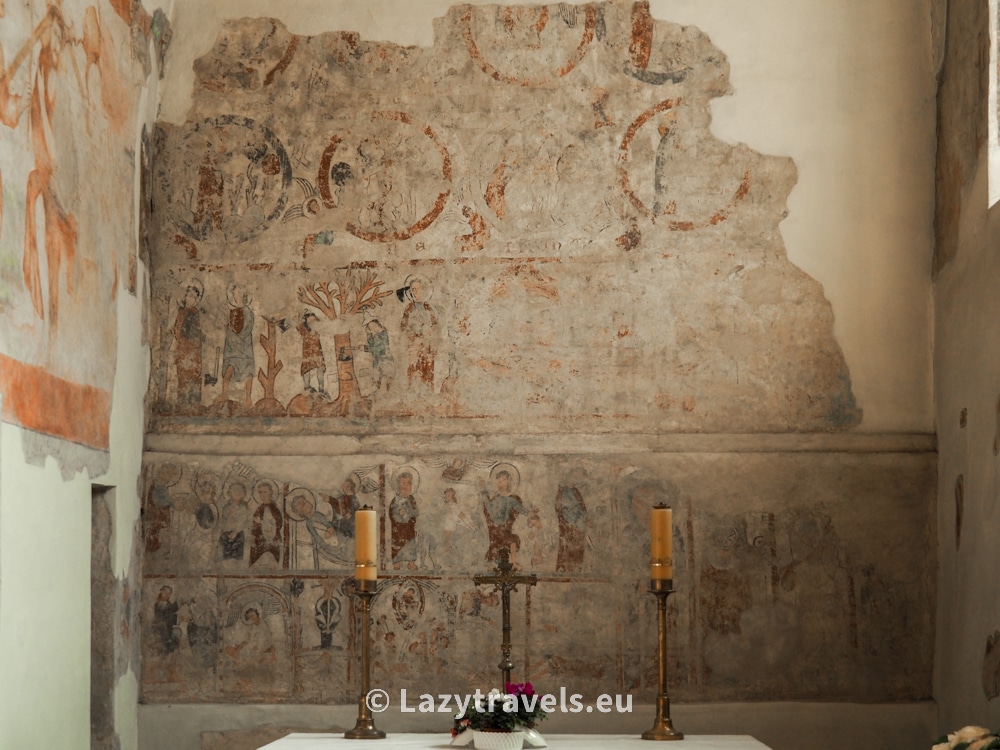
While the stone portal dates back to the 12th century, the next attraction, or rather masterpiece, comes from the 13th century and was only revealed to the light of day in 1951. Previously, it had likely been hidden under subsequent (twelve) layers of whitewashing for hundreds of years. Yes, Professor Karol Dąbrowski, during conservation work in the southern nave, stumbled upon a true rarity.
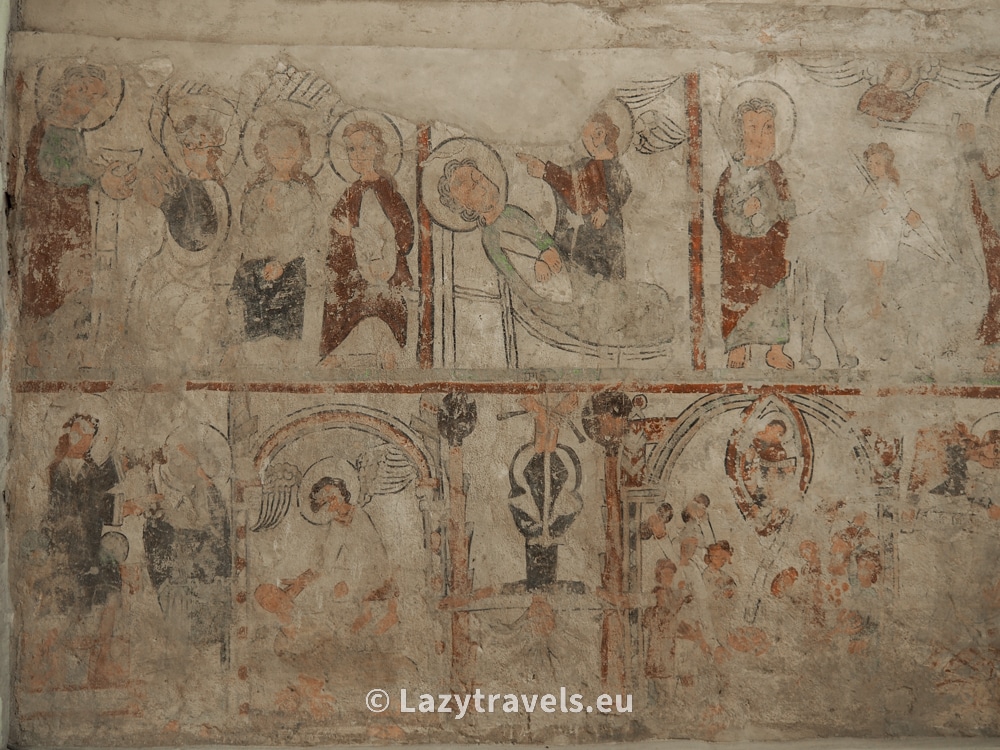
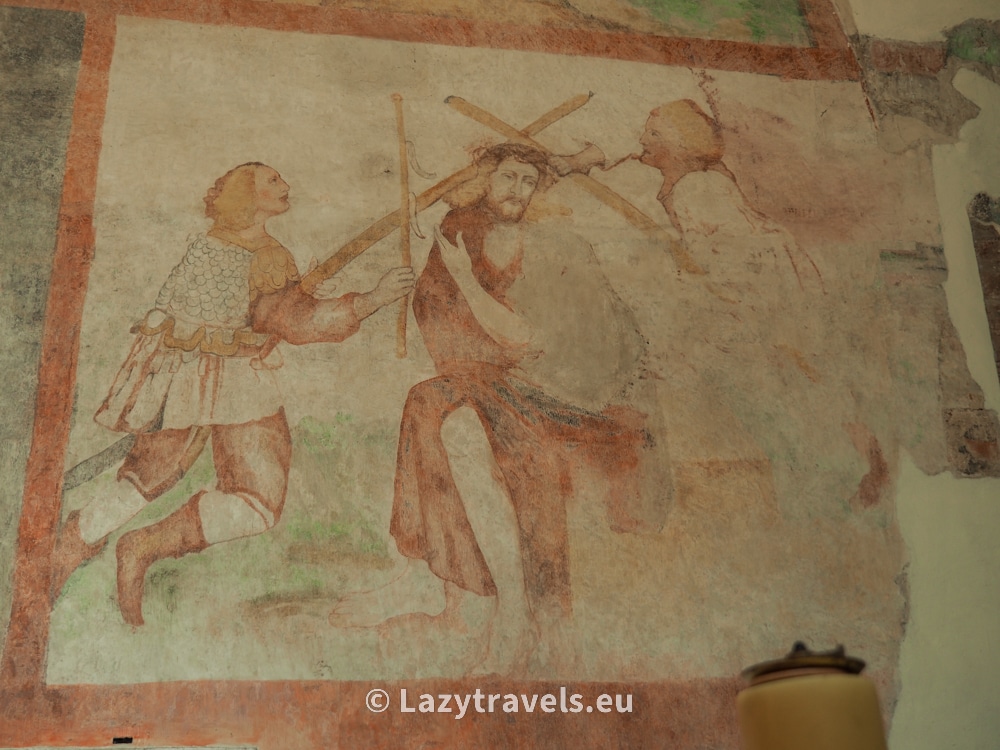
Unfortunately, the frescoes have not survived completely, but to this day, five rows of paintings remain, depicting scenes from the Old Testament. One could say it is a kind of Biblia Pauperum, or Bible for the poor. Since most people were illiterate at that time, stories were presented in pictures. Thus, we see here the creation of the world, original sin, the expulsion from paradise, and the murder of Abel. There is also the construction of Noah’s Ark, as well as the story of Abraham. The last, fifth row of medallions refers to the New Testament, and we see here, among other things, the story of St. Peter and the conversion of Saul.
The Interior of the Temple
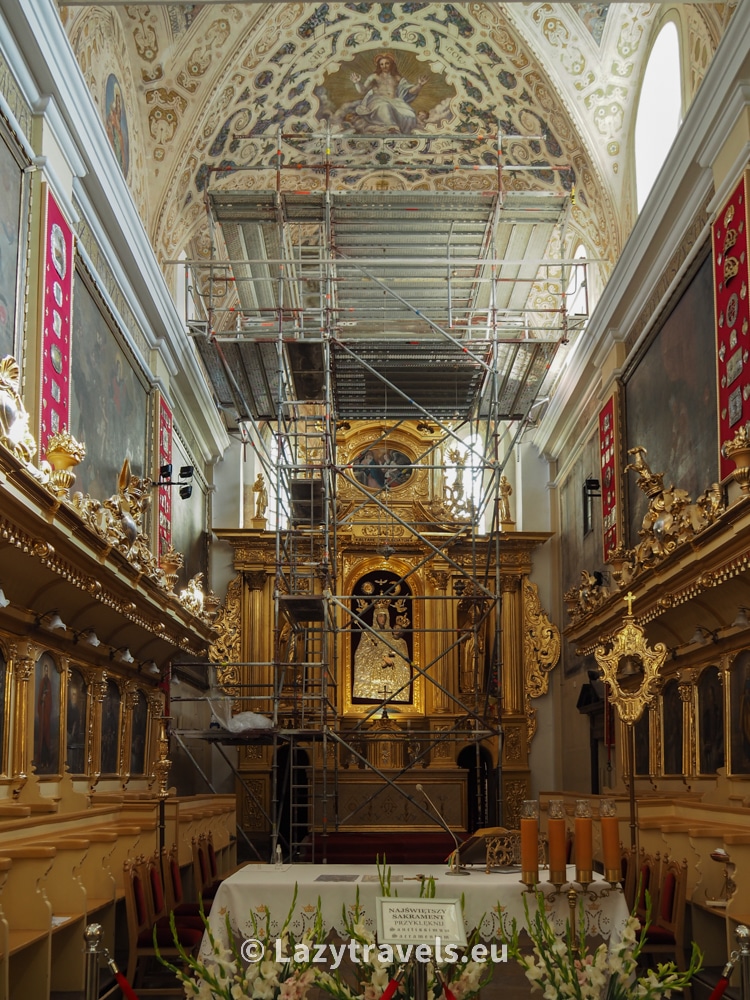
When visiting the Sanctuary of Our Lady of Consolation, it is worth paying attention to the details. Because over 800 years, many changes have been made here, but fortunately, there has also been a thought to show the history. Therefore, not all walls are plastered. Some have been left uncovered, revealing old walls. There are also low doors leading to side rooms, so pay attention to those as well. You can’t miss them.
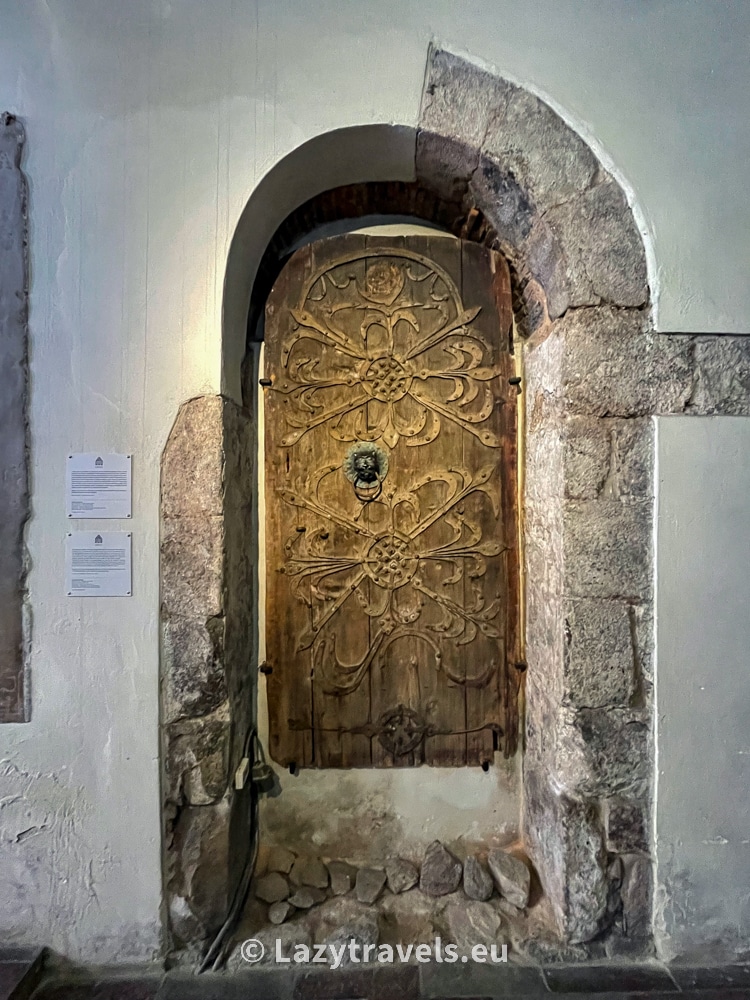
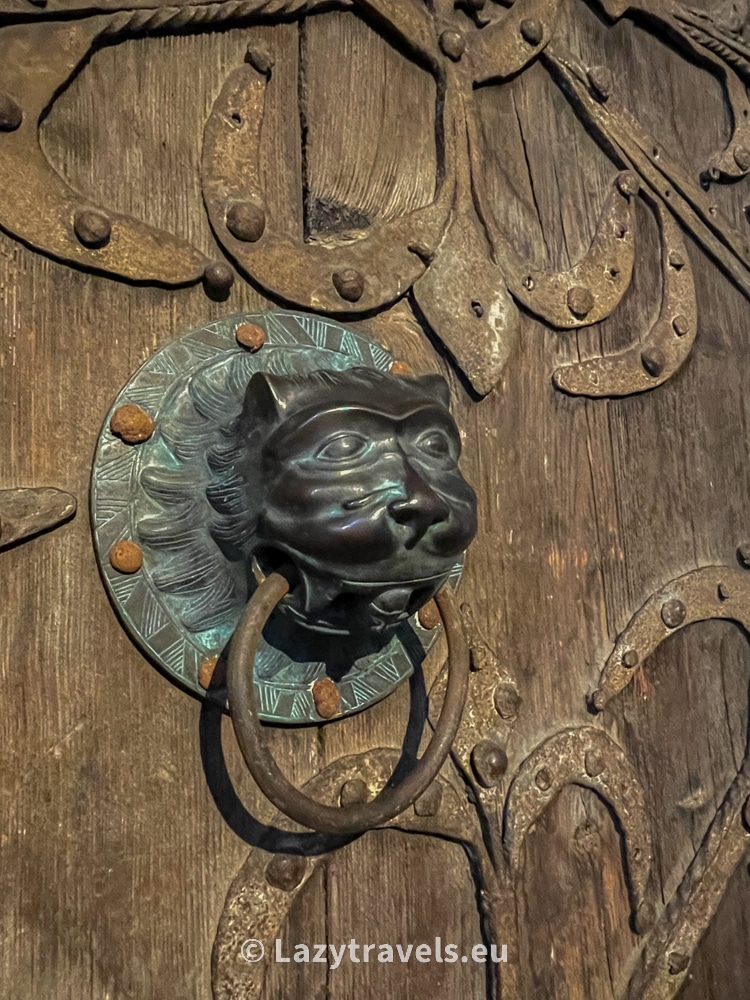
Next to one of those doors, you will see a plaque with information about the visible door handle. If you are wondering what an „antaba” is, I can tell you that it is a decorative handle placed on doors or other objects, such as chests. The antaba on the door also usually serves as a knocker. And what is interesting about this particular one? Well, the one from the church in Czerwińsk nad Wisłą was created at the end of the 12th century and has hung in the same place for centuries. Until 1939, when a piece of scum, namely the German professor Dagobert Frey, stole the antaba, and it disappeared without a trace. So what we see is a replica, meant to prevent the original from being forgotten. Because who knows, maybe somewhere, someday it will miraculously be found?
However, the heart of the temple is the famous miraculous image of Our Lady of Czerwińsk. It is to this image that the faithful pilgrimage, hoping to receive graces or simply counting on a miracle. The work dates back to 1612 and was created by, or rather painted by, Łukasz from Łowicz. It is a replica of the image of Our Lady of Consolation from the Roman basilica of Santa Maria Maggiore. The person who contributed the most to the fame of the image was King Władysław IV, who in 1647 asked Mary for health. And since a miracle occurred, the news spread throughout Poland. Since the king received the grace of healing, why shouldn’t the community also receive healings?
The medieval bridge on floating boats
However, if you are not particularly interested in architecture and centuries-old frescoes, there is another curiosity related to Czerwińsk nad Wisłą. In the winter of 1409/1410, a loud sound of axes echoed over the Kozienice Forest. It was the lumberjacks cutting down old oaks and other trees to prepare them for a miracle of contemporary engineering. King Władysław Jagiełło was thinking very long-term and strategically. And it is well known that in waging war, logistics is the most important thing.
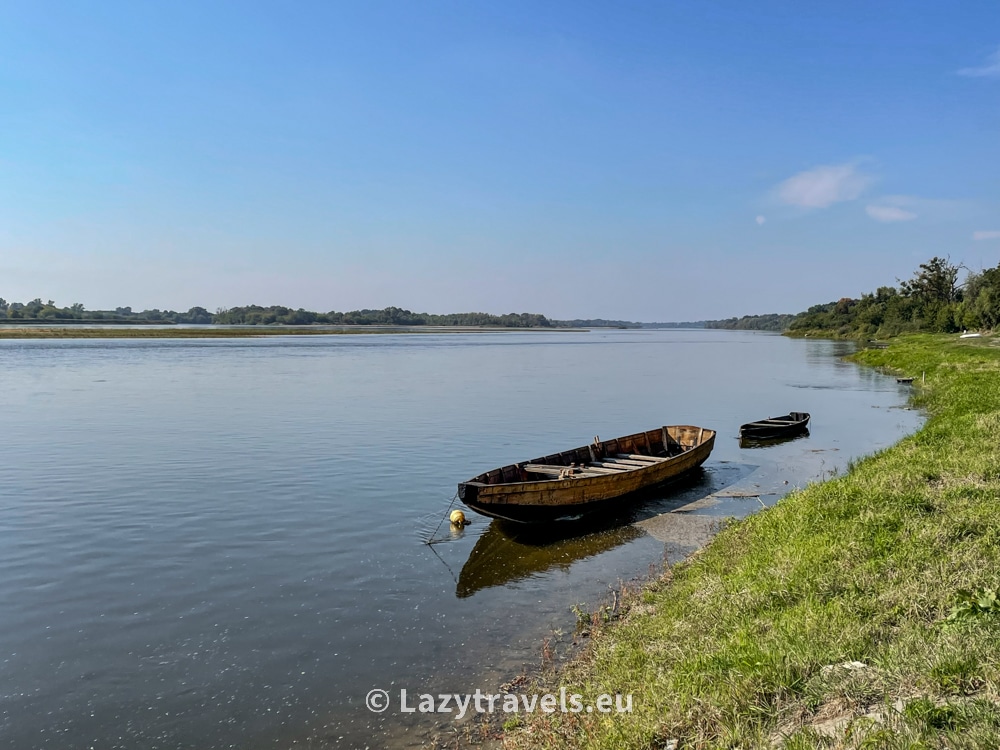
Therefore, preparing for a great war with the Teutonic Order and all its might, the Polish king thought of everything. Above all, how to get to the Teutonic lands and surprise the enemy. Everyone knew where the fords on the rivers were at that time, and those places were easy to observe. The Teutonic Knights knew this all too well, so they set up strong garrisons in those fortresses that would be on the potential path of the royal troops. However, it turned out that Jagiełło was smarter than the Teutonic Knights thought.
He trusted his men, who assured him that they would prepare a bridge over the Vistula, which would shorten the route to Malbork and surprise the Teutonic forces. And you know what? Just as they thought, it happened! On June 29, 1410, boats and necessary materials were floated from Kozienice to the vicinity of Czerwińsk, and in just half a day, a bridge was assembled. Can you imagine what a perfectly rehearsed maneuver it must have been to accomplish it in half a day?
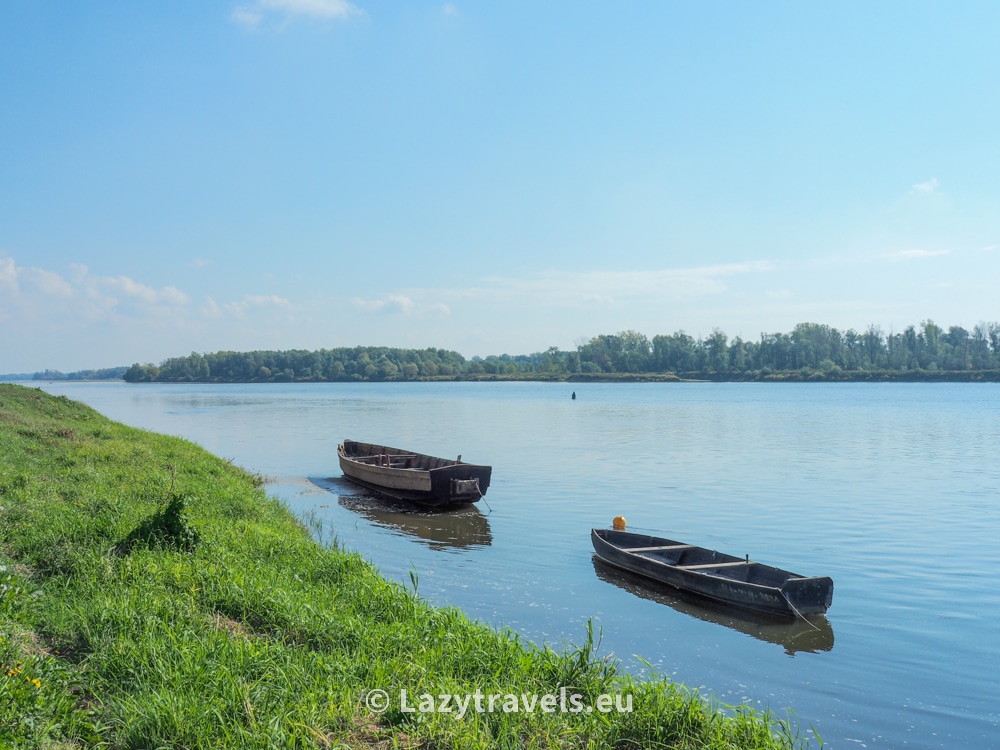
What it looked like exactly is unknown today. There is no certainty about how many specific elements and boats it consisted of, nor what its width was. All we know are assumptions. Therefore, the following data surely differs from reality, but probably not significantly. The ice bridge (for that is its name) was about 500 meters long. It was built on about 200 boats on which approximately 500 nine-meter beams and 2500 three-and-a-half-meter boards were laid. The boats were probably connected beforehand, and they were floated to Czerwińsk in the form of ready-made spans, which were then quickly connected. Finally, to prevent the bridge from being slippery, it was covered with fascines, which is a mixture of earth and various branches and brushwood.
A significant part of the Polish army crossed such a structure. What those forces were, there is no certainty, but estimates suggest that the army could have numbered around 18,000 cavalry, 4,000 infantry, 30 cannons, and several thousand wagons along with camp followers. The crossing of this mass of troops took only three days. Interestingly, it is said that during the crossing, no one was harmed. This is claimed by the chronicler Jan Długosz. And that would mean that despite the lack of railings, no one fell into the water in armor. It is evident that an incredible order was maintained during the crossing.
And what happened to the bridge after the last soldier crossed? The bridge was dismantled and its parts were floated down the Vistula towards Płock, where it was reassembled when the victorious Polish army was returning from Malbork. Unfortunately, they did not capture it. It is worth mentioning, however, that on returning from the battle, King Władysław Jagiełło appeared again at the monastery in Czerwińsk to offer a votive thanks for the victorious battle. This is how the royal helmet ended up in the monastery’s treasury.
A walk through Czerwińsk nad Wisłą.
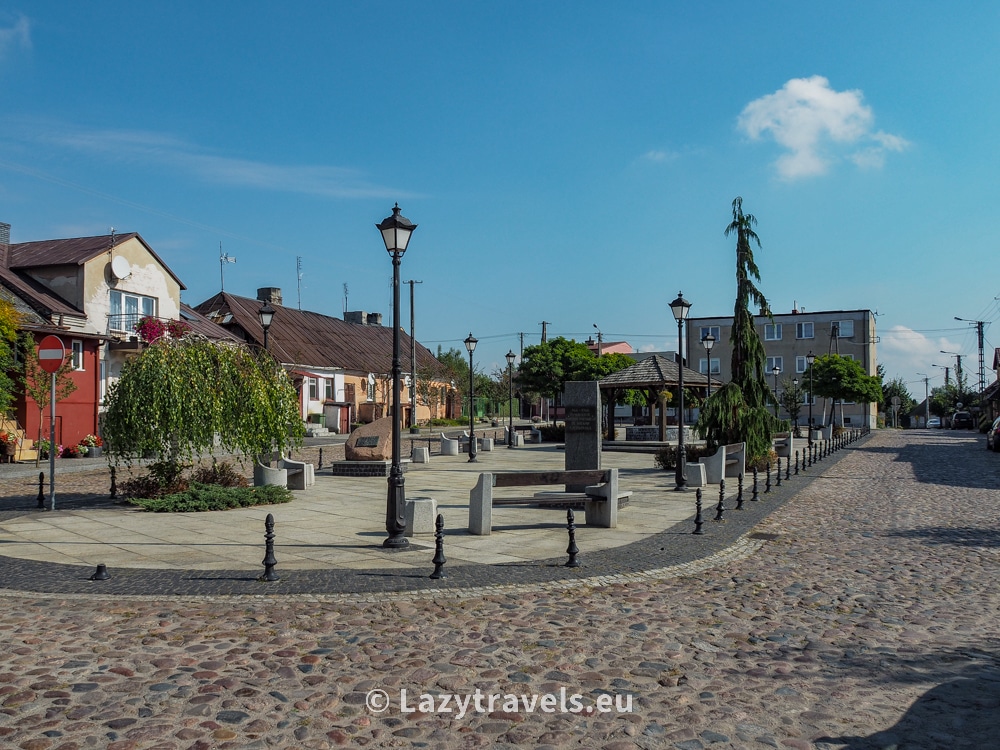
I must admit that after visiting the monastery, I headed towards the center of Czerwińsk. I even managed to park my car in a side street and went to explore. I entered the local market square and, well, there aren’t any spectacular attractions here. Although the wooden house from the mid-19th century certainly makes an impression. Very few such architecture has survived in villages and towns. Usually, we can see them in open-air museums, like the nearby Mazovian Village Museum in Sierpc or, for example, in the more distant Tokarnia. In Czerwińsk on the Vistula, such a house stands right on the market square. The square, which is indeed deserted, is quite nice.
And to be honest, I recommend a visit to this town. It is an excellent stop for a day trip to see attractions near Warsaw. Afterwards, you can go to Żelazowa Wola and see the house where Fryderyk Chopin was born. You can also visit the defensive church where this outstanding Polish composer was baptized.