Tarnow is one of those cities where you arrive knowing little about it and soak it in. The city absorbs you, its history, the look of its atmosphere…. I invite you for a walk to show you what attractions Tarnów has. And history.
Tarnów is too close to Krakow and this is its curse. But hopefully this disadvantage will soon become an advantage. After all, to get to Tarnów and see what attractions it has, you only need an hour’s train ride from the capital of Malopolska. Besides, for the time being, I don’t think much has been put into promoting the city yet, as this is a job for years. But the potential is so great that it’s a matter of time when crowds of tourists will start coming here. Anyway, this year (2021) Tarnow was awarded one of the most beautiful cities in Europe according to CNN Travel. Ok, I consider most such awards to be (pardon my French), out of my ass, but because people read it, the promotion is huge. And Tarnow deserves the distinction.
Tarnów. Why it’s worth it
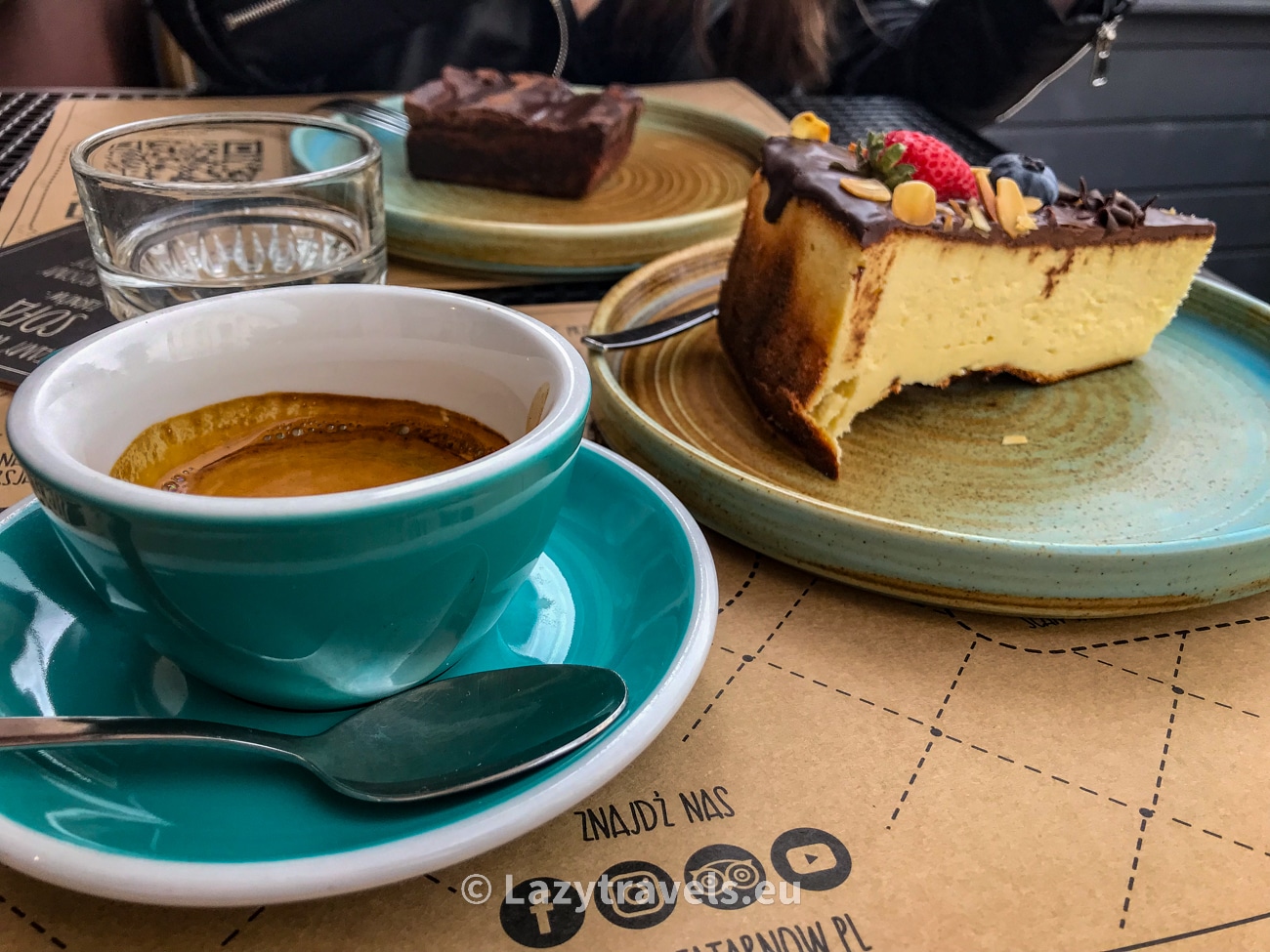
- Because the Sofa cafe is excellent and for it I returned here a second time
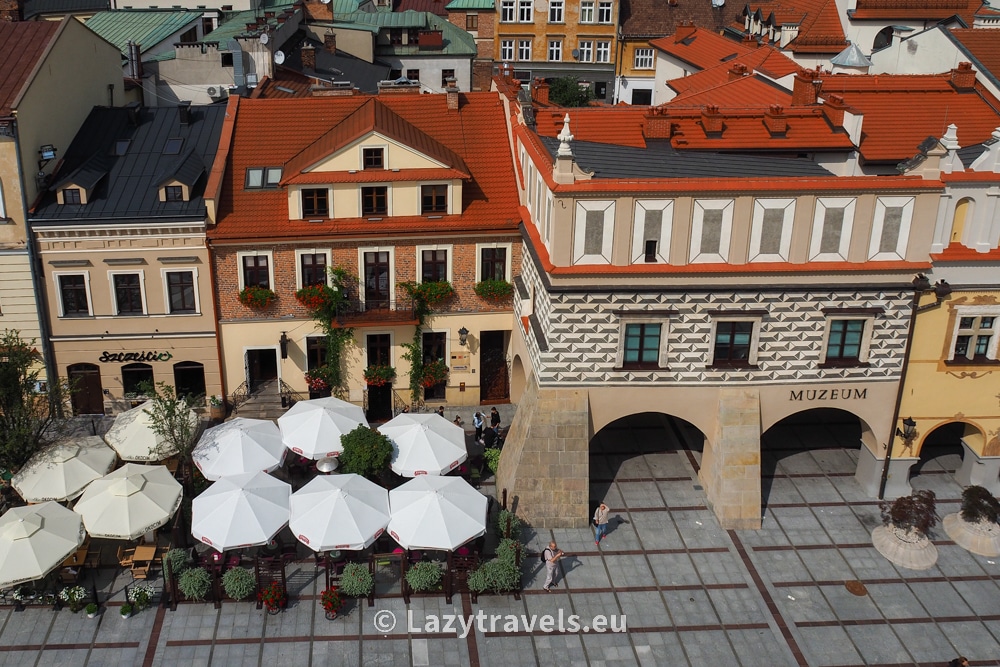
- it has a beautiful Renaissance market square with arcades, and pubs on it
- because the market square has a beautiful Renaissance town hall
- on the town hall still works a clock hand winding since the 17th century
- there is one of the largest Jewish cemeteries with beautiful matzevot
- Jozef Bem was born here, and is a somewhat forgotten Polish hero
- the city can be visited in one day
- there are preserved medieval relics like the city walls and tenement houses
- is the Polish pole of warmth. The growing season here lasts 220 days
All the above are mixed together in the right proportions. All this makes the city sightseeing very pleasant and fast. By dosing yourself with attractions and interrupting them with pleasures for body and soul, such as food and coffee. And while we’re on the subject of coffee, the year before, walking down Walowa Street, I stopped by the Sofa café. I ordered a double espresso and a cheesecake. For that taste, I returned a year later. Seriously!
But now I invite you to take a walk through the tourist attractions of Tarnów. And at the end of the article a few words about what else to see in the area. Yes about 50 km.
Market Square and Town Hall in Tarnów
Today it is difficult to imagine what the central square of the city might have looked like in the early days of Tarnow. After all, Tarnów wasn’t built right away, and what we see today is the result of evolution over the centuries. This is because initially the houses surrounding the square were wooden. However, due to the numerous fires that haunted the city at the end of the 15th century, the then owner of the city, Jan Amor Tarnowski (Tarnów, I remind you, was a private city), did everything he could to secure his property. Using prohibitions, orders and privileges, he made sure that the houses that were rebuilt, were already built of durable materials.
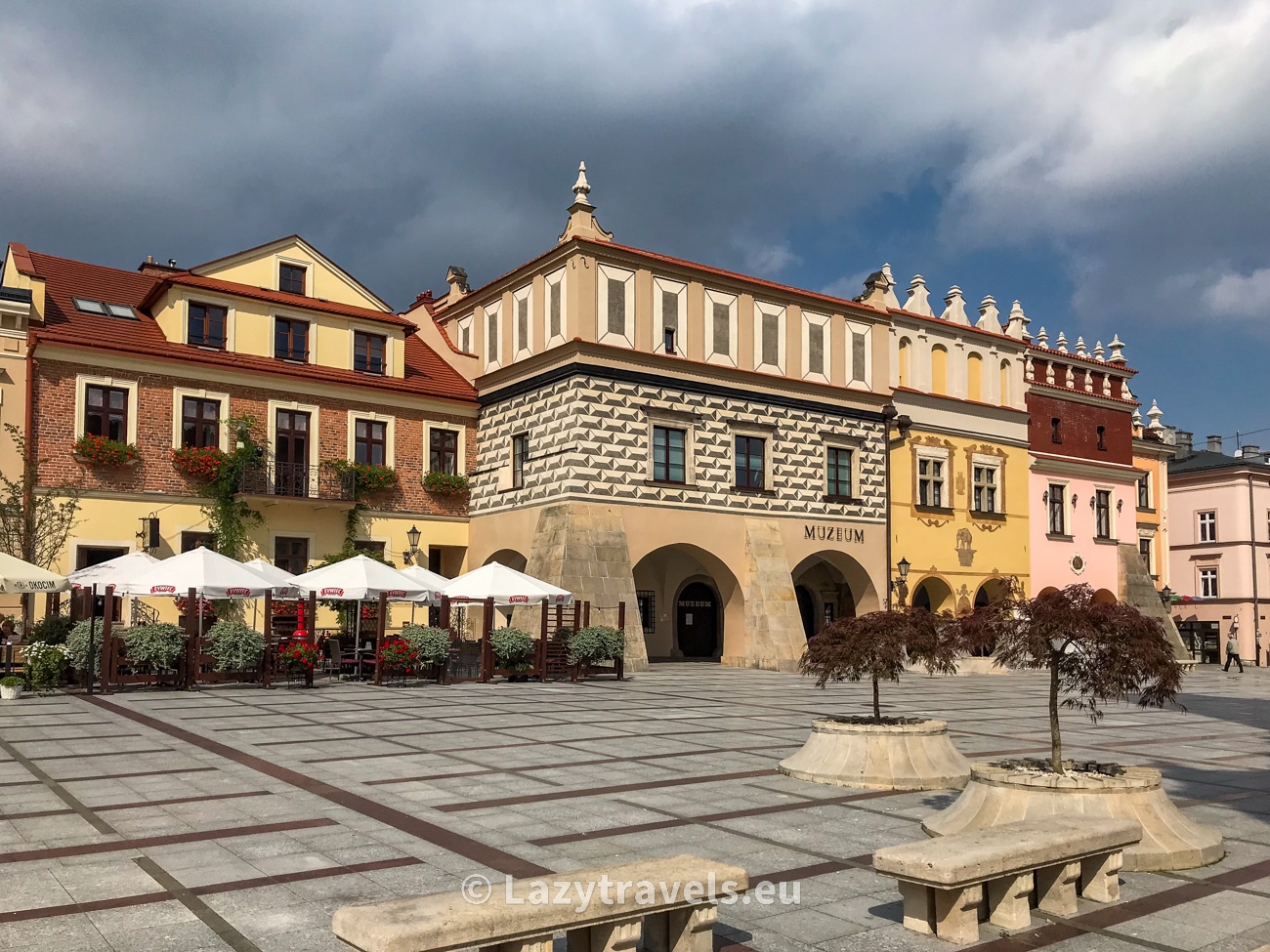
Thus, slowly, buildings began to emerge that may have been altered, but have survived to the present day. It was then that ornate townhouses with representative fronts and arcades were built. And arcades are very useful during heavy rainstorms – in peace and quiet you can conduct trade in them and strike other business.
City Hall – the jewel of the Renaissance
But as the market square is usually the center of the city, so decisions are usually made in the city hall. The Tarnów one is considered one of the most beautiful in Poland today. Admittedly, for me its shape resembles the one in Sandomierz, and differs mainly in the tower. What I like most about the whole building is the richly decorated entrance portal. Although also pay attention to the tower clock. Behold, the clock has existed here since the 17th century, and day after day it is manually wound by a city hall employee. The building itself is 18 meters high, and the tower rises 30 meters above the ground.
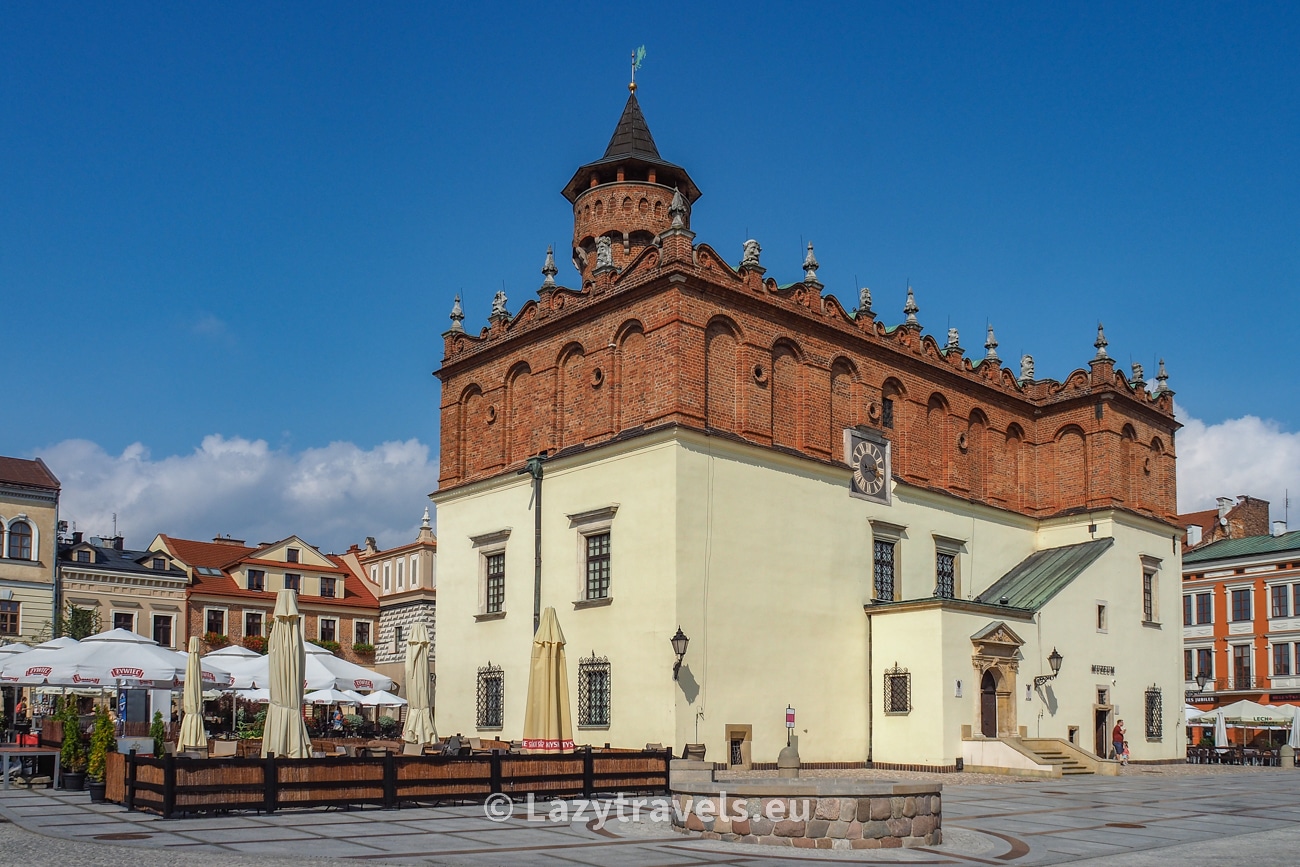
An interesting feature is the pit you can see on the side opposite the entrance. It is a starvation pit, or simply a prison. The unfortunate were thrown into it and held until, for example, the family failed to settle debts. I wonder what the survival rate was in such a place….
The interior of the city hall
Today from the city hall is no longer in charge of the city, but you can visit its interiors. And believe me, it’s worth it! Although while the exhibitions of militaria from the first floor did not impress me, the floor, it’s a different world! I invite you to visit the Hall of the Common!
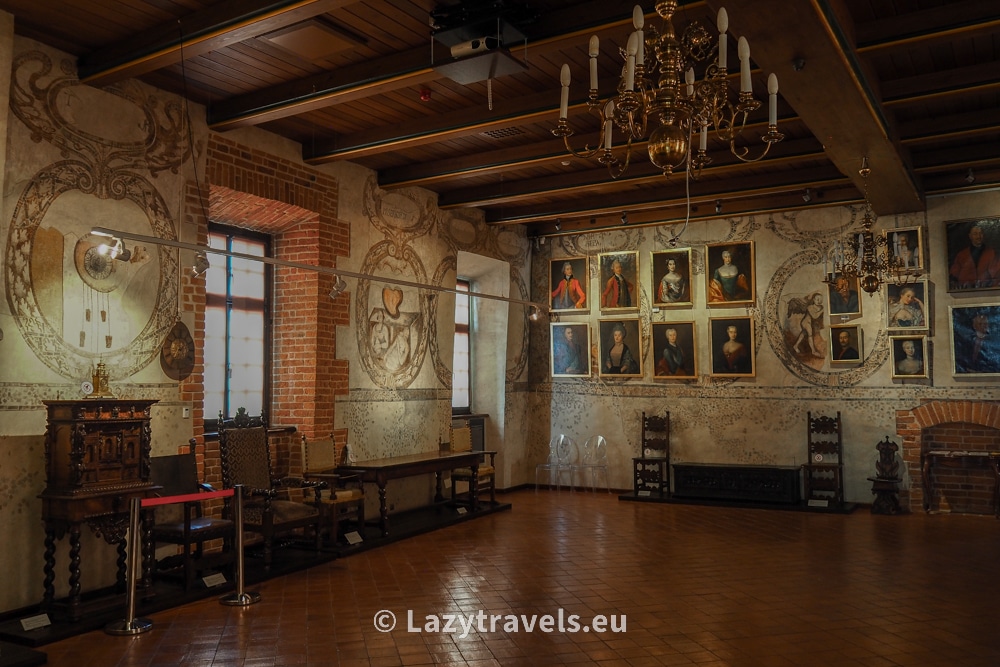
The Hall of the Commoners an interesting name, isn’t it? And it derives from the fact that here important and most important scenes in the life of the city took place. Here, for example, city councilors were elected and sworn in. Therefore, in such an important place, care was taken with the decor. The polychromes and ornaments we see here were probably created in 1646-1652. But how long they pleased the eye before they were plastered, we do not know. You can read on the information board that they were probably plastered after the fire of the town hall in 1663.
In any case, only some of the old ornaments have survived to this day, and anyway, what we see is a reconstruction that was painstakingly restored after what is under the plaster was examined in 1959.
Today, in addition to the decorative walls, there is old furniture such as dressers and chairs. And an additional decoration is an exhibition of Sarmatian paintings – the Sarmatian Portrait Gallery. You know, noble men with sumptuous mustaches with a serious look.
The proverbial frosting on the cake is the opportunity to climb the City Hall tower. After climbing the narrow balcony that circles the structure, you can see the panorama of Tarnów. Is it worth it? And that’s up to you, what kind of views you like. I like different perspectives, so I don’t regret it. Anyway, see the photo for yourself.
Tramway – a marvel of technology in the city
Tarnów was the third city in former Galicia to have a streetcar line. The other two, as you can easily guess, were nearby Krakow and more distant Lviv. The ceremonial opening of the 2,580-meter-long route took place on September 25, 1911. The line was permanently served by five cars, while three stood in reserve at the depot. Streetcars ran every six minutes from 6 am until 10 pm at night. Tickets were unfortunately expensive, as they cost 20 gr. per adult, while youngsters were charged 10 gr. per ride.
The only problem was that the investment was loss-making and the city bailed it out year after year with a subsidy. The occupation authorities of the Third Reich put an end to the line served by red depots called ladybugs by Tarnów residents at the time. The line interfered with troop movements, so the traction was dismantled. And so, after 31 years of operation, Tarnów said goodbye to streetcars.
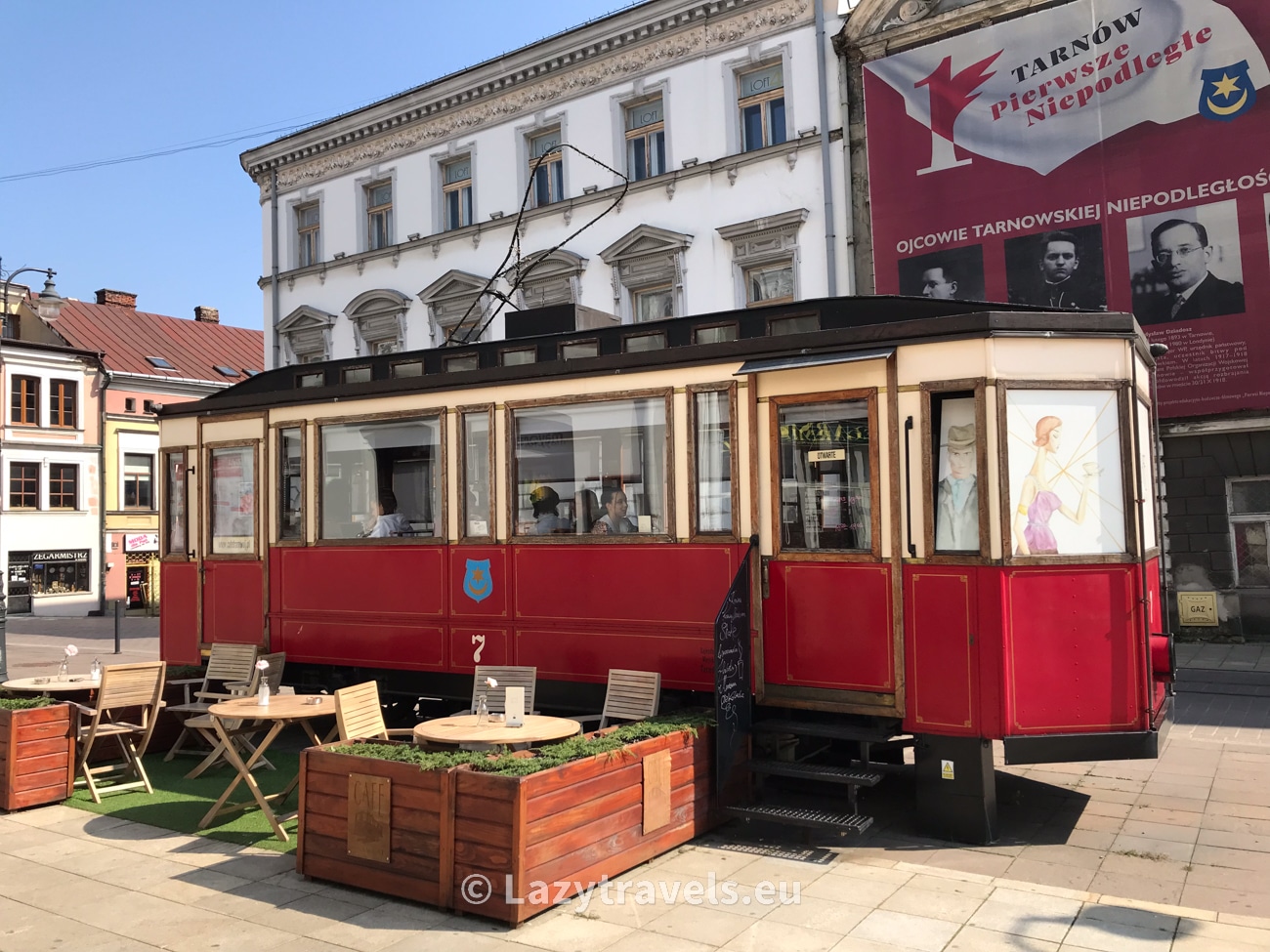
Today, the fact that streetcars ran here 80 years ago is reminded by a streetcar restored by enthusiasts, which houses a café. Unfortunately, I won’t tell you whether they serve good or bad coffee here. I just haven’t drunk it 🙂 But you can let me know in the comments if you have drunk it.
Wałowa Street. A beautiful promenade
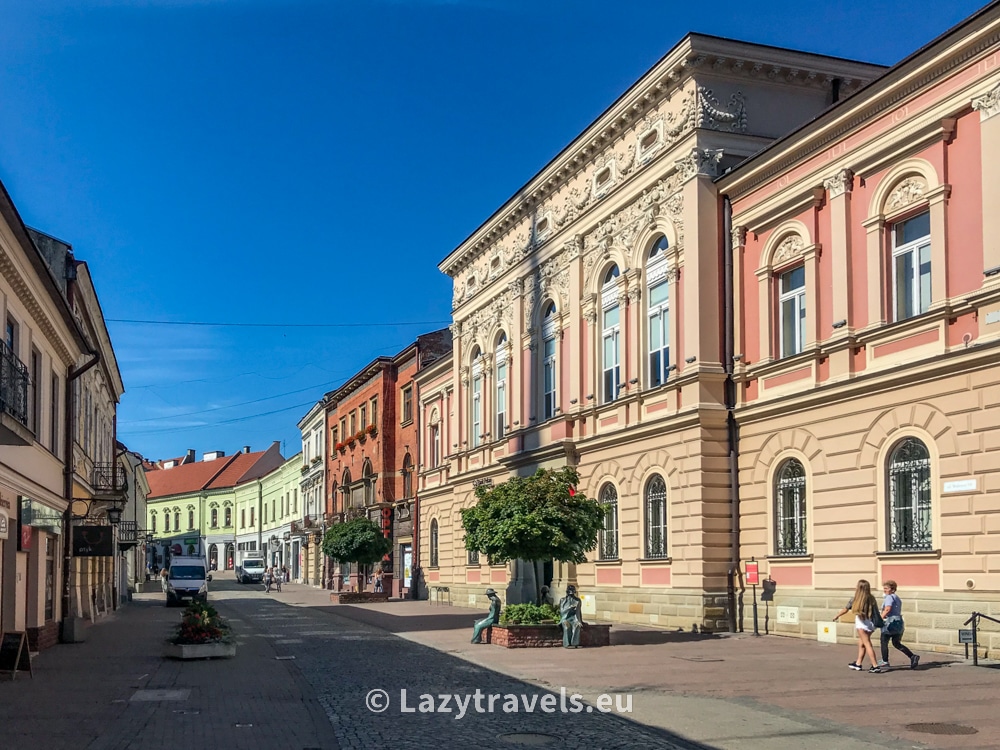
Admittedly, in Poland the word “deptak” means a place where there are fewer cars, not a place where there are only pedestrians who “tramp” down the street. Unfortunately, however, on Walowa Street, which is a promenade in name and is really beautiful, one has to watch to see if a car slowly drives by. This spoils gently the perception of the street, but does not take anything away from its beauty. Although without cars it looks lovely.
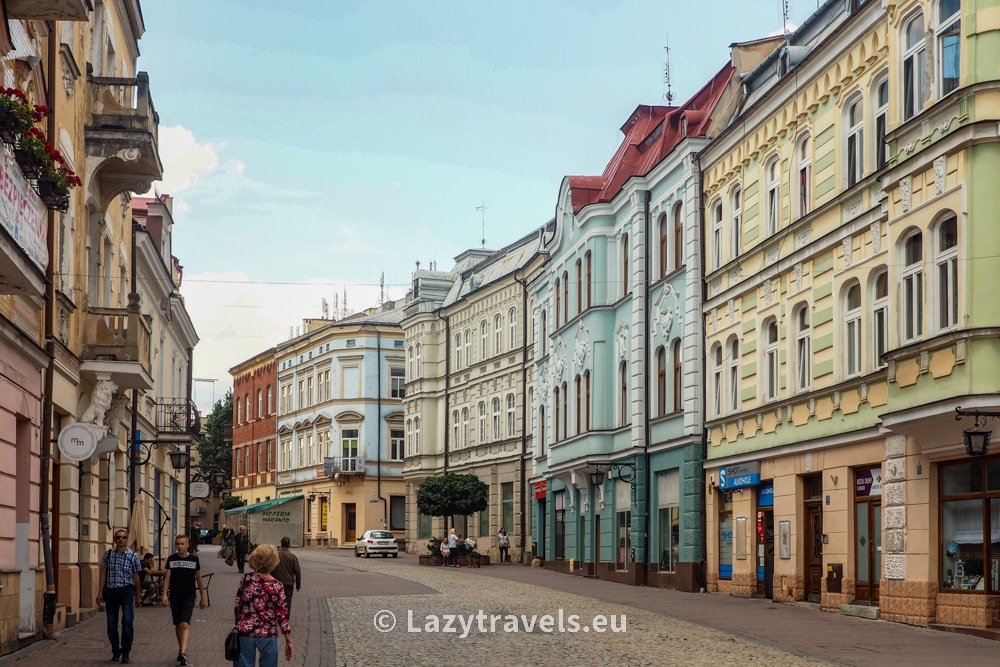
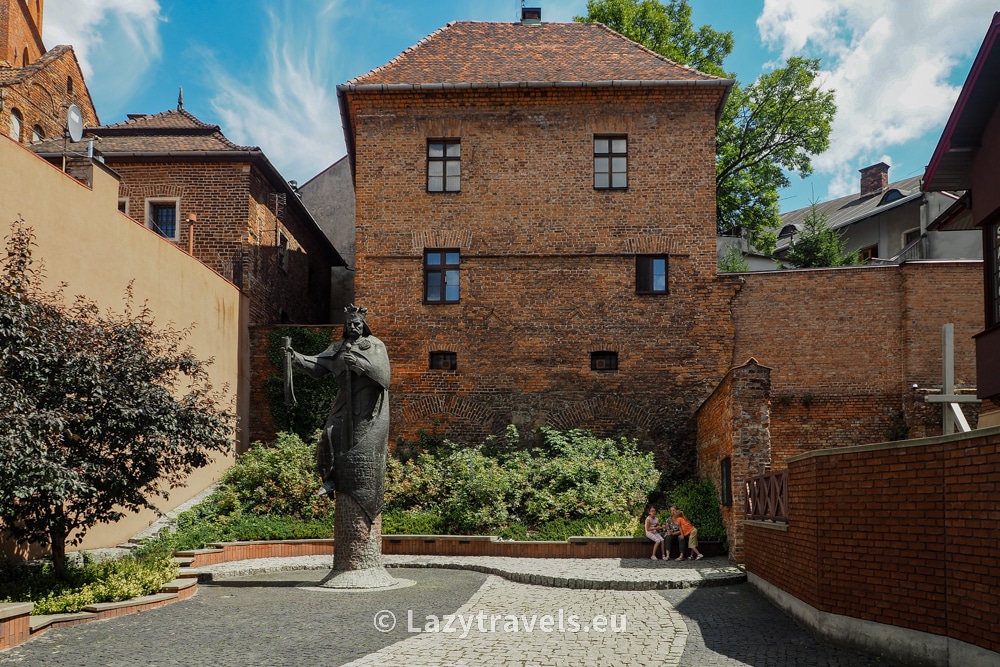
Walowa Street, as the name already suggests, was created along the decommissioned ramparts of the city. Fortunately, liquidated only in part, because walking along the street, you can still encounter fragments of the city walls with towers. This is the case, for example, in Lokietek’s Alley. First of all, there is a monument to this Polish king, and it is here because it was he who issued the deed of incorporation of Tarnów on March 7, 1330. And we can read a photo of this deed in the original and in translation on the information board.
It’s also worthwhile to look under your feet while walking along Walowa Street. In a certain place you will see two black lines, cutting off from the cobblestones. This is a symbolic reminder of the already described streetcar line. There is also a symbolic streetcar stop that once existed here. From it we will learn details about the streetcars that ran in Tarnow.
Right next to this place stands perhaps the most representative building on the street that is the local wedding hall with the Hall of Mirrors. Concerts and exhibitions are also held here. The building can be freely admired while sitting in the garden of my beloved Sofa cafe. Yes, I know, I have a weakness for it 🙂 Oh, walking down the street, look if sometimes there is an ajar door to any of the houses, the staircases here can have beautiful floors!
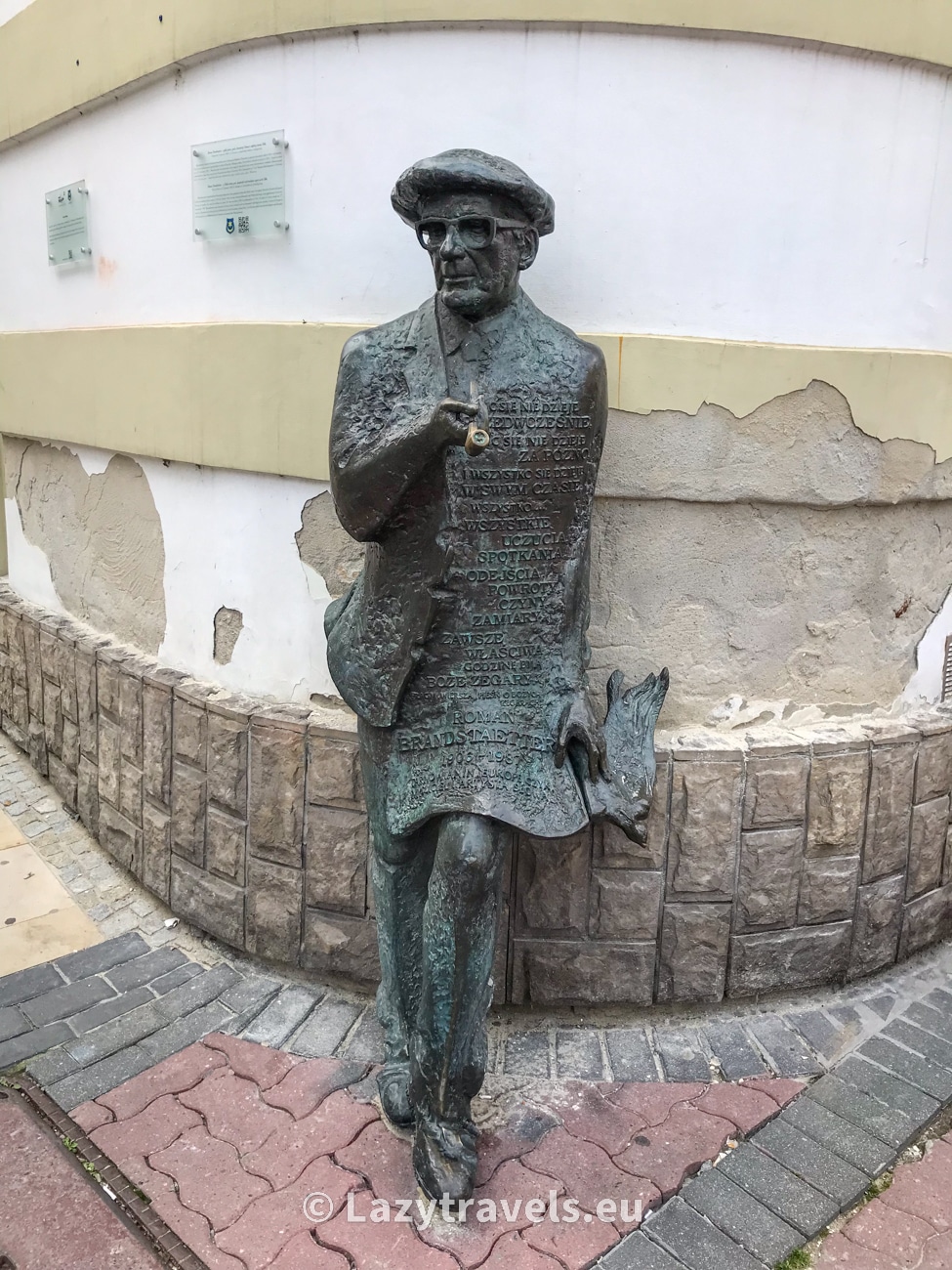
Walking in the direction of the monument to Józef Bem, you are sure to catch the eye of the monument to Roman Brandstaetter standing on the corner of Rybna and Walowa Streets. He is an interesting figure for Tarnów and Poland. Brandstaetter was born into a Jewish family, but converted to Catholicism. In addition to being a writer, playwright and poet, he also became a translator of the Bible from Hebrew into Polish! His monument stands in this place for a reason. This is where the Jewish quarter used to begin. So it is safe to say that it bridges two worlds.
Jozef Bem. Probably the greatest Tarnów resident
“Bem’s memory mournful rhapsody… “You probably remember from Polish lessons. And if Norwid just wasn’t covered, you probably associate General Józef Bem from history lessons. As Poles, we like him very much, because he was one of the most outstanding generals in the history of the Polish nation. He did great things in the November Uprising.
After it fell, he performed miracles in Hungary, where under his leadership the insurgent army inflicted heavy losses on the Austrians. And after he lost this hopeless battle as well, he emigrated to Turkey. Here, too, he did very well. He converted to Islam so that he could live freely in the new lands. He defended Aleppo, which was part of Turkey at the time… and subsequently died of malaria.
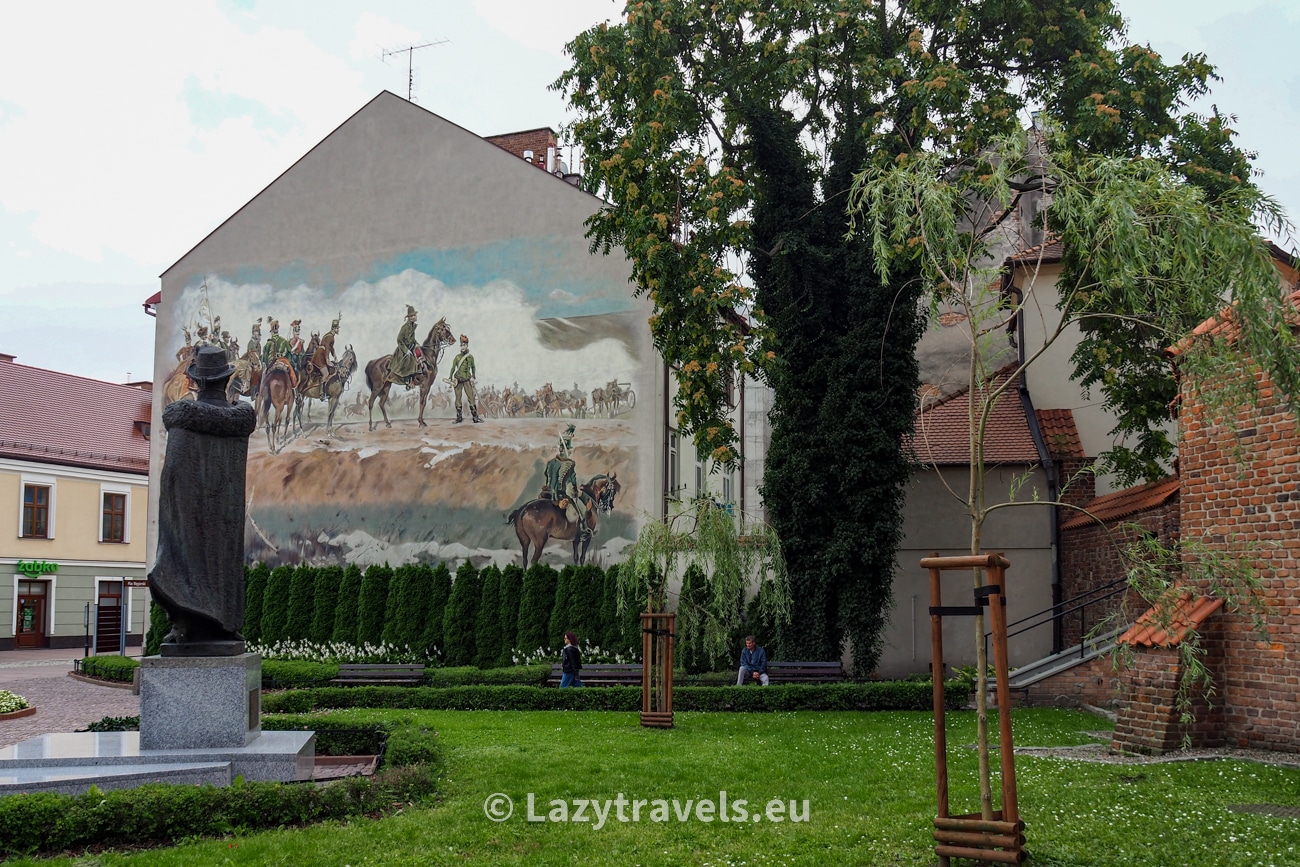
And why am I writing all this? Because Joseph Bem was born in Tarnow! Walking around the city you will encounter many mementos and references, to this outstanding strategist. There is a large monument to be seen, but right next to it is also a large mural with a fragment of the Transylvanian Panorama. On it is immortalized one of the general’s victories during the uprising in Hungary. Commanding Hungary, he inflicted a severe spoil on the Austrians at Sibiu. Yes, Joseph Bem is a national hero in Hungary.
Sekler Gate
And just related to this is another memento of the famous strategist, namely Seklerska Gate named after Jozef Bem and Sandor Petöfi (the general’s adjutant). This tourist attraction is quite young, as it dates back to 2001, and was officially handed over on the anniversary of the Battle of Ostroleka. It was in this battle that a daring charge led by Bem, significantly reduced the losses of Polish troops. The gate is symbolic, because its name also refers to the nation, but at the same time obliges to guard the borders. That is, exactly what Jozef Bem did everywhere he went. You can read more about the gate here.
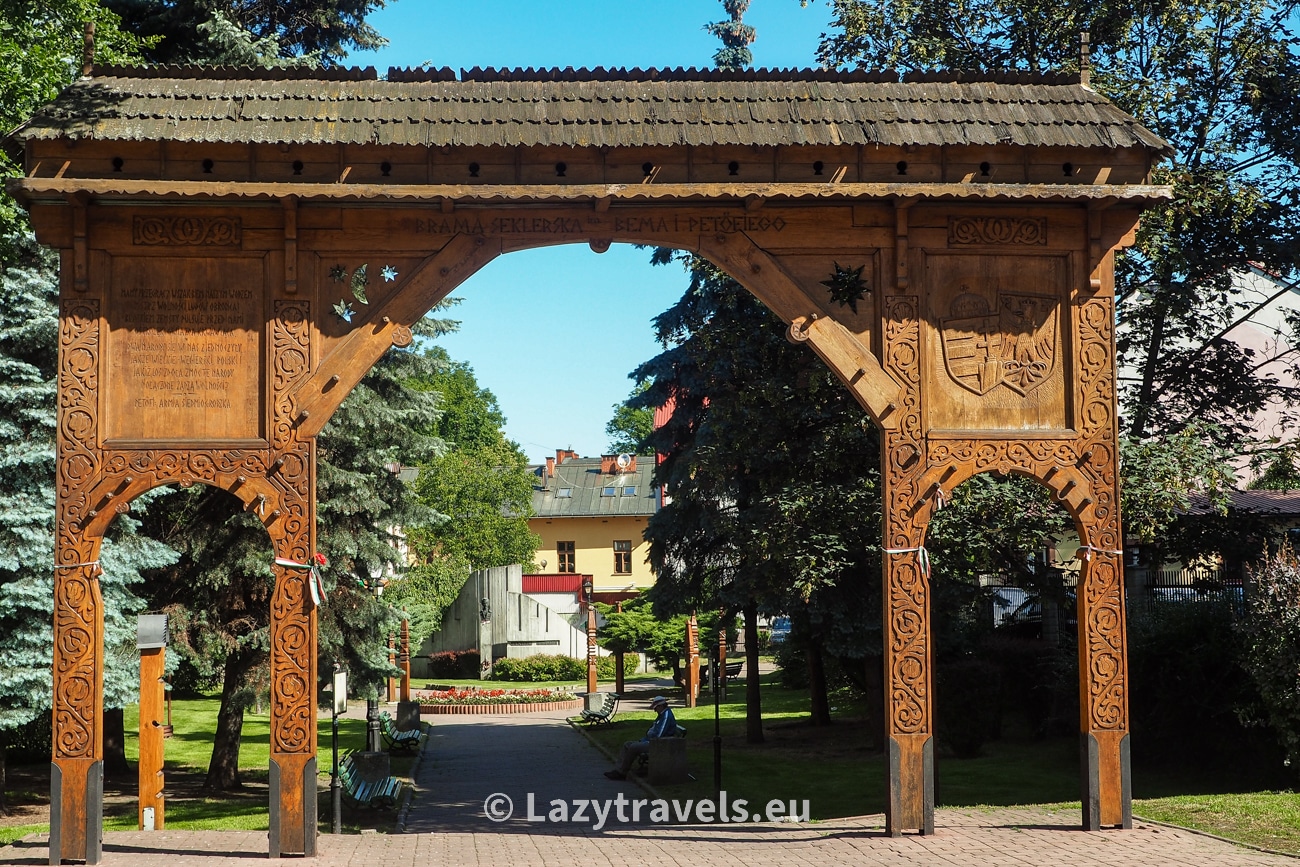
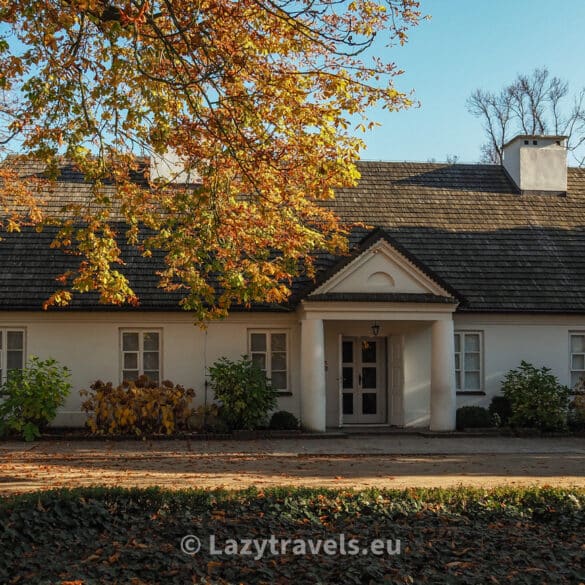
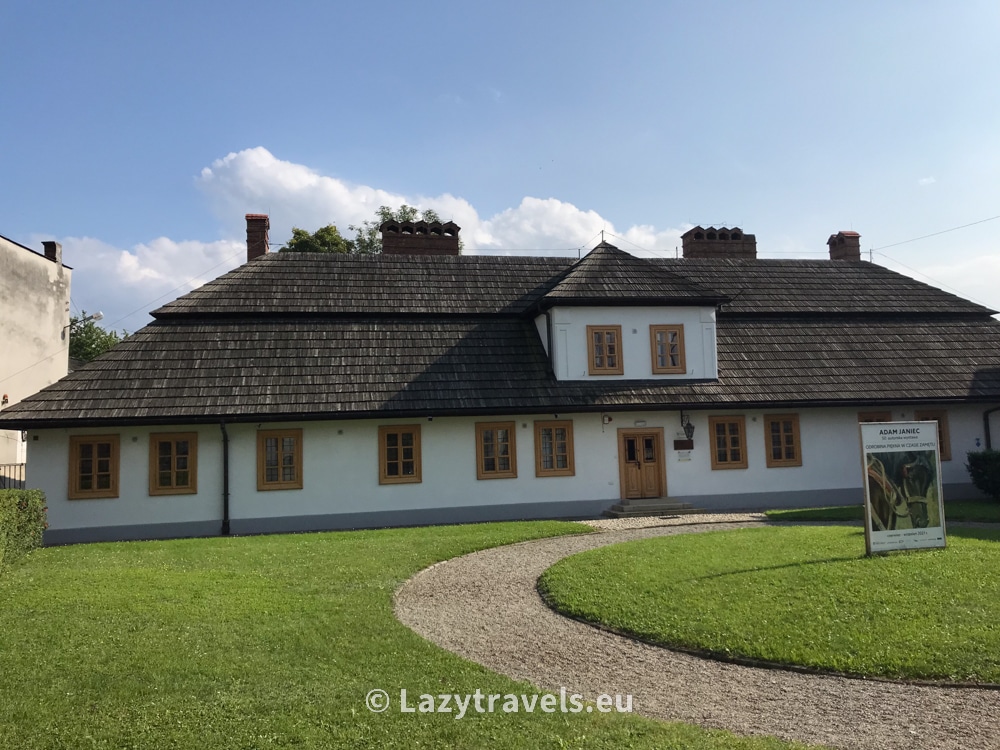
Almost opposite the gate stands a beautiful wooden-shingled cottage – a manor house from the 18th century. This is the Ethnographic Museum in Tarnow. It houses, among other things, an exhibition on Roma culture. If the topic interests you, take a look.
Mausoleum of Jozef Bem
Poland may have been reborn after 123 years of partitions, but the memory of its greatest citizens survived. Therefore, when the Second Republic found its place on the map, people began to think how to bring the hero’s mortal remains to the country. To his hometown of Tarnów.
The return of the mortal remains to the homeland was, of course, preceded by preparations. Since the general could not be buried in the Old Cemetery, due to the fact that he had converted to Islam after all, another form of burial was decided upon. A special mausoleum was erected in Sagittarius Park. On an island in the middle of the pond, a platform was set up, and on it were six columns. On them rested a sarcophagus. It is said that the sarcophagus is at the same height as the Old Cemetery. This is as a sign that Bem was equally worthy of burial anywhere. Anyway, that’s not the end of the symbolism, as stone balls stand on the platform – a reference to the artillery he commanded. And the chains connecting these stone balls are made of melted down cannons. Everything here has its own symbolism.
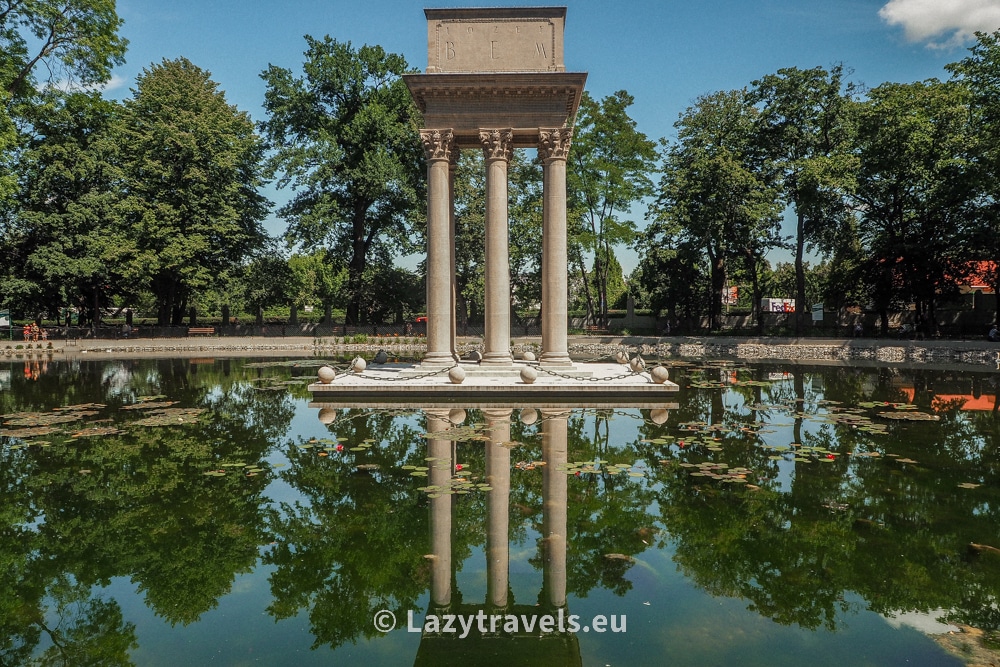
And on the sarcophagus there are inscriptions in three languages: Polish, Hungarian and Arabic.
But this story and its stature would not be complete if I left out the fact that before Jozef Bem was finally laid to rest in his grave, honors were paid to him. When the coffin with his body was displayed in Budapest, several hundred thousand Hungarians came to bid him farewell. In Poland, on the other hand, before being transported to Tarnów, the coffin was displayed at Wawel Castle. This is how only the greatest among the great are bid farewell!
Jewish Tarnów
Before World War II, Tarnow had a population of about 50,000. Half of them were Jews. Therefore, it is difficult to ignore in this guide the impact that such a large group of people had on their city. To this day, walking around the city one encounters souvenirs, of this community murdered by the Germans. And now the important point: these were Germans, not Nazis, because there never was a Nazi nation
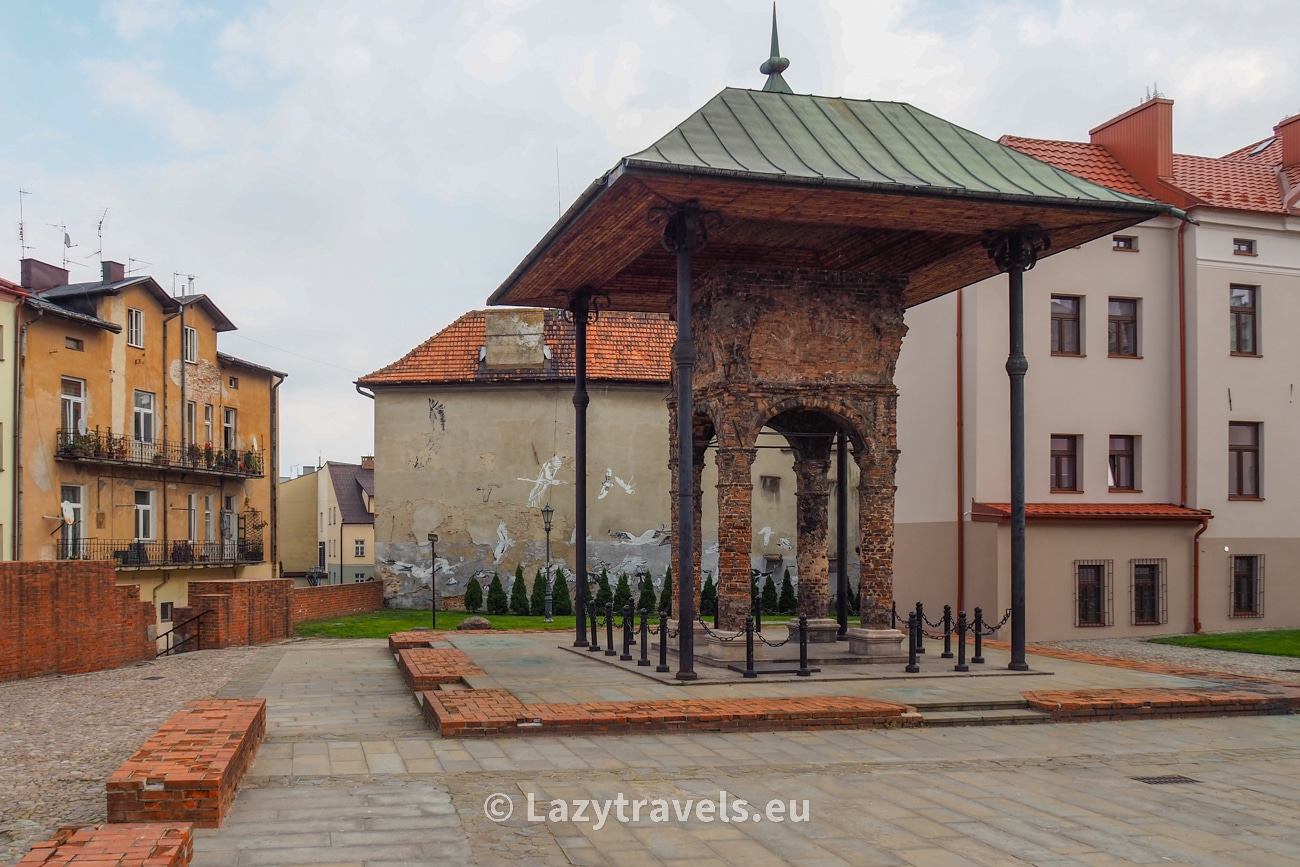
Bima
The Bima, the synagogue’s centerpiece, stands like a silent remorse. A reminder that a beautiful and powerful synagogue once stood here. A place that was the heart for the city’s 25,000 residents. During the war, the Nazis planted explosives under the synagogue, destroying the entire building. Only the bimah remained. Today it has been covered with a roof so that it can serve as a reminder for as long as possible of what is gone.
It is worth mentioning that there were several synagogues in former Tarnow, and the one whose bimah we are viewing is the Old Synagogue.
Jewish cemetery
Such a large community as the Jewish one had to have somewhere to bury the bodies of its members. That’s why the Jewish cemetery in Tarnow is one of the largest in Poland. On an area of three hectares you will find as many as 6,000 matzevot, or Jewish tombstones.
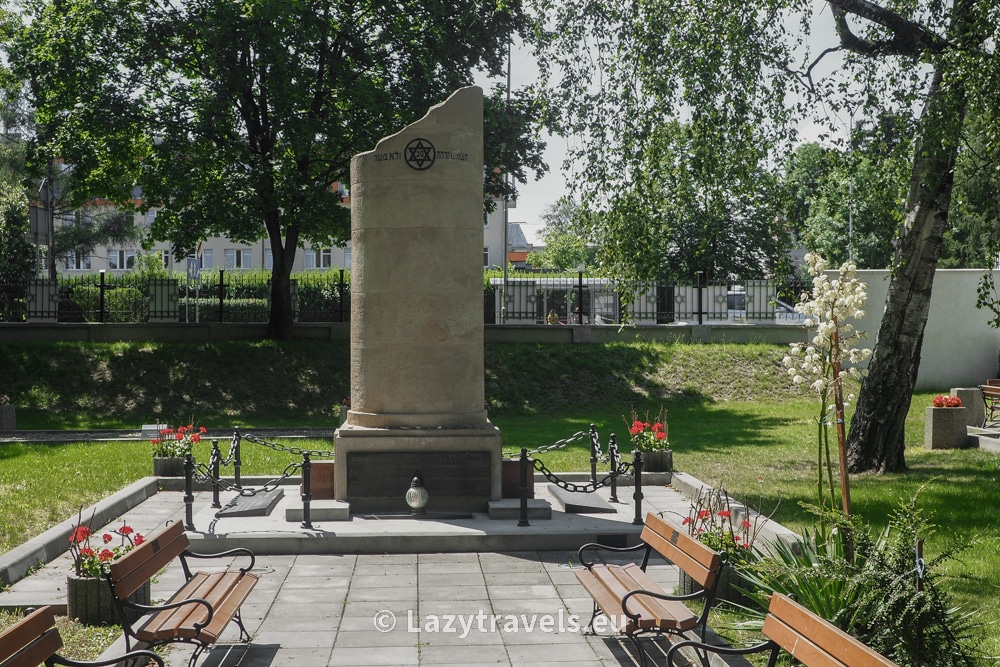
To the right of the entrance stands a large, broken column. This is also part of the demolished synagogue once known as the Jubilee Synagogue. The column bears a symbolic inscription, commemorating the murder of the Jews: “And the sun shone and was not ashamed.” This broken column is the only reminder of the 30,000 lives murdered in barely three months…. (Jews from neighboring towns were also brought to Tarnów and clustered in the ghetto). One of the sites of mass executions was precisely where this column stands….
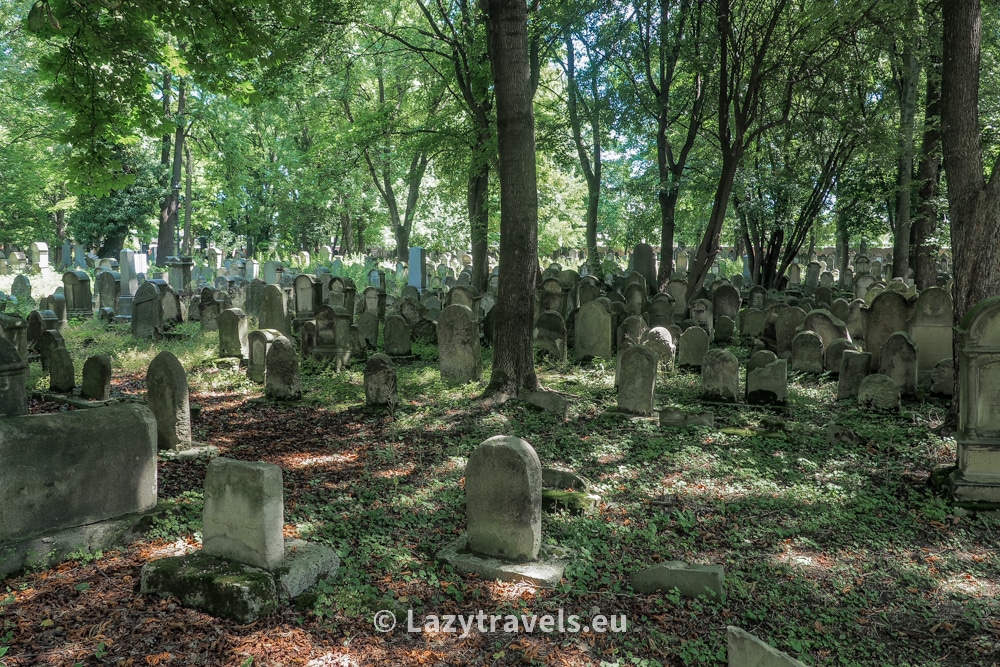
Today the cemetery is a reflective and almost charming place. If not for the memory of what happened here. It is interesting to note that the original gate leading to the cemetery, was donated by then President Lech Walesa to a museum in the USA – you will see it at the Holocaust Memorial Museum in Washington.
It is also worth mentioning that entry to the cemetery is free, but the gate is locked. The key can be found at the tourist information desk in the Market Square. It is taken against a deposit, which is returned when the key is returned.
The mikveh or former bathhouse
Quite an interesting place is also an old Jewish bathhouse or mikveh. The building was built in 1902 and refers to the Moorish style, as you can see in the photos.
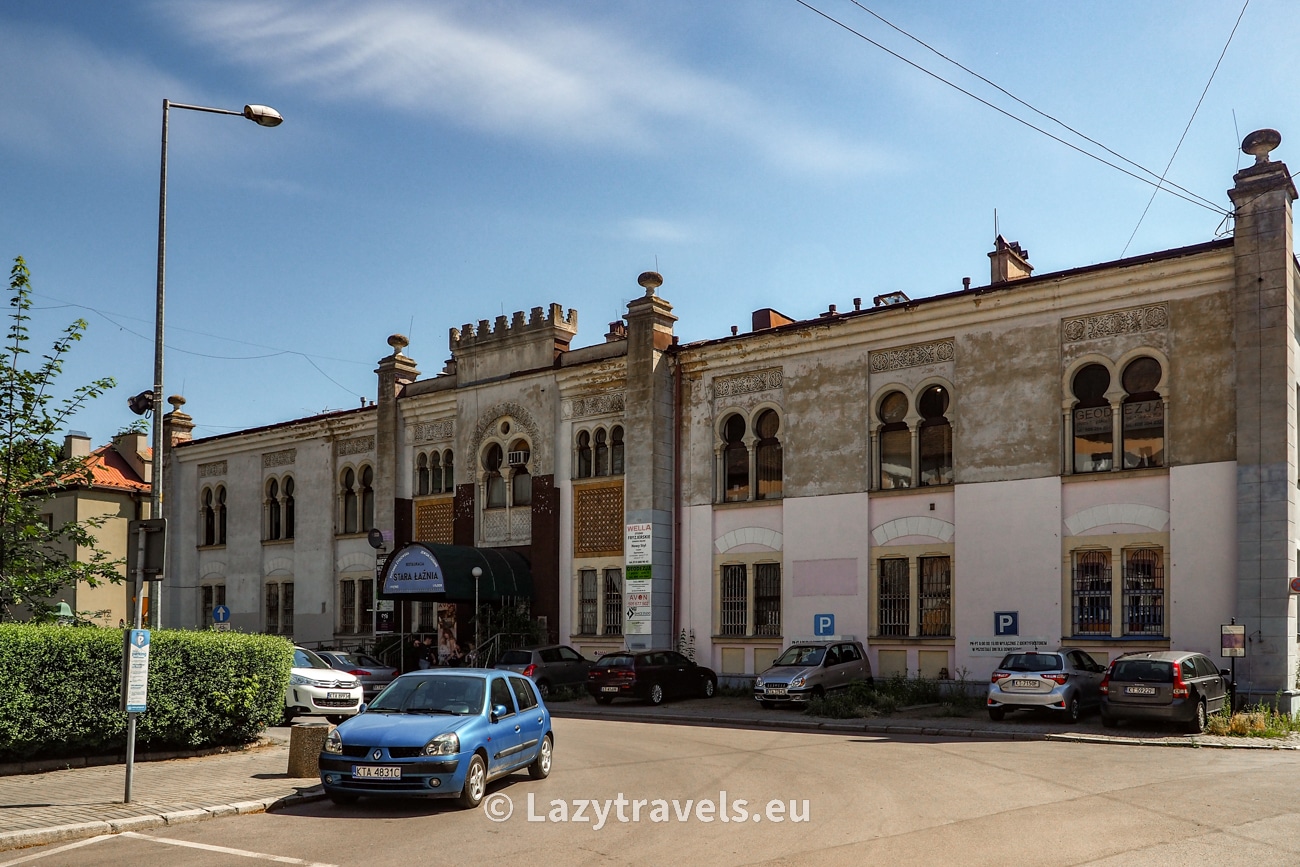
Today, admittedly, the mikvah looks tragic, covered with advertising rags and crying out for renovation. But in its glory years it certainly looked more beautiful. It is also interesting to note that it was from here that the first transport to Auschwitz departed on June 14, 1940. And to commemorate this, a phone booth was erected here, where we can listen to the story.
Oh, the building houses the Old Bathhouse restaurant, which serves Jewish cuisine. Magda Gessler conducted her revolutions here. How they feed, I don’t know, I haven’t eaten.
Cathedral
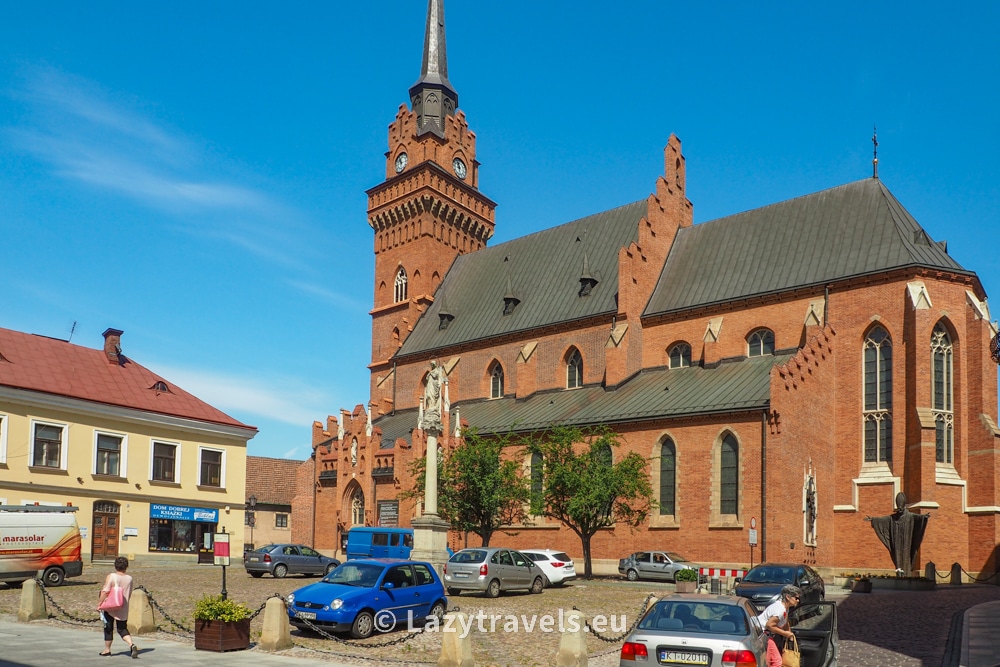
Since Poland stood for Catholicism, it is therefore impossible to tell the history of Tarnów without mentioning the local cathedral. And let me warn you right away that from the outside it somehow failed to impress me. A church like a church, huge as a church is, because with an edifice a person is always supposed to be small. At first glance, it does not look like the origins of this architectural structure date back to the 14th century. What is most beautiful is hidden inside, as it usually is.
Most people are said to be most in awe of the grave monuments next to the altar, because they are tall…. while I stopped at the monuments in the nave opposite the entrance. This is the Monument to the Three Johns, because three figures are also immortalized on it as they fell into eternal sleep. The monument commemorates the family of the founder, who was Hetman Jan Tarnowski. If you can’t see the third John, it’s the child at the top, located above the adult figures.
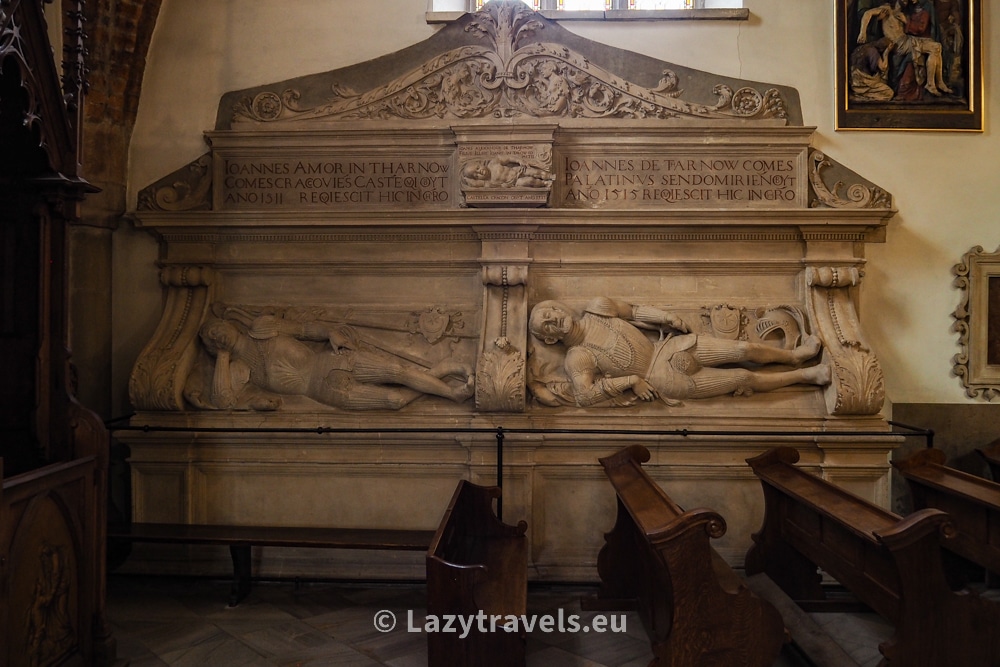
What else impressed me was the arched ceiling of the church. I have a weakness for beautiful ceilings. Although, as I mentioned, most art experts marvel at the tallest Renaissance tomb monuments in Poland. The monument to the Tarnowski family measures 13.8 meters in height, while the Ostrogski monument standing opposite is not much lower, at a “gross” 12.9. And I admit that I like the lower one better. The latter represents the style of Danzig Mannerism.
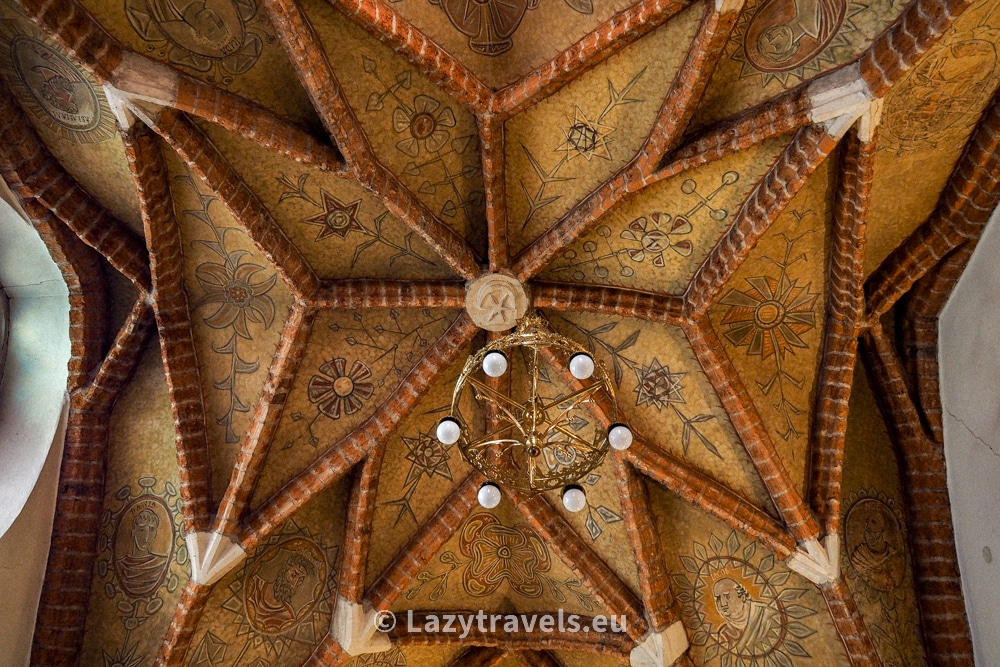
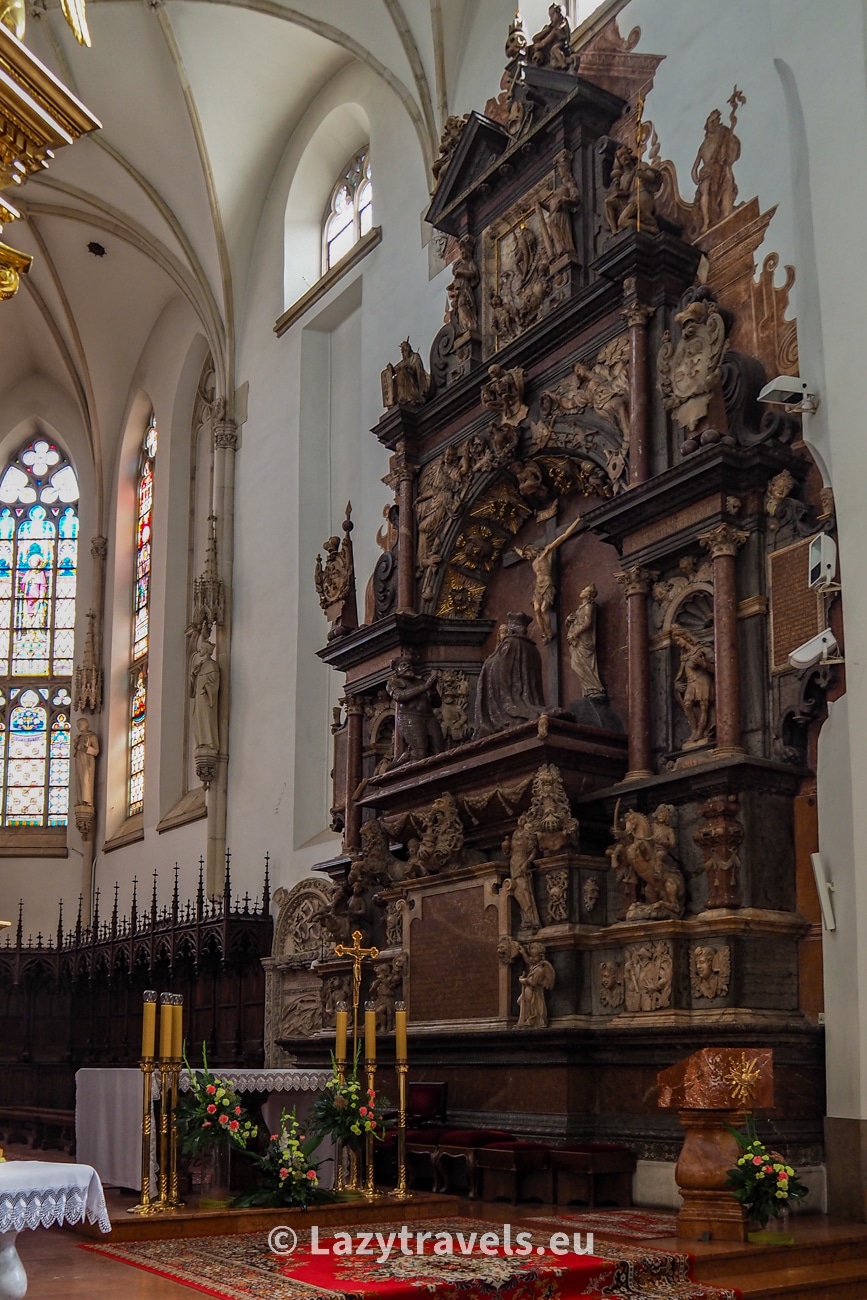
In the right nave is the Pieta, or wooden sculpture of Our Lady of Sorrows. It is famous for its miracles, so there are a lot of people praying for mercy here. And those who have experienced it often place votive offerings here.
Museum of the History of Tarnow and the Region
This is probably the most modern museum in Tarnow. But it is also not devoid of the delicate charm of old age – all because of the place where it is located. These are some of the older townhouses on the Market Square. The nice ones with arcades and beautiful remnants of old decorations on the front wall. After buying a ticket, you enter the halls with fragments of old room decorations and that’s basically it. Then there’s still a chance to go down and see the basement, and at the very end we go to the floor. And I guess this floor is the least interesting.
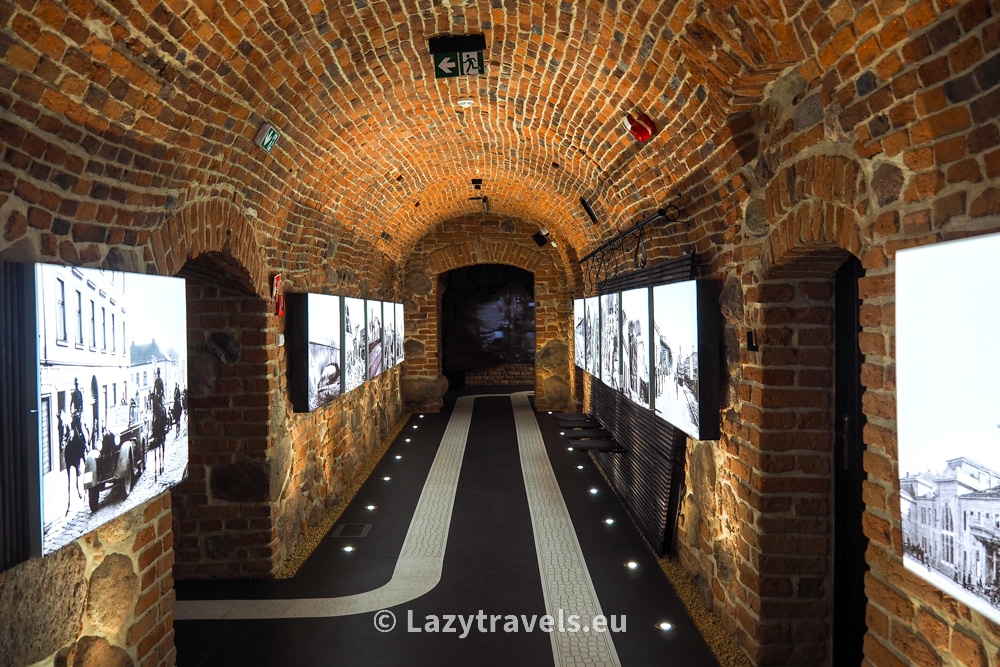
Although if I had to point out what I liked most in this museum, it was definitely the pictures of old Tarnów.
The icing on the cake here is the opportunity to punch your ticket in specially prepared machines. Once you’ve punched all the holes, you’re supposedly rewarded with music featuring a cattleman’s anthem. Well, I haven’t found all of them, so I won’t confirm.
Railroad station. A veritable cacique
Galicia had its own peculiar style, the kind of Austria-Hungary that I love and feel comfortable in. The train station in Tarnow, built between 1906 and 1910, exhibits this style. If you have been to Lviv, you will probably notice the resemblance. And it’s not surprising, because the Tarnow one was modeled after the one in Lviv. If you look from the outside and don’t know what the building is, it could boldly pass for a palace. On the lands of present-day Poland, probably only the railway station in beautiful Przemyśl presents itself in a similar style .
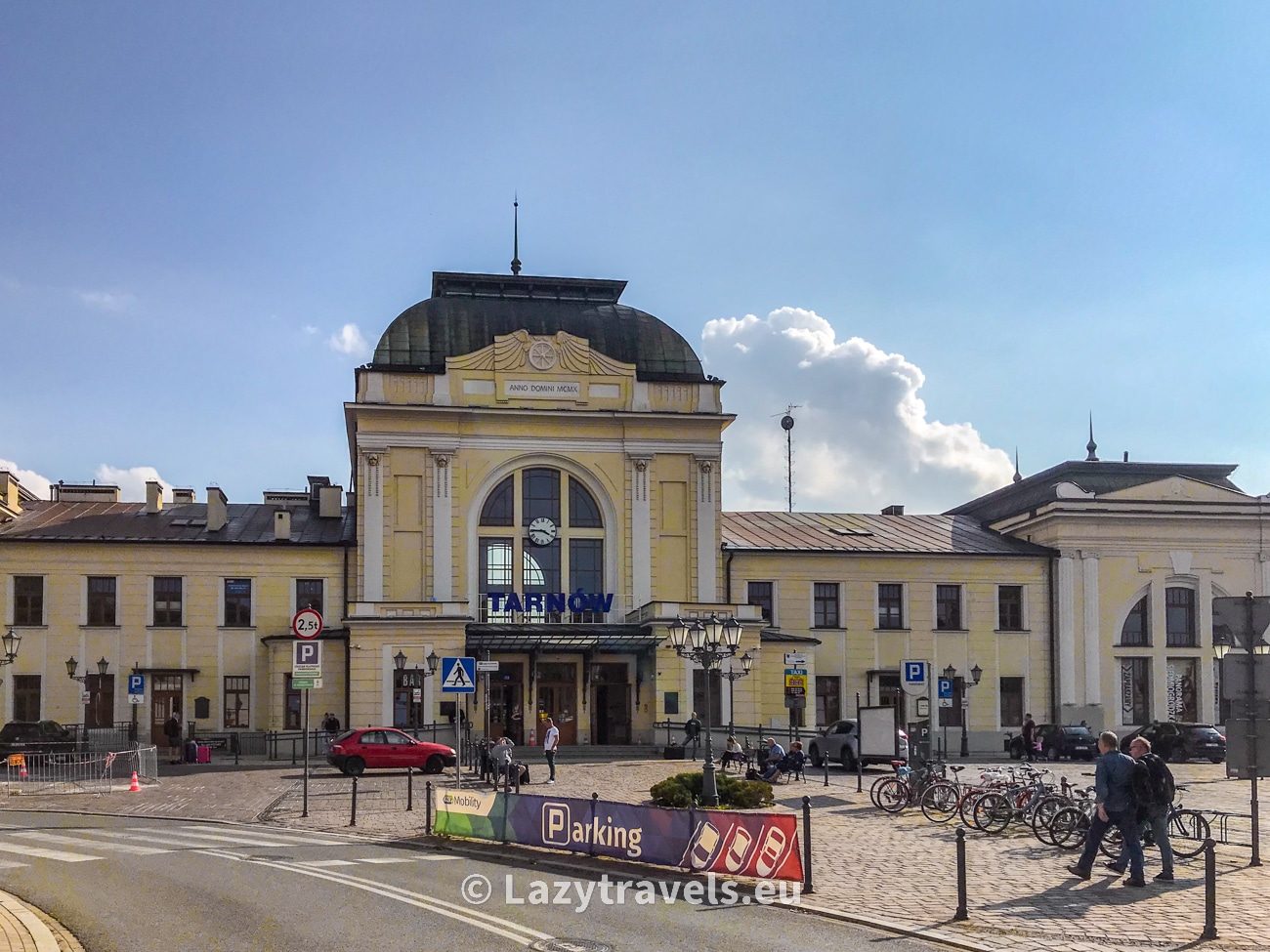
The history of the railroad in Tarnow began on February 20, 1856, when, gasping and panting, the first regular train entered the still makeshift platform. The train ran twice a day on the route: Krakow – Debica with a stop in Tarnow, among other places. The entire 111 kilometer route was covered in 4 hours and 10 minutes. As rumor has it, the train ran on time then. The railroad developed the city, which began to grow rapidly. Passenger streams grew, the city’s stature did the same. Therefore, the decision was made to build a station worthy of such an important city.
And although over the subsequent post-war decades the station declined and lost its former splendor, the 2007-2010 renovation restored it to its due splendor. 42 million zlotys were not in vain. It was restored as it was in its glory years. I… that’s the end of the story of Tarnów.
Attractions around Tarnów
The train station is an excellent place to go further to explore the Tarnów area, that is, for example, to go to Bochnia and the salt mine there. Or further on to beautiful Jaroslaw, which may not be well-known, but is certainly worth spending a day in. Or perhaps you prefer to visit the magnates at their palace in Łańcut?
Although the most famous place in the area anyway is Krakow. And Krakow, after all, needs no introduction to anyone 🙂
You can get everywhere there from the Tarnów train station. Who knows, maybe like in the golden years of railroads, the train will come and go punctually? 🙂 What I wish you!
Lunch and coffee in Tarnów
I already mentioned that the place I absolutely fell in love with is the Sofa cafe. So in addition to coffee and pastries in an elegant interior, you can also have a meal here, which is breakfast. And if you get the urge for a drink, you can try something good in the premises of the same name right next door.
While in Tarnow, we had dinner at the Obsession of Taste restaurant. It was quite decent, as the portions were large and tasty. In addition, they have a very pleasant patio at the back of the restaurant. Right next door is the other noteworthy restaurant in Tarnow, which is Tatrzanska Restaurant.