1280 metres above sea level is a good altitude, just in time to be closer to God. In fact, it is the ideal altitude to build a monastery at the foot of the Zlatovrv (Golden Peak) mountain in Macedonia to connect mortals with God. The Treskavets Monastery was built in just such a beautiful location.
The first reason why you should visit Treskavec Monastery is the frescoes. There are few places in the world where so many of them have been preserved. The second reason is that there are hardly any tourists here, you can have the place to yourself! And the third reason is that the interior of the monastery is in very poor condition. Who knows if it will be possible to see them for a long time yet.
Treskavets Monastery – the beauty of the sacred
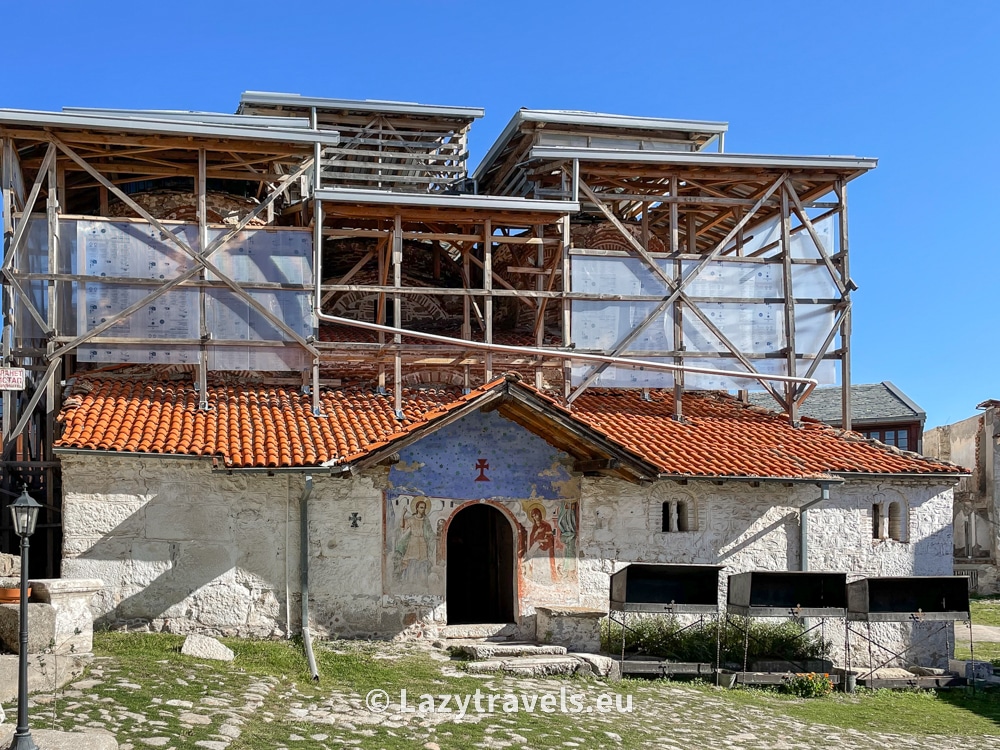
At first glance, the Treskavets monastery is some kind of old, dilapidated temple, further encased in scaffolding (2022). The entrance? Definitely not inviting to enter, because what spectacular thing can hide behind such a facade? Yet the saying not to judge a book by its cover applies perfectly here.
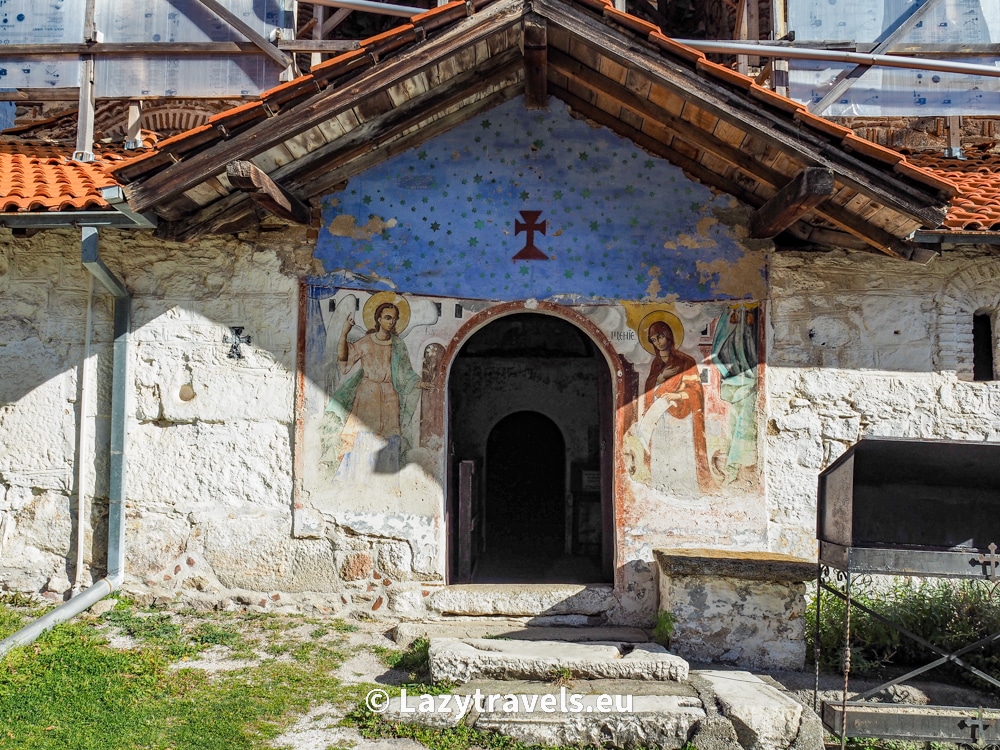
When you cross the threshold of the temple, you first enter the nartex, or covered vestibule. And this is where things already start to ‘happen’, with the first works of art on the walls. From what is written on the information boards, these are the oldest in the monastery (13th century). Well, there’s scaffolding here too, it doesn’t add to the beauty, but it’s undoubtedly needed because the temple needs renovation. But miracles begin to happen behind the next door.
Have you ever had that moment when you walk through a door and enter another world? Like Alice walking into Wonderland, for example? Once you pass the threshold of the church in Treskawiec, you suddenly find yourself in the realm of the perceptible sacred. And looking at this interior, you are overcome by two feelings: awe and horror.
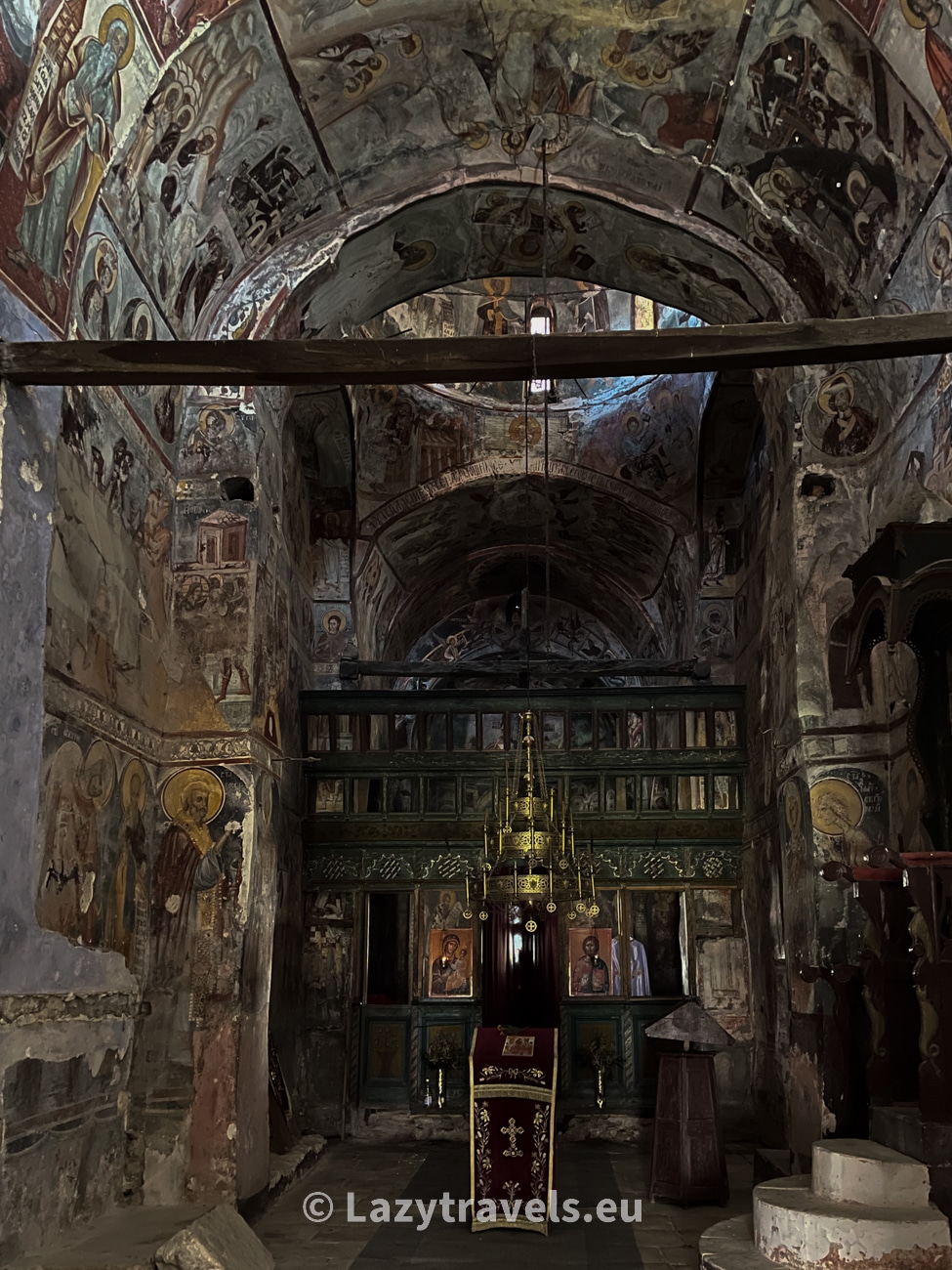
The frescoes of the Treskavec Monastery
I must admit to you that after walking around the temple, I simply returned to the front door, stood in the corner and absorbed the beauty. There are no crowds of tourists here, as getting there is not that easy, so if anyone does come here, it is consciously and for the purpose of prayer. And, like me, everyone has the impression of being alone here, so I am not surprised by the surprise and loud cry of one girl. After a short prayer, she turned around and my silhouette emerged from the darkness.
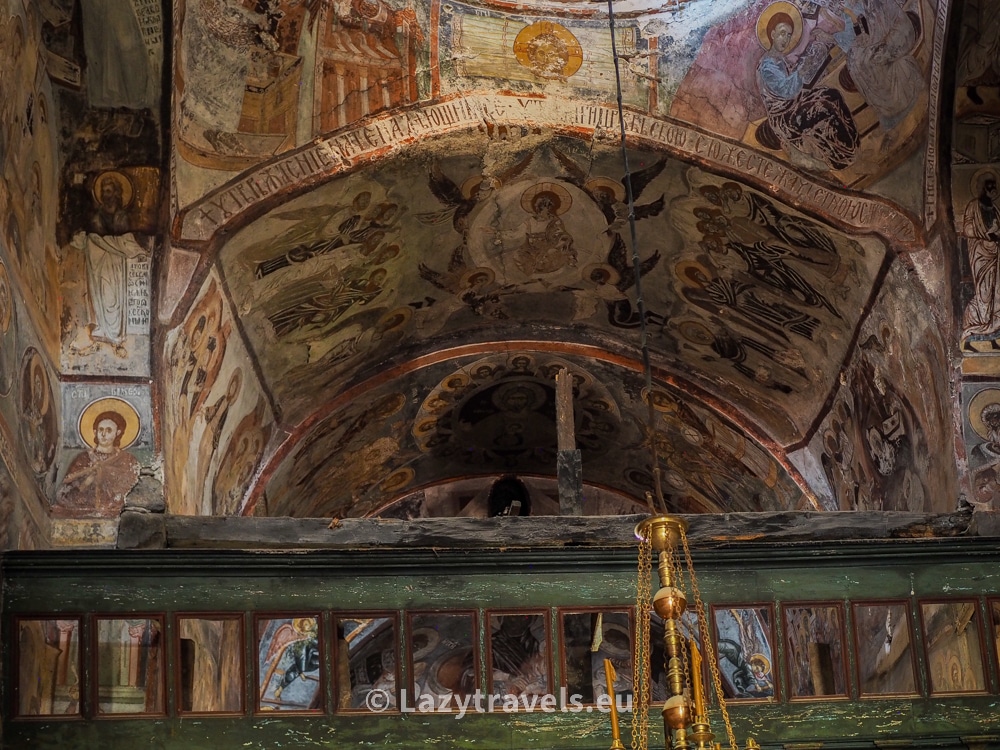
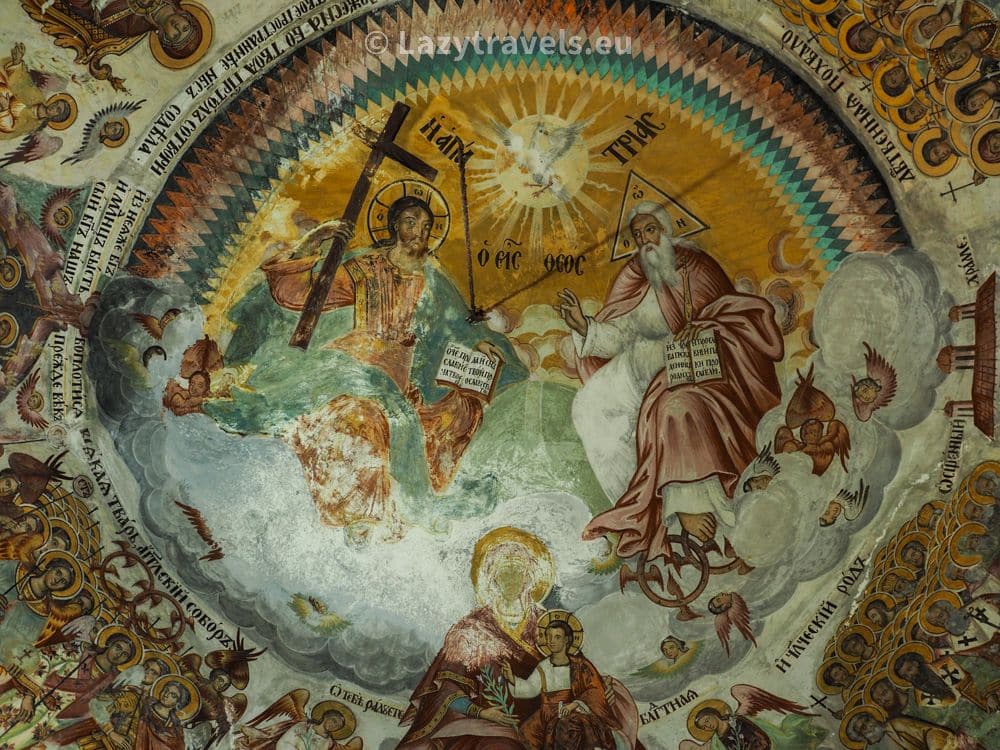
However, how long can one stand like this? So after several minutes of admiring from a distance, I began a slow tour of the temple. It’s not huge, just one aisle, but the level of saturation in the paintings makes the minutes go by as you study the details and the colourful stories coming from the paintings on the walls. Only the longer one stays in this room, the more it becomes apparent that what is needed here is urgent intervention by a conservator. And thus large sums of money. Probably hundreds of thousands of euros, if not more.
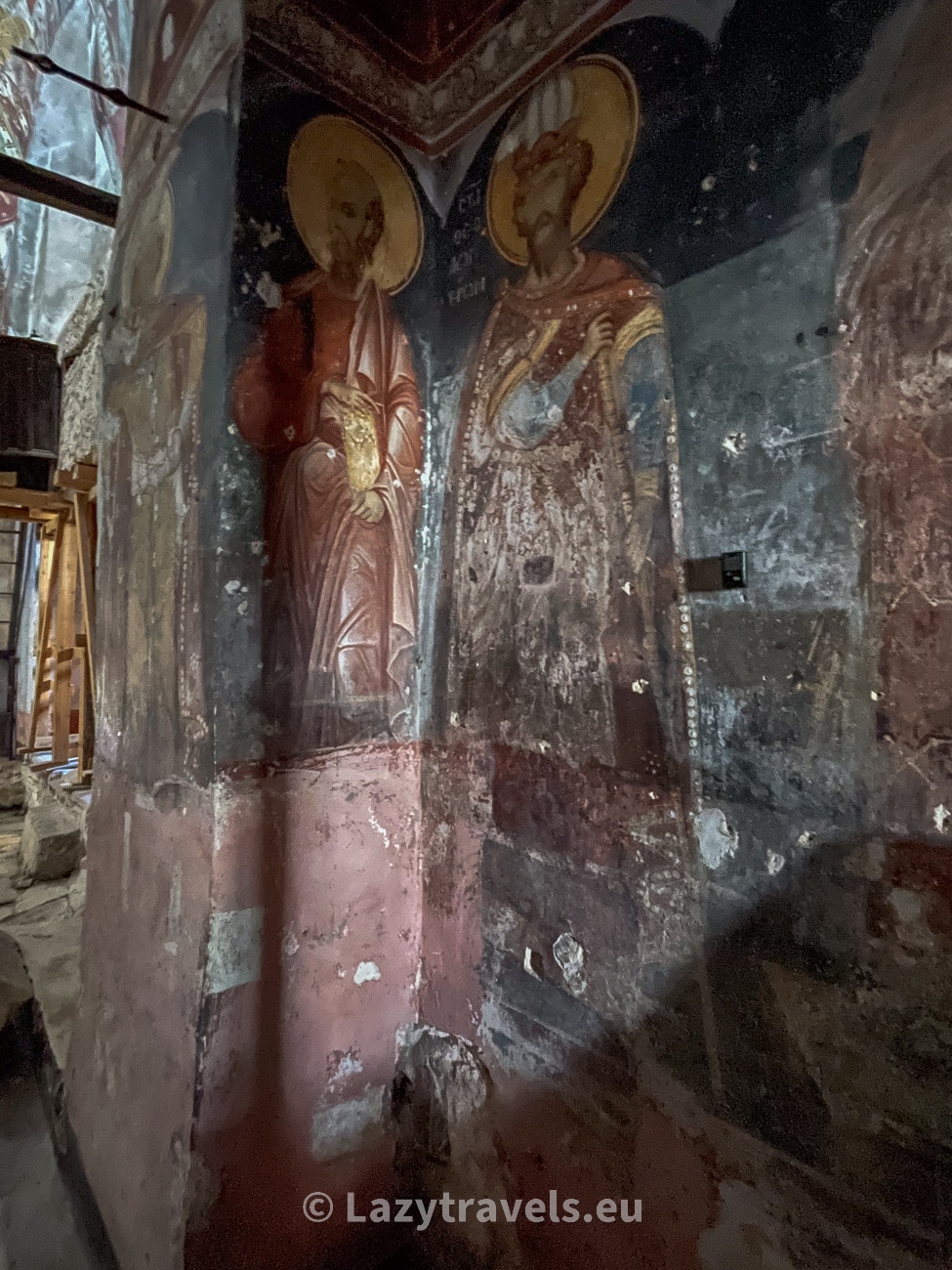
One only has to stand with one’s back to the altar to see, for example, the crumbling pulpit and the walls damaged by time. I poked around some more in the interior and left to set off on the way back towards Prilep. ‘By footsteps’, because it has to be said that to get to the Treskavets monastery you have to take a very scenically beautiful road through the mountains. Two hours of walking in beautiful natural circumstances.
History of Treskavec Monastery
Interesting fact: Treskavets monastery is not an original Christian idea. Already in Roman times Apollo and Artemis were worshipped here. But since the gods are long-lived but not eternal, an end came to the cult of the above with the fall of Rome. Instead, Christianity, as a universalist religion, as is its custom, fits perfectly into the new free spaces. For people, as it turns out, can rarely live without a god. That is why, in the sixth century, a temple of one God was established in the former sanctuary of two gods.
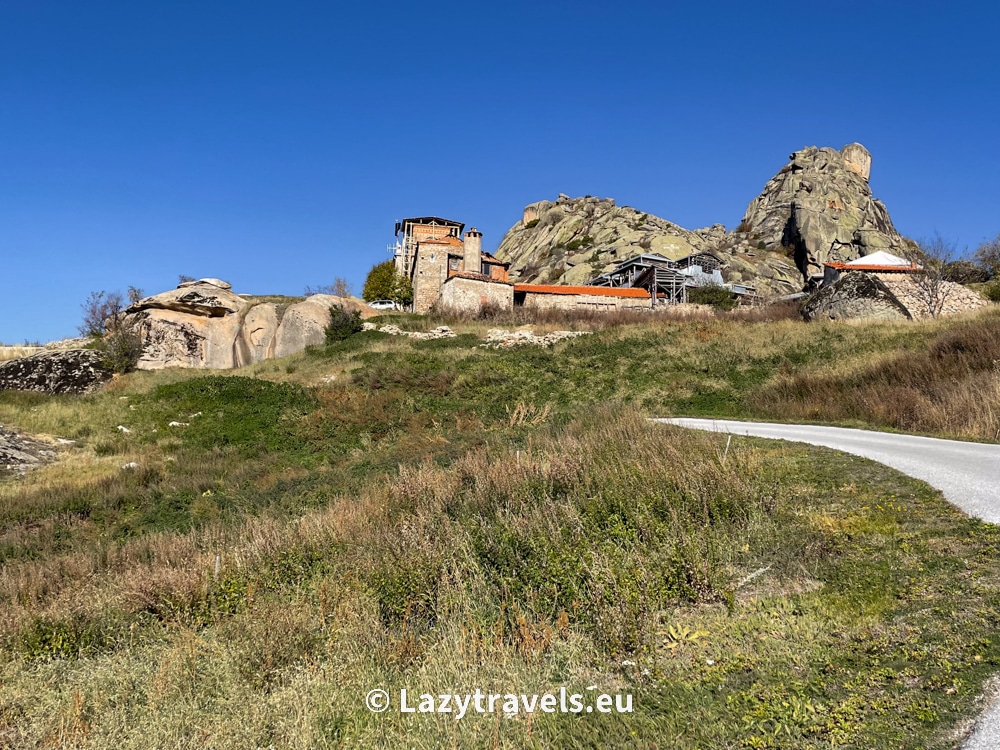
And it lasted for centuries, until the 12th century, when the monastery of the Assumption was built in its place.
The temple that was built was a single-nave structure and was rebuilt many times due to the winds of history. Well, the Balkans as a region is not a peaceful place and it can be said that wars are the order of the day here. Therefore, the Treskavets monastery has also suffered many times.
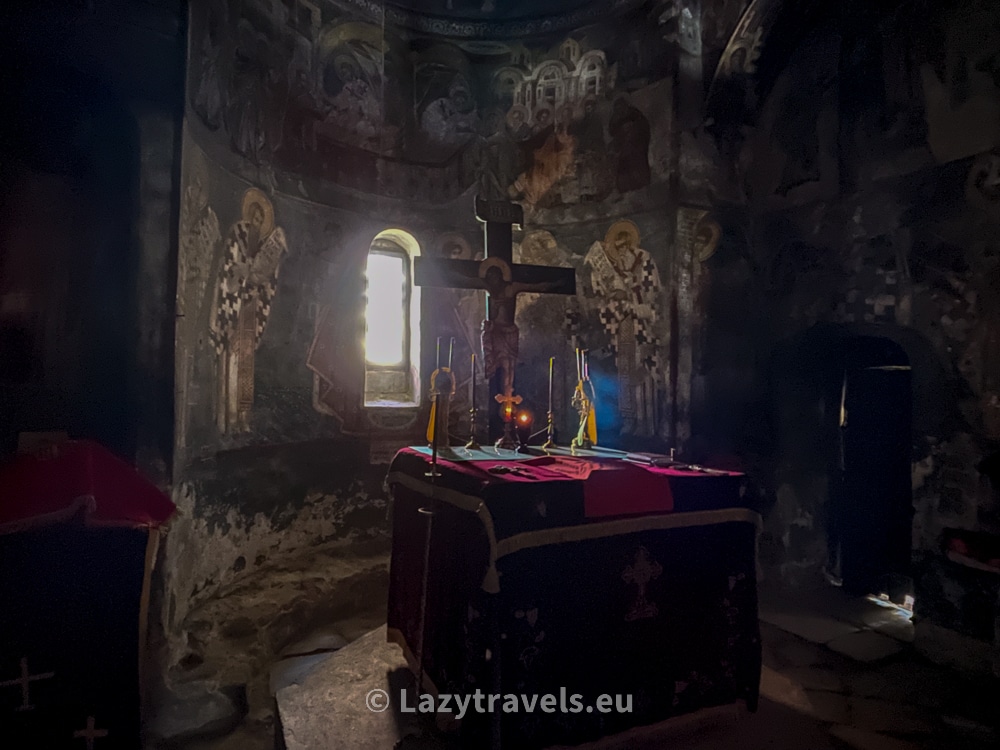
But what we see is old enough to be a zero-class monument anyway. And when we enter it, a different world is revealed to the visitor. The frescoes are beautiful above me, an absolute delight within me!
Although if you come here to pray, another world opens up to you too. A world of the sacrum!
As we are at the frescoes, they used to cover almost all the interior walls. Well, they don’t cover them today, because simply the tooth of time has obliterated some of the masterpieces. Still, what survives today is simply stunning.
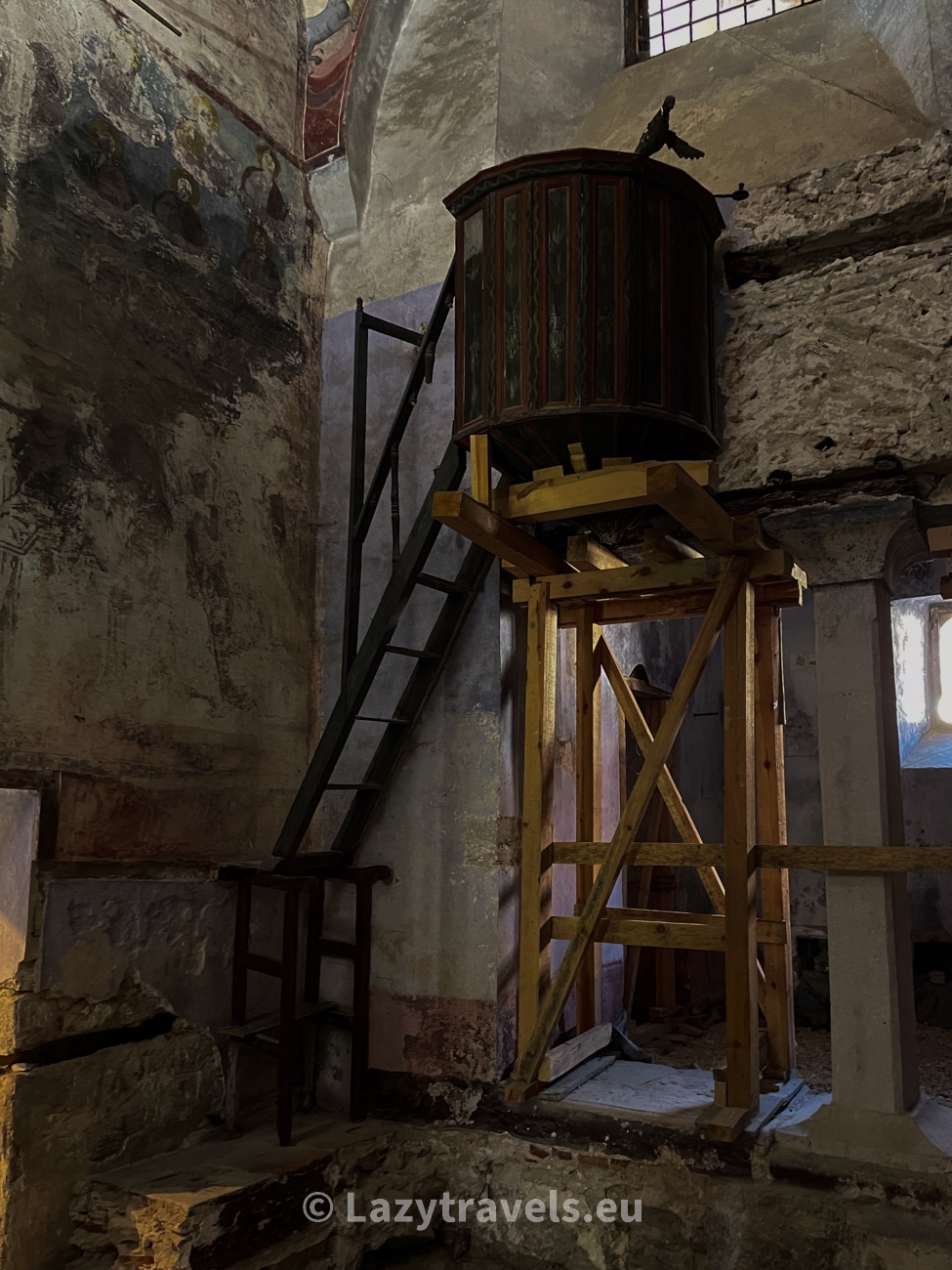
The oldest, from the 14th century, can be seen in the exonartex (outer vestibule), while in the interior, the oldest date from the 15th century. Although most of the decorations were created later, roughly up to the 17th century. And let me tell you, what was painted cannot be described, it has to be seen to be felt. That is the magic of the place. The sacred…
Today, there is one monk living in Treskavec Monastery, who occasionally sneaks around the monastery grounds somewhere. He is alone, so he tries to keep an eye on everything that is going on. Therefore, do not be surprised that he may not find the time for you. I did not manage to talk to him either.
And there is something to do here because, as I wrote, the monastery is encased in scaffolding and needs urgent renovation. Well, it has been hit by two fires in the past dozen or so years – the biggest in 2013 – and although the church did not suffer, the monastery buildings did. You should know that this is quite a complex, as in its heyday about a hundred monks lived here!
Interesting fact: you may be wondering where the name Treskawec comes from? According to what I read on the website of the local tourist organisation, ‘Treskavec’ means a place where lightning often strikes. But there is nothing strange here, after all, the monastery is built almost under the top of the highest mountain in the area!
Treskavec Monastery – how to get there
We can get to Treskavec Monastery in two ways. The first is on our own feet, starting from Prilep on a beautifully scenic trail through the mountains. The trail is about 7km long. The trail starts next to the Salida 2 hotel, which I also sincerely recommend to you. I paid 20 euros for a room with a bathroom for myself in a good standard!
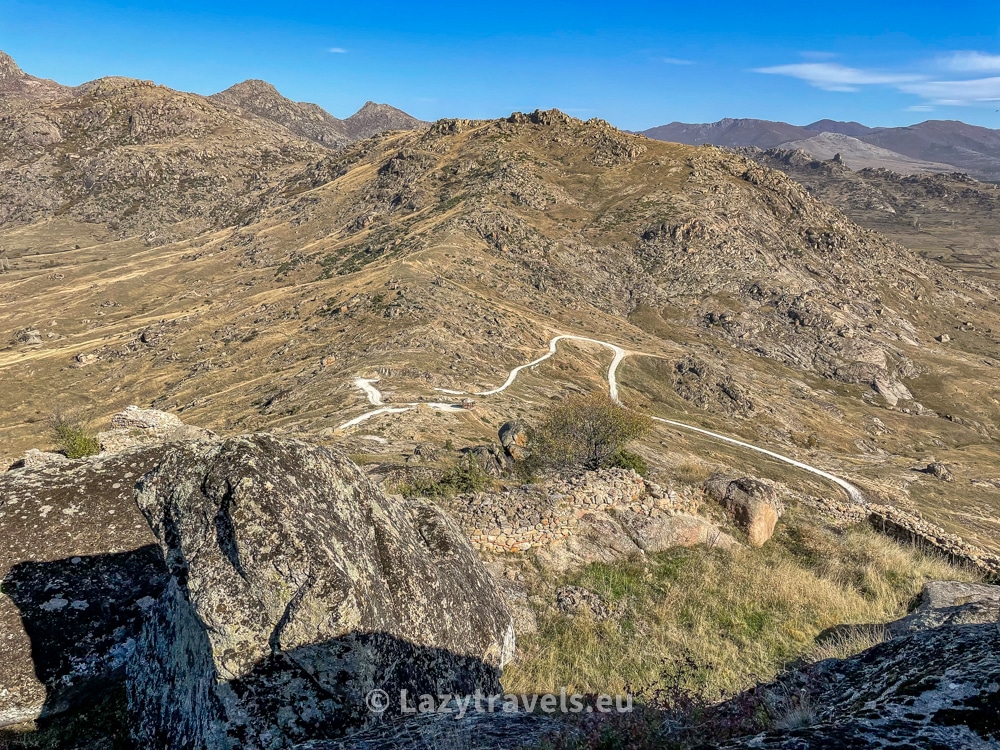
You will cover the route from Prilep to the Treskavec Monastery in about two hours to two and a half hours. Initially it is quite easy, but in the final section there are steep places in one there is even a very long rope! Take this into account!
The second option to reach the monastery is to walk along a comfortable road. There is 11km to walk. But you can also cover the same distance by car, or more likely by taxi if you haven’t come to the Balkans in your own car. The route has recently been paved with asphalt and if you don’t drive in winter, you will make it without difficulty. There is a large car park in front of the entrance to the monastery. But there is also a small car park in front of the monastery gate itself.
I’ll admit that I don’t know how much a taxi costs, because I walked, but I’m betting it should be around 350-400 denarii one way. Because it’s a long way, though, and at the same time the driver also has to return. I give an approximate price based on my experience in Bitola, when I took a taxi 8km to Pelister National Park.