Przemyśl has always been on the way and in between. It was on the route between the East and the West. It stood between the interior of Poland and the invading foreign armies. And, of course, it benefited from trade, thanks to which it began to grow rapidly richer. This wealth can still be seen today. Here’s what you can see and visit in Przemyśl.
I drove through Przemyśl several times, because it is a city on the way to Lviv, which I love so much. So I drove through Przemyśl many times because it was the cheapest way. I occasionally ‘went out on the town’, but never to explore the city and get to know the tourist attractions of Przemyśl. Until I finally matured and year after year, I went here twice on purpose! Especially the visit before the pandemic pleased me, because I caught the underground of Przemyśl still working.
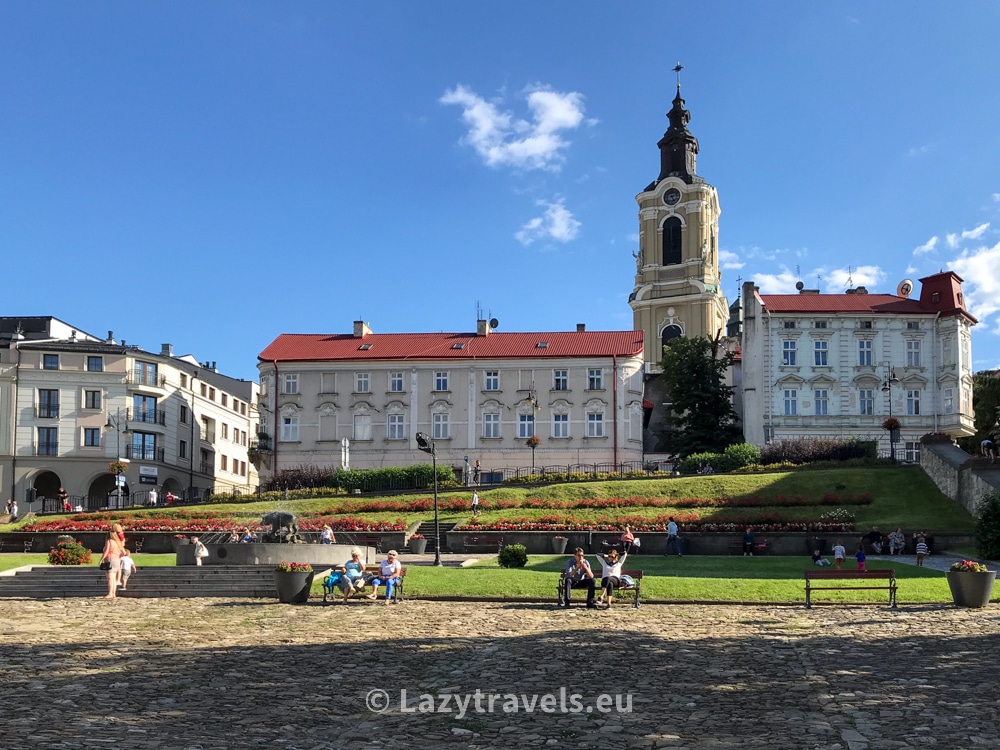
And you have to know that I liked this place. Przemyśl is one of those characteristic places which you recognise almost with your eyes closed. You can immediately see that it is a city of the formerAustro-Hungarian Empire. The distinctive architecture unites all important cities of the former empire. The same whether it is Zagreb, the as yet undiscovered tourist city of Tarnów or Chernivtsi. I don’t know how to describe it. Such a café-like atmosphere of unhurried provincial life. You’ll say ‘bring on Swejk!’ and you’re right, because there will be time for him in this story too. But let’s take it one step at a time and start at the beginning, because history likes to be told on time.
A brief history of Przemyśl
The first mention of Přemysl dates back to 981 in the Ruthenian book ‘A Novel of bygone years’ depicting the history of the Ruthenian state. From the pages probably dating from 1113, we learn that it was in 981 that Vladimir the Great deprived the Lachs of Przemyśl and other Red Ruthenia Towns (in polish it’s called Grody Czerwieńskie). The Lachs were a West Slavic tribe that became part of the nascent Polish statehood. Then there were further struggles for these lands, in which one of the greatest Polish kings, Bolesław Chrobry, participated during his expedition to Kyiv.
However, for almost 200 years Przemyśl became an independent Ruthenian principality.And it was only Casimir the Great (Kazimierz Wielki) who in 1340 reconnected the duchy to his state. In order to secure the area and strengthen his influence. He built a castle in Przemyśl, powerful by the standards of the time, as part of ‘He left Poland walled’. The fortress can still be seen today and I will write more about it later in this article.
In the following centuries, the city grew rich on trade, reaching the peak of its power in the 16th and 17th centuries. At that time it was one of the richest towns in the Republic of Poland! After the first partition of the Rzeczpospolita in 1772, it came under Austrian rule. And it was the capital city of Vienna that shaped its character forever. It is from this time that a great part of the city’s buildings and decorations originate.
And due to its strategic location on the border with the Russian Empire, Przemyśl was powerfully fortified in the 19th century. The battle for the Przemyśl Fortress during World War I was long and bloody. To this day, there are cemeteries where its victims lie.
Further battles were fought here during the defensive war of 1939. Although, as we remember from history, a defensive war on two fronts was doomed to failure. Przemyśl took part in the repeated partitions. It is interesting to note that the border divided the city. Zasanie, the part of the city beyond the San River, became part of the Third Reich, while the old city was part of the Soviet Union. A choice between the plague and the cholera. After the war, in a new state with new borders based on the Bug and Oder rivers, Przemyśl remained with Poland. It became an almost border town. The eastern borderlands of the country.
Attractions of Przemyśl
Today, Przemyśl no longer attracts crowds. It does not lie on the railway line connecting the two powerful cultural centres that were Lviv and Krakow in the Second Polish Republic. The train used to stop in Przemyśl as it does today, only today the long-distance train stops here and does not reach Lviv as its destination station. And only a few run several times a day on the Przemyśl-Lviv route.
So let’s start our sightseeing from the railway station.
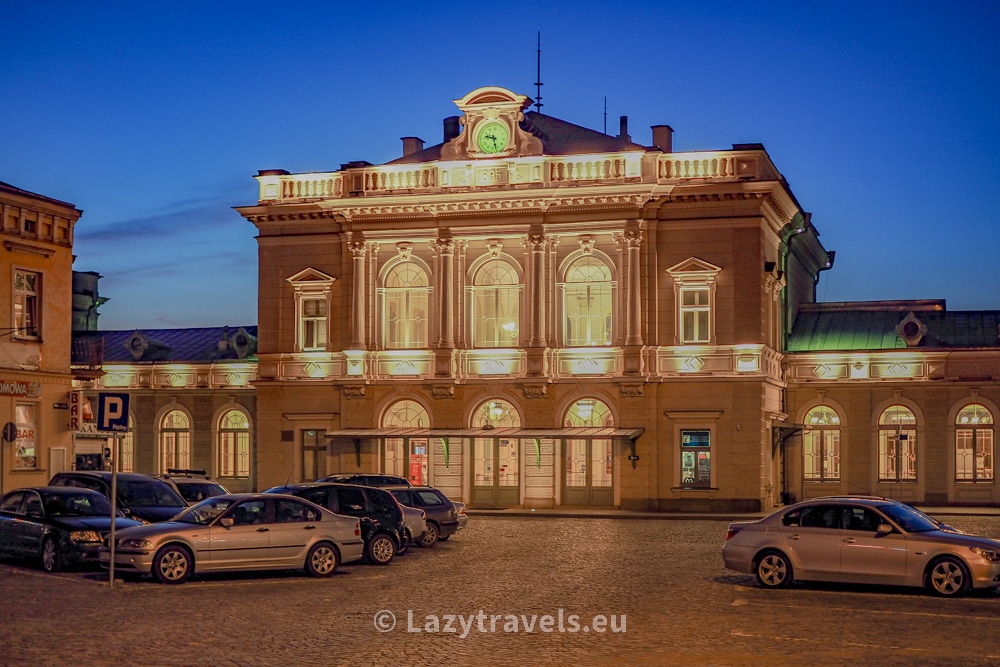
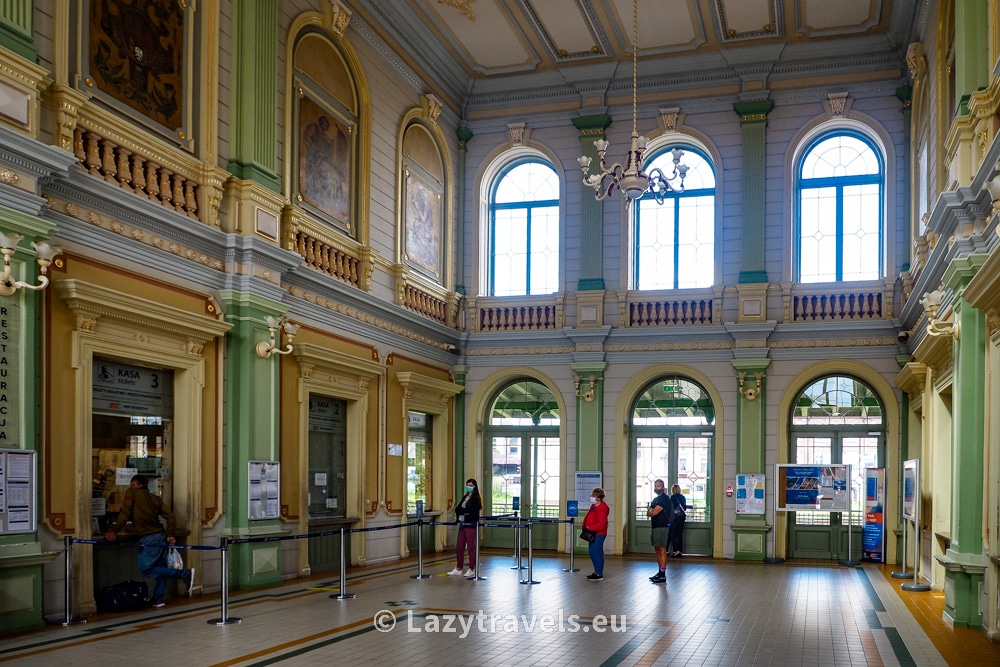
The railway station in Przemyśl could easily serve as a palace. Believe me, it is such an architectural gem that if you only saw a photo, you would say it was the house or palace of some 19th century magnate. It was built in 1895 in the neo-Baroque style. Renovated a few years ago, it is one of those places you have to see. And not just from the outside, as the interiors are very different from the image of a typical railway station! Those ornate ceilings, those walls, floor, chandeliers and other details. Simply a gem from the old days. The only thing missing, is the steam locomotives entering the platform.
Market square in Przemyśl
The heart of old towns is almost always the market square. Przemyśl is no exception, as in the glory years of the 16th century it was here that the heart of the city beat. And it was then that the town hall was built quite nicely. As I look at the pictures, it is quite similar to the one in nearby Jarosław. And why can it only be seen in paintings? Because the invader decided that it had to be demolished, and thus in 1794 the town hall in Przemyśl ceased to exist. Unfortunately.
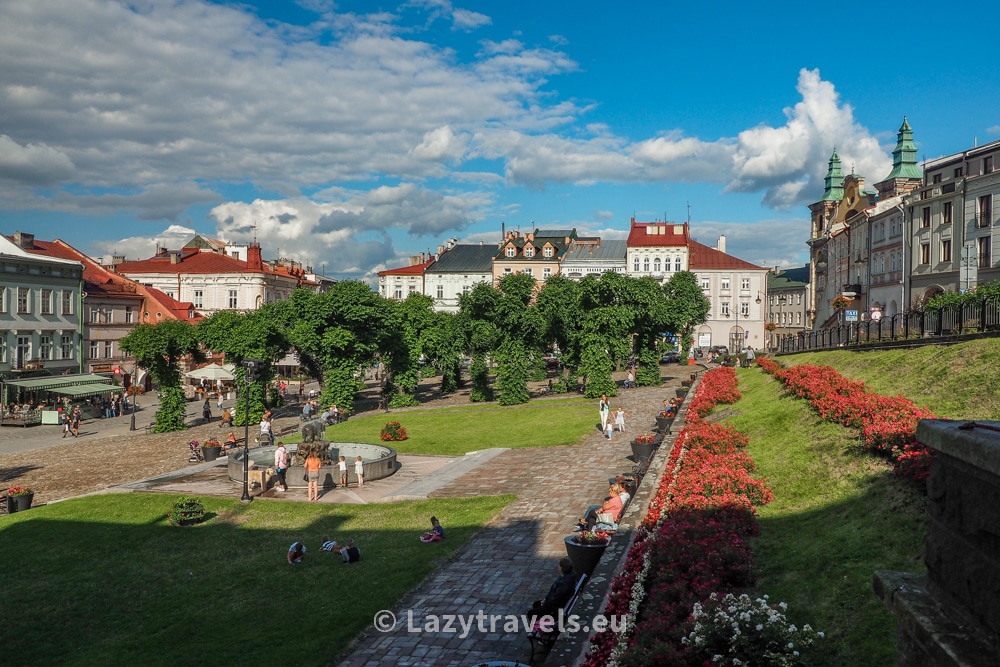
A similar fate befell the western frontage of the former market square. Therefore, today the square seems unnaturally large. The impression is also heightened by the fact that the square is sloping. Well, Przemyśl is almost like Rome. It is situated on seven hills. The only thing missing is that, like in the Romanian city of Timisoara, the Capitoline Wolf stands somewhere here 🙂 But thanks to the slope, there is a lot of green here: grass, trees and flowers.
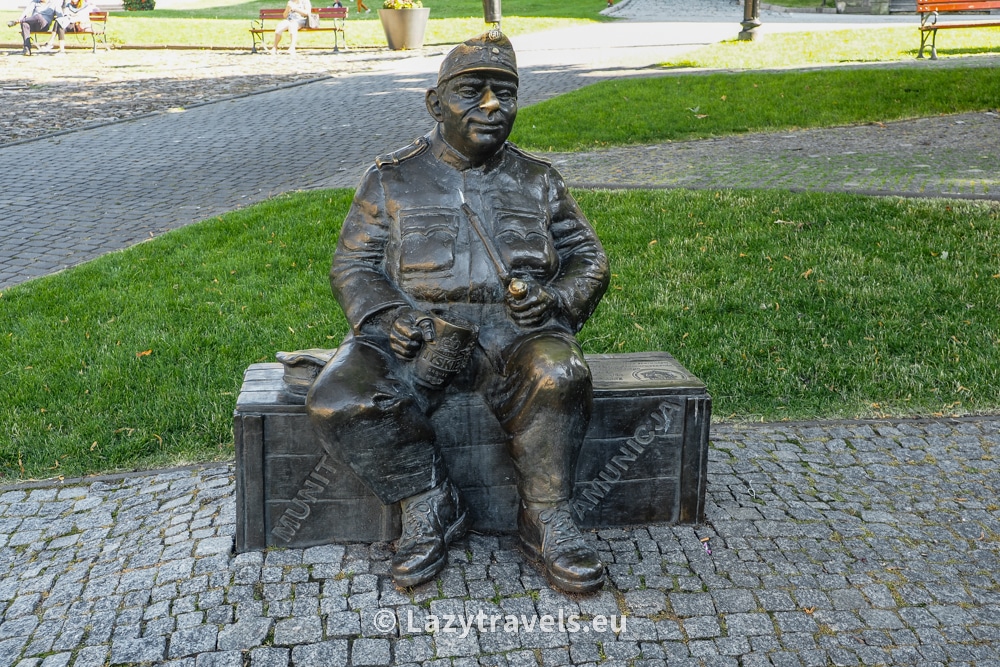
And against this backdrop, a kind-hearted man found himself quite well! In front of us is a statue of the warrior Szwejk, part of whose book adventures took place in Przemyśl. So, as befits a military man, he is sitting on an ammunition chest and, as befits a Czech, he is holding a mug of beer in his hand.
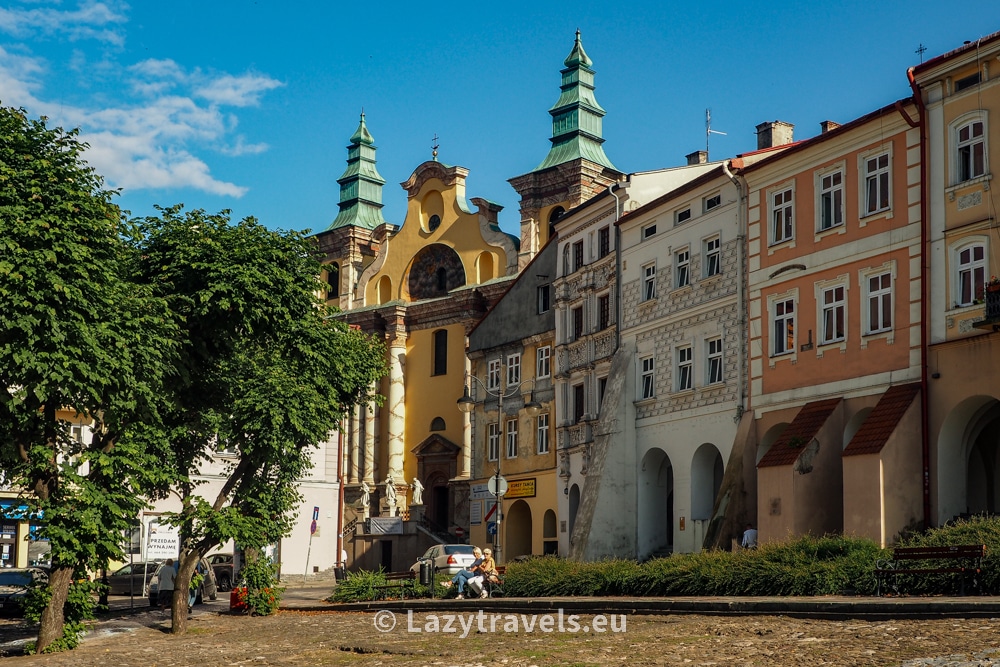
And while we’re at it, it’s worth paying attention to the northern frontage, as it’s here that firstly the beautiful townhouses and secondly the main cafés and restaurants are located. It’s worth going in because there are some where you can get local craft beer. You can get it, for example, at the ‘Cuda wianki’ restaurant. Anyway, there is also tasty cuisine here, including regional cuisine.
National Museum of the Przemysl Region
At number 9 on the Market Square, there is an old tenement house which houses one of the offices of the National Museum of the Przemysl Region. It is worth going in here to visit the several floors and the exhibitions prepared on them. Of course, not everyone likes such classic exhibitions, but for some time now I have been appreciating old, stylish furniture more and more. And there is an abundance of these here, when you view, for example, a reconstruction of a bourgeois flat from the time of Przemyśl before the First World War.
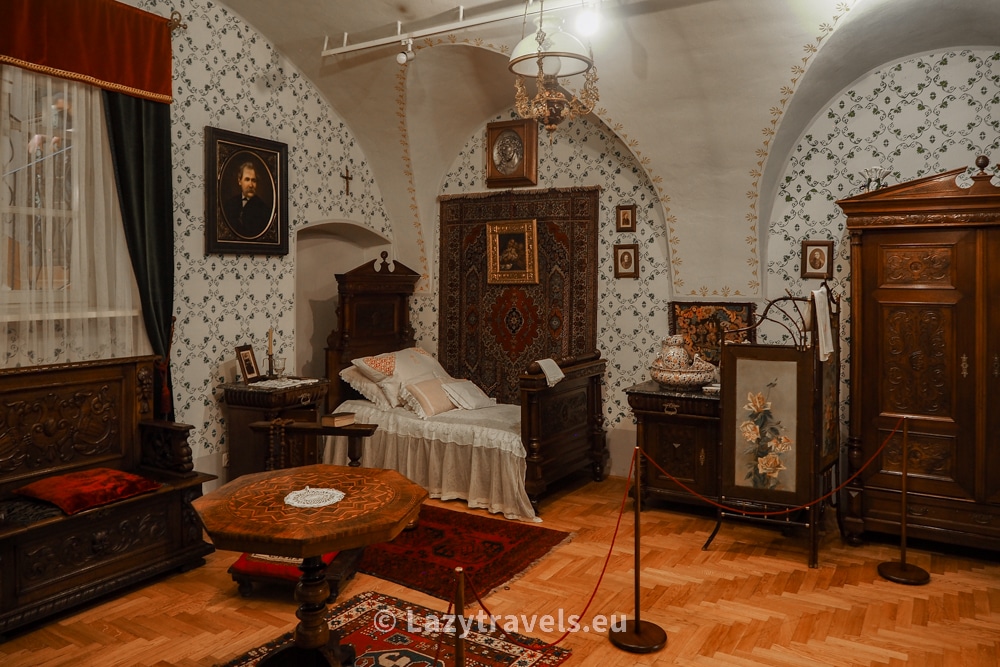
There is also an old photographic atelier and a schoolroom with desks and all the school equipment. And a portrait of Józef Piłsudski next to the cross.
It is also worth visiting for another reason, to see the interior of an old well-preserved tenement house. Narrow, but very deep, which is not visible at first glance.
The underground tourist route
With the tour of the underground route I was lucky, because I managed to do it in 2019. Unfortunately, a year later the route was already closed. All because of expansion, as work is underway to extend what tourists can see. Basements under more houses are being connected to the older tour. The new rooms will feature multimedia installations, showing life in former Przemyśl. I expect something extra, because the cost of the investment is a bagatelle! 13 million zlotys! Conservation work on old tenements is simply devilishly expensive. All the more so if they also include the renovation of these tenements.
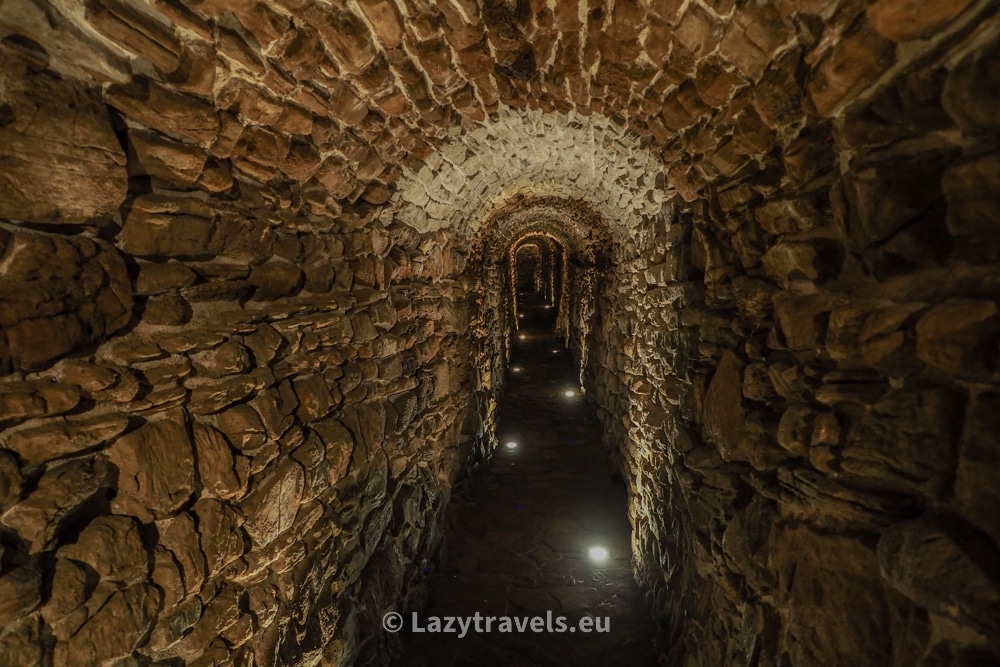
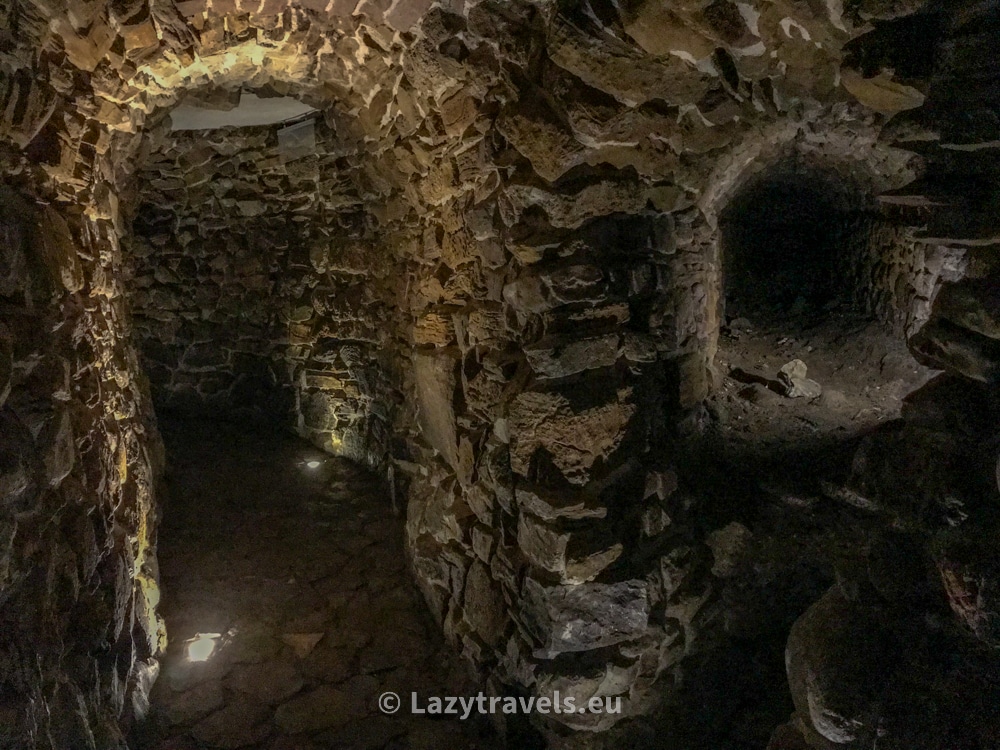
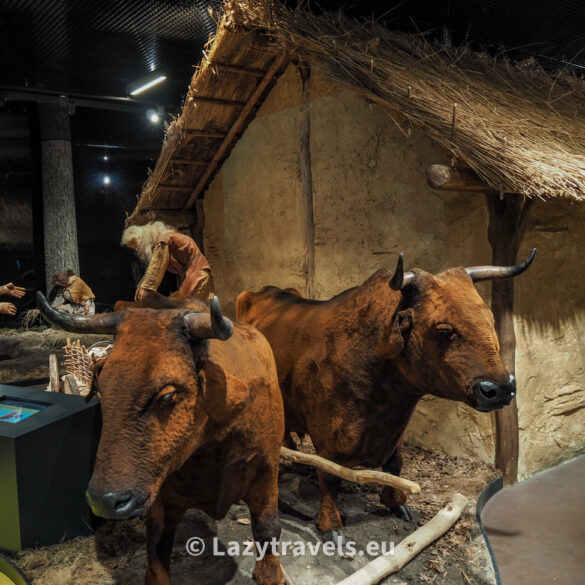
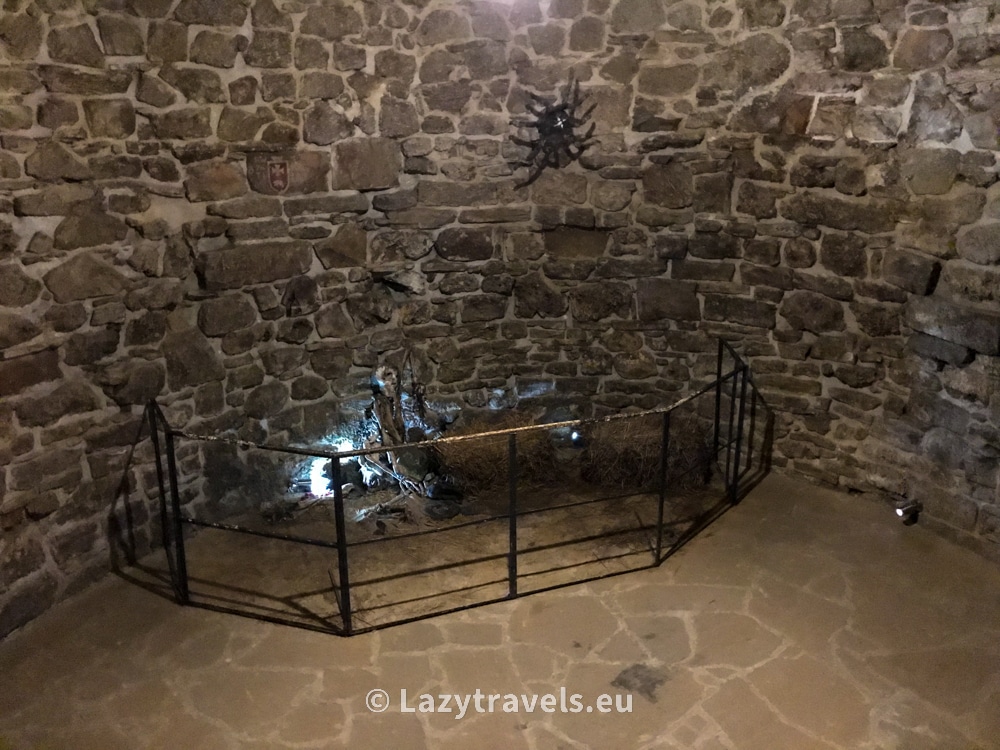
The old route descended to a depth of up to 10 metres below the city surface and was about 120 metres long. The most spectacular part was the long collector, through which water and waste from around the castle hill once flowed into the San. The nicely illuminated route provides an interesting experience, especially as it is entirely made of stone. The route starts under the town hall and exits at the market square through a specially built exit.
Churches of Przemyśl
As befits a border town, Przemyśl united not only different nations (although nation is a modern term) and languages, but also religions. This is why not only magnificent Catholic but also Orthodox churches were built here. And as with multiplicity, competition is born. The resulting decoration and beauty has survived to this day.
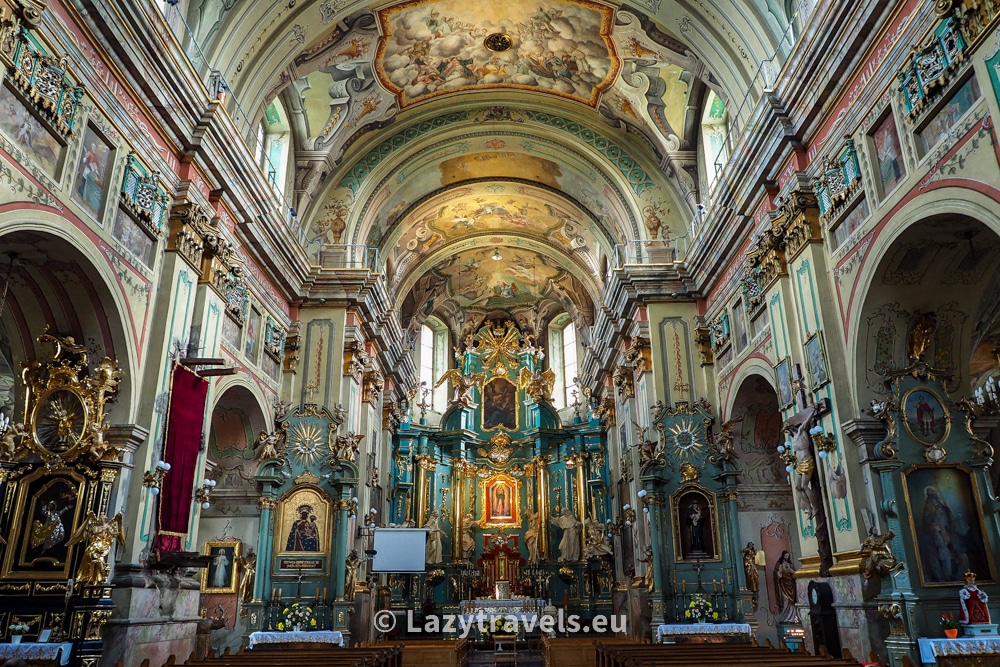
In my opinion, the most beautiful church interior in Przemyśl is the Franciscan Church. Don’t let the exterior’s inconspicuous façade fool you. It is massive, tall and dominant, but nothing foreshadows such a richly decorated interior. The interior is pure Baroque. It is a baroque of the kind that you don’t know what to look at. There are sculptures, frescoes, organs and altars. See for yourself in the photograph.
Of the many pre-war synagogues in the city, two have survived. Unfortunately, neither of them can be visited today. This is a pity, because the New Synagogue is impressive. It has survived the years probably mainly because it housed the city library for several decades.
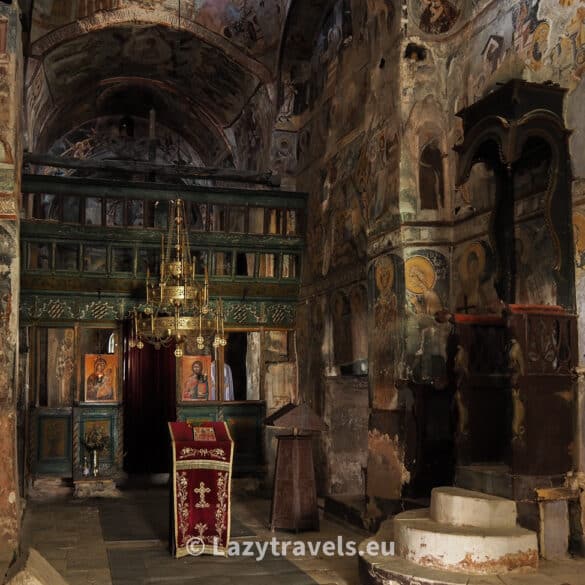
We can also see the Greek Catholic Cathedral of St John the Baptist with its rich iconostasis. Originally, it was a temple of the Jesuit order, but after the dissolution of the order, it was converted into a warehouse. The Greek-Catholic temple has only been here for a short time, since 1991.
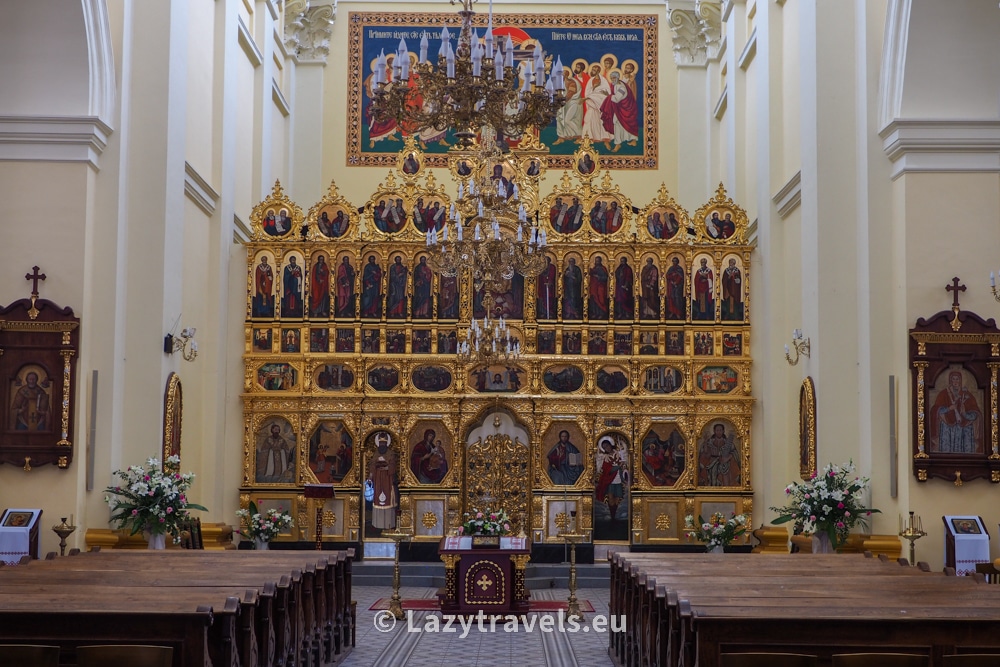
But the largest church in Przemyśl is the Archcathedral Basilica of the Assumption of the Blessed Virgin Mary and St John the Baptist in Przemyśl. The name is not short, but it is also a huge edifice. It even has a tower, which, according to a sign, can be climbed, but somehow it has never been open during opening hours. Today’s interior is in Baroque style, but the church was previously built in Gothic style. And what was Gothic was placed on top of the Romanesque church.
As you can see, each era brought rebuilding and enlargement. But let’s return to the present day. What we see is the result of a rebuilding started in 1724 and finished a dozen years later. Interestingly, shortly after its completion, a building disaster occurred and the vault collapsed. It destroyed the altar, as well as part of the crypts. Of course, the church was rebuilt.
Kazimierz Wielki Castle in Przemyśl
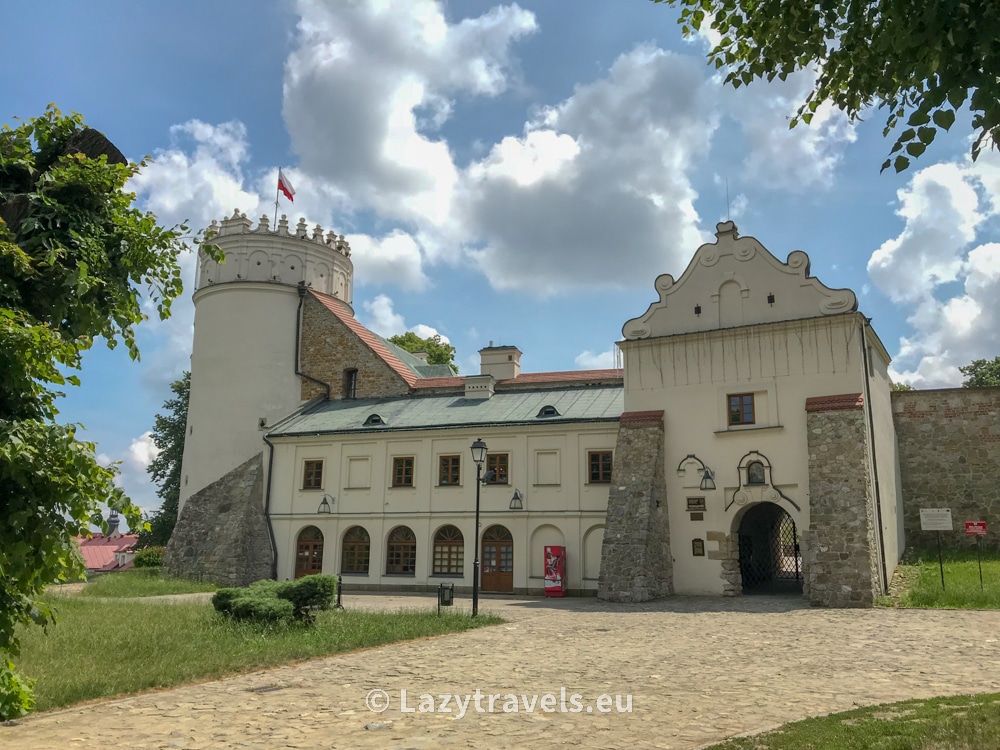
When you’re next to the cathedral, it’s worth climbing a dozen metres higher to the Castle Hill. It was on this hill that Casimir the Great had one of the castles of the defence system of Poland at the time erected. Unfortunately, almost nothing of the original building has survived to this day. Numerous reconstructions, sieges, reinforcements and demolitions have changed the character of the fortress. Today it is simply a Renaissance castle.
But in the courtyard, the outlines of buildings erected by Bolesław Chrobry – the Romanesque rotunda and the palatium, i.e. the main castle building for the ruler – have been uncovered.
The castle is worth visiting if only to see Przemyśl from this perspective, as it is one of the best viewpoints over the city. Oh, and there is a very good cafe with good coffee in front of the castle! Recommended.
The Pipe and Bell Museum in Przemyśl
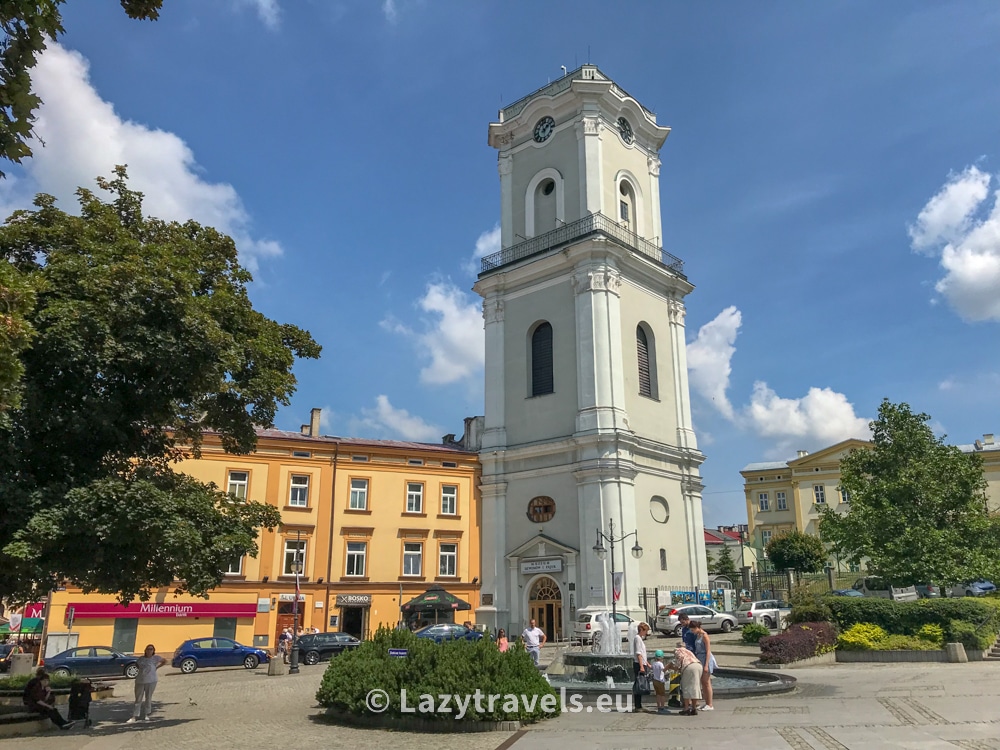
Since I mentioned a vantage point, probably the best point with a view of Przemyśl is the Clock Tower. The tower houses the Museum of Bells and Pipes. If you are a fanatic of bell-making, this will be your place on earth. I am not, so I only glanced at the bells. I paid more attention to the extensive exhibition of pipes. Why pipes? Because in the 19th century, Przemyśl became a power in their production. It is worth looking at the details of the pipes, as the craftsmanship of the makers was truly amazing. As well as the humour, because one of the pipes features…. a shitting guy 🙂 Look for it.
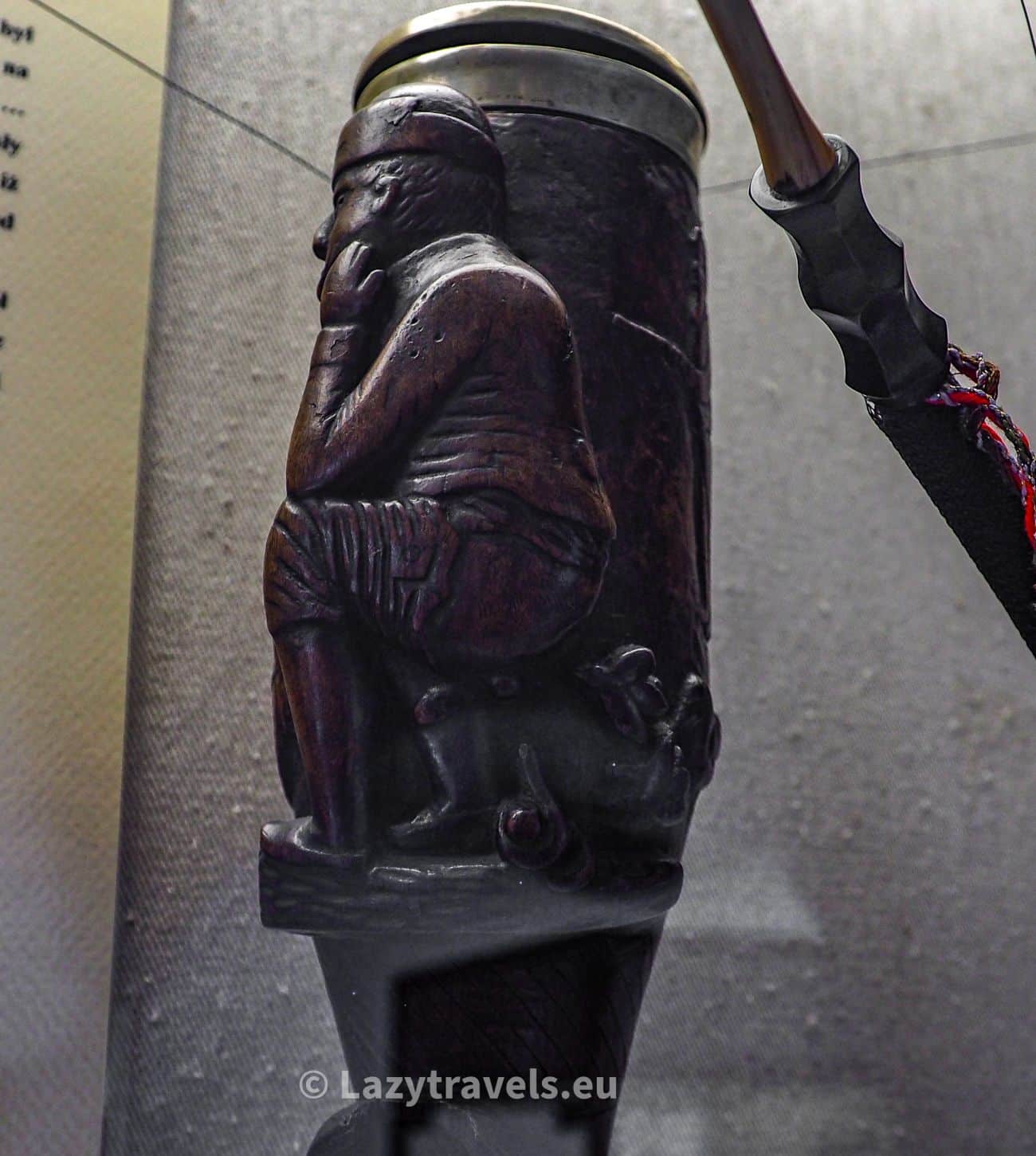
But the most interesting place is the top of the eight-storey, 38-metre high tower. It is from this observation deck that you get perhaps the most beautiful view of the old town. From here you can see all the towers of the churches, and if you look closely, the white wall of the Kazimierzowski Castle will emerge between them. You can also see the bridge over the San River and plenty of nature. A discerning eye that knows where to look will also notice the forts of the Przemyśl Fortress, which played such a great role in the First World War. And, of course, you can also see the Tatar Mound.
The Tatar Mound in Przemyśl
The name Tatarski Mound, as legend has it, was raised to commemorate a khan who was defeated and buried here. The mound stands on a hill with the symbolic name ‘Abolition’. And abolition comes from the word ‘abolish’ meaning to overcome. Although research links the mound to the Old Slavic cult of pagan gods headed by Svarogos. And it was on the mound that blood sacrifices were offered to them. Including human sacrifices. You can read more about the mound at this link.
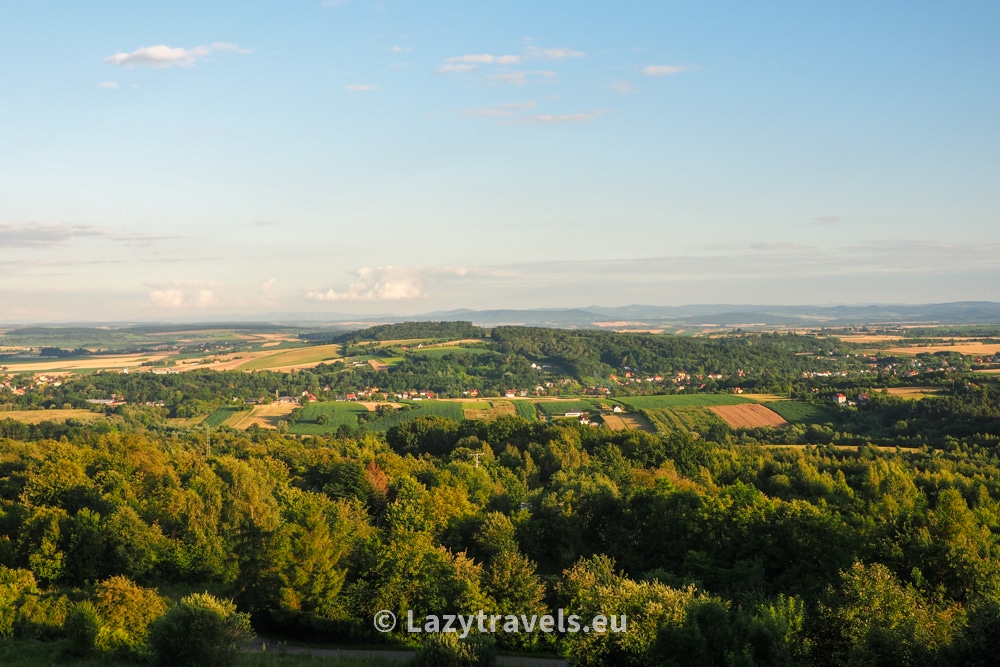
For me, the Tartar Mound was a fantastic trip from the centre. Firstly, I had the opportunity to see what the suburbs of Przemyśl look like, but secondly, the mound offers a wonderful panorama of the city and the surrounding area! A truly idyllic landscape with fields, forests and small villages in the background.
Descending from the Tatar Mound, I chose to go via the cross on Zniesienie, where there is another vantage point on Przemyśl. Because a cross is just like a cross. Nothing special, except that it is metal and reflects the sun. But right next to it is a toboggan run, not a winter one, but a summer one. So if you like such attractions, or are looking for attractions for children in Przemyśl, this place will be perfect. I will honestly say that I regret that I came late, because I would have ridden it myself 🙂
Going down towards the Castle Park, you will pass the Three Crosses Hill, but don’t count on any views like the hill of the same name in Kazimierz Dolny. There are bushes and mosquitoes here. If you have a keen eye and are a fan of militaria, you can spot the remains of the Przemyśl Fortress here. But these will not be spectacular fortifications. We will see more going out into the San area. But this bunker is already a newer construction from the Second World War. Caponier 8813 is one of the Molotov Line fortifications and can be visited.
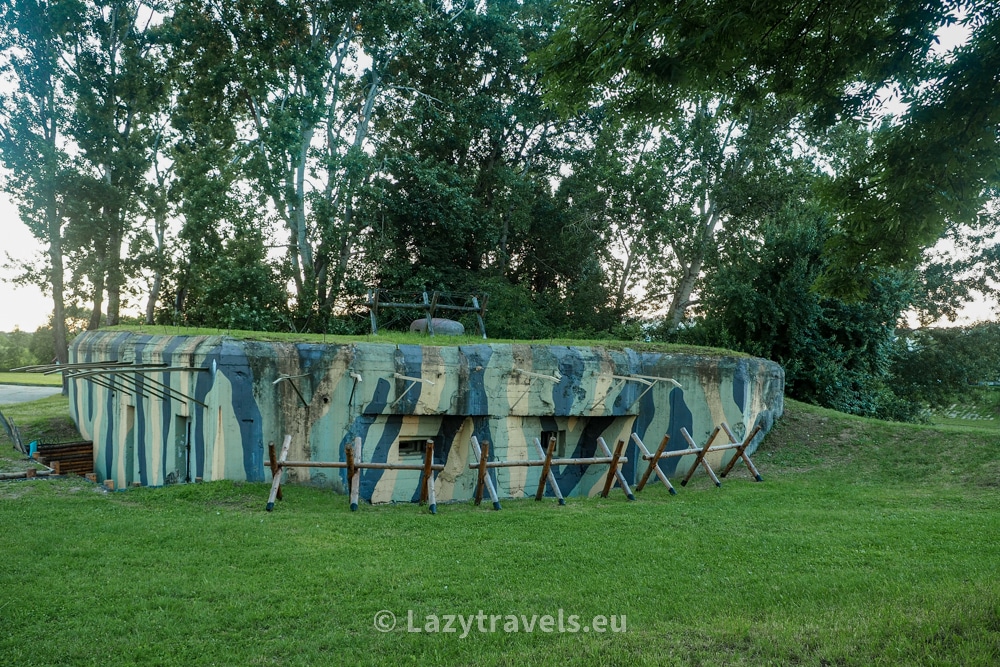
However, as I arrived here almost at sunset, it was already closed. So I returned to the Market Square, where I first went to eat in one of the restaurants. Then I did what I usually do in the evening after sightseeing. I went for a beer. Because the area around the Market Square in Przemyśl has several charming pubs with good beer. My choice fell on Absinthe, because the taps were tempting with something that wasn’t a typical conglomerate beer. And on a hot evening, a pint of beer jumped into my hand all by itself. Anyway, I was following the example of the good warrior Szwejk.
Hotels in Przemyśl`
And here I must admit that I was slightly surprised, because when looking for decent and inexpensive accommodation in Przemyśl, I had a problem. There is no well-developed accommodation in the city. Of course, it is not a desert, but it is clear that Przemyśl is not a tourist centre and still needs to work on this aspect. So either book further in advance, or the prices will be a little higher than expected or the standard lower. I stayed for a couple of nights at the Hotel Europejski just next to the railway station. It’s not the highest standard, but the price is very decent. And, of course, a private bathroom, which is the most important thing for me.
The Panorama Przemysl, for example, has a higher standard and is also in the centre.
Attractions around Przemyśl
Przemyśl is quite an interesting base for exploring the surrounding area. The closest is the castle in Krasiczyn, where you can take local buses and spend a few hours exploring the beautiful castle and adjacent park. But as there is a railway line in Przemyśl, we can easily get to Jarosław by train. And there, a lot of interesting attractions await us. From the beautiful town hall, through two underground tourist routes, to the Black Chapel with its burnt bricks, so great was the temperature of the fire. A little further on lies Łańcut with its famous palace, carriage house and gardens. You can also make a day trip to Rzeszów.
And if that’s not enough for you and you like cycling, there is the Przemyśl Fortress among the local hills, connected by a system of cycle paths. However, I have not been there, so I cannot say whether it is worth it. So, as you can see, there is plenty to see in the Przemyśl area. Unfortunately, Lviv is close, but because of the border, it is hardly suitable for a day trip. Which is a pity.