The castle makes an impression the moment we approach the town. The massive brick structure is visible from afar. It used to be the administrative center of a Teutonic Knights’ commandery; today it’s a museum as well as a hotel. Not much of the Teutonic Knights’ spirit remains here, though. Even the layout of the rooms is different. But you’ll read more about that below.
Gniew Castle marked the end of my journey through the Gothic, brick castles that still bear the memory of the Teutonic Knights. Gniew remembers them, too! But getting here without a car takes some effort. I’d made Grudziądz my base for exploring, so the question of how to get there remained. In Poland, getting around without your own car is usually a nightmare. That was the case this time, too.
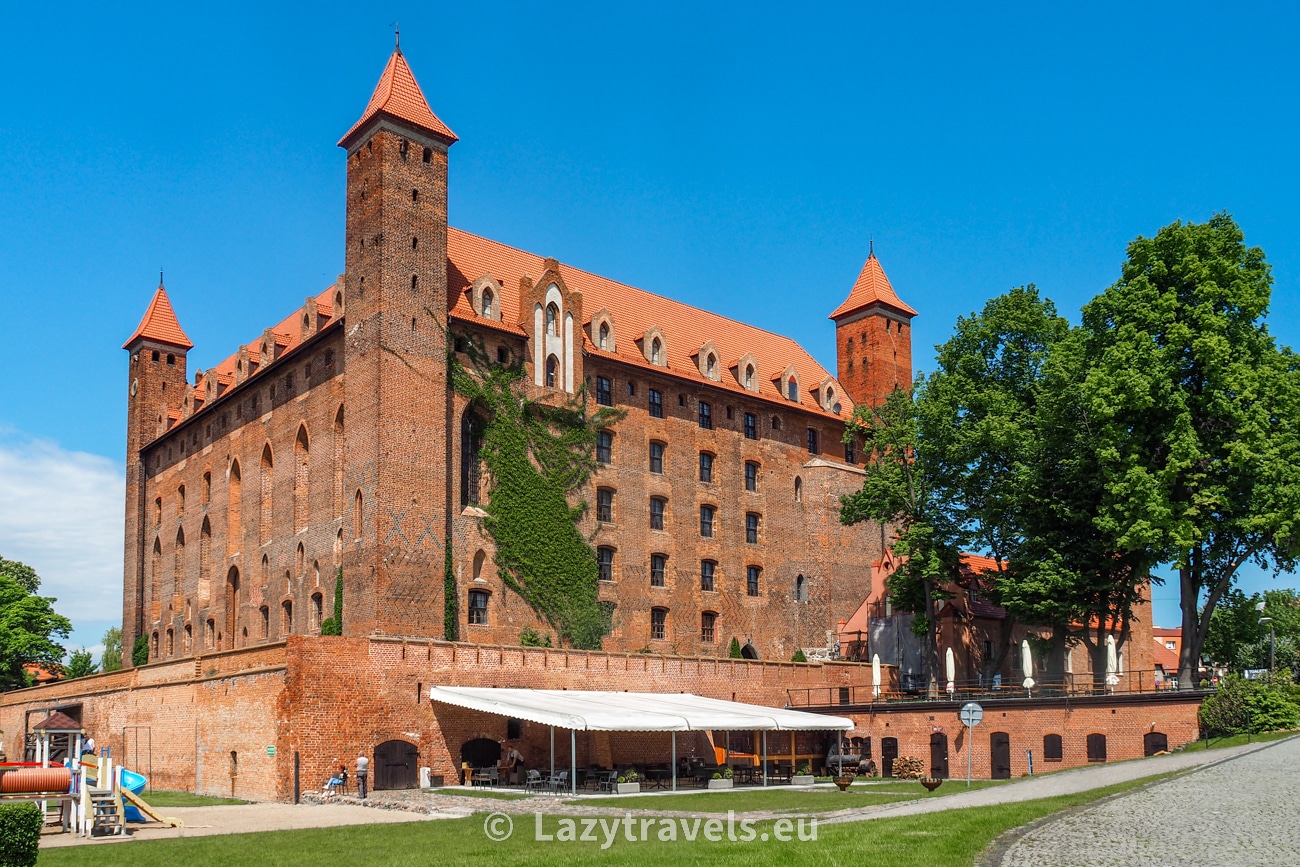
You can’t tour this Teutonic castle on your own. Tours are only available with a guide and last about an hour. And that was the problem, because I arrived at 11:30 a.m., and the next tour was at 12:20 p.m. Unfortunately, the bus to continue my journey was at 1:20 p.m., with the next one not coming until several hours later. Well, it turned out, however, that the tour group consisted of only one person – me. So the guide leading the tour of the historic site became… my private guide.
Gniew Castle. Little Remains of the Teutonic Knights
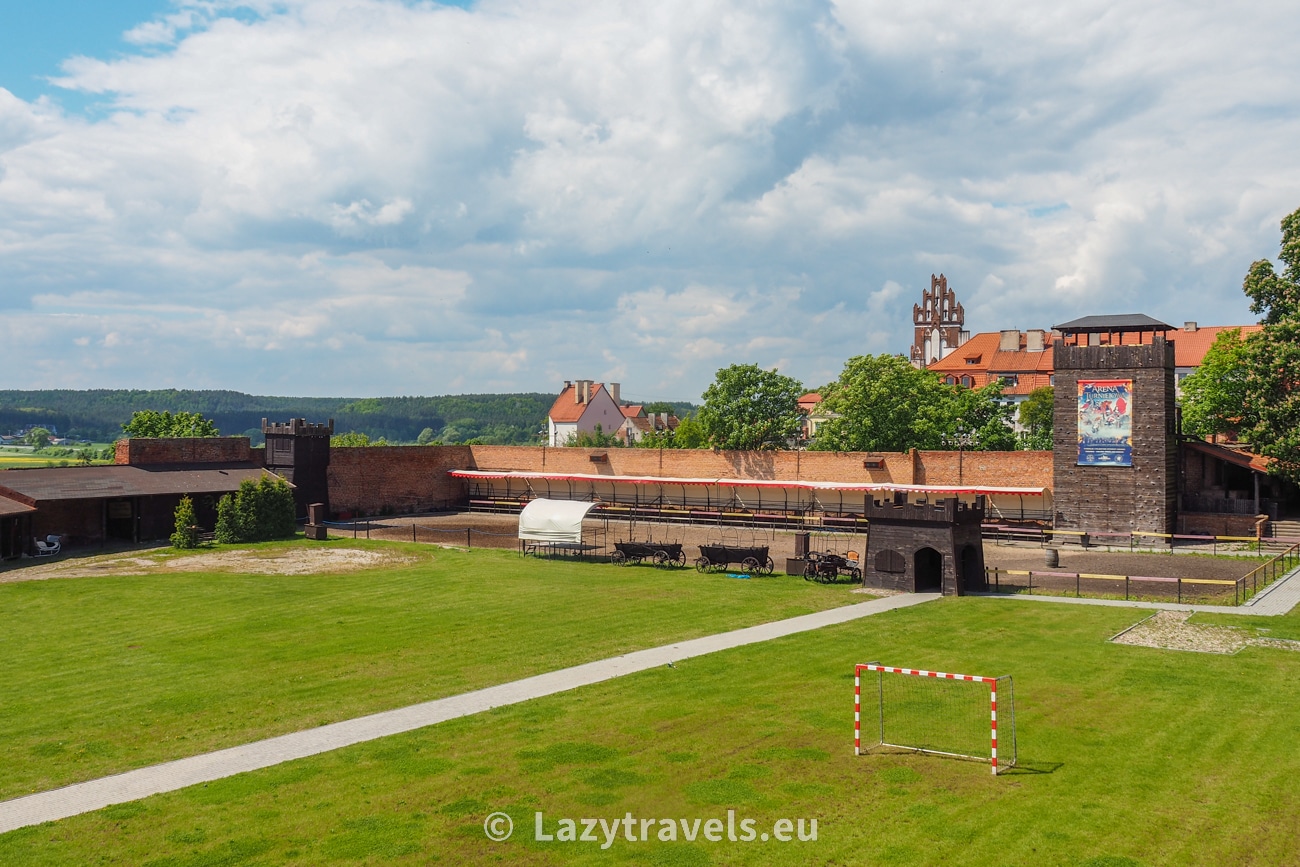
As we enter the castle courtyard, I see what he meant when he told me earlier that today this former Teutonic stronghold looks less and less like a castle and more and more like a hotel. For my part, I’ll add that it’s definitely more of a hotel than a gloomy brick stronghold from centuries past.
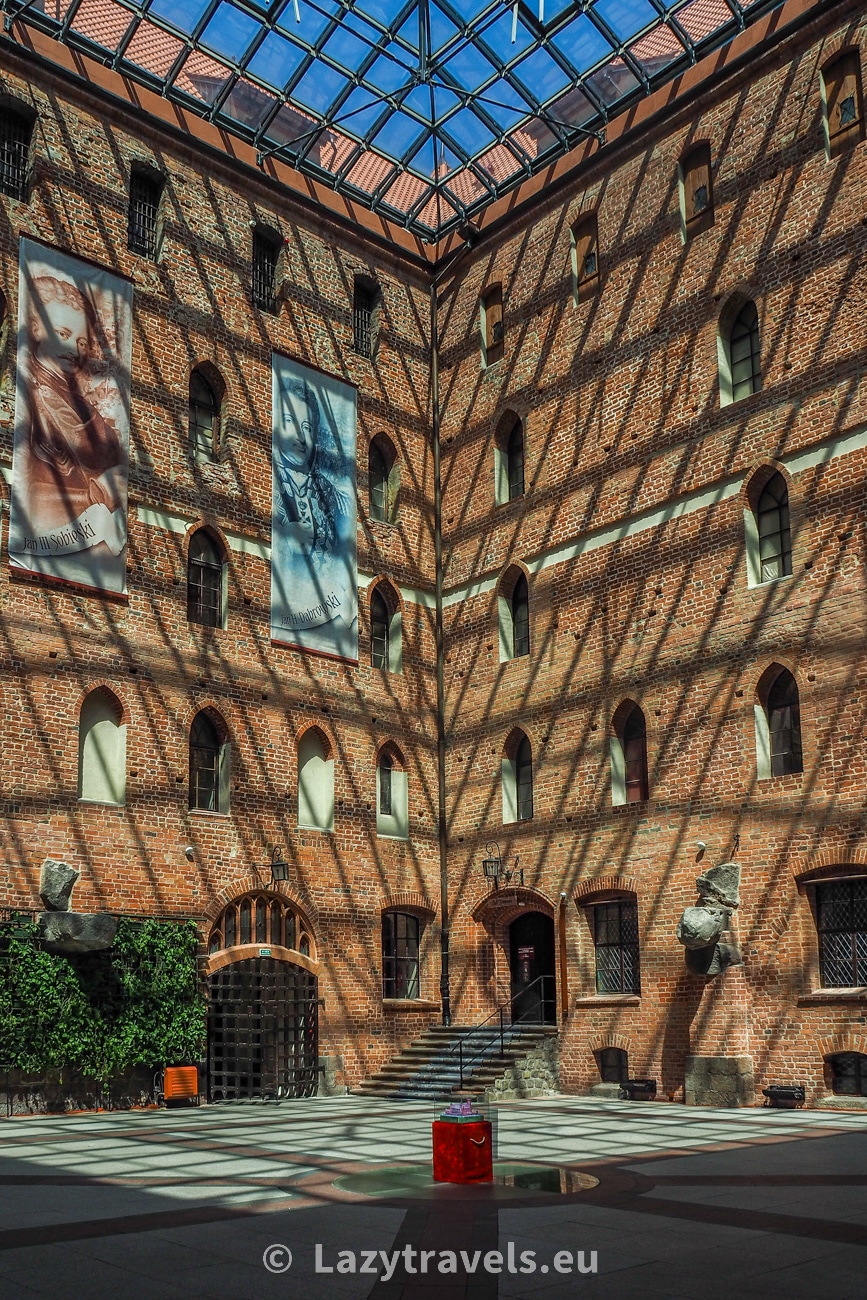
Upon entering the courtyard, I immediately notice that a glass roof has been built over the Gniew Castle courtyard! Thanks to this, events can be held here safely without worrying about bad weather. Nothing will disrupt corporate celebrations, weddings, conferences, or other types of events. What’s more, even the well that once stood in the center of the courtyard has been covered with frosted glass. I’ll go further: likely to ensure that gentlemen in patent leather shoes and ladies in high heels can walk comfortably while enjoying themselves, the inner courtyard of the Gniew Hotel has been paved with a surface as smooth as a table.
Inside, everything is perfect; even the walls look as if the masons had just finished building them yesterday and had just taken down the scaffolding. And that stone sphere embedded a few meters up the wall? Even it looks like a beautiful ornament. In short: Gniew Castle – or rather, the Gniew Hotel – looks exactly as a high-class hotel should!
However, with all these changes, the spirit of the commanders in their cloaks bearing the cross—the spirit of a fortified castle, of weapons, sieges, and heroic defenses of brick walls—has been lost somewhere along the way. It’s too perfect! So perfect, in fact, that even the ghosts probably don’t want to haunt Gniew. Besides, where would they haunt, when even the castle cellars house a bowling alley and a nightclub? Although who knows—maybe the former commanders grab their balls at night, when no one is watching, and knock down some pins to pass the time? They have all of eternity for entertainment…
Places to see in Gniew castle
Fortunately, with a little imagination, the guide’s vivid storytelling, and a good dose of attention, you can picture the old Teutonic castle in your mind!
>>>>>Upon entering the courtyard, the guide briefly recounts how Prince Konrad of Mazovia, in 1226, brought the Teutonic Knights to Poland in good faith. There’s no need to dwell on this, as it’s taught in every school in Poland. My guide draws my attention to what isn’t visible!
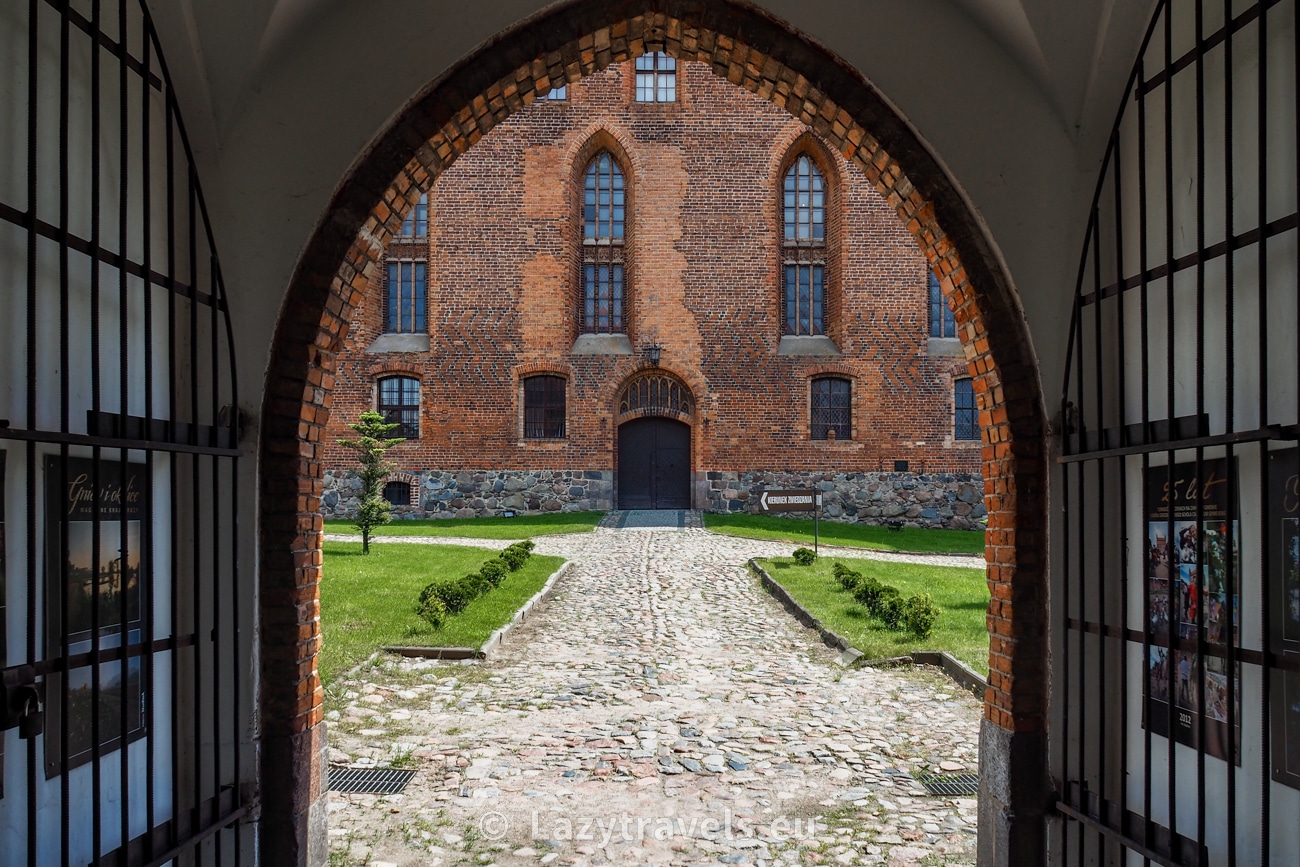
It turns out that what I see – and where I’m standing – isn’t… isn’t the castle courtyard at all! You could say this is level minus one. This is where the service rooms were located. A hundred years ago, right above us on this wooden floor, the castle’s daily life unfolded. Why was it designed this way? It was mainly for security! Even the old entrance gate was higher up. In the event of an enemy attack and the threat that they might break into the castle grounds, the garrison would destroy the wooden floor. The castle’s entrances and corridors were therefore located one floor above the wooden floor. Attackers could be fired upon from above, and they would also have to bring ladders to gain access to the interior of the castle.
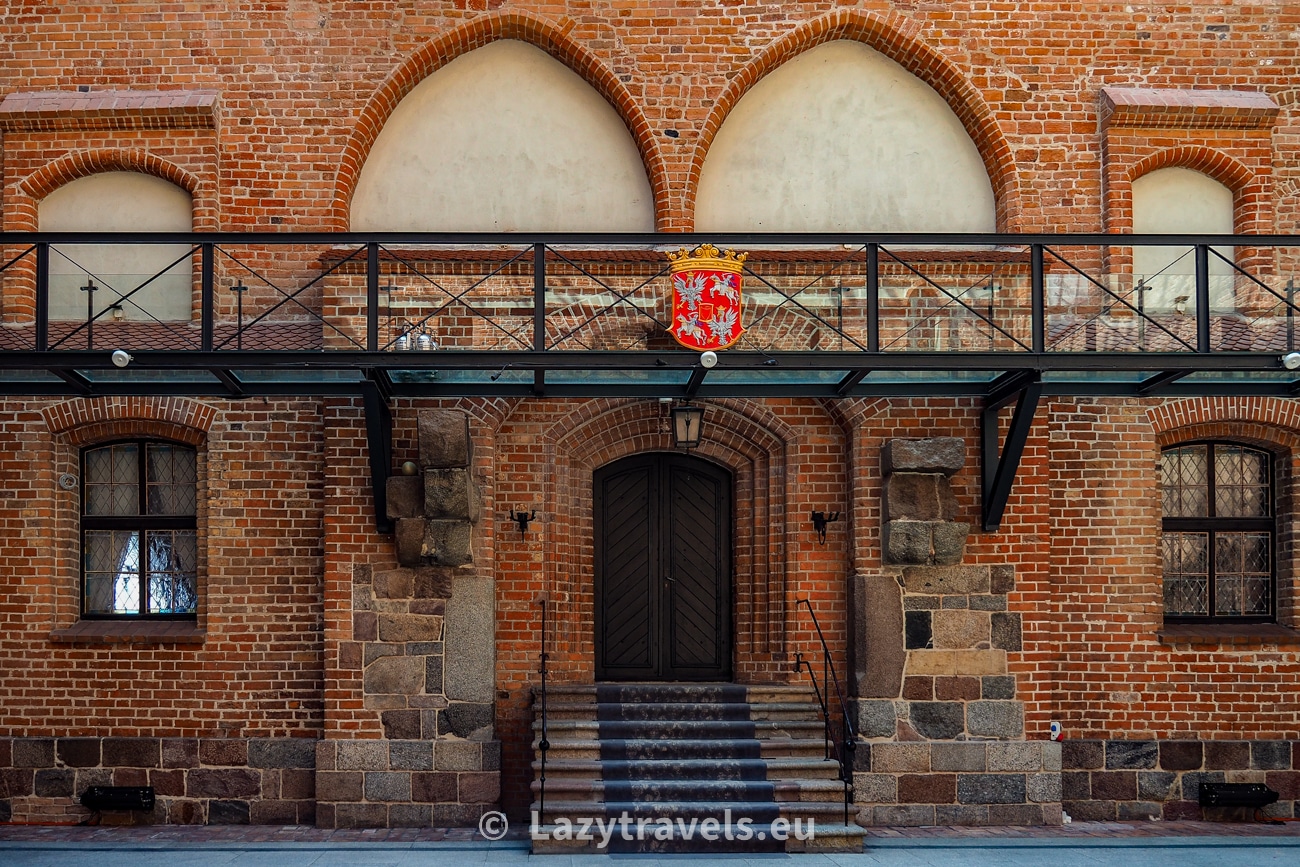
The defenders gained time to retreat to the keep – the last line of defense. A two-week supply of food and water was always stockpiled there. This was the time needed to organize a relief force from other nearby castles. The Teutonic Knights, after all, built their castles 30 to 40 kilometers apart. In the past, this was the distance a horseman could travel in a single day to summon help.
As you can see, the knights really thought through every possible aspect, which is why they were so formidable. Returning to the wooden floor I mentioned earlier, it was roughly at the height of the current glass balcony. As you’ll see for yourselves, that’s high!
The Chapel: The Heart of the Teutonic Castle
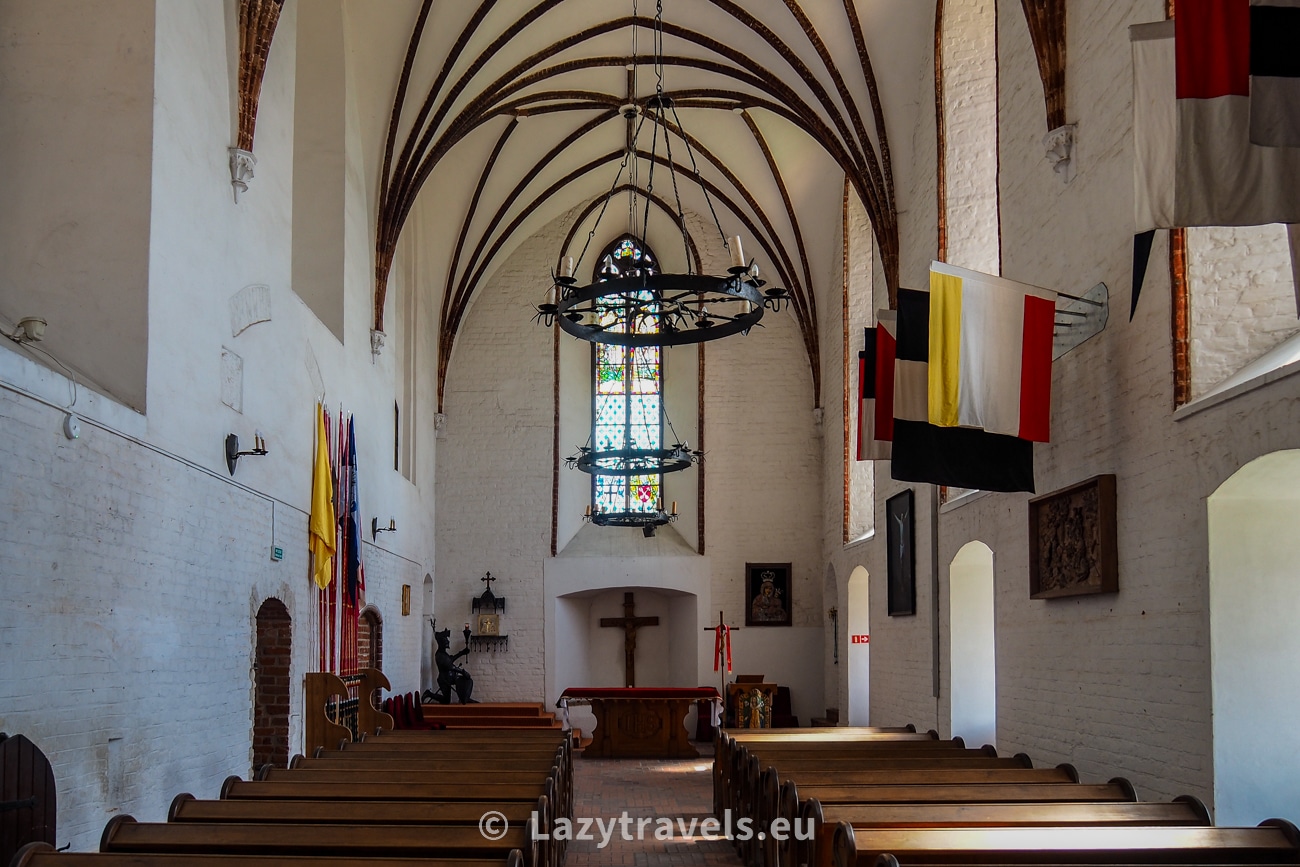
Accompanied by my guide, I’m heading to the part that once formed the heart of the castle in Gniew. It’s the church and the chapter house. As befits monastic brothers, they prayed every three hours and needed a church for that purpose. Unfortunately, not much remains of the former church, so you’ll have to use your imagination here.
A keen eye will immediately notice arches on the wall just above the floor. These are the remains of the former entrance gate, which led into the castle from the south. As you might guess, the ceilings and floors were also at different levels than they are today.
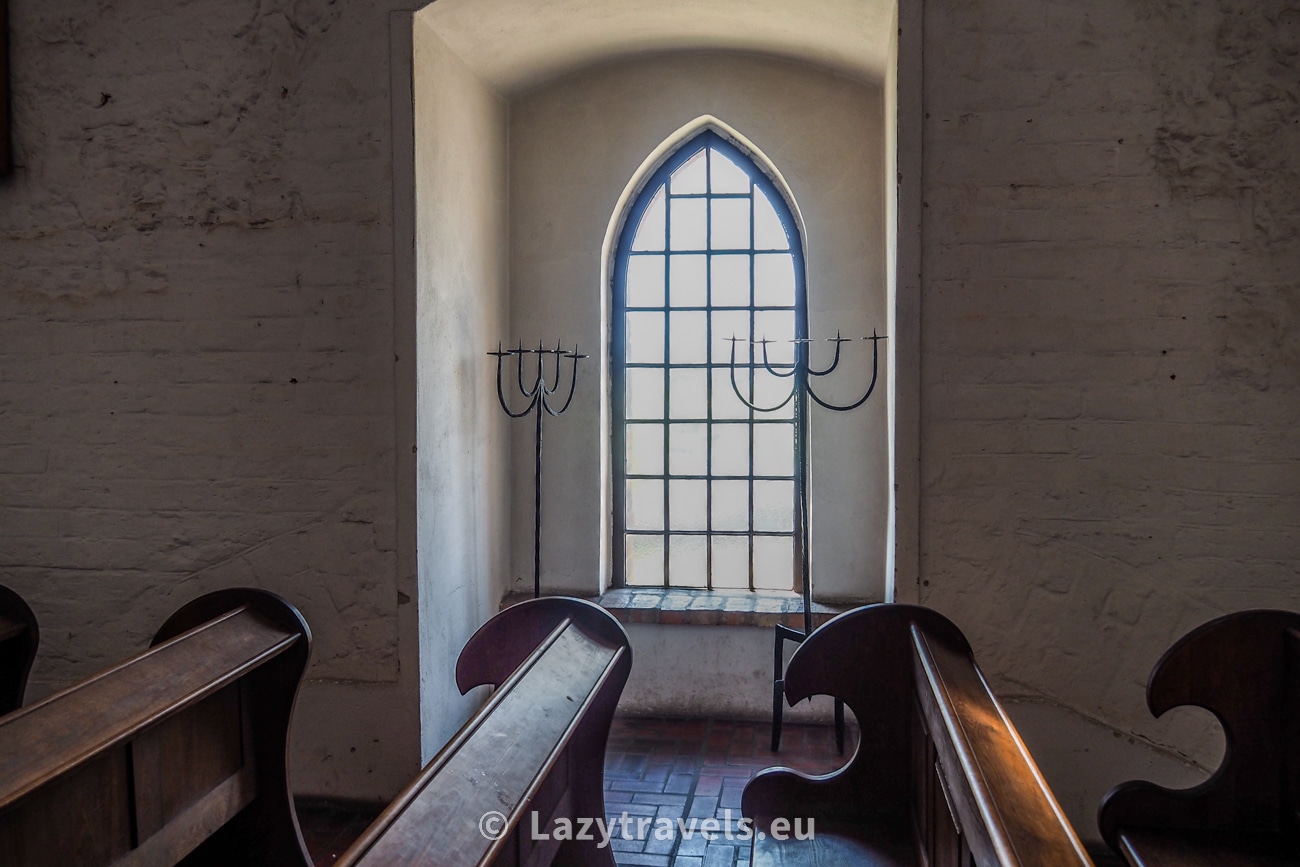
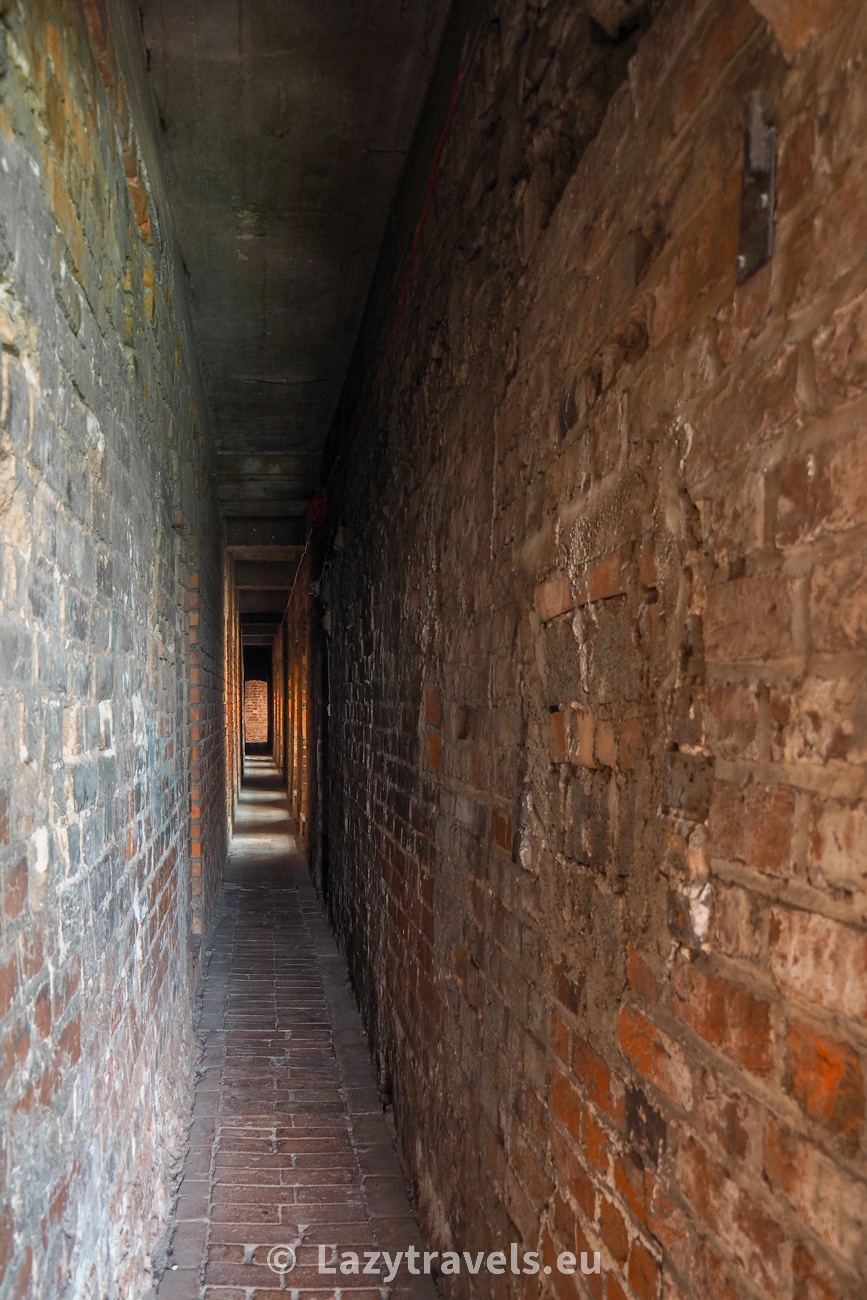
It’s also worth noting the small door located on the left as you face the former altar. Behind it was a room where, for example, sick monks could participate in services without coming into contact with the rest of the congregation. After hearing these interesting facts, we head upstairs via a narrow staircase. These stairs are perhaps among the few in the entire castle that still recall the old days. They lead us to a narrow corridor that encircles the entire castle. From there, you can also enjoy a perfect view of the castle’s surroundings, and my guide tells me where the river port once stood.
Yes, a lot has changed here over the years. In fact, today rivers in Poland hardly count as transportation routes at all. And yet, back in the day, cities such as Jarosław in what is now the Podkarpacie region, the royal and ancient Sandomierz, the impressive Toruń, and the nearby Chełmno – all of them grew wealthy through trade in goods transported down the rivers. Goods from the heart of the former Polish-Lithuanian Commonwealth flowed down the Vistula and its tributaries to Gdańsk, and then onward to the rest of the world. Rivers were the lifeblood of trade. One could say they were the highways of their day.
The History of Gniew castle
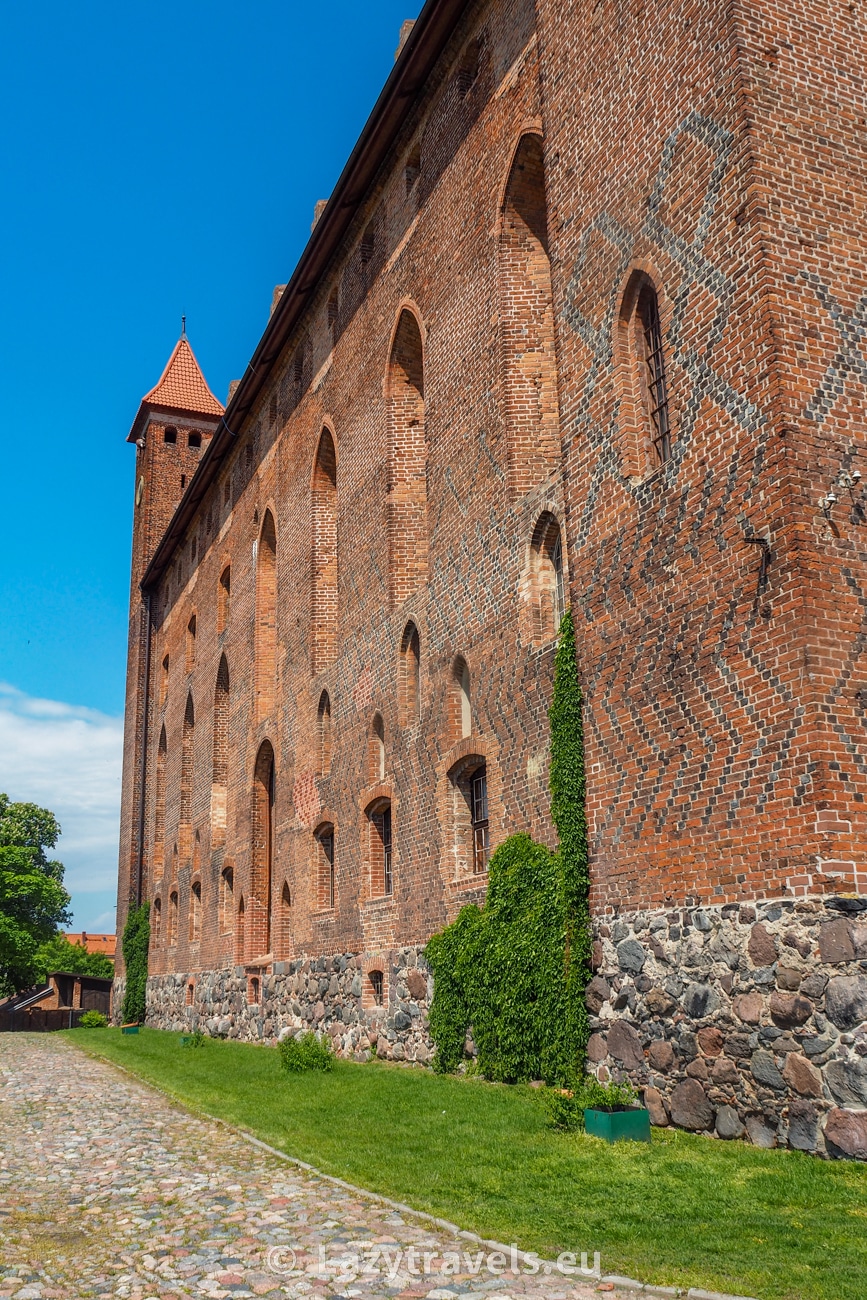
After Prince Mściwoj II granted the Gniew region to the Teutonic Knights, the monk Dietrich von Spira began construction of the castle. This took place around 1290. Since the knights were painfully pragmatic, in order to speed up the work, materials from a dismantled watchtower in Potteberg – located on the opposite bank of the Vistula – were used for the construction. A hill at the fork of the river was chosen for the castle—a location that was as inaccessible as possible and offered additional defensive advantages. Reportedly, construction took about 40 years. And it’s no wonder, because the stronghold is truly massive. As the first castle built on the western bank of the Vistula, it was certainly intended as a staging ground for conquering the surrounding area.
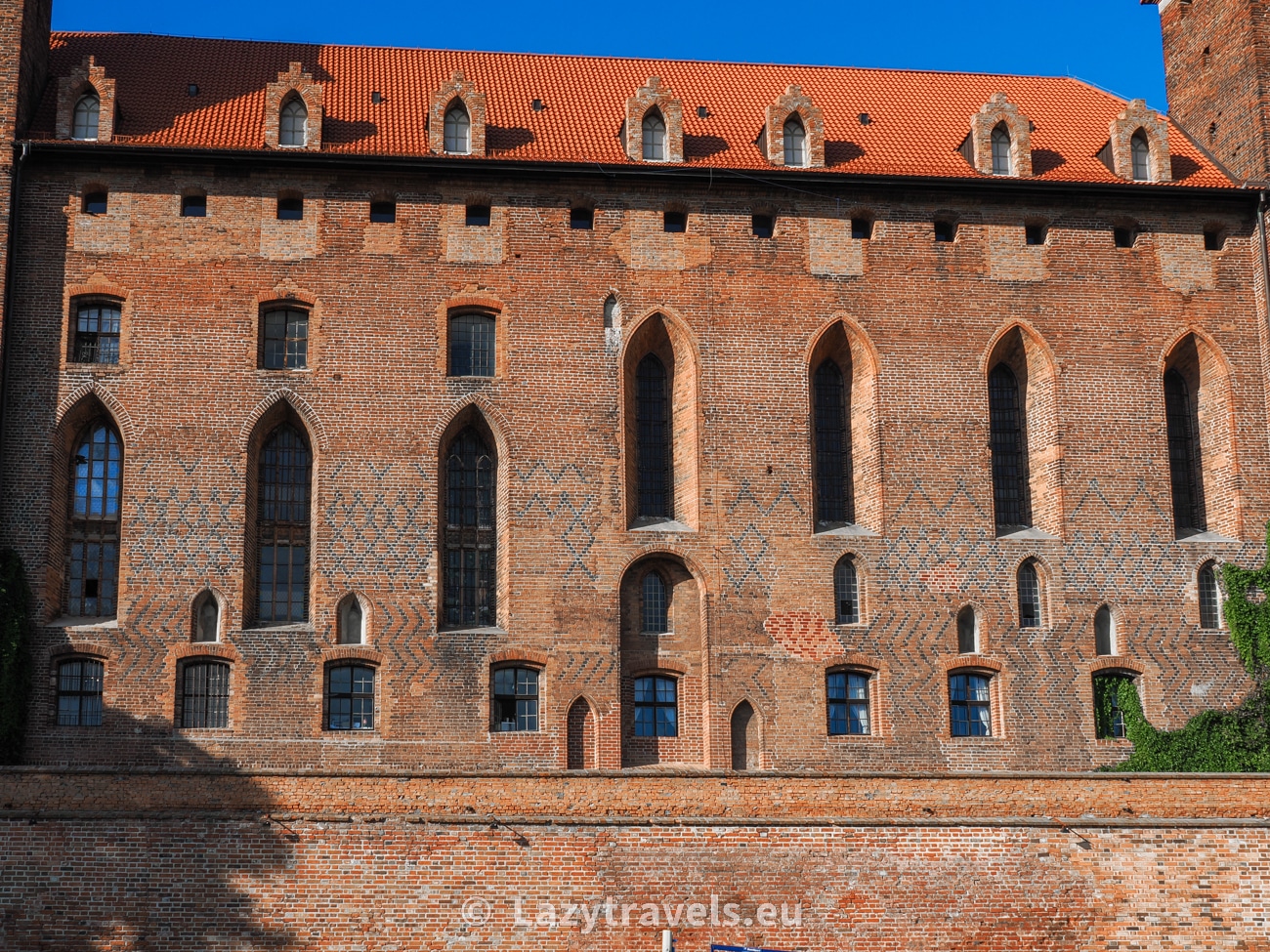
The completed castle had three turrets, and a fourth housed the last line of defense – the so-called “stołp.”
>In the famous and widely known year of 1410 in Poland that is, after the Battle of Grunwald – the castle briefly fell into Polish hands, but it did not remain so for long. The Teutonic Knights soon reclaimed it. A similar event occurred in 1454, when townspeople belonging to the Prussian Union captured the castle, only to return it to the Teutonic Knights later that same year.
The year 1463 was a significant one in the Polish chapter of this fortress’s history. It was then, in July, that the Polish army began a siege; it lasted several months, as the castle did not surrender until January 1, 1464. The Poles entered the castle in Gniew and remained there for several hundred years.
Polish Gniew
Gniew Castle became the seat of Polish starosts. And then? And then came the Republic’s subsequent wars—the defense, assaults, and destruction of this mighty stronghold. Particularly devastating were the Swedish invasions, during which the invaders plundered whatever they could and loaded everything onto rafts, barges, and ships to ultimately transport it to Sweden. Hetman Lubomirski recaptured the castle and subsequently established his headquarters there. Why am I writing about this? Because there’s an interesting story connected to it one that may well be a legend, but a very charming one at that.
You see, the hetman took several Swedes prisoner and held them in the castle cellars. However, they decided to organize an escape, and they might have succeeded if it weren’t for the fact that they burrowed a hole from their cell into the wine cellar. Where, to put it colloquially, they got completely drunk and went to sleep. After they were recaptured, they explained that they hadn’t intended to escape at all, but were simply drinking to the health of Hetman Lubomirski. The magnate was so amused by this that he pardoned them for their attempted escape.
Another interesting fact is that the starost of Gniew was the future King of Poland, Jan III Sobieski. It was thanks to him that the castle was renovated and restored to some semblance of its former condition.
The Partitions of Poland and the period following them
Then came the year 1772 and the First Partition of Poland. Gniew fell under Prussian rule. The Prussians began adapting it to their current needs. For this reason, it initially served as a granary and later was converted into a maximum-security prison. Both of these uses required major renovations, traces of which can still be seen today on the interior walls and which I mentioned earlier.
After World War I, Gniew returned to Poland, and unfortunately, a tragedy struck a year later. A fire broke out in the castle, consuming a significant portion of the building. If you’re wondering what could possibly burn in a brick castle, here’s a hint: the ceilings are usually made of wood, as is the interior furnishings. And as we know, wood burns very quickly.
>Major restoration work didn’t begin until 1968, and it is to this effort that we owe the current appearance of the former Teutonic Knights’ castle. Some of the alterations made over the centuries were removed, and the castle’s more Gothic character was restored.
In 2010, the castle came into the hands of a private owner, who transformed it into a hotel with a tour component.
Well, perhaps this is the future that awaits most historic buildings. Maintaining them is incredibly expensive, and they’re better off serving as hotels than falling into disrepair. In any case, it’s wonderful that they aren’t being used as a source of cheap building materials, as was once the case and as many castles ultimately met their end. Take, for example, the castle in Radzyń Chełmiński – once one of the mightiest of the Teutonic Knights’ fortresses. Today it still impresses, but most of it has been demolished.
Gniew Castle. Staying at the hotel for a night
Finally, let me remind you once again that today, at Gniew Castle, in the wing that once housed the dormitories of the Teutonic Knights, you’ll find the four-star Hotel Gniew. So if you want to see what it’s like to spend the night in such a hotel, you can book a room here. Gniew is a pretty decent base for exploring the surrounding area, so if you have a car, it’s a good idea.