Szydłów – a small town in southern Poland with fascinating monuments that few people know about. It’s a pity, because if the town were located closer to a major urban center in Poland, it would be an ideal spot for a weekend getaway. But unfortunately it is not, so it is even difficult to get here without a car. Here’s a guide to what to see in Szydów
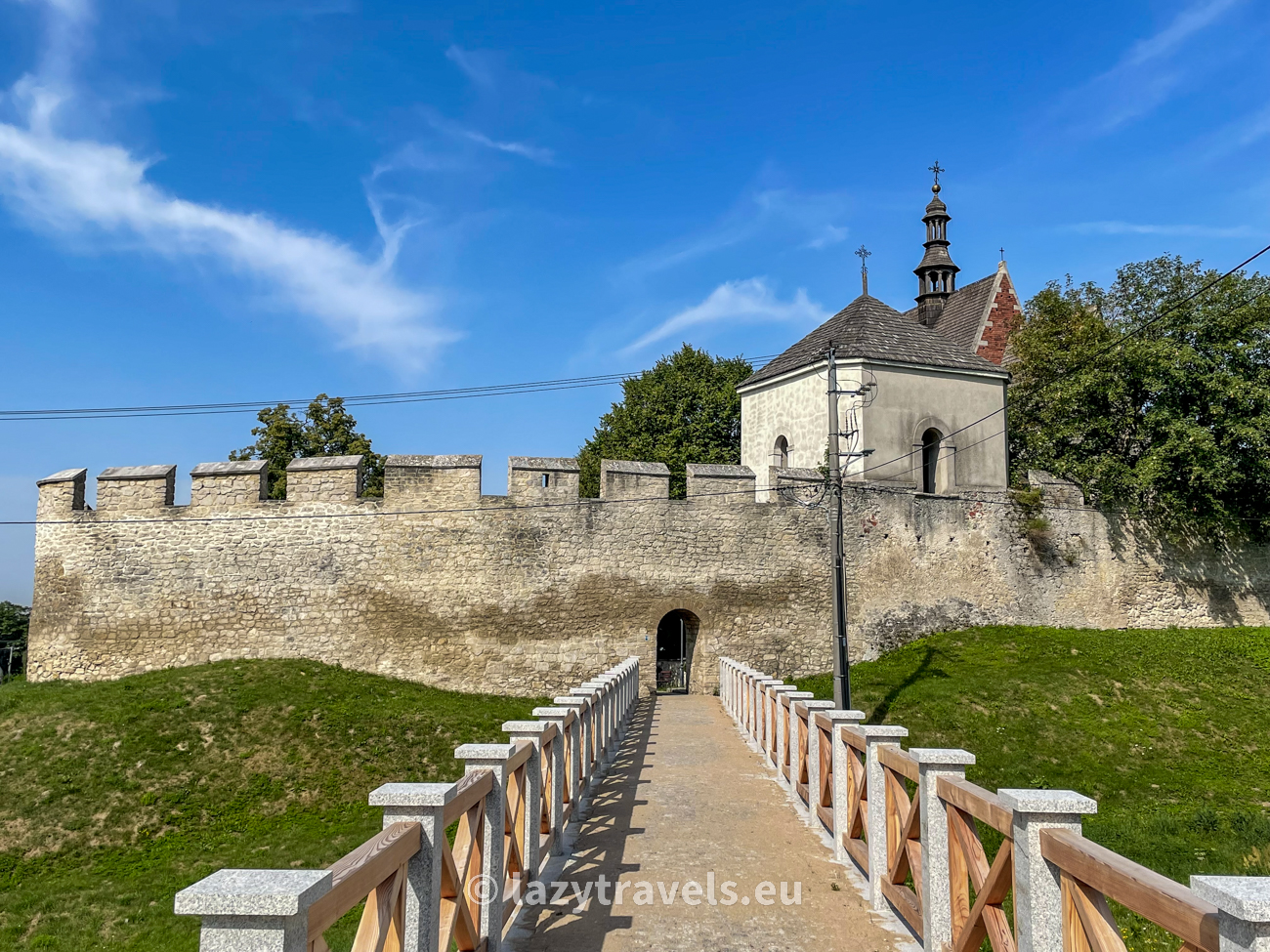
In guidebooks, you might find the description of Szydłów as the Polish Carcassonne. Carcassonne is, a town in France that has preserved almost complete medieval city walls. However, this description in relation to Szydłów is a misunderstanding. First of all Szydłów does not have preserved entire medieval defensive walls. Moreover, of the three former city gates, only one has survived to this day: the Kraków Gate. Beautiful and majestic, but still one and only. In fact, there are more comparisons in this part of Poland. Szydłów is located in Ponidzie, a region sometimes compared to Tuscany. This is also a definite mistake. And just as Ponidzie is not Tuscany, Szydłów is not Carcasonne. And it’s VERY GOOD, because you don’t have to pretend to be something you’re not in order to be an interesting place, full behind the monuments.
The first glance at Szydłów
The first impression upon arriving in Szydłów is peace and a feeling of emptiness. How else to describe a town you arrive at on a Friday morning that greets you with silence? I parked my car in the central parking lot, right by the church, and went to the market square. It was 9:30 AM, and I didn’t see a living soul around; only a closer look at the surrounding houses revealed that I was not alone. In two places, there were stalls with fruits. The local plum, the symbol of Szydłów, was the star of the show. Other than that, absolutely nothing was happening. The lethargy of a small town. I had no choice but to enter a café that was miraculously open and wait until 10 AM, when the tourist information center and the castle located right next to it would open. Thus, I began to explore the town’s monuments. Come with me to see interesting places in Szydlow, there is so much to see!
The legend of Szydłów founding
Not far beyond the mountains and forests, but in a cave beneath a hill among the woods, there lived a bandit named Szydło. He was very greedy and fond of treasures. Together with his gang, he roamed the merchant route leading from Kraków to Sandomierz and further to Ruthenia. He practiced his banditry for years, but his time eventually came to an end. According to one of the legends, one day he attacked a merchant (other legends say it was a bishop or even a king), who, in great fear, began to pray and call for help from all the saints.
Surprisingly, the heavens responded, and a rescue party appeared on the road. A knight clad in armor was riding a powerful steed. The band of robbers fell into a panic and fled in terror. Seeing what had happened and that the saints themselves had summoned the knight to earth, the bandits came to their senses and decided to abandon their bandit ways. As compensation for their amassed treasures, they founded the town of Szydłów. At the same time, on the hill where they had their bandit cave, they built a church dedicated to All Saints, to honor their intervention and guide them onto the right path.
The Royal Castle in Szydłów
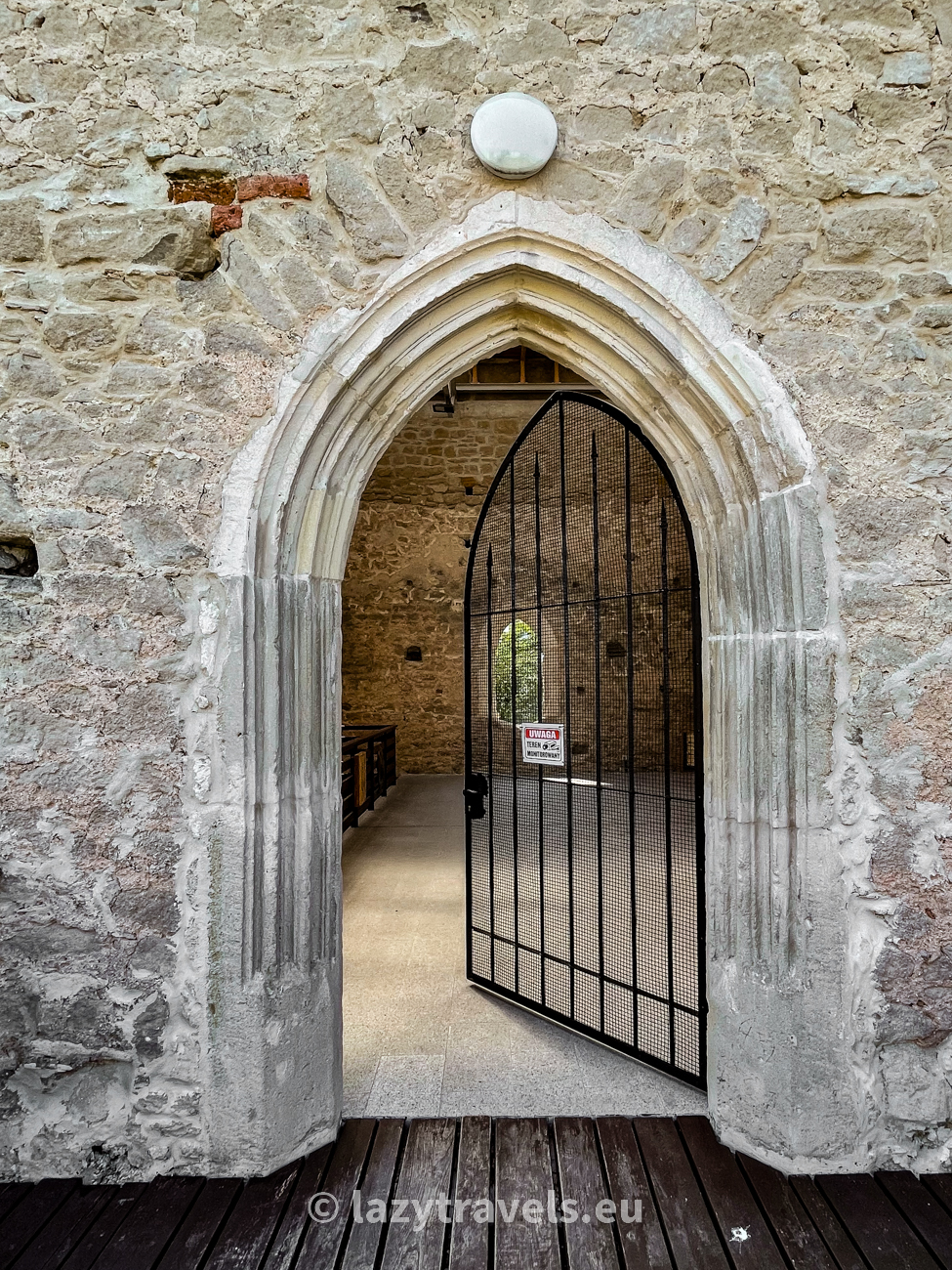
If the phrase „royal castle” conjures images of soaring towers, mighty walls, and interiors dripping with wealth… this is not the place! The royal castle in Szydłów was, until recently, what is known as a permanent ruin. Only recently has it been roofed and opened to tourists. However, this does not mean it is not interesting! On the contrary! For one, its simplicity and rawness show what royal residences looked like in the Middle Ages. This is what makes the Szydłów royal residence unique. Many royal castles have evolved over the centuries, being rebuilt and transformed into various architectural styles, while Szydłów has remained as it was built. Only… it has deteriorated.
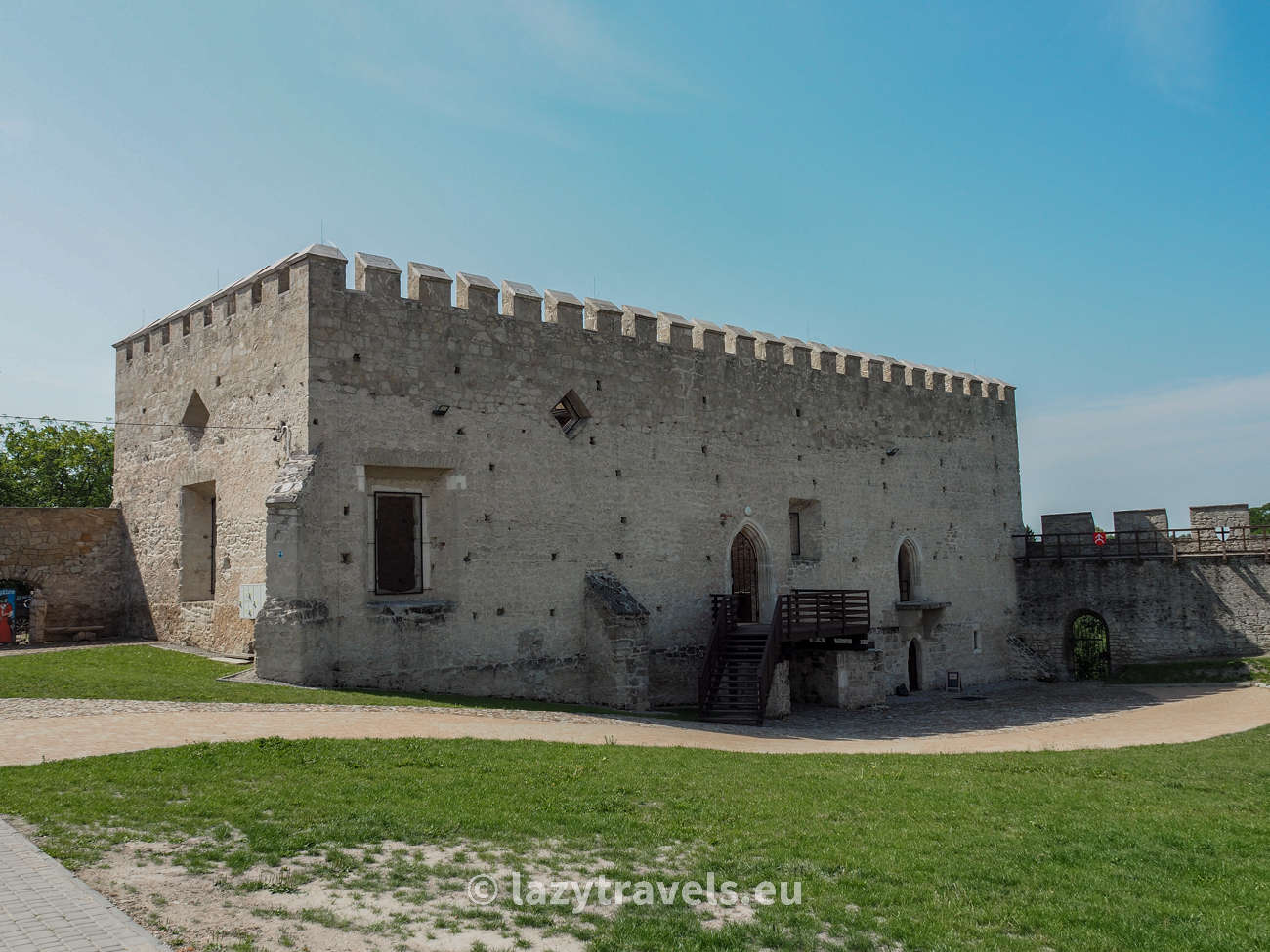
Originally, the castle consisted of a greater number of buildings. What has survived to this day is just one building, the southern house. It was erected on the orders of Władysław Jagiełło at the end of the 14th century. For a more detailed description, it is worth mentioning that right next to it stood the northern house, which was built during the reign of Casimir the Great. Unfortunately, it has not survived to this day, and in its place now stands… a gymnasium. And as befits a medieval castle, this one also had a „stołp,” or a tower of last defense, where the castle’s crew would hide when the enemy broke into the castle. The last place of defense while waiting for rescue. Well, to this day, the tower has not survived.
However, in the preserved building, hypocaust ovens have been preserved in the basement, which heated the throne room above with warm air. And since we are in this room, it is worth taking a look at the windows. They are made „the other way around.” Usually, decorations are on the outside, but here, to emphasize the splendor of the place, the window decorations are directed inward. Additionally, deep window niches have also been preserved, where people once sat and held conversations.
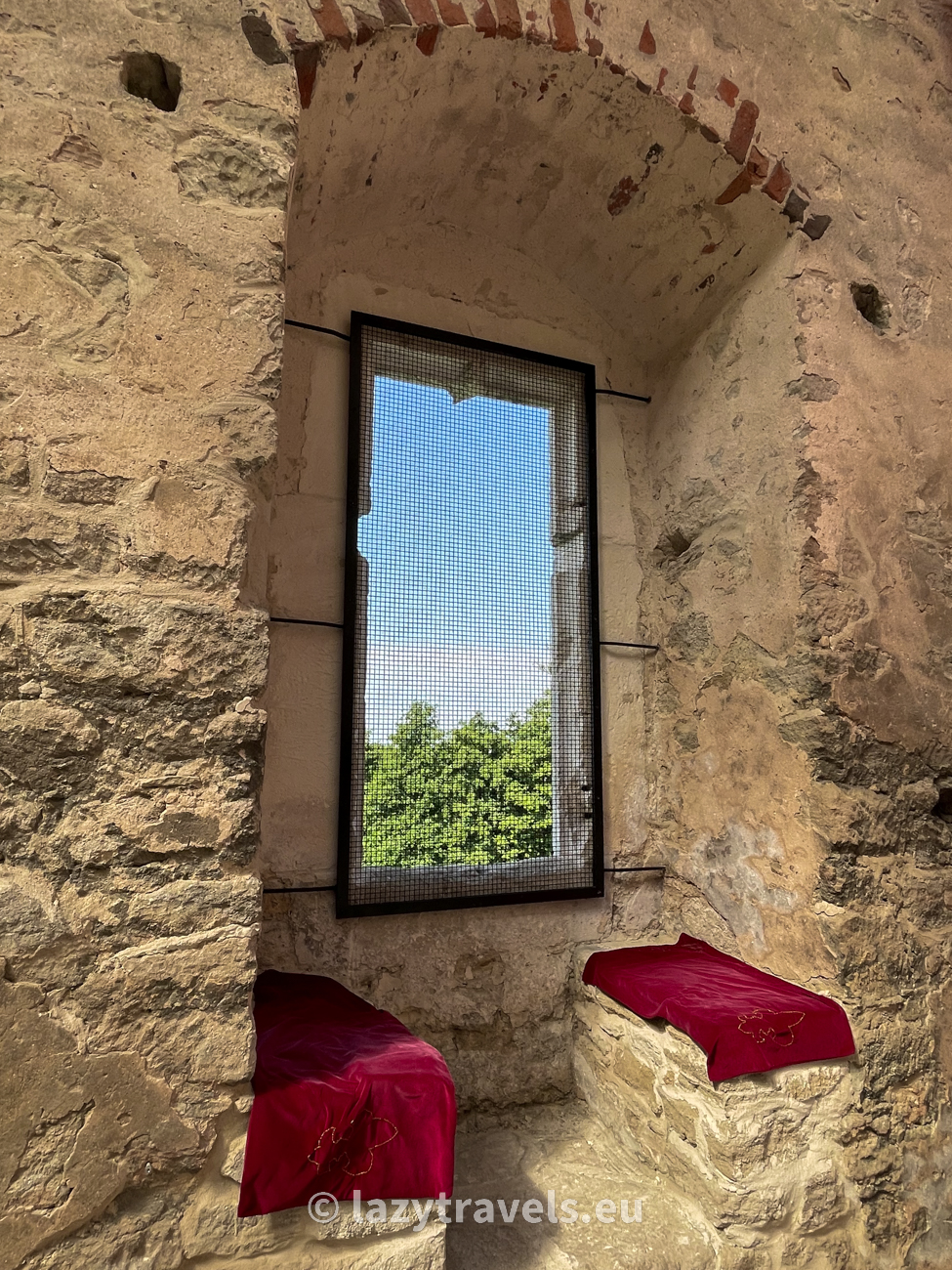
Or perhaps they were simply admired for the surrounding area. They must have once been beautifully decorated, like those from the prince’s tower in Siedlęcin. Well, another thing that did not survive the test of time.
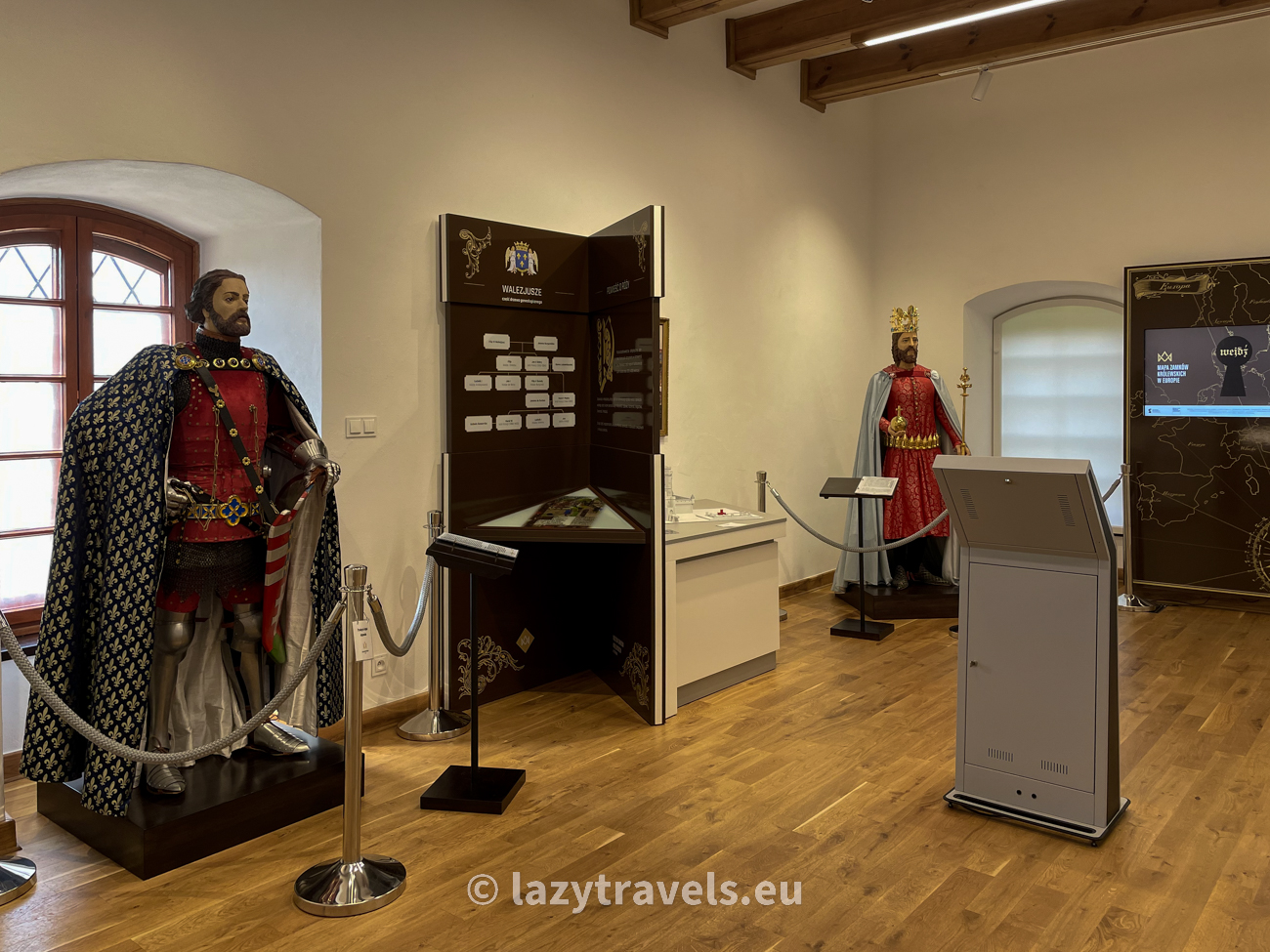
Walking around the vast courtyard, you can enter the walls and view the wooden lineage of Polish kings. With your ticket, you can also enter the building housing the museum of royal castles. Inside, you will find an exhibition with models not only of the Szydłowiec castle but also of others. Here, we will see places known not only from Poland but also from Europe. For example, there is a section about the Teutonic Knights, so the castle in Malbork is certainly included, but there is also nearby Wiślica, which often hosted kings in the past, and we will also see Krakow’s Wawel, as well as distant Aachen and many, many others.
The defensive walls along with the Krakow Gate
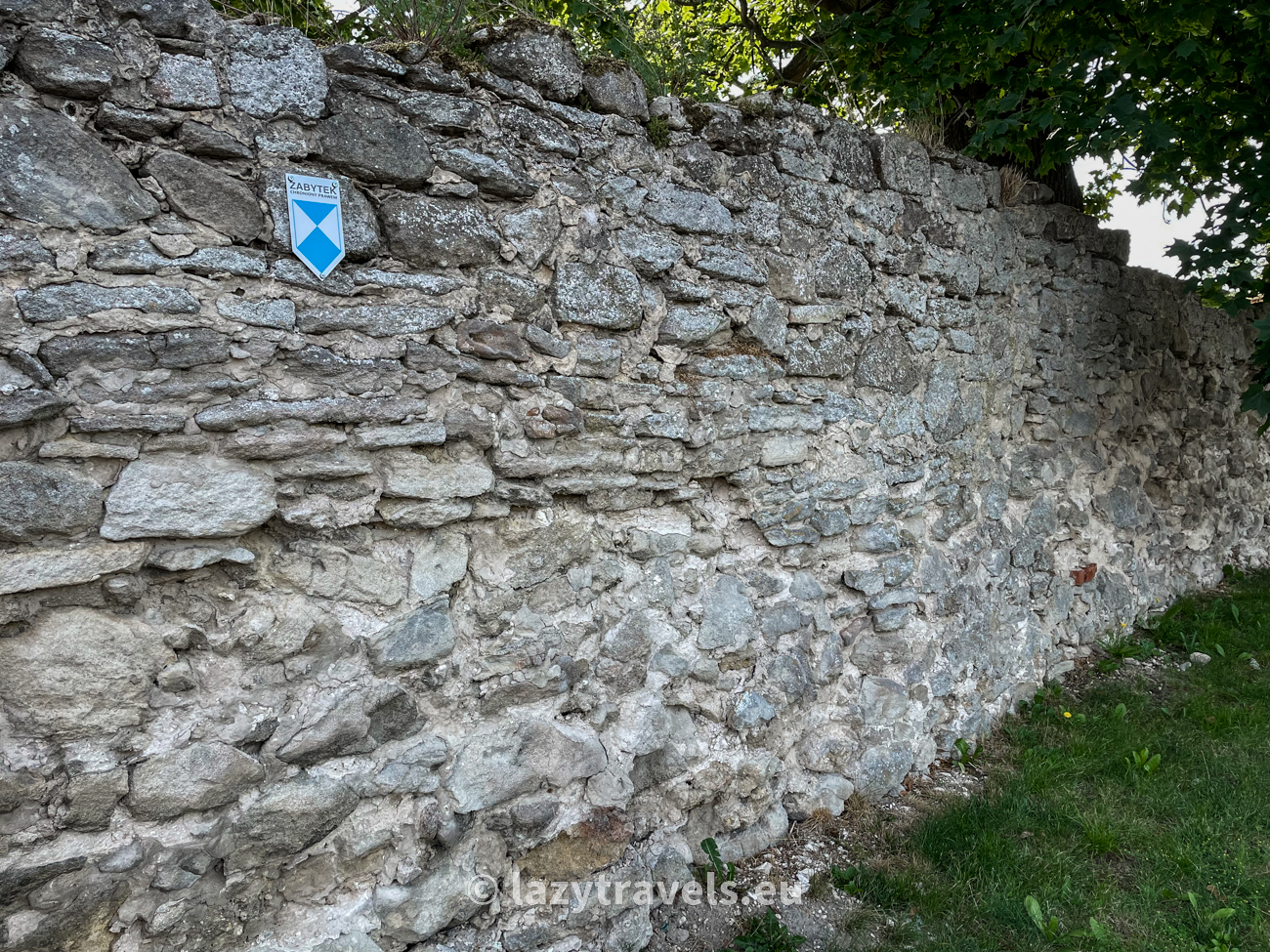
If you are familiar with Casimir the Great, he may not have personally run around Szydłów with a trowel, but one of the cities he left fortified was indeed Szydłów. The defensive walls surrounding the city were built at his command. And they were no small fortifications, as their total length was 1.2 km, with a thickness reaching up to 1.8 meters. As you can imagine, this required a colossal amount of building material. But thanks to this effort, the area of 7 hectares that constituted the old town was safe.
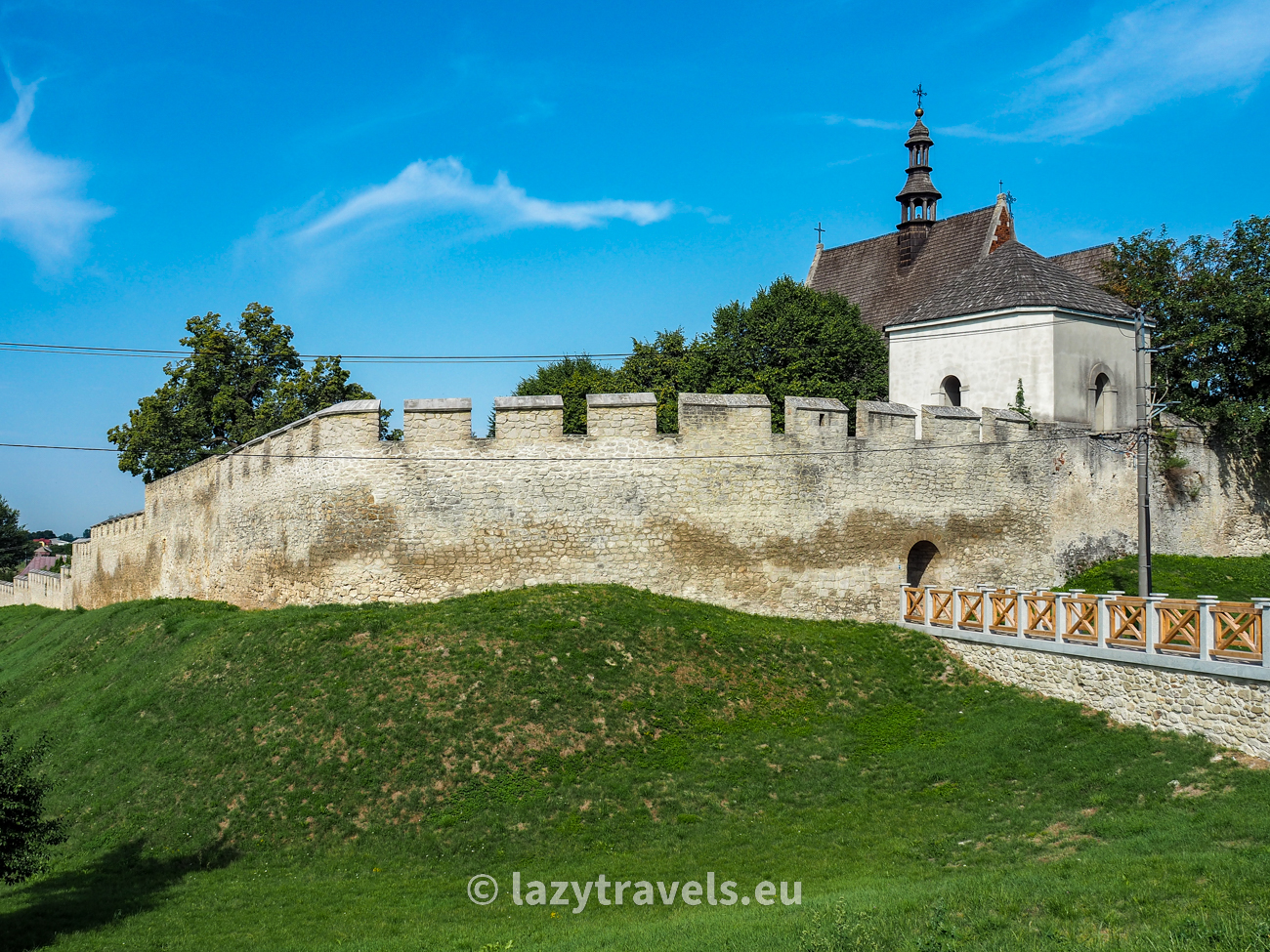
Unfortunately, the power of these walls also became their curse. In 1822, an announcement appeared in the official journal of the Krakow Voivodeship stating that the city walls in Szydłów were for sale. Literally! But not to maintain them as a tourist attraction (who knew such a concept back then?), but to dismantle them for building material. The price was set at 1867 zł and 35 groszy. Fortunately, no one was interested, even though the price was lowered. Unfortunately, there were interested parties for two of the three gates, which disappeared forever. Only the Krakow Gate survived.
To this day, 680 meters of the old walls have survived, which is quite a lot, but it is certainly not the full circumference, so calling it the Polish Carcassonne is indeed a severe exaggeration. However, this does not diminish the Szydłów walls too much, because first of all, they are ours, secondly, they were funded by Casimir the Great (Kazimierz Wielki in Polish), and thirdly, you don’t have to travel to the other end of the world to see them 🙂 A magnificent, impressive monument!
Church of All Saints
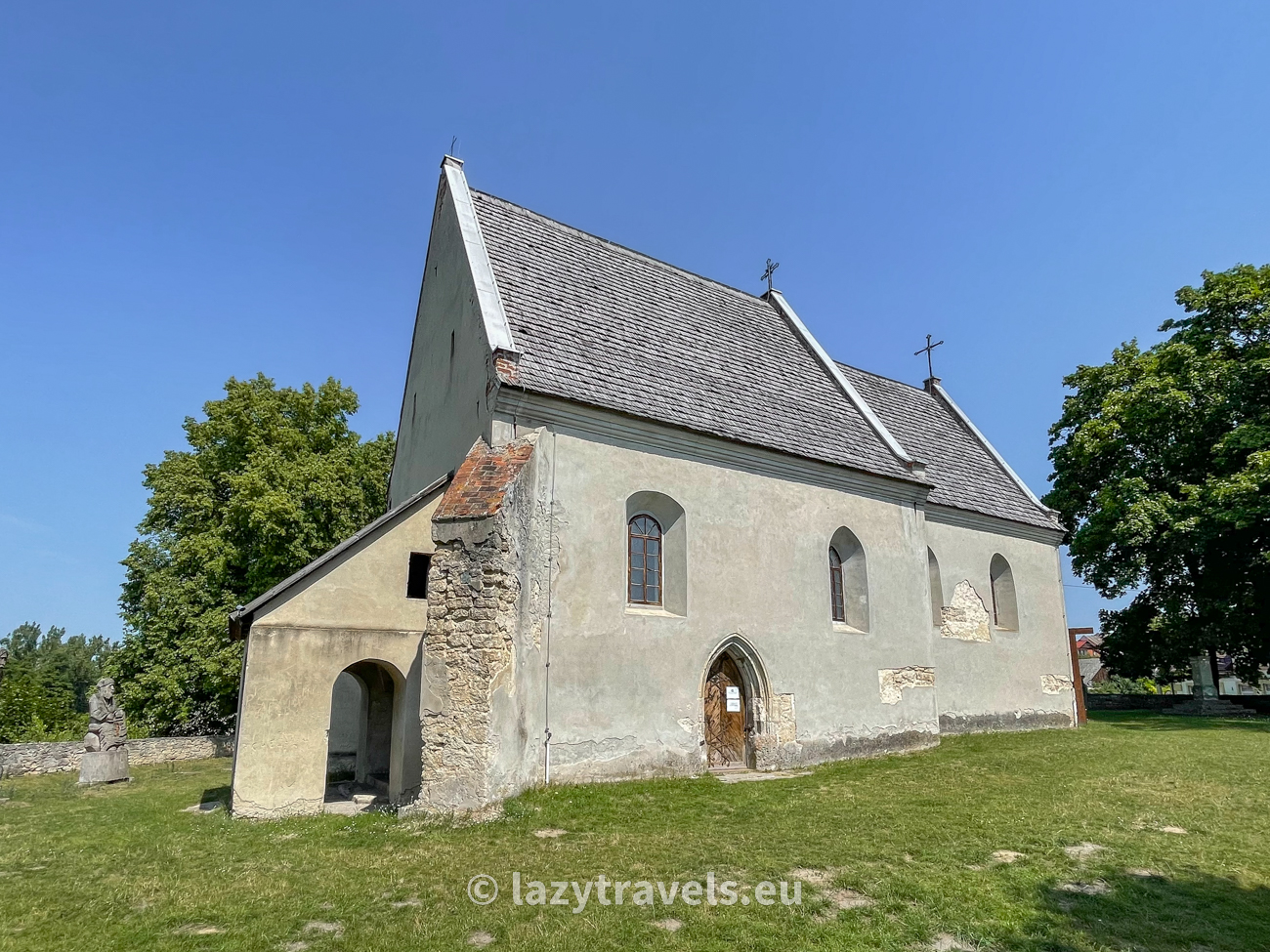
Before I arrived, I had no idea what treasures were hidden in the Church of All Saints in Szydłów. I knew something about the polychromes, that they exist and are beautiful, but that it is SUCH a monument and so beautiful, I did not expect that. A small, unassuming church, a bit shabby. You would walk past it and not pay much attention to it. I wouldn’t either.
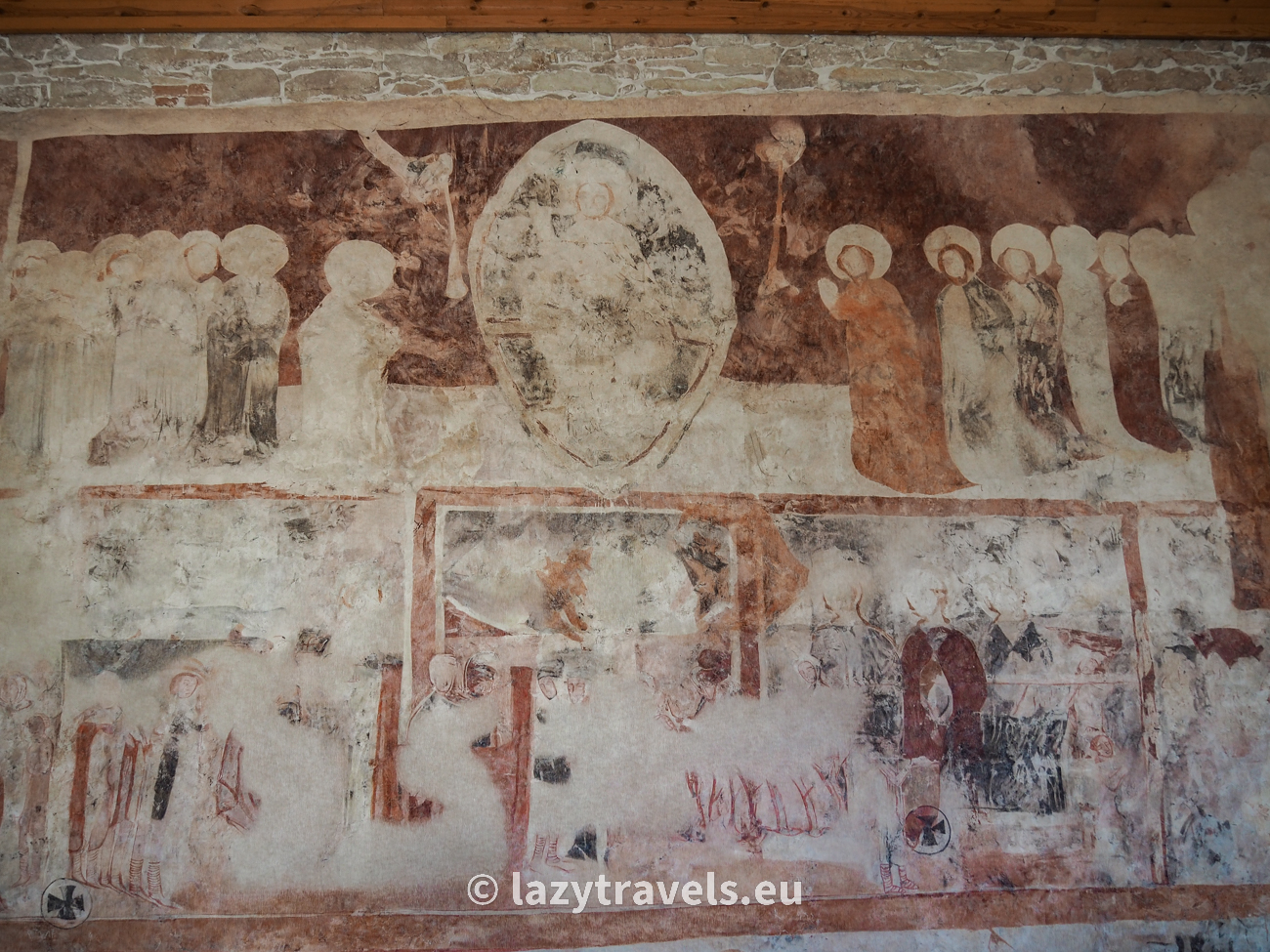
Because inside the temple, you see another world. I enter the temple and see the „Bible for the Poor,” or in Latin, „Biblia pauperum.” What is this „Bible Pauperum”? It is a pictorial form of telling the Bible, because as you can easily guess, at the time when these polychromes were created, around the year 1370, only a small, privileged handful of people could read and write. Usually, of course, it was the clergy. Therefore, to allow the common people to understand the Holy Scriptures, biblical scenes were painted on the walls of many churches. Thanks to them, even illiterate people could have contact with the Word of God.
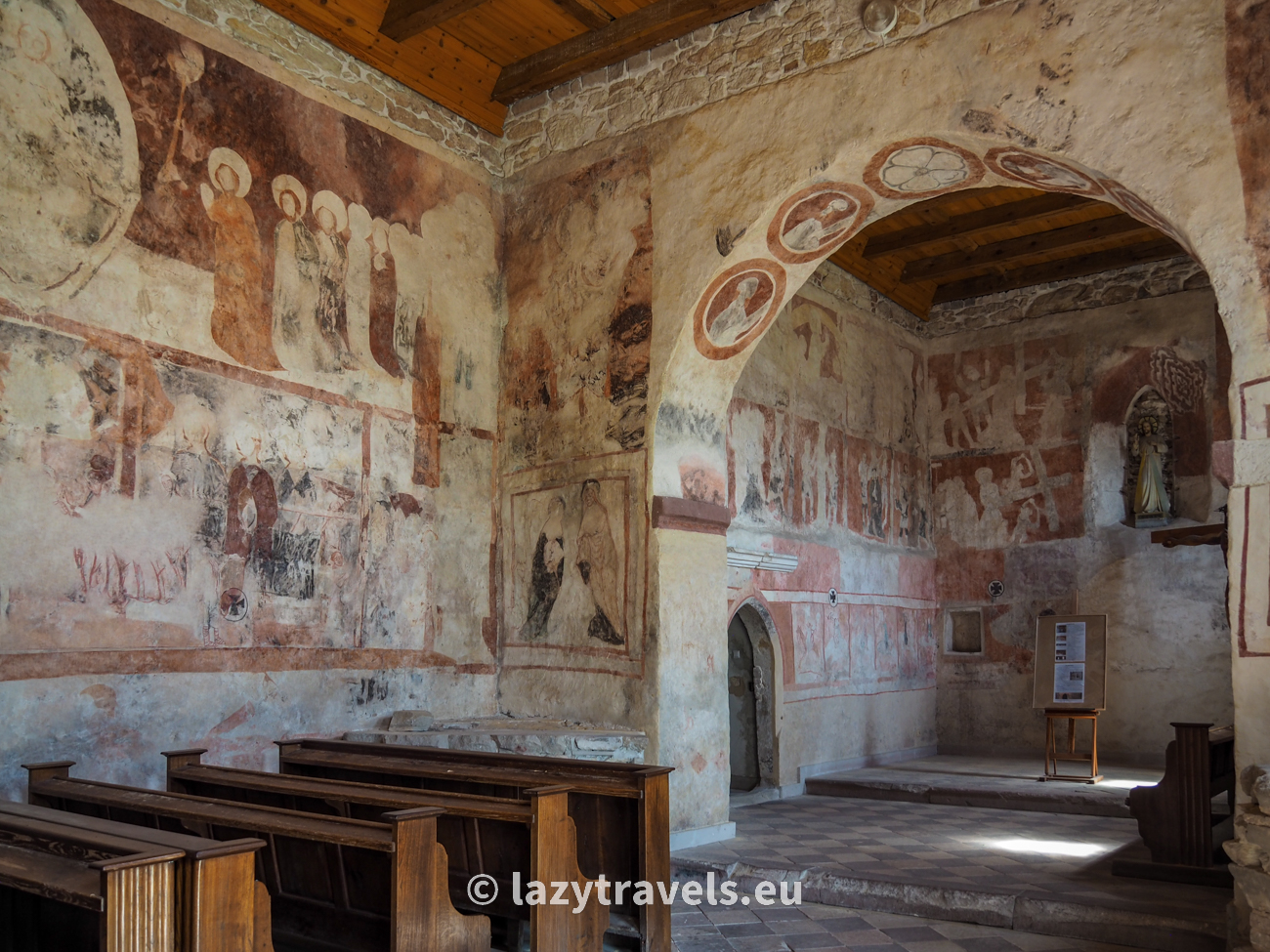
Don’t expect the paintings to be a riot of colors, because they are not. We have a red background with white and black on it, which build the individual scenes. And what do we see on them? For example, on the northern wall, there is a scene of the Last Judgment where Christ, accompanied by the Apostles, saints, and Mary, towers over the people. On other walls, we have, for example, the Presentation of Christ in the Temple, and above the presbytery, you can see the scene of the Seven Deadly Sins. Here, figures sitting on animals embodying sins approach the jaws of Leviathan. Believe me, if you are art historians or enjoy medieval sacred art, you could spend hours here.
A bit about the church itself, or its brief history. A specific date for its construction has not been established, but the temple dates back to the early 14th century. However, it is quite likely that the church was built earlier and what we see today absorbed a previous, older temple. Initially, the structure was even simpler than it is today, consisting of a rectangular nave connected to the presbytery. Only later were the sacristy and the vestibule added. Interestingly, at some point, the polychromes were covered with plaster! It was only after the church’s roof caught fire in 1944 that the plaster fell off, revealing the original wall decorations.
The synagogue. This is all that remains of the jewish Szydłów.
Legend has it that the first synagogue in Szydłów was founded by Esterka. According to legend, she was none other than the mistress of King Casimir the Great. But there are many such legends about Esterka’s influence, as she is also associated with Kazimierz Dolny. Who knows, perhaps her influence over her powerful lover was so great that she made foundations in many towns? In any case, the synagogue that stands in Szydłów today was built between 1534 and 1564. And anyone who would say that it is an ordinary house of prayer would be mistaken.
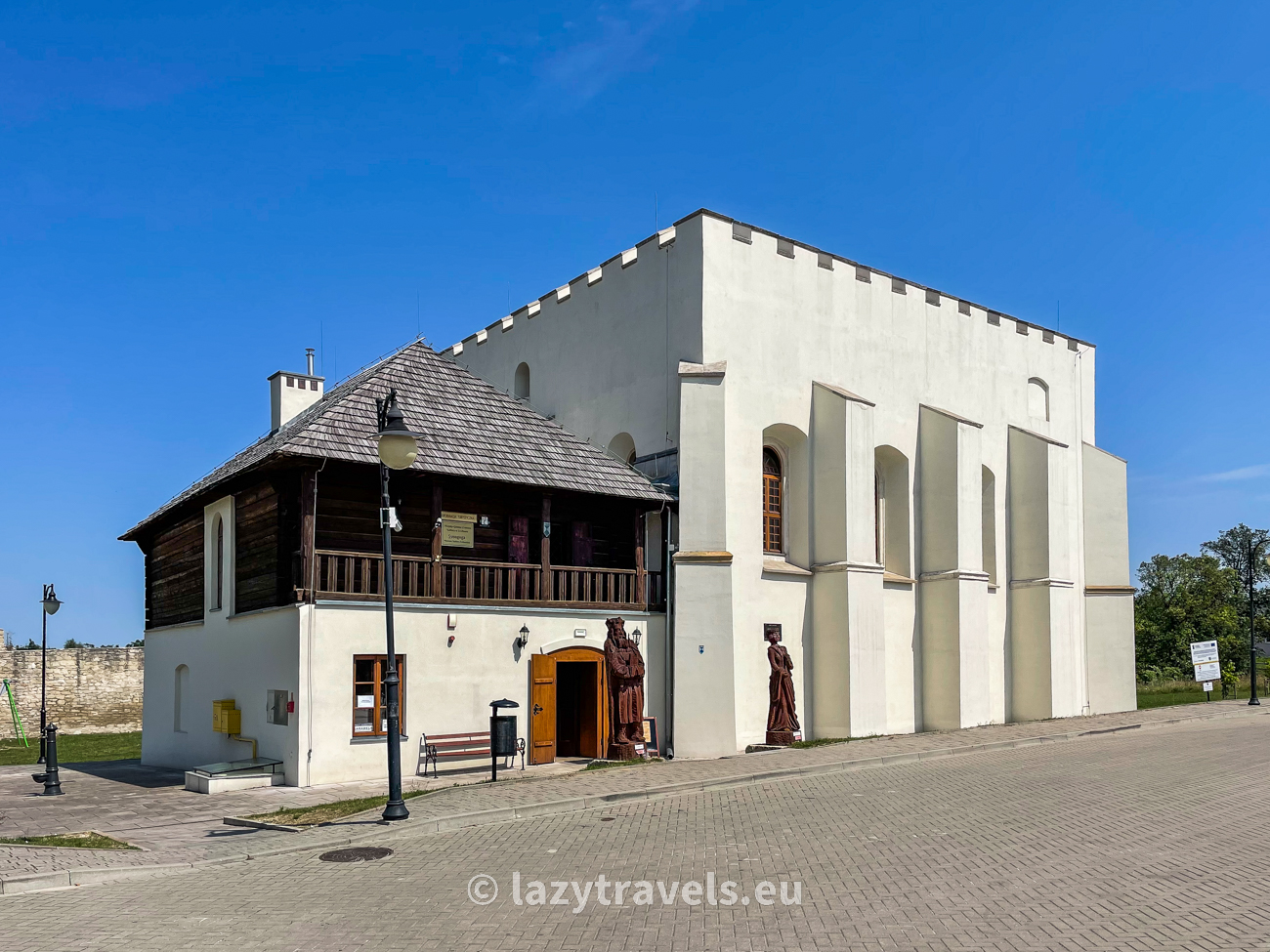
Just take a look to realize that this is an unusual building. It turns out that the synagogue also had defensive functions. Look at the high-placed windows! And also at the thick walls when you enter. Well, today the interior is quite modest and houses a museum displaying items related to Judaism. An example? The Torah, for instance. But it wasn’t always so austere here, as during the renovation of the synagogue in the 18th century, the interior was adorned with beautiful polychromes. Unfortunately, they have not survived to this day. And since they must have been beautiful, one can assume that they were created by the same artist who decorated the synagogue in Pińczów. There, it has not survived in its entirety, but enough to see and not have to imagine.
However, when you are inside, pay attention not only to the plaques with the history of the Szydłów Jewish community but also to the beautiful Aron-Ha-Kodesh, which is the place where the Torah was kept. Right at the entrance, just by the door, there is a donation box. It used to be found in every synagogue and, of course, served to collect donations. And why am I writing about it? Well, it is beautifully decorated and has managed to survive. Just look at the polychrome and the hands arranged in a gesture of blessing.
Other attractions of Szydłów
But what I described above is not all the attractions of Szydłów, as there are definitely more places to visit here. One of the oldest is undoubtedly the Church of St. Władysław, founded by the aforementioned King Casimir the Great. But an interesting fact is that this temple is essentially one big bribe, if not to God, then directed to the contemporary church hierarchs. You see, since Casimir led a rather free lifestyle (see the Jewess mistress Esterka) and new women frequently ended up in his bedroom, there were those who openly criticized him.
One such person was Father Marcin Baryczka. By royal order, Baryczka was drowned in the Vistula at night. As a propitiatory gift, the ruler promised to fund several churches. So goes the legend. And the church itself? Well, inside it is not something that will stay in your memory for long. Rather an empty interior, and unless you are art historians (an interesting and old altar) or architects (a building from around 1355), there is nothing here that will blow you away.
Another place worth at least a glance is the Church and Hospital of St. Spirit. At first glance, it may not seem very interesting, as it is basically just stone walls. But it is worth stopping by, as it used to be a temple, but also a hospital for the old and poor. Although perhaps a more appropriate name reflecting its function would be to call this place a shelter for the poor.
And in the market square next to the town hall, there is a cage. This is also a specific tourist attraction, meant to remind us of how justice was administered in towns in the past. Those convicted of minor offenses were placed in such a cage so that the local community could mock them and vent their frustrations by throwing whatever they wanted at the convicts.
Szydłów – a history from rise to fall
We know from the chronicle of Jan Długosz that Szydłów existed as a town. He recorded the name of the place in the context of the Tatar invasion. One of the battles took place near the village of Chmielnik close to Szydłów. Subsequently, King Władysław Łokietek sold the mayoralty in Szydłów in 1329 to a townsman named Zammeloni. As we can see, it was not just any locality, but it had town rights.
However, a true revolution began to take place thanks to one of the greatest Polish rulers, Kazimierz Wielki. The king included Szydłów in the network of defensive castles and fortifications he was building. As a result, the town was surrounded by defensive walls with three gates, and a brick church was also built there. Szydłów simultaneously became prosperous, as it lay on the route leading to the capital, Kraków, benefiting from this trade. Numerous guilds emerged, among which the cloth merchants were perhaps the most significant. But there were also active guilds of swordsmiths, blacksmiths, bit makers, carpenters, saddlers, potters… there were really many of them, as the town had a large area within the walls (as much as 7 hectares!).
An achievement highlighting the greatness and wealth of the town was the fact that local craftsmen pooled their resources to fund a water supply system in the town. Water was drawn from the river Ciekąca flowing under the walls and raised to the level of the town using a water wheel. Of course, there was a fee for using the water supply, but this money went to pay the watermaster. The watermaster was a specialist who took care of the water supply – much like today’s plumber. Moreover, thanks to the water supply, Szydłów even had public baths! So while other towns were smelly, here one could take care of hygiene.
By the end of the 16th century, according to chronicles, Szydłów had 710 inhabitants. In total, that is fewer than currently live in large-panel apartment blocks. In the following decades, the town was struck by two fires. A powerful blow was also dealt by the so-called Swedish Deluge. The Swedes plundered everything they could, and what they could not take, they burned. The water supply and baths lay in ruins. While before the Deluge the town had 1,700 inhabitants, only 350 townspeople emerged alive from the turmoil of war. A humanitarian tragedy. From that point on, the decline of Szydłów began.
The final blow was dealt by World War II. The Jews, who made up a significant part of the population (30%), were exterminated by the Germans, and the front passing through in 1944/45 significantly damaged the urban fabric. Therefore, when you walk through the market today, you will surely see that most of the tenement houses are post-war, ugly „blocks.”
Szydłów. Is it worth to see the town?
If you are wondering whether it is worth coming to Szydłów, I answer: YES, it is worth it! The monuments and attractions described above are certainly worth attention, and visiting Szydłów will not be a waste of time. After all, medieval polychromes do not appear on every corner and in every city. They are found only in a few places in Poland, such as in the cathedral in Sandomierz and the beautiful chapel in Lublin. But if you are not interested in monuments, it is still worth coming to Szydłów for the Plum Festival!
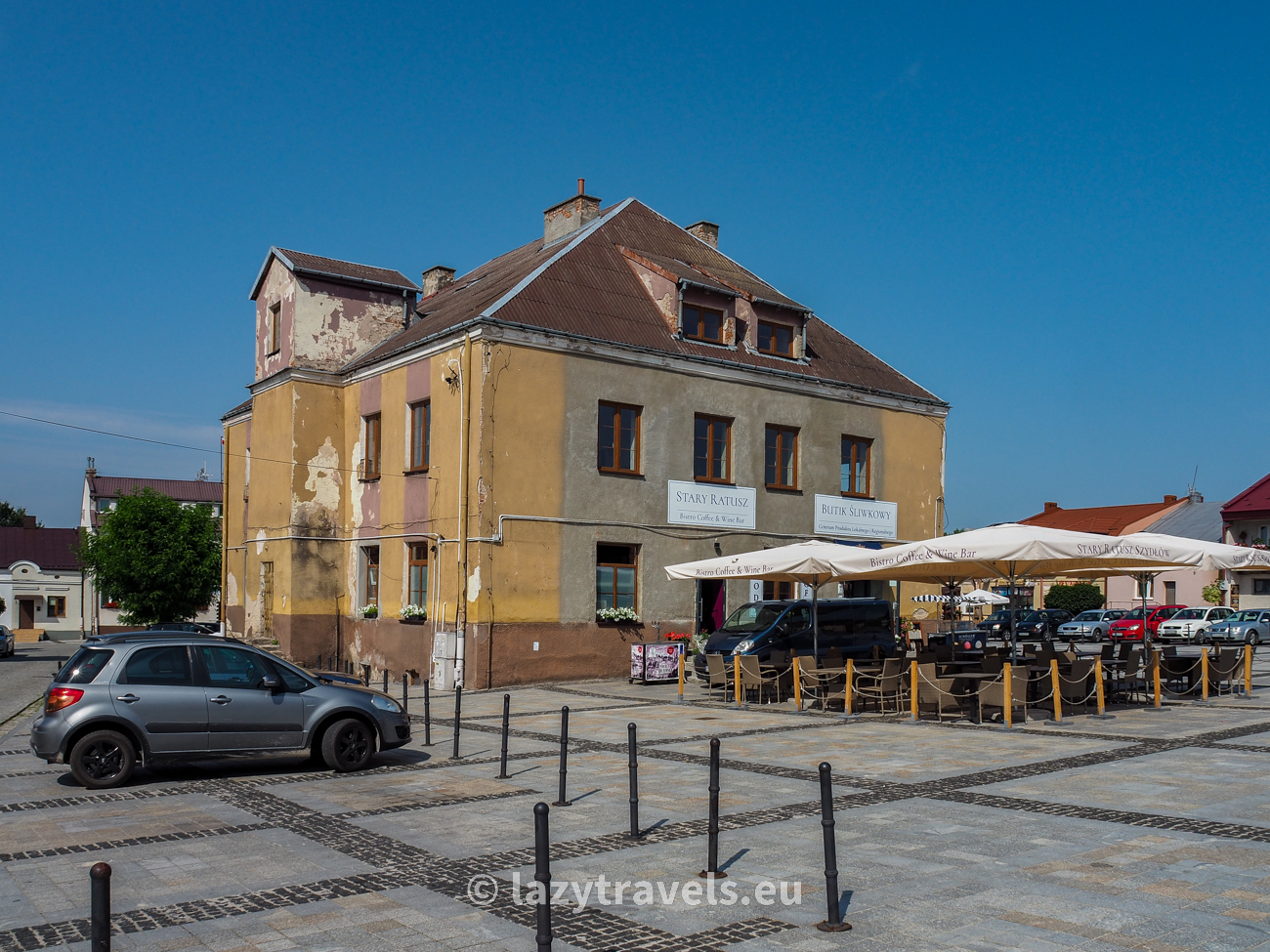
This is a unique festival dedicated to the treasure of the local land, namely the plum, which is commonly grown here. During this time, you will eat and drink everything that can be made from plums. From sweets to alcohol, because who would refuse plum brandy?! Fortunately, for those with a sweet tooth, the shop in the old town hall offers plum products all year round.
Szydłów – how to get there
First of all, some people may wonder where Szydłów is. Well, Szydłów is located just 50 km southeast of Kielce. Unfortunately, there is no railway line here, so you have to rely on local buses or simply come by your own car. We will not have a problem with parking, as there is a large parking lot right by the city walls, close to the market, located by St. Władysław’s Church. A second, larger parking lot is located at the intersection of the main road with Staszowska Street. You will definitely not have a problem with parking.
Accommodation and hotels in Szydłów
Well, the accommodation base in the town is worse than poor, but the demand is rather small. The only hotel I managed to find is Gospoda Rycerska, which also offers accommodations. The fact is that the prices here are low and the standard is acceptable. A second option for accommodation is Siedlisko Vincent, about 3.5 km from the town. If you have a car, this will not be a problem for you. And if you are looking for peace, love wine, and want to disconnect from the surrounding world, choose the Avra Vineyard. Wine tastings, vineyards. A perfect place to relax, as there are few similar ones in Poland.