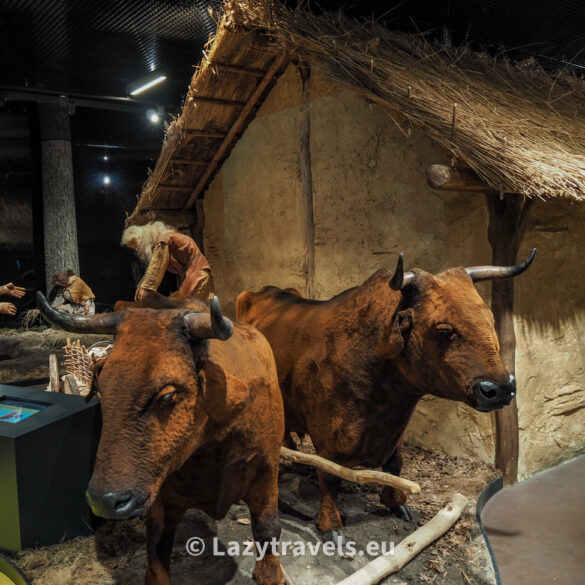
Bóbrka is an amazing place! Because today oil is associated with Arab countries, yet the history of industrial oil production in the world began here, in Bóbrka! The first oil mine was built in Bóbrka! The Ignacy Łukasiewicz Museum of Oil and Gas Industry exists so that the world does not forget about it. And unfortunately even in Poland not many people know about this museum.
As recently as 200 years ago, the rooms of houses were lit by candles. Candles and bows were used to illuminate small peasants’ chambers, as we see today in open-air museums (such as in Sierpc or in Maurzyce in Mazovia – Poland). But also magnate’s ballrooms, where candles were placed in decorative candelabra. If, for example, you have been to the palace in Łańcut or the castle in Książ, you have certainly noticed the chandeliers. This way of breaking the gloom lasted for centuries. But the beginning of the end was the brilliant mind of one man: Ignacy Łukasiewicz. Seemingly just an ordinary pharmacist from the Galician city of Lviv.
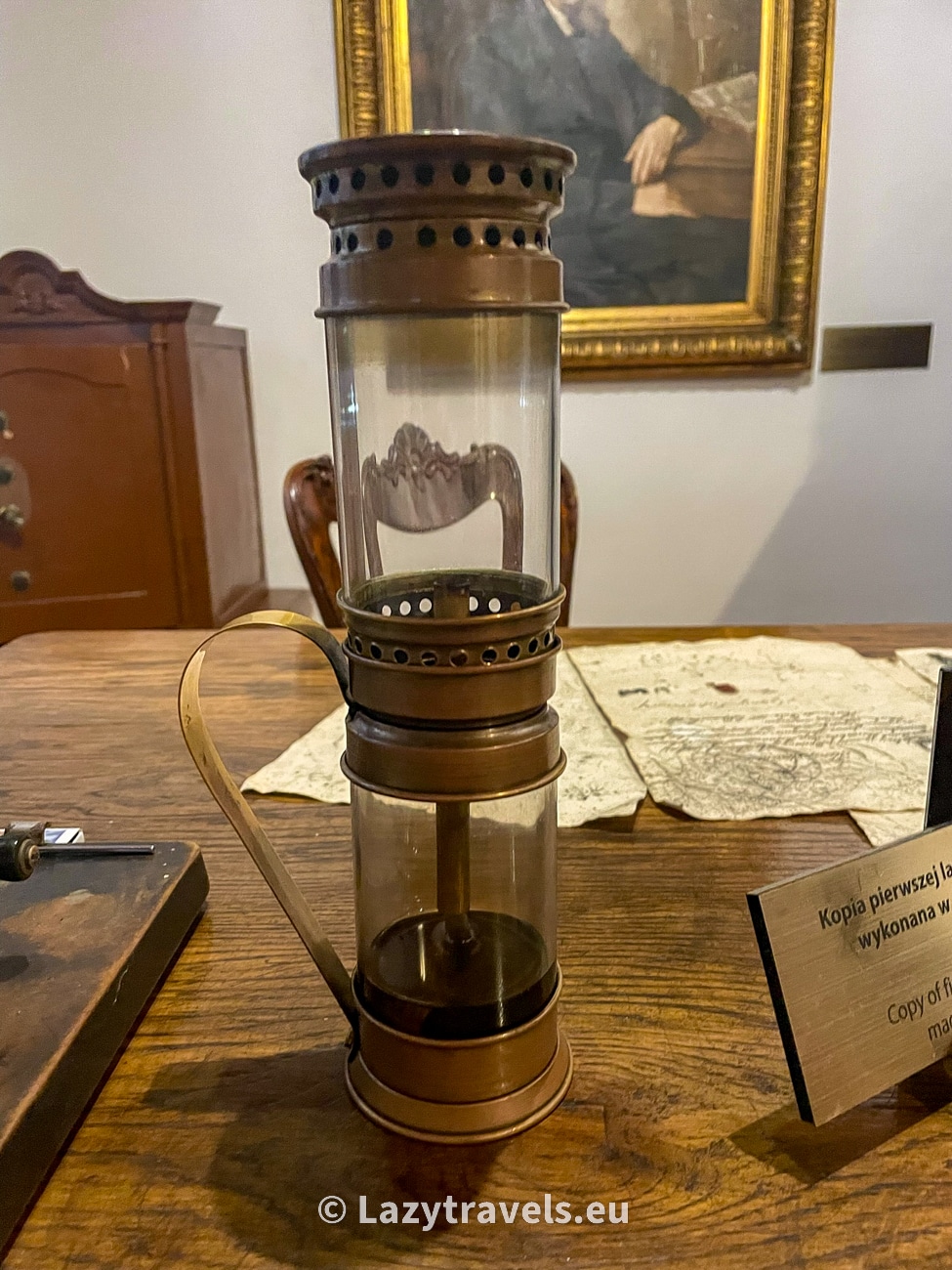
Ignacy Łukasiewicz caused the world to change, because he invented the paraffin lamp. Its light first dispelled the darkness on 30 March 1853, when Ignacy Łukasiewicz hung the first paraffin lamp in the shop window of the ‘Pod Gwiazdą’ chemist’s in Lviv, which belonged to Piotr Mikolash, where he worked at the time. Its brightness was equal to about 10 candles, so it was no wonder that the world was enthralled and the invention began to be used in more places. And so four months later, on 31 July 1853, paraffin lamps illuminated the operating theatre of the Lychakiv hospital in Lviv. The first street paraffin lanterns were lit in Gorlice in 1854. Progress was made in a flash!
The date 31 July 1853 is considered the symbolic date of the birth of the oil industry. You will sometimes hear the term ‘Polish oil industry’, but there was no Poland then…. there was no Poland then. Poland were partitioned century before, and Lviv was in the Austrian partition. Oh, and an interesting fact: today there is a beautiful café in the pharmacy „Under the Star”. When the war in Ukraine is over, I cordially invite you to visit it. Some of the pre-war atmosphere of old Lviv has been preserved here. By the way, cafes in Lviv are a separate topic – very cozy places with excellent coffee.
Ever since the first paraffin lamp was lit, paraffin oil, or rock oil as it used to be called, began to be needed in wholesale quantities. The world demanded modern and good lighting. Nature and the economy do not like a vacuum, the demand had to be met quickly, so three friends formed a partnership. They were: Ignacy Łukasiewicz, a pharmacist (he had the so-called know-how), Tytus Trzecieski, a landowner and initiator of the mining company, and Karol Klobassa-Zrencki. The latter was the owner of the village of Bóbrka, where ‘rock oil spills’ were observed. In a word: the oil was so shallow, that it was leaking out of the ground on its own. Without any man-made tools.
Initially, a trench about 120 metres long and 120 cm deep was dug to collect the ooze, i.e. rock oil. But this was clearly not enough, as the needs were greater. Therefore, they soon started to bore into the ground and dig so-called ‘diggings’. You could say that these were the first ‘oil wells’. Of course, this was a start, as this was the way to reach the most easily accessible oil. To get to more rich deposits, required a change in technology. Therefore, drilling and the construction of wells as we know them today soon began. The wells we know from the movies.
The museum in Bóbrka
The Bóbrka mine began a story that continues to this day, because the Bóbrka oil mine is still an operating mine. Of course, on a global scale and in terms of demand for this precious commodity, extraction is modest, but oil still flows from underground here. In the past, it was processed in the refinery in Ulaszowice, but this no longer exists. Today, however, oil from Bóbrka is processed at the refinery in Jedlicze – Poland.
Walking through the mine site, we go back in time and, during the walk, have the opportunity to see the oldest shafts and observe the changes that have taken place in the way oil is extracted and the shafts drilled since the time of Lukasiewicz. Although it is not really fair to say that since the time of Łukasiewicz, as he was of course the inventor, but the real economic brains behind the venture was Karol Klobassa-Zrencki. More on him in a moment, however.
Places to see in the the oil mine
When you buy your ticket and cross the gate of the museum in Bóbrka, the area may surprise you because…. we are in a forest! Yes, this is one of the most picturesque museums I have ever been to. The museum is set in the midst of a forest, with paths leading from one attraction to another in the shade of the trees. Although of course there is also one main museum building with exhibitions right at the entrance. But in my opinion, these old buildings and adapted buildings, hide what is most interesting.
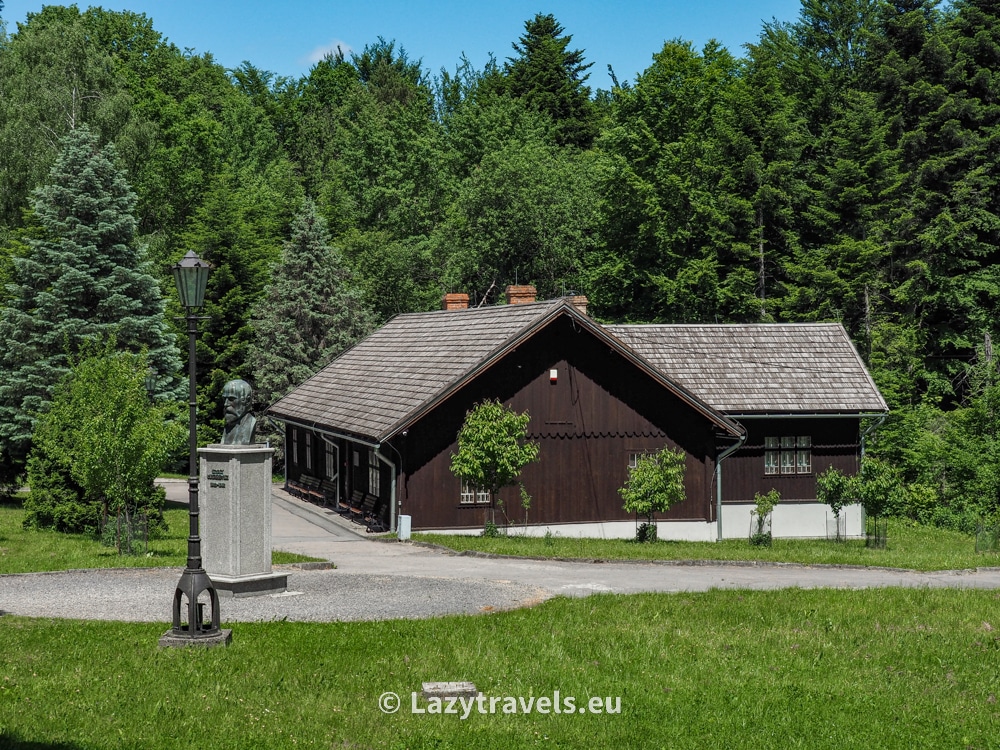
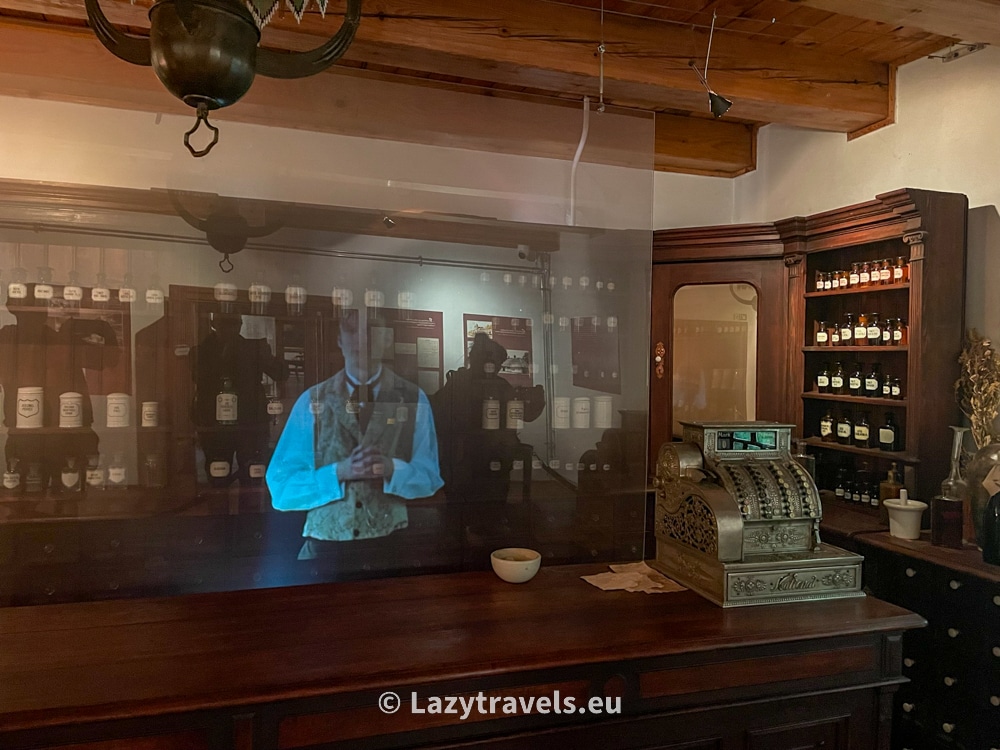
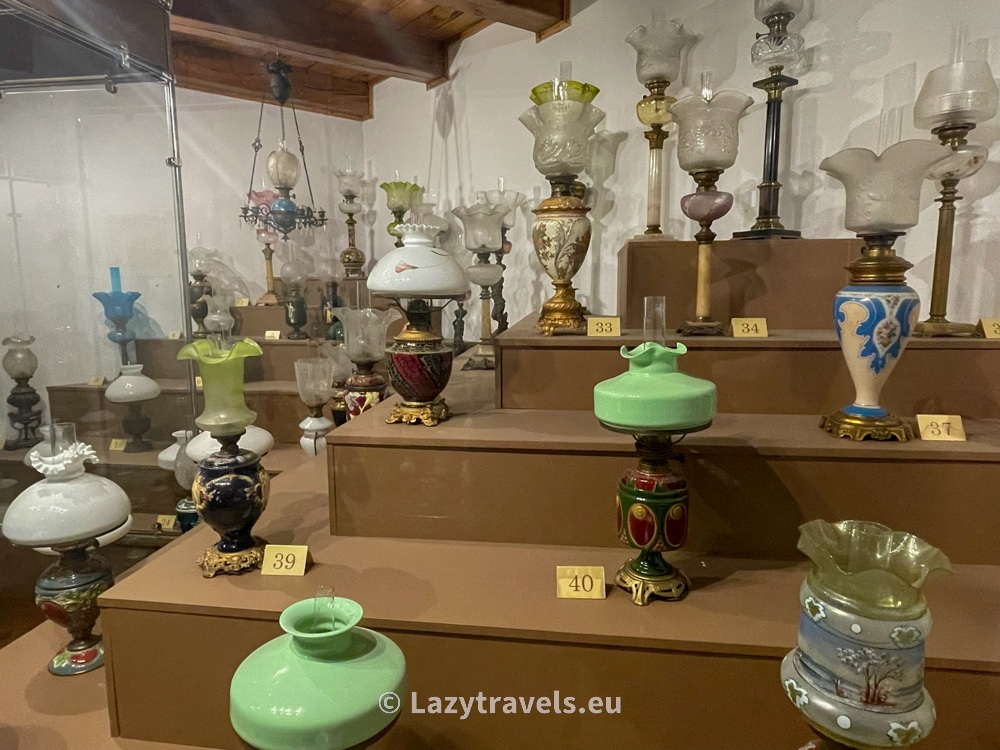
The Ignacy Łukasiewicz Museum of Oil and Gas Industry has preserved quite a lot of what was the heart of the mine operating here in the 19th century. We have old buildings here, but also old mine shafts. I don’t know what I would consider to be the most interesting building, but the so-called administrative building of the mine, the so-called Łukasiewicz House, dating from 1865, houses multimedia exhibitions showing the trade in the former pharmacy. After all, it is a beautiful reference to Łukasiewicz’s profession – the inventor of the paraffin lamp. In addition to the multimedia, there is also a quite tangible exhibition of paraffin lamps. From the simplest ones, used simply for lighting, to decorative ones.
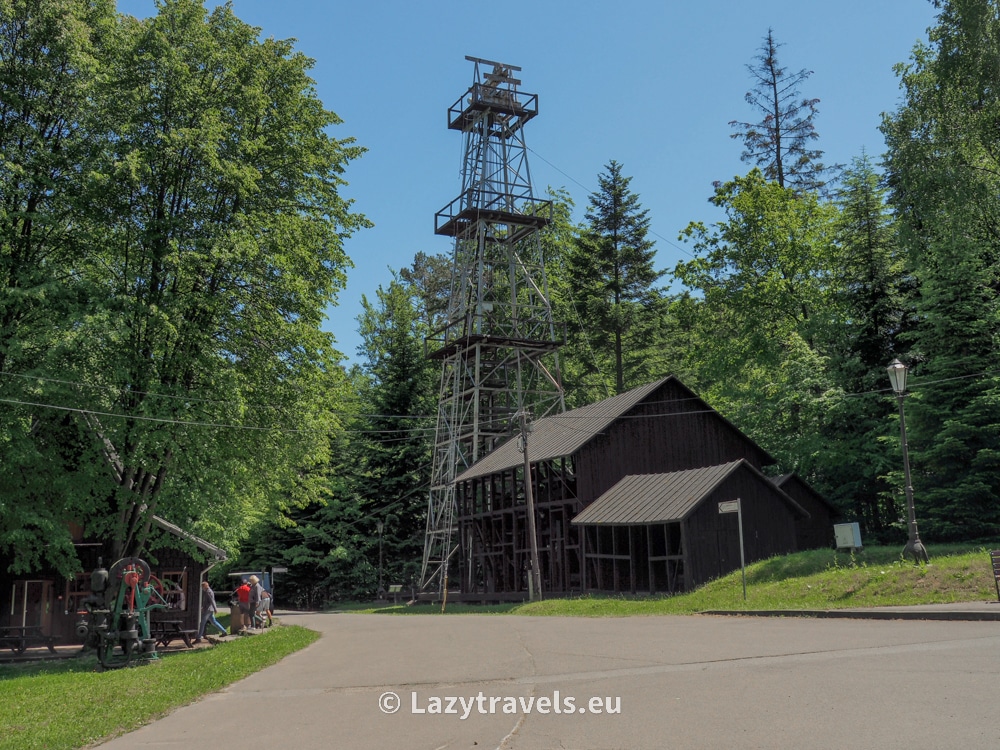
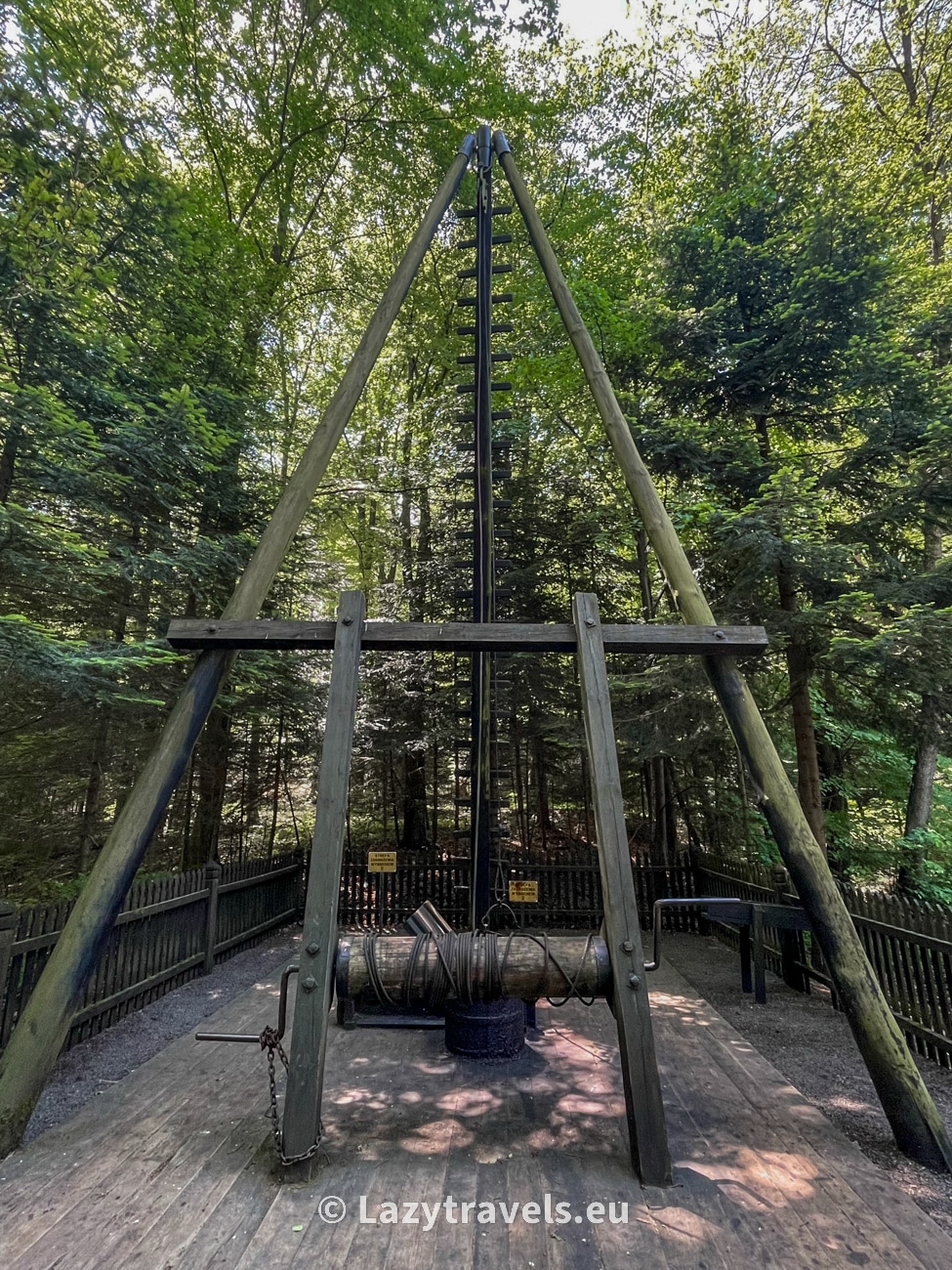
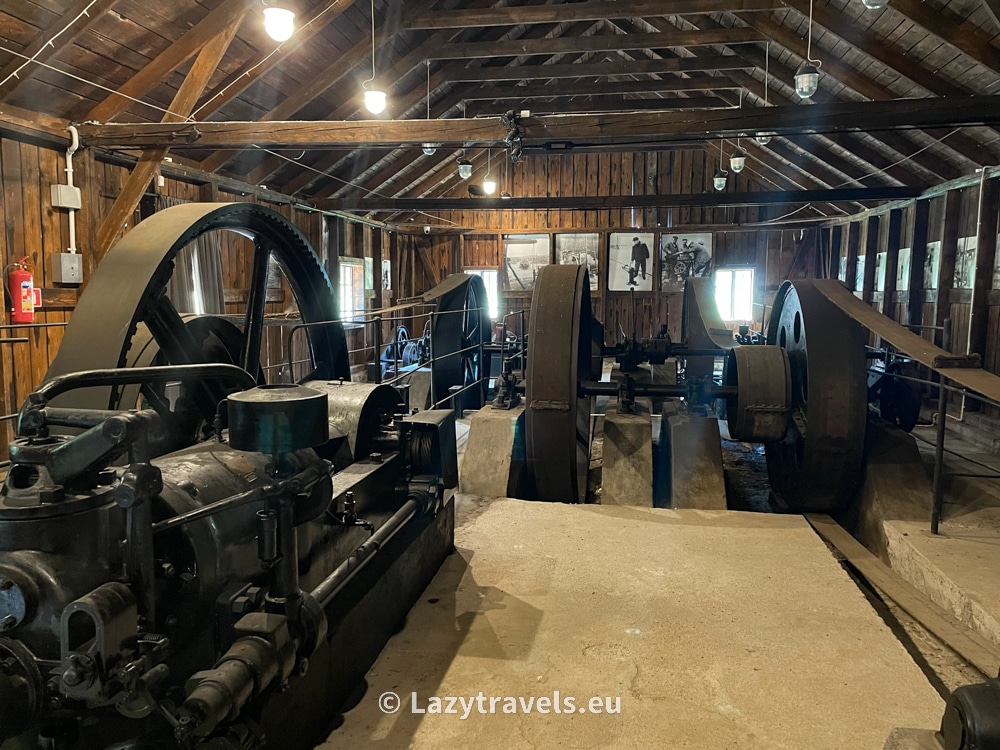
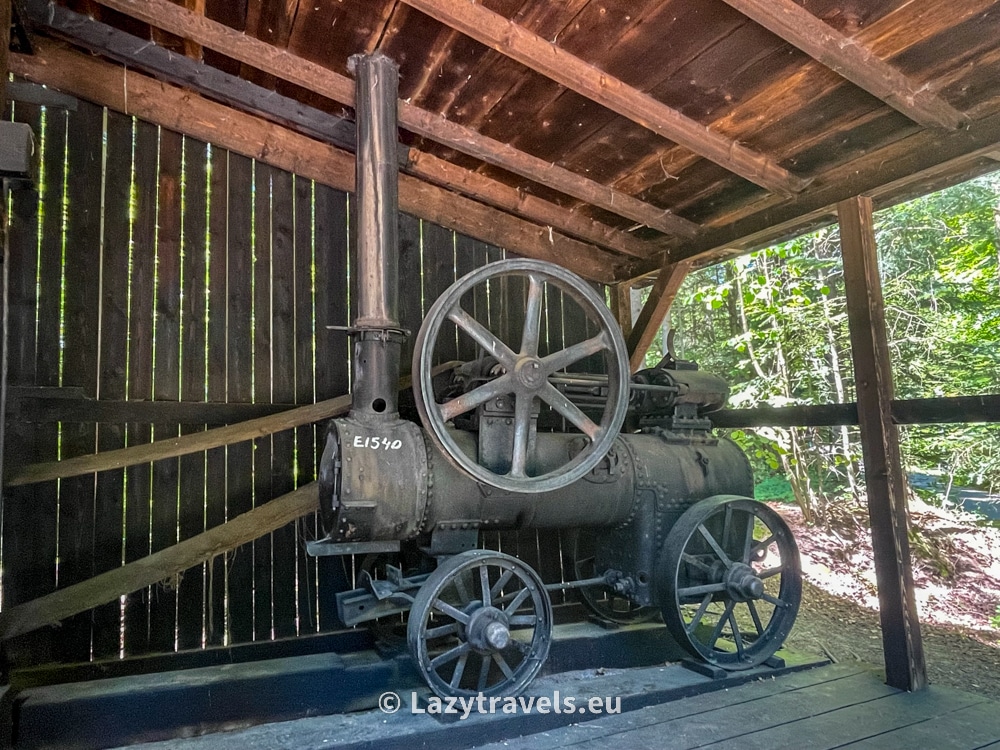
On the grounds of this museum scattered through the forest, we will also visit a number of buildings which show the tools with which oil was once extracted and wells drilled or repaired. So there is a forge and repair workshops, and there are the once ultra-modern steam engines that enabled oil to be quickly extracted from underground. Yes, the oil industry generated massive profits from its early years. But it also required a lot of investment. The owners, and later the independent mine owner, invested in everything modern.
A museum that still produces oil!
The Franek dig site from 1860 is also worth a visit. It is a hand dug well 20 metres deep. It was dug in the same way as such shafts used to be dug in the past, i.e. with shovels and pickaxes, while a wooden formwork protected the well from backfilling. As you can see, there is still oil in the Franek pit. And right next to it is a cart with a barrel, which used to be used to transport the extracted oil.
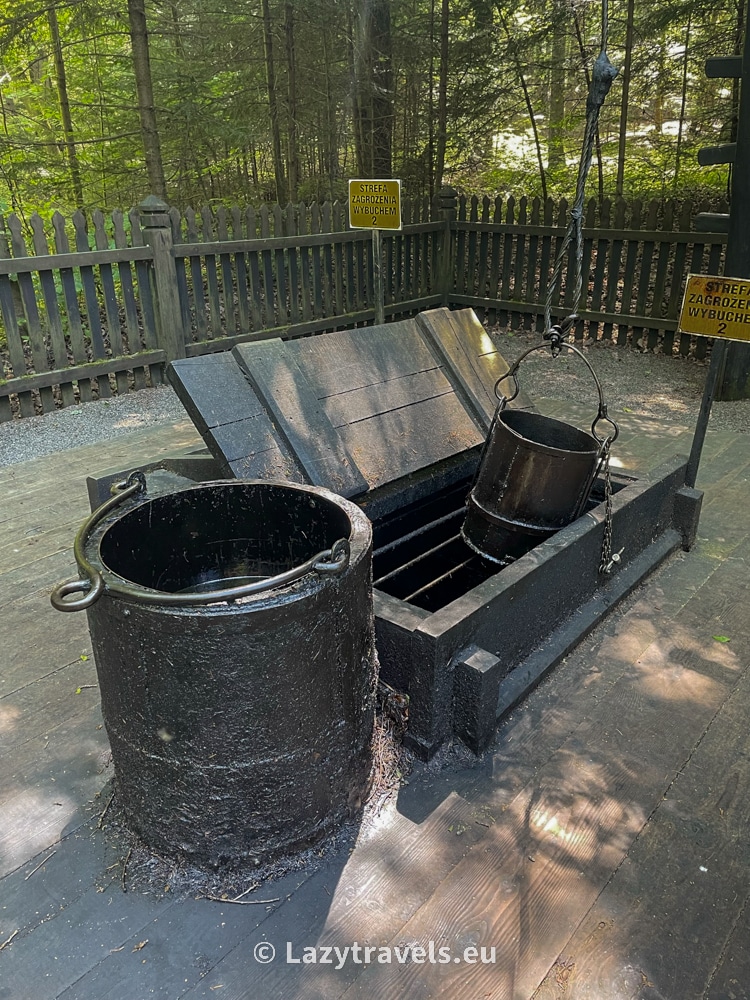
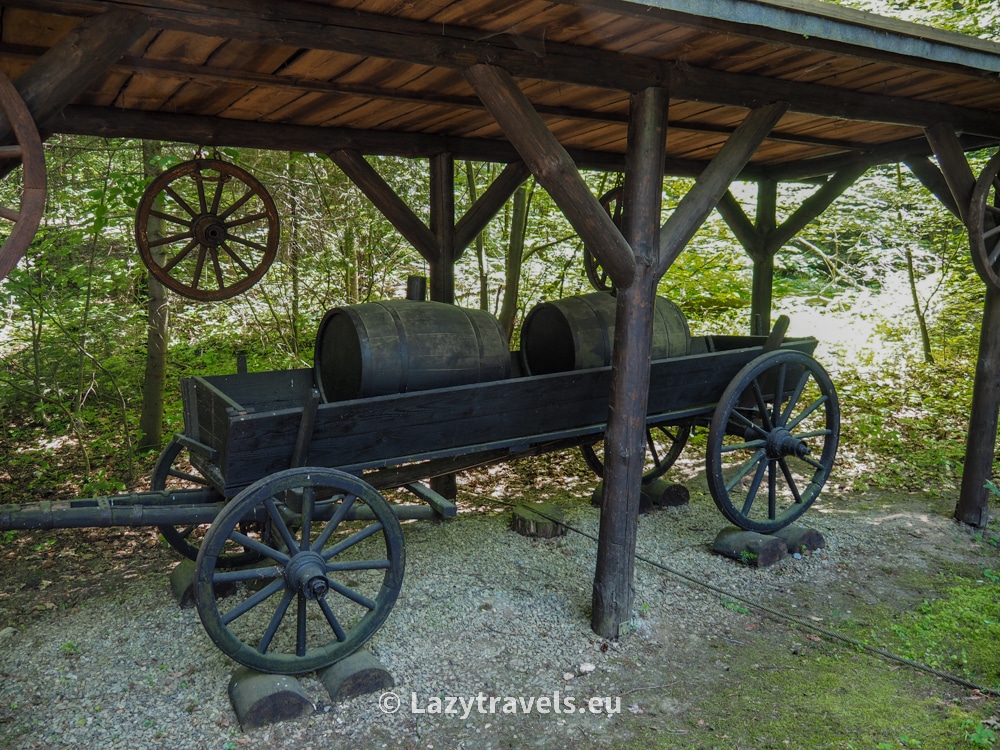
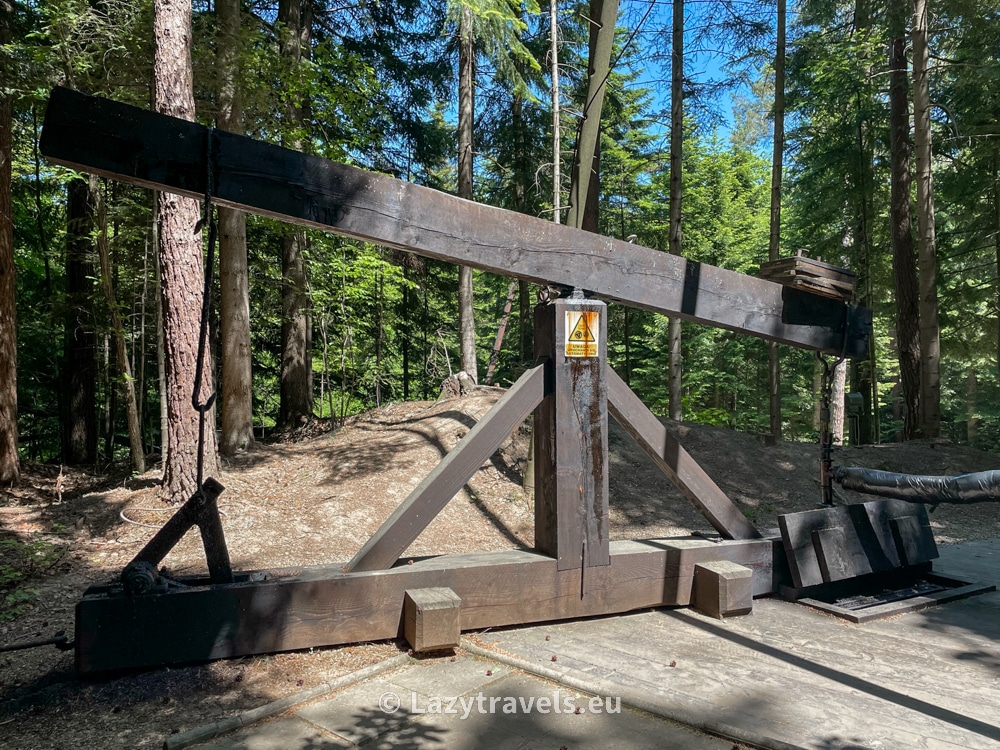
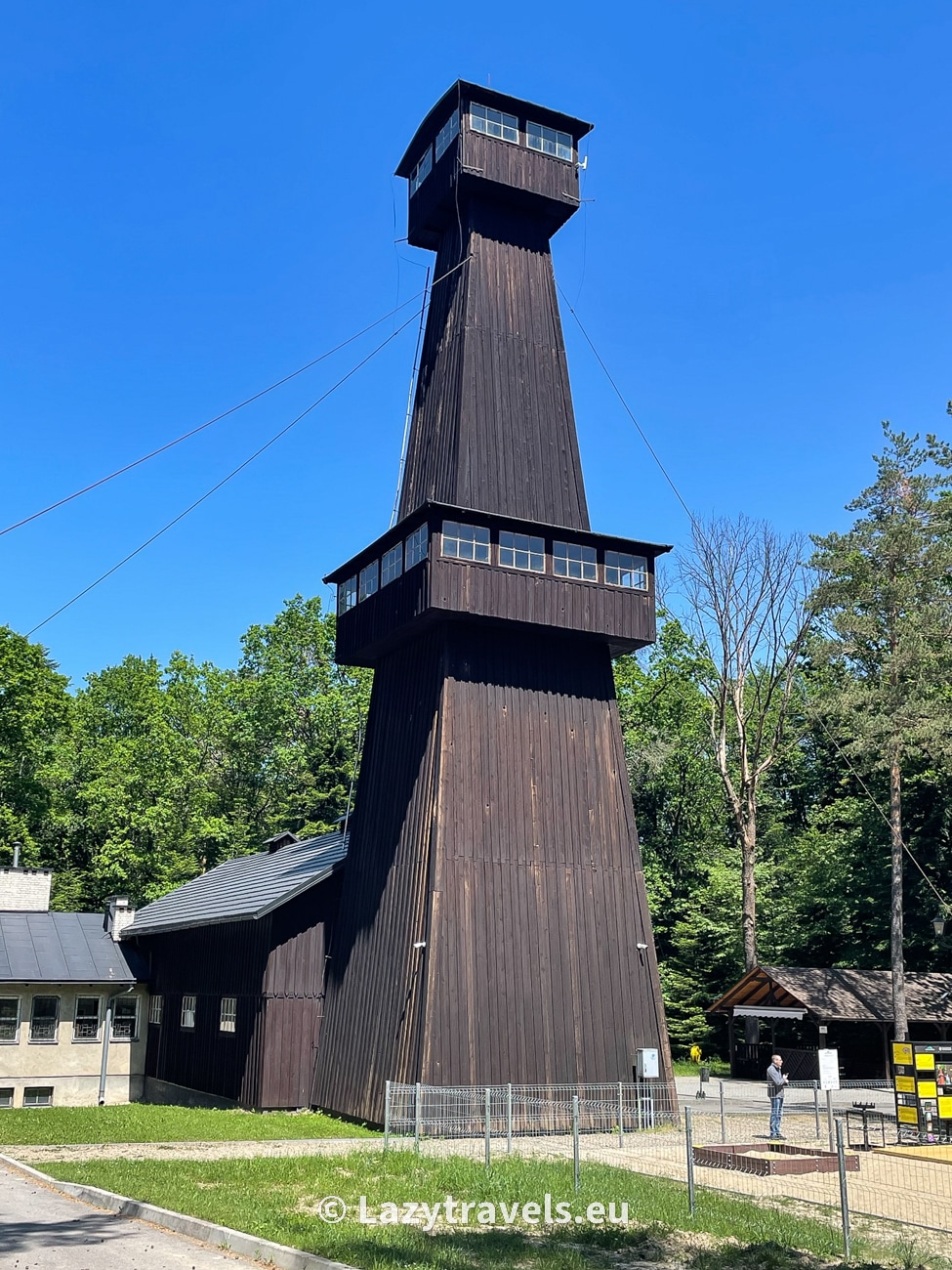
Nearby you will see another site from the 19th century, the Janina dig site. This was dug by hand to a depth of 95 metres! The shaft was then deepened with a hand drill to a depth of 156 metres. Interestingly, this shaft is also still in operation and oil is extracted from it! Pipes and conduits lead to the well and carry the oil away. A curiosity is the pupm jack – characteristic shape of the pump with which oil is extracted from a low pressure source.
Walking through the grounds of the Bóbrka museum, you will still see some artefacts that were used to extract and search for oil. There is equipment from the oil miners of the past, but also equipment that was still in use in the 20th century. You can walk up to all of them, look at them and even touch them.
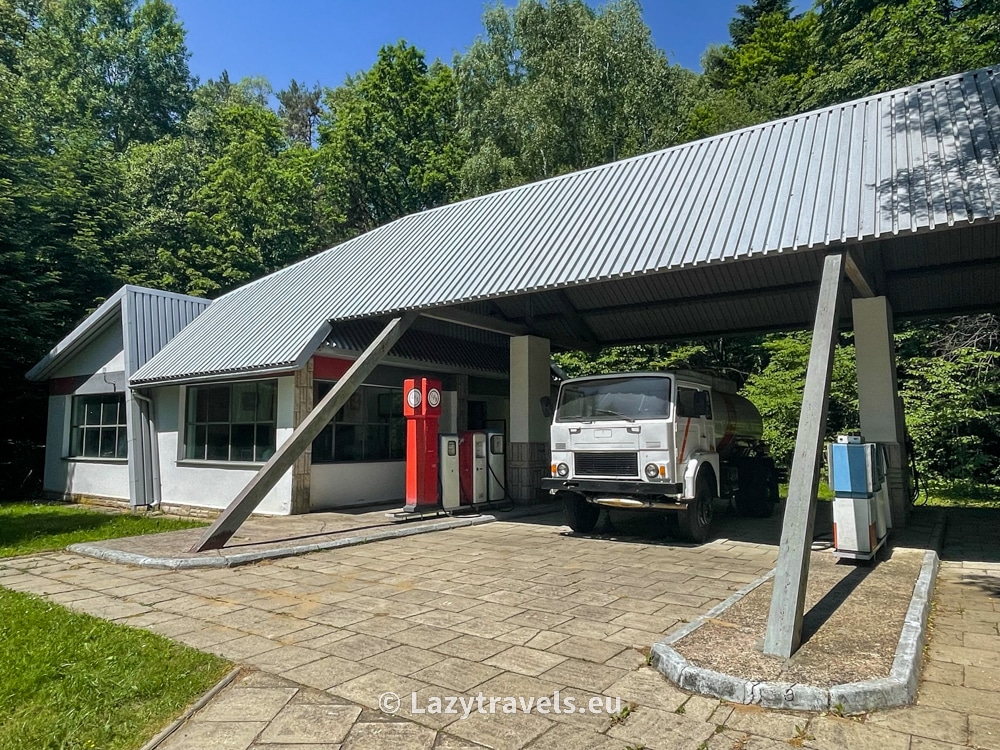
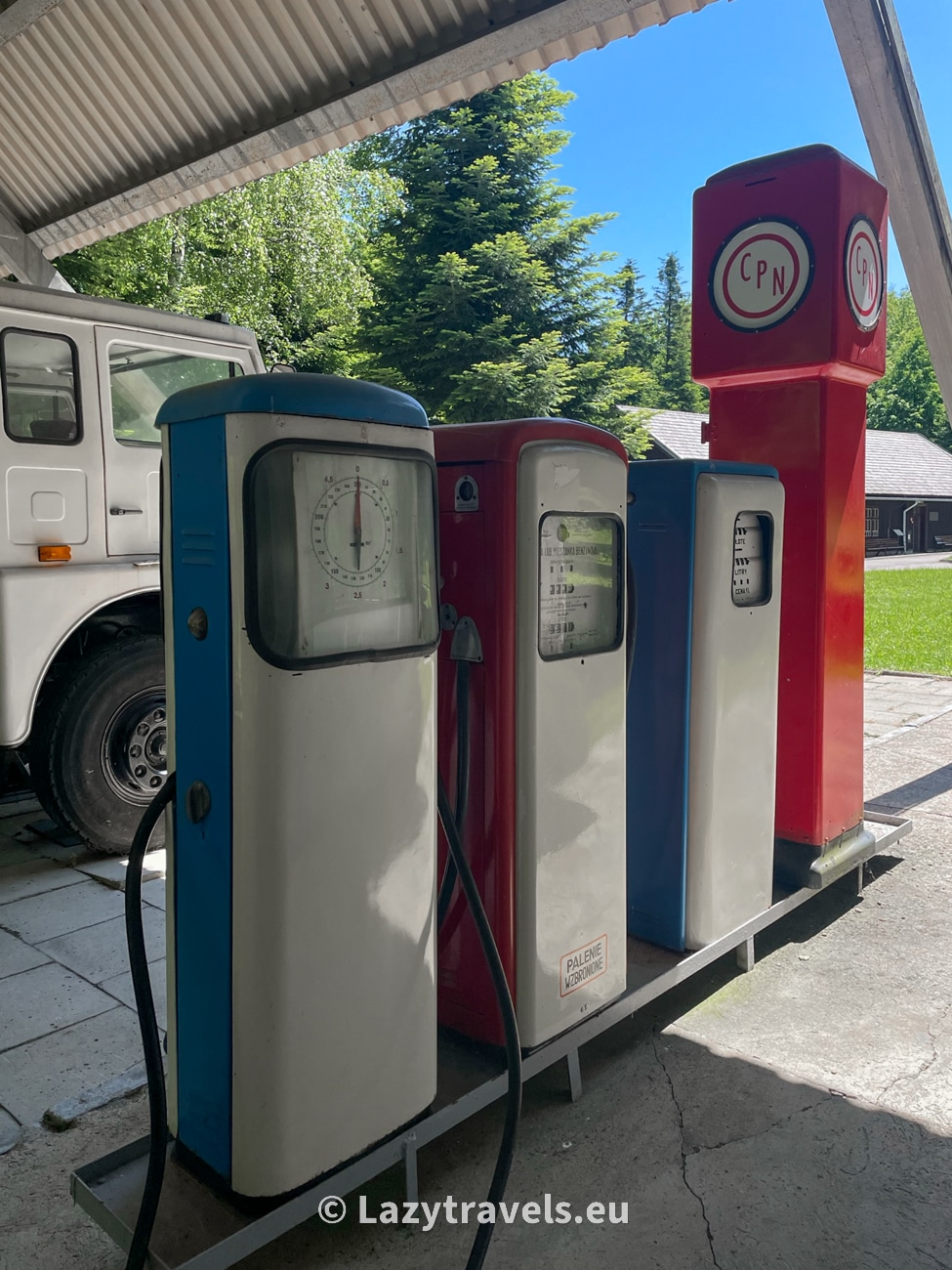
Because the museum is linked to Orlen, which sponsors the site and is also the heir to CPN, the former Central Oil Industry Company. In the past, this company was involved in oil refining and fuel distribution. That is why even a mountain-type filling station was set up here at one point. In addition to the car that used to take fuel to the station, you will see different types of dispensers here. And when we go inside the station, exhibitions await us. Here we will see old photographs showing the refuelling of cars, as well as banners and memorabilia from the company’s marketing activities. On top of that, there is also laboratory equipment. As you can see, there is something interesting in every corner of Bóbrka.
Bóbrka, a place of 19th century human capitalism
If you are familiar with the film Promised Land, then you must have noticed how some capitalists treated the workers in the 19th century in Łódź. It is interesting to note that things were fortunately different in Bóbrka.
After the informal partnership formed by the three gentlemen mentioned above in the article broke up, the mine passed into the ownership of one of them. Karol Klobassa-Zranecki became the master of the mine in 1871. And he did not rest on his laurels, as he knew that technological progress was happening all the time. Therefore, in order not to fall behind, he sent his son to the USA to observe what technical innovations made work easier overseas.
But he showed a different, civilised face in his home town of Zrębin. Here, he funded a brick building for a school that local children could attend. What is more, he also secured funds for a teacher to teach at this school. In addition, Klobassa built many local roads and even such a large investment as a bridge in nearby Krosno. Additionally, and this is a rarity, he provided free health care in Bóbrka. You could say that he indirectly invested in himself, as the local population largely worked in his mine. And a skilled worker is a treasure, and it is better to treat him than to look for another in his place, who must first be educated.
And it was precisely because he had such an approach to people that he was remembered as a philanthropist, and during his lifetime he was one of Galicia’s most respected citizens.
Bóbrka mine – how to get there and ticket prices
Well, the mine and museum in Bóbrka can only be reached by car. There is a car park in front of the entrance gate and I don’t think you will have a problem leaving your car. There are not that many visitors. Parking is, of course, free of charge.
Bóbrka is about 12 km from Krosno, so it is relatively close by car, but still far on foot. The railway does not run here.
The museum is open from Tuesday to Sunday. The museum in Bóbrka is closed on Mondays!
Let me show you the opening hours, which come from the museum’s website.
8:00 – 17:00 – 1 May – 30 September (Tuesday to Friday)
10:00 – 18:00 – 1 May – 30 September (Saturday, Sunday)
8 a.m. – 4 p.m. – April, October (Tuesday to Friday)
9 a.m. – 5 p.m. – April, October (Saturday, Sunday)
7:00 a.m. – 3:00 p.m. – November 2 – March 31
Price list:
- Tickets – normal 25 zł
- Discounted ticket 15 PLN
- Family ticket – (2 adults + 2 children) 64 PLN
- Tickets with a Large Family Card – normal 20 PLN, reduced 12 PLN
If you are wondering how much to spend on visiting the museum in Bóbrka, in my opinion you should count about 2 hours.