If you are looking for the most famous and characteristic fortified church in Romania, the fortified church in Biertan will meet your expectations. It is probably the most famous church of this type. However, the church in Biertan is perfectly preserved and today it does not serve as a place of worship, but as a museum.
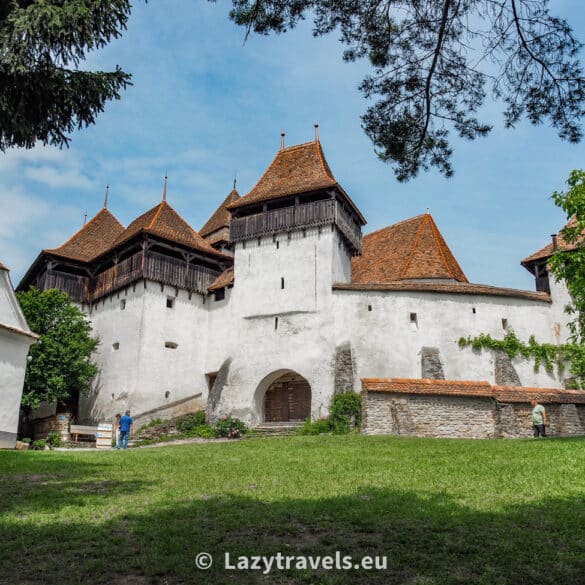
Fortified churches are a type of fortification characteristic of Romania, especially Transylvania. Saxon villages were quite large, but they focused mainly on agriculture and occupied vast areas. Therefore, the local community was unable to build defensive walls around the entire village. Therefore, the Saxons decided to do something else to ensure their safety. They began to build churches not only as places of worship, but also as shelters from enemy invasions. In those days, the church was the heart of the community, so its protection was important.
At the same time, however, it was necessary to protect the local population, who needed shelter in case of danger. Therefore, fortifying the church seemed to make perfect sense. In fact, these were defensive castles with a church function, or, if you prefer, churches with a castle function. The important thing is that it worked.
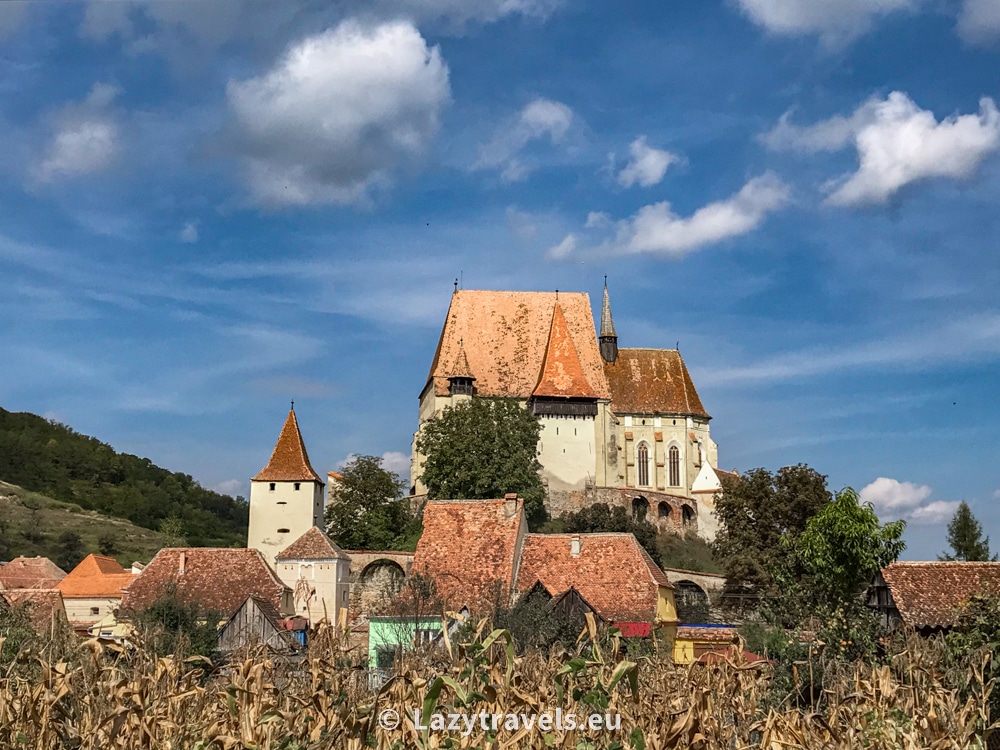
For this reason, around 170 such fortified temples were built in Transylvania. However, the fortified church in Biertan is considered the most powerful of them. This is probably why it has been on the UNESCO World Heritage List since 1993.
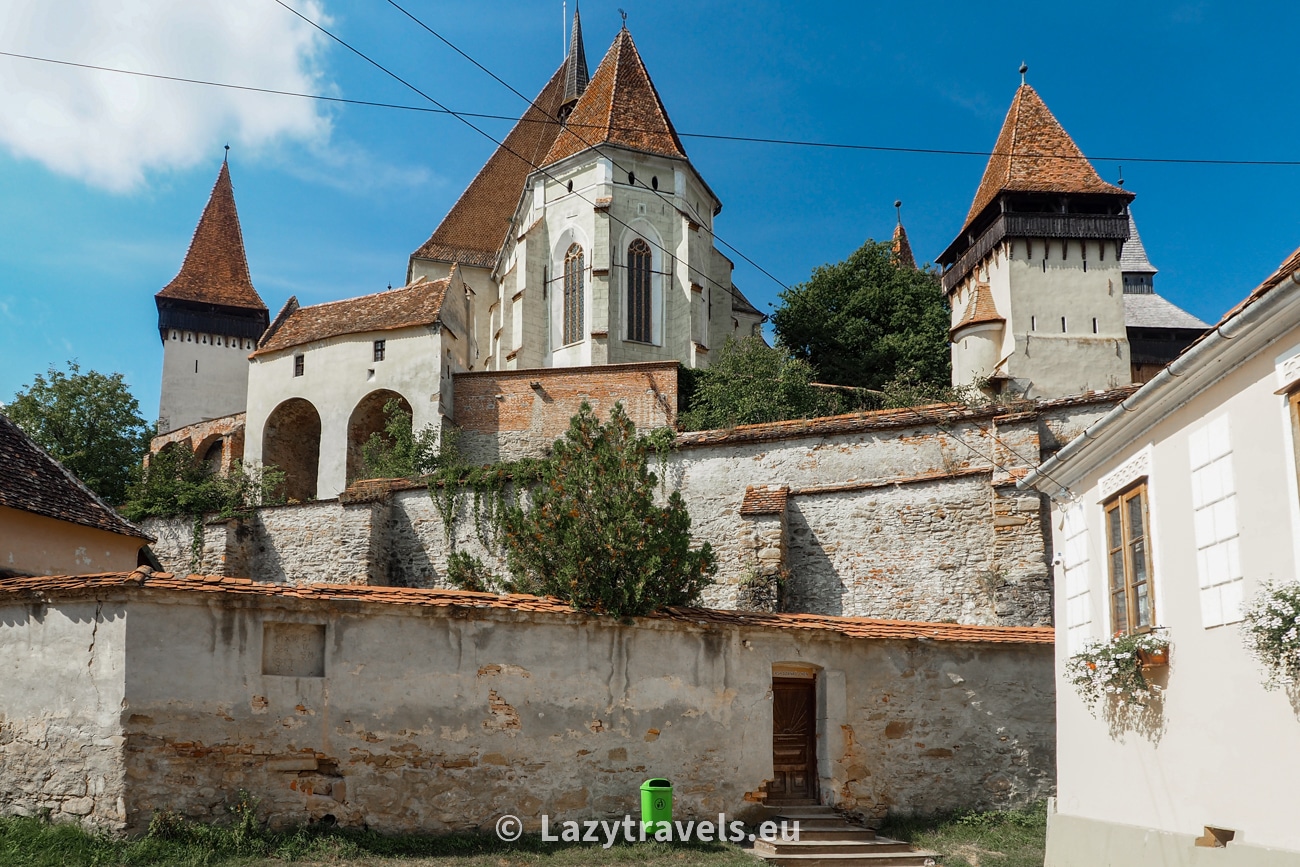
The fortified church in Biertan
When I first visited Romania and wanted to see the church in Biertan, I didn’t show much intelligence. I arrived in Biertan on a Monday, which, as we all know, is the day when almost all museums in Eastern Europe are closed. Well, I kissed the door handle, walked around the village and, not without difficulty, moved on towards Sighisoara, a beautiful medieval town. One of Romania’s biggest attractions.
The advantage of visiting Biertan was that I had time for a long walk around the village and to admire the old Saxon architecture. In the morning, while waiting for the bus to Biertan, I discovered the town of Medias. Small but charming, with a fortified church on a hill. Tourists have not yet discovered this place, and perhaps that is a good thing, because it still has the unique atmosphere of a small, somewhat run-down town.
However, I managed to return to Biertan in 2023, when my friends and I went on a private trip. We managed to plan our trip to Romania so that we could visit museums on days other than Mondays. This time, the church and its interior were open to me.
We bought tickets and entered the fortified church via a covered staircase. From this perspective, it is not yet clear whether the Saxon fortress has three rings of fortifications and whether it can be called a castle. In fact, the fortification system does resemble a classic castle.
Biertan. A brief history
No written and confirmed documents indicating the specific date of construction of the present church in Biertan have survived. However, it can be assumed that it took place around 1500, when the local parish priest obtained confirmation of the indulgence in 1493, first issued in 1402. It is known that the construction of the temple took about 30 years and was completed in 1522, as evidenced by the date ‘1522’ carved on a wooden beam in the chancel. It is also certain that the church was incorporated into the existing fortifications and that it was a process rather than a one-off construction.
First of all, it is necessary to explain why such a massive building was erected. The answer is nothing other than human ego. The towns of Medias, Mosna and Biertan fought fiercely for supremacy, to become the most important town in the region and become the administrative centre. According to the inhabitants of the time, the ideal way to demonstrate power was to build a large and imposing church. And it seems that Biertan succeeded in this, as it was the seat of the Saxon bishopric for 300 years (from 1572 to 1867). All this probably happened because in 1572 Lucas Unglerus, a native of Biertan, was elected bishop of the Evangelical Church in Transylvania. As a local patriot, he chose the church in his hometown of Biertan as his seat. Then the tradition simply continued, contributing to the development of the town.
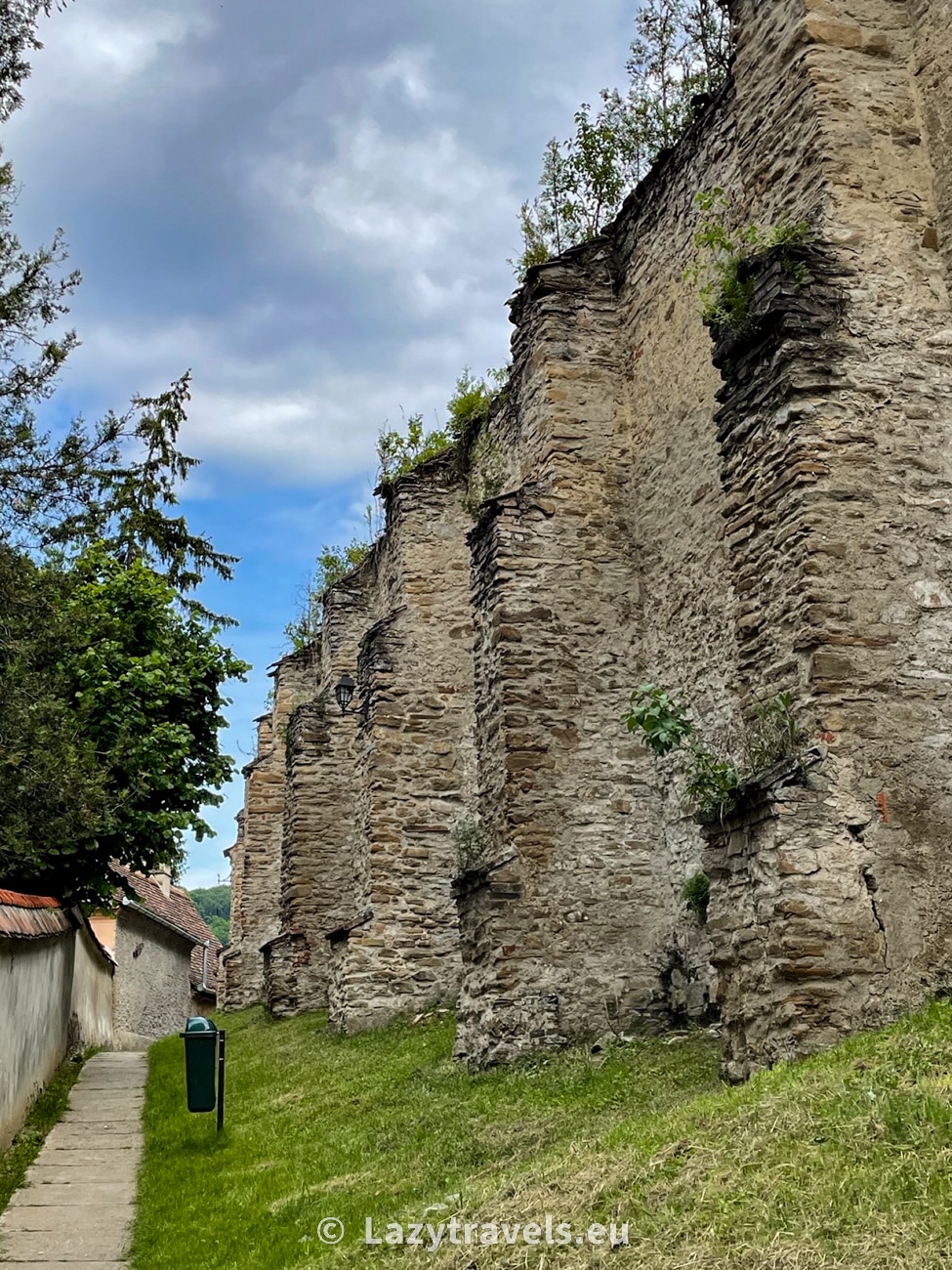
The church must have been well fortified, as it was never conquered by enemies.
A visit to the fortified church in Biertan
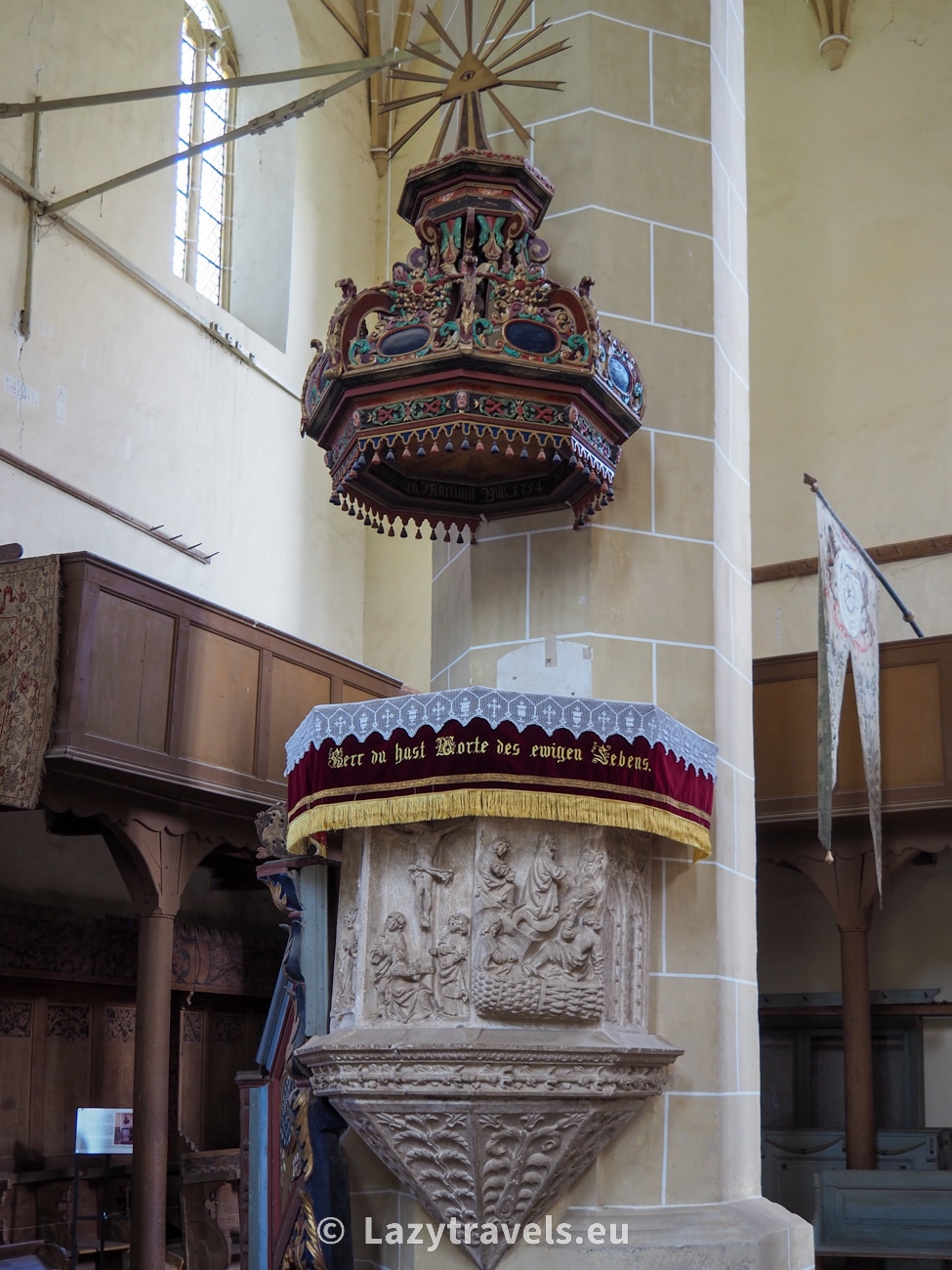
Upon entering the church, I was surprised by its modesty on the one hand, and on the other hand by the details that aroused real admiration. That is why it is worth spending some time there. I suggest you first head towards the pulpit, as the intricate stone decorations are very impressive. All the more so because it is handmade and dates back to 1520.
If you continue on, be sure to take a look at the wood-carved stalls. The fact that the wood, intricately carved in 1514, has survived to this day is nothing short of a miracle! Note that the stalls are inlaid, which means that small pieces of wood have been placed into the wooden base to create beautiful patterns.
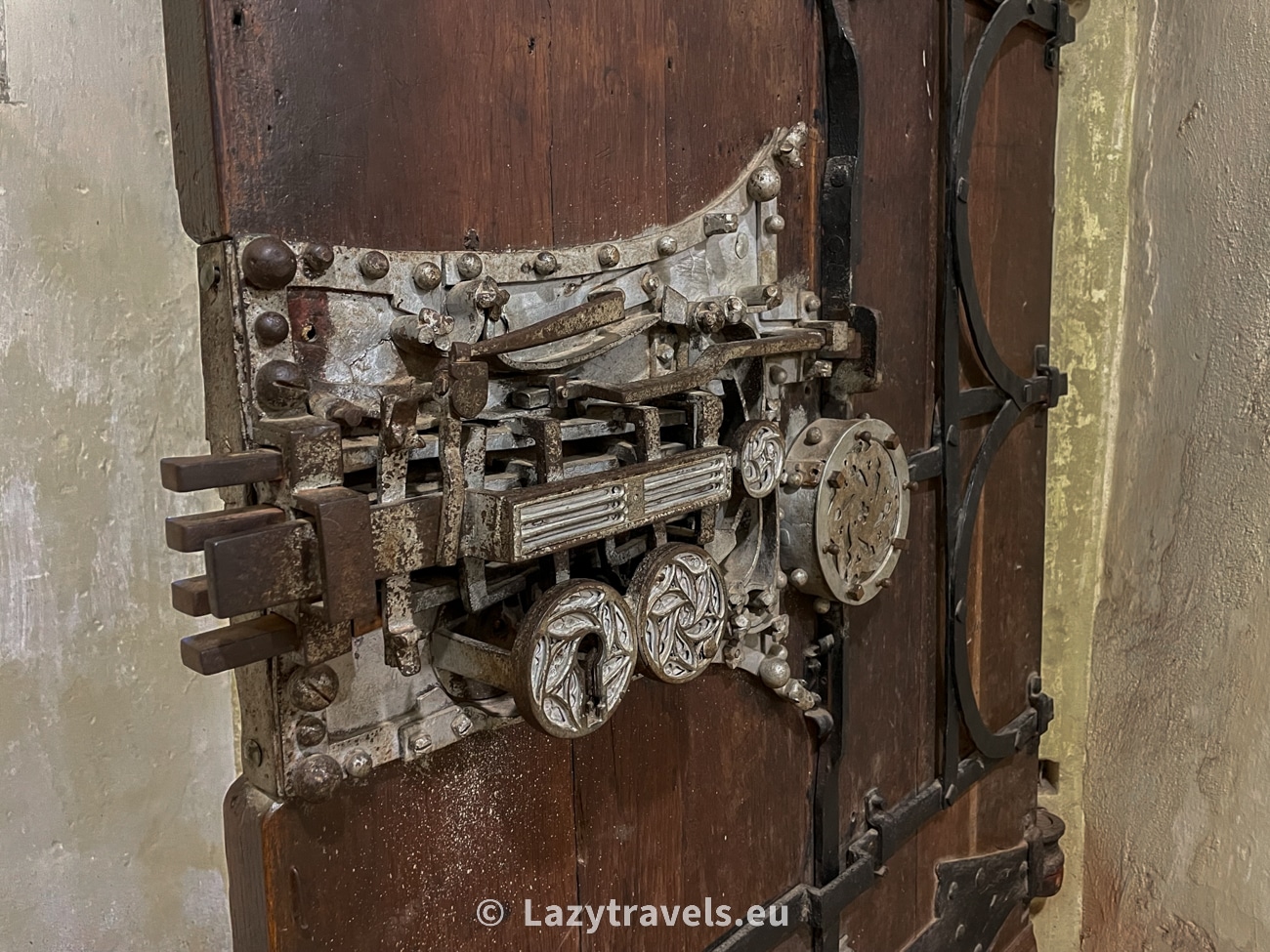
And now, in front of us, on the left-hand side when facing the altar, there is a stone portal leading to the sacristy. It was built in 1515 and combines late Gothic and Renaissance styles. However, after passing through the door, another surprise awaits us. From the inside, we can see the powerful lock mechanism that secures the door. This is because it was not only a sacristy but also a treasury in times of war or social unrest. Apparently, the lock contains as many as 13 mechanisms that protect it from being opened. When the lock was turned, 13 elements sprang up and protected the treasury from unwanted visitors. An interesting fact is that the lock mechanism is so unique and interesting that in 1899 it was shown at the World Exhibition in Paris. This caused quite a stir, as reported by the media. In Biertan’s heyday, this technology must have seemed incredible.
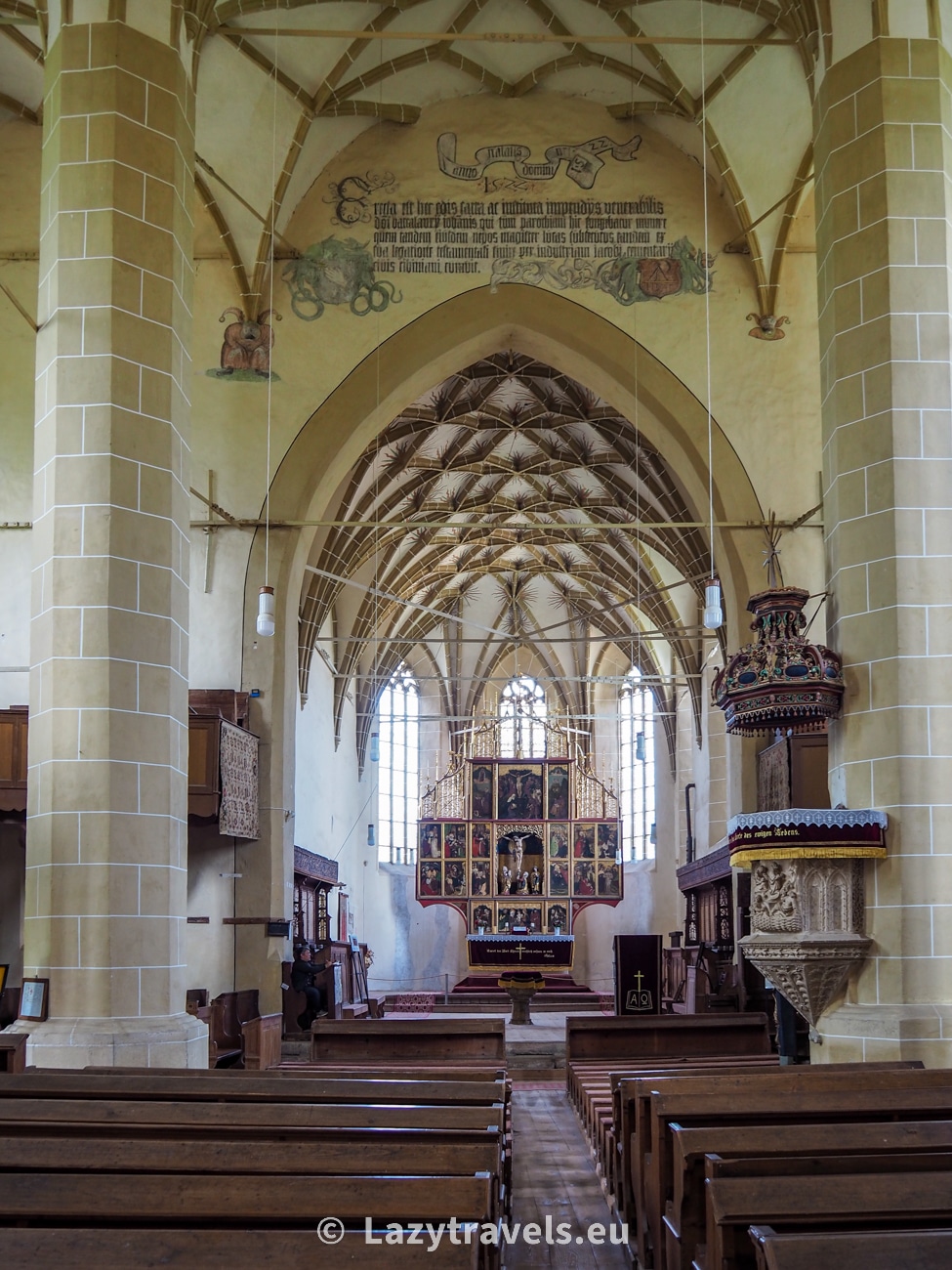
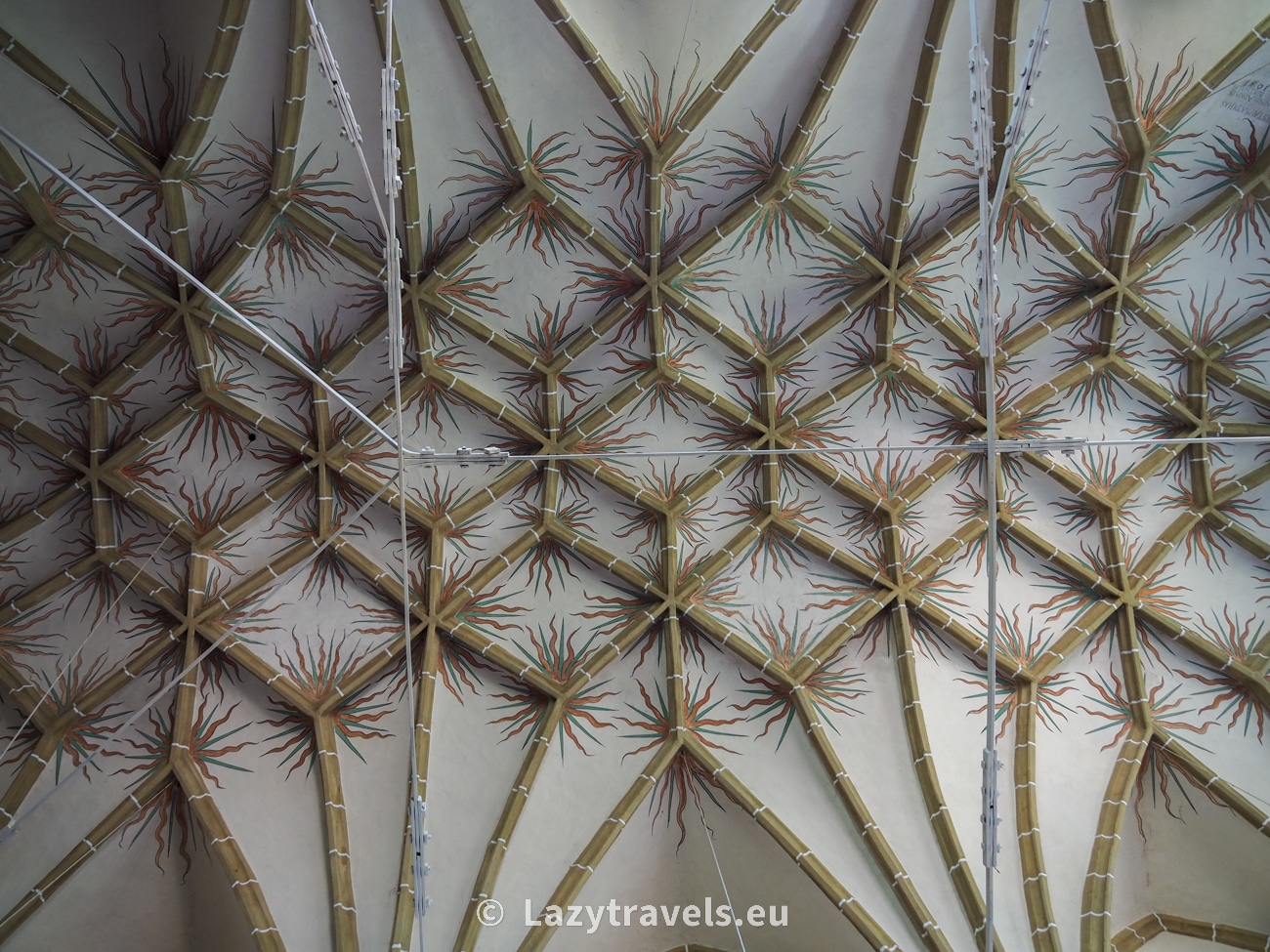
But according to the canons of faith, heaven is the most important thing. Therefore, pay attention to the vault of the church. And there is something to look at, because the vault, rising 22 metres above the floor, is an architectural gem.
The starry vault rises above the three-nave hall, and to add to its charm, the stone elements have been enriched with painted ornaments. The interior of the church is bright thanks to the high Gothic windows, finished with intricate tracery.
The prison for unhappy couples
I admit that this is a special place within the church complex. Due to the fact that in those days the family was even more than today the basic social unit, it was protected even more strongly. How? Let me explain. When a marriage was in crisis and the husband and wife wanted to divorce (they had the right to do so!), a kind of experiment was carried out. The quarrelling couple was placed in a room inside the fortified church. The names given to this particular place are: Marriage Prison and Reconciliation Room.
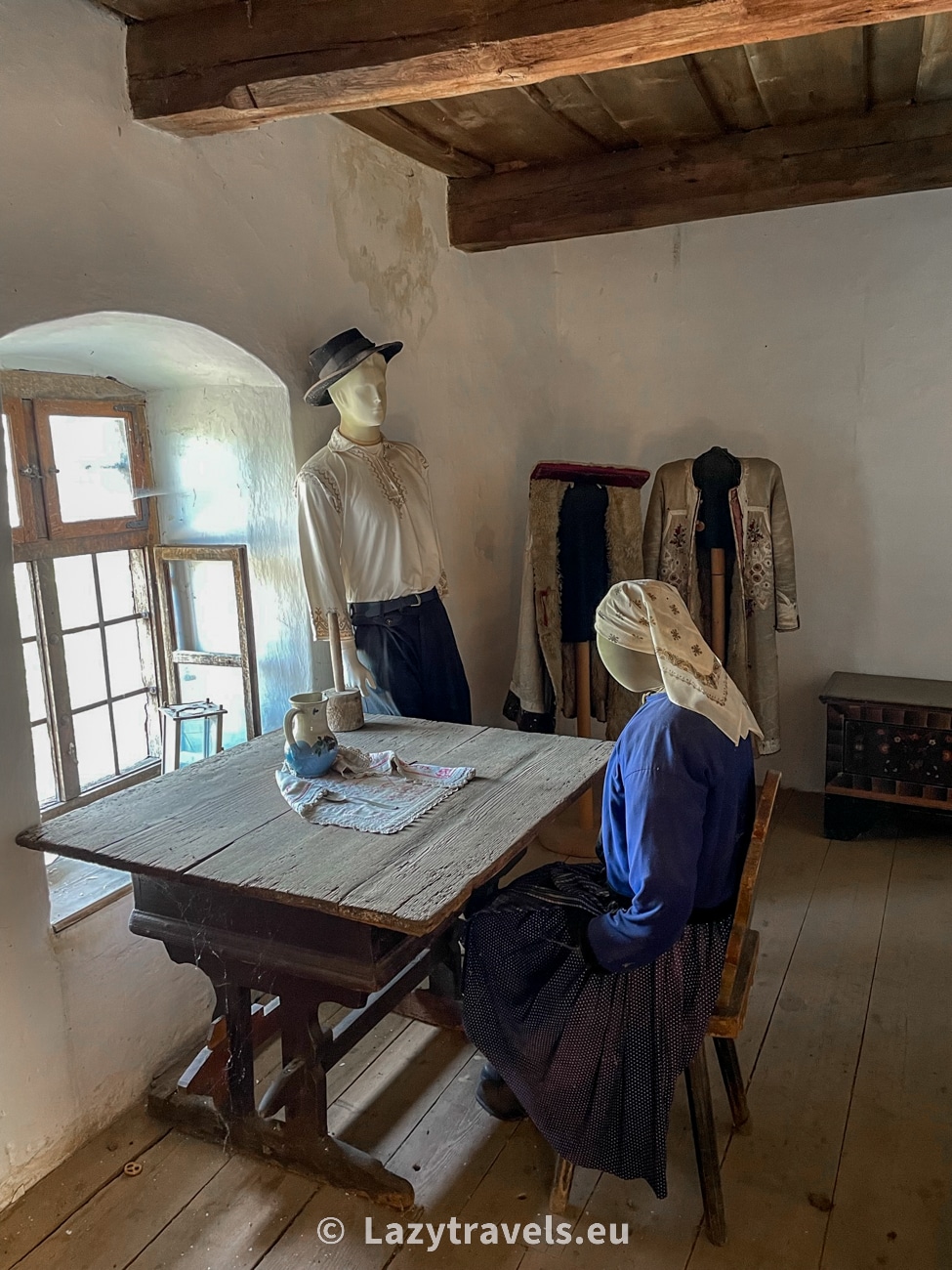
The couple was locked up for two weeks in this relatively small room. They had one narrow bed, one table, one spoon, one fork and one chair at their disposal. One of everything, and there were two of them. It is obvious that they had to get along with each other in order to survive. Apparently, in 300 years, only one couple still wanted to divorce after two weeks. How much truth is there in this? I do not know, but social pressure must have had an impact.
Catholic Tower. A specific form of tolerance
The fortified church in Biertan was initially Catholic. Only initially, because after 1517, when Martin Luther nailed his famous theses to the door of the church in Wittenberg, the Reformation also swept through Transylvania and the Transylvanian Saxons (simplified as Germans). Thus, the church in Biertan became a Protestant temple. However, since not all Catholics accepted the new faith, it was decided to give them space to practise their old one. In short, they lost their church but gained a chapel, located in the southern fortified tower.
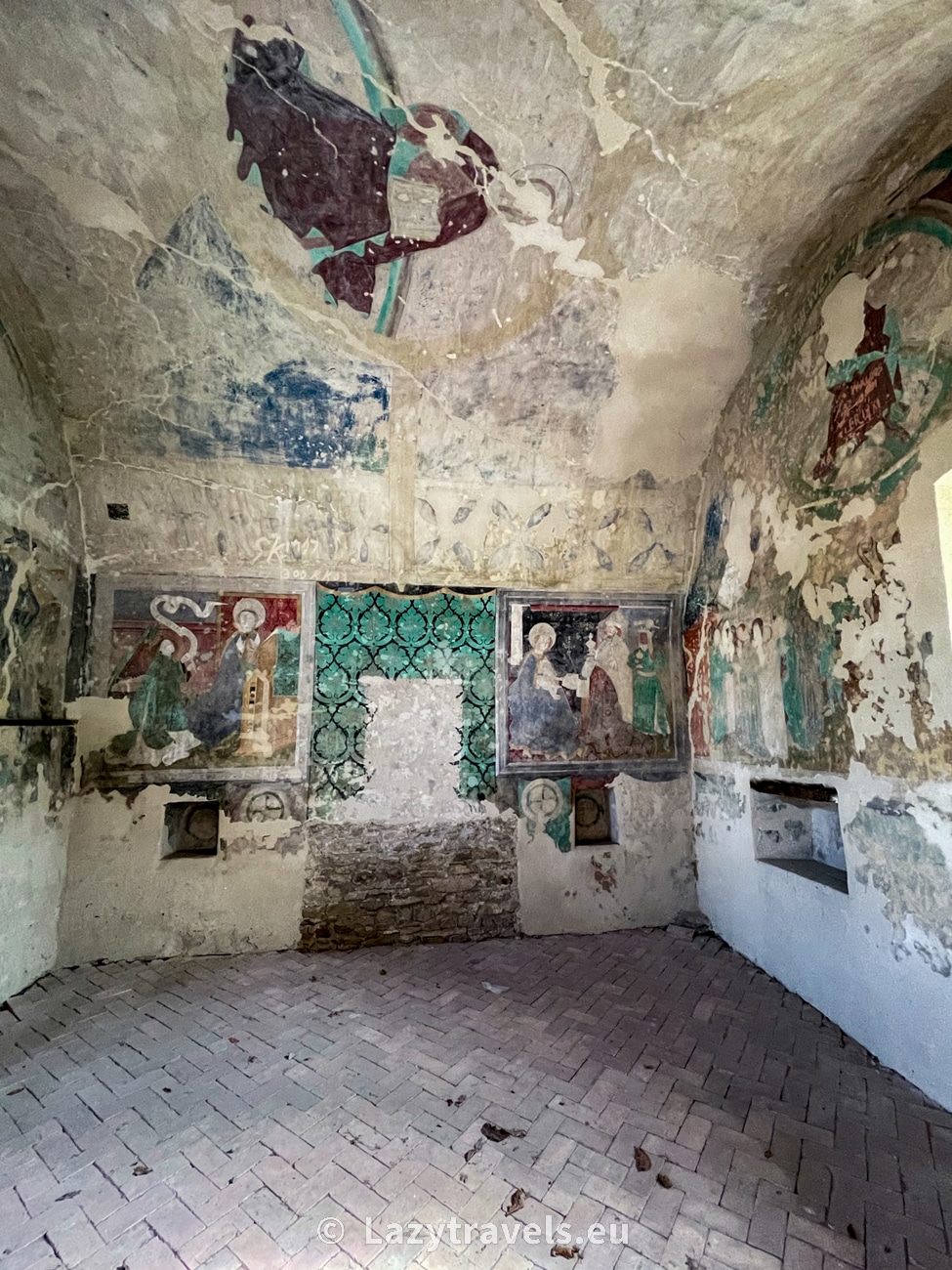
The chapel was covered with late Gothic frescoes. The poorly preserved paintings depict the Annunciation, the Last Judgement, Archangel Michael and Saint George. Unfortunately, the whole thing can only be viewed through a grille, but as it is a modest chapel, the frescoes are still within reach and can be seen. An interesting fact is that in the niche above the entrance there is a painting of the Polish king Władysław Jagiełło.
There is something about these painted chapels in fortified churches, because when I visited the church in Harman, I was also delighted by the beautifully painted chapel. Although there are many more frescoes there.
Former fortifications of the church
Then we went to another tower, which turned out to be a kind of lapidarium, to which tombstones from inside the church were moved at the beginning of the 20th century. So if you like this kind of art, it is worth visiting.
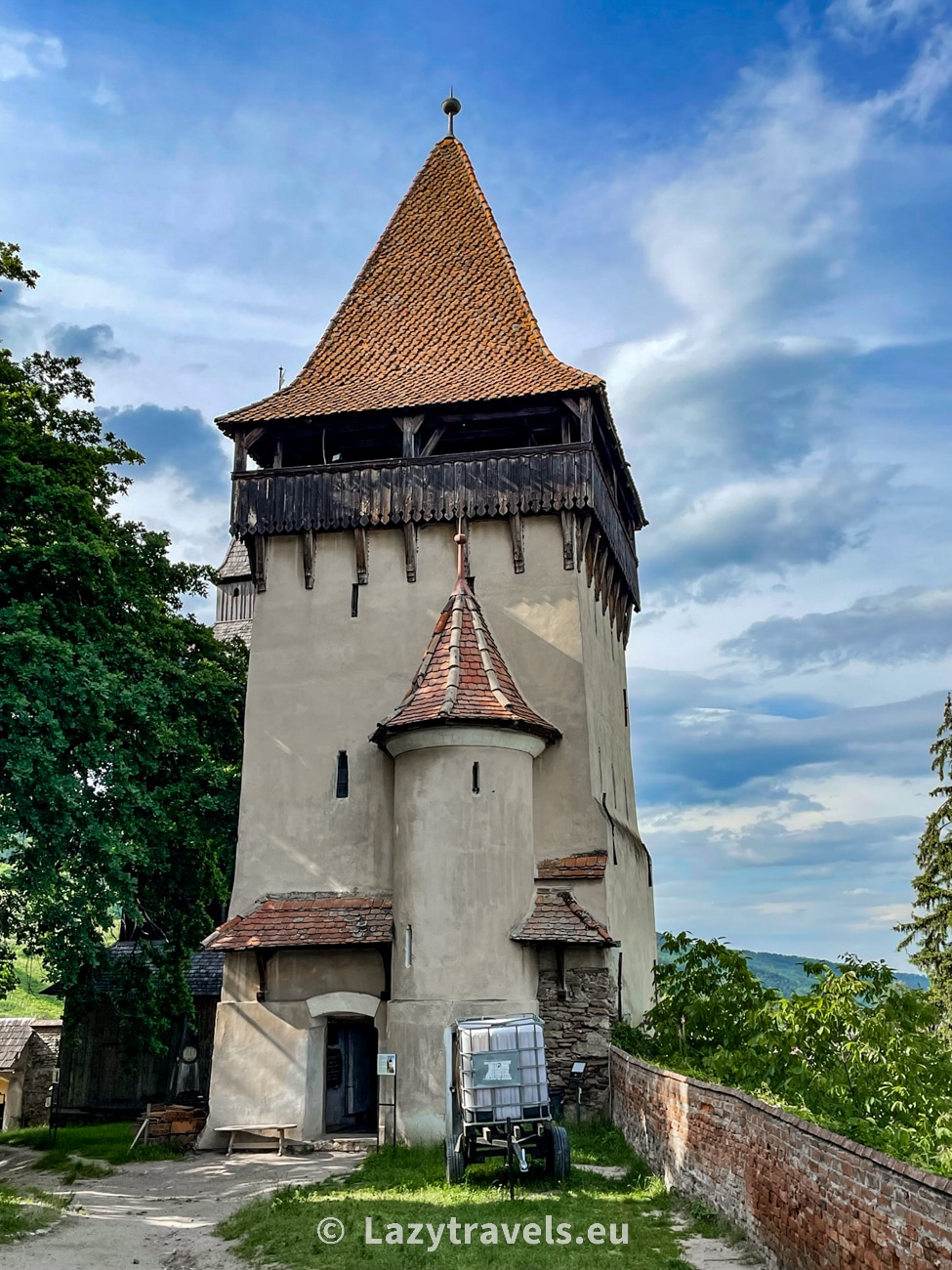
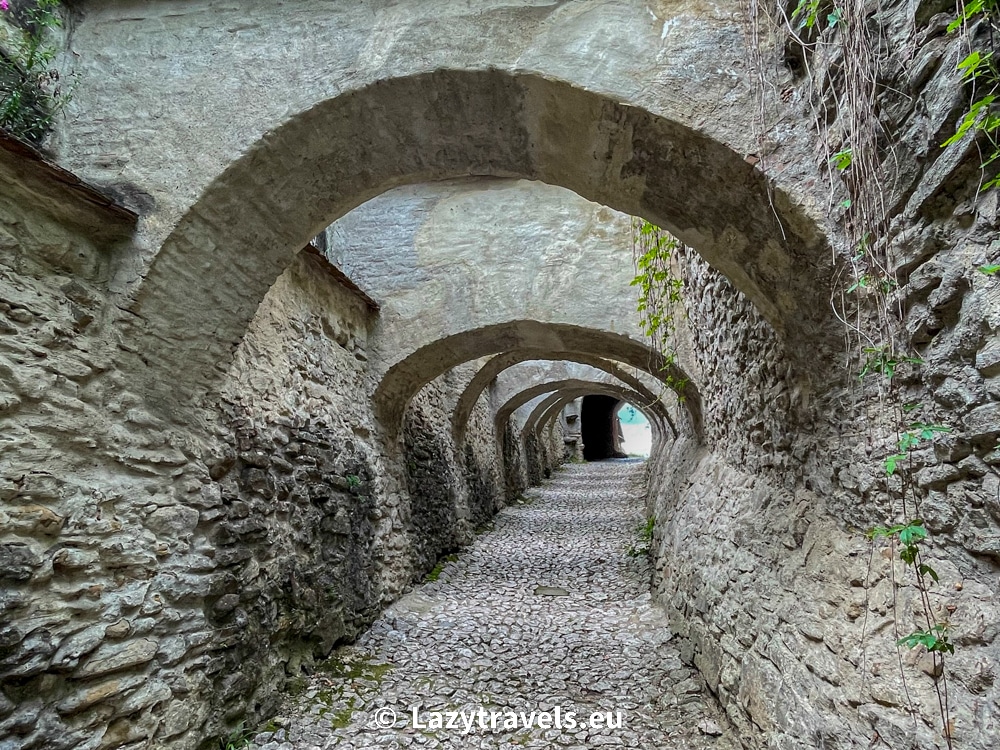
Finally, we walked through what was probably the most impressive part of the fortifications, from the church under the arcades to the lower part of the fortifications. This is where the besiegers would have had to go to reach the heart of the fortified church.
Viewpoint of the church
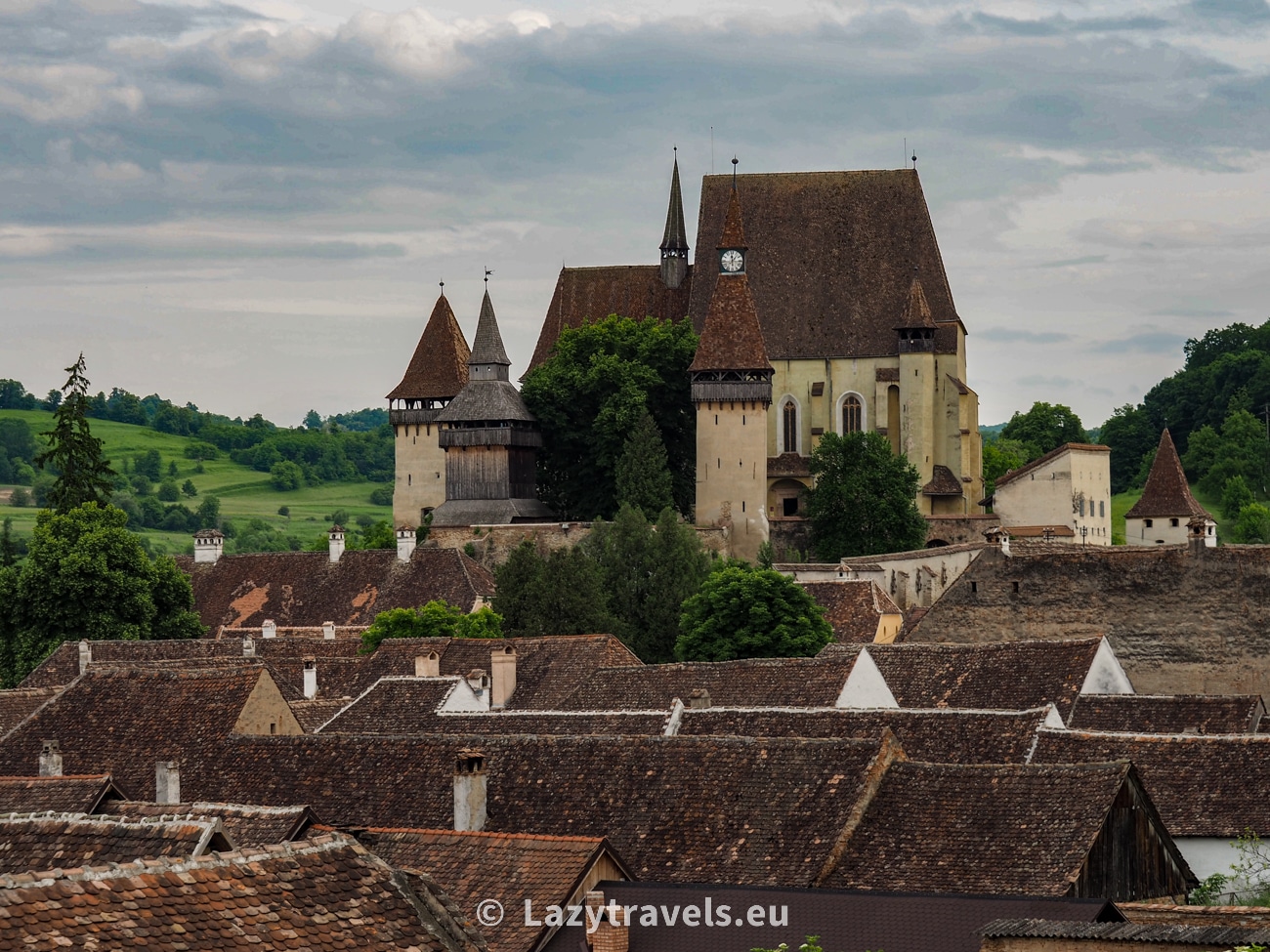
Before leaving, we tried to find a viewpoint from which we could see the fortified church in Biertan from the surrounding hills. Unfortunately, the village is densely built-up and we were unable to find a passage towards the hills. However, we did not give up and kept trying. Walking along the road towards Dumbraveni, we finally found a passage on the right. Fortune favours the bold, so we went inside and saw an old, dilapidated farm, mud and dirt. Well… after a while, we managed to push through the tall grass and bushes. Finally, we saw the roofs of Biertan, towered over by a fortified church.