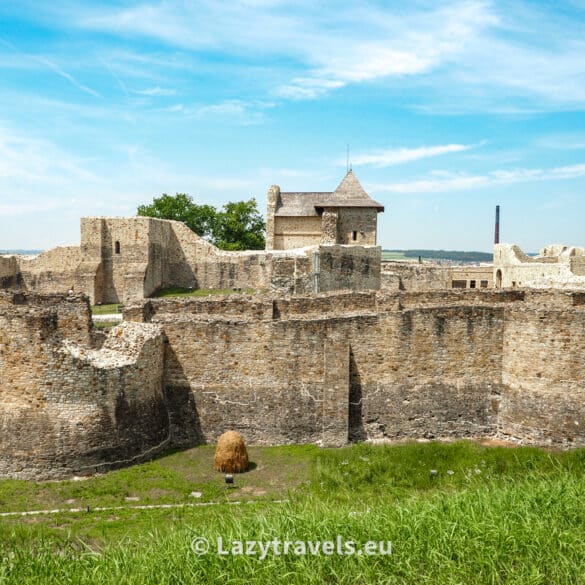
Viscri Castle is beautiful, although it is actually a fortified church, not a castle! And I’m not sure if castles can be described as beautiful, because their primary function is defensive. But the one in Viscri seems beautiful to me. Maybe because it is now full of wooden elements, red tiles, flowers and greenery?
Transylvania is full of fortified churches, which sometimes meet all the criteria to be called castles. Because what is a castle? High walls, towers, an entrance gate, and during war or danger, the local inhabitants would hide in it. However, castles were the seats of princes or other magnates. Fortified churches in what is now Romania were built on the initiative of local communities, which also erected and maintained them. First, a temple with thick walls was built, and then further fortifications were added around it. Of course, this usually took several hundred years, as the process was an evolution. This was also the case in Viscri.
The history of the Viscri fortified church
The church, or rather chapel, already existed here at the beginning of the 12th century. It was probably built by the Szekler community, long before the Saxon settlement in Romania.
This first temple was rebuilt and incorporated into a new, larger church. The building was a single-nave/barn-style church with a semicircular apse. In the 13th century, another extension was undertaken and, among other things, a keep was added. Soon, a tower was also added.
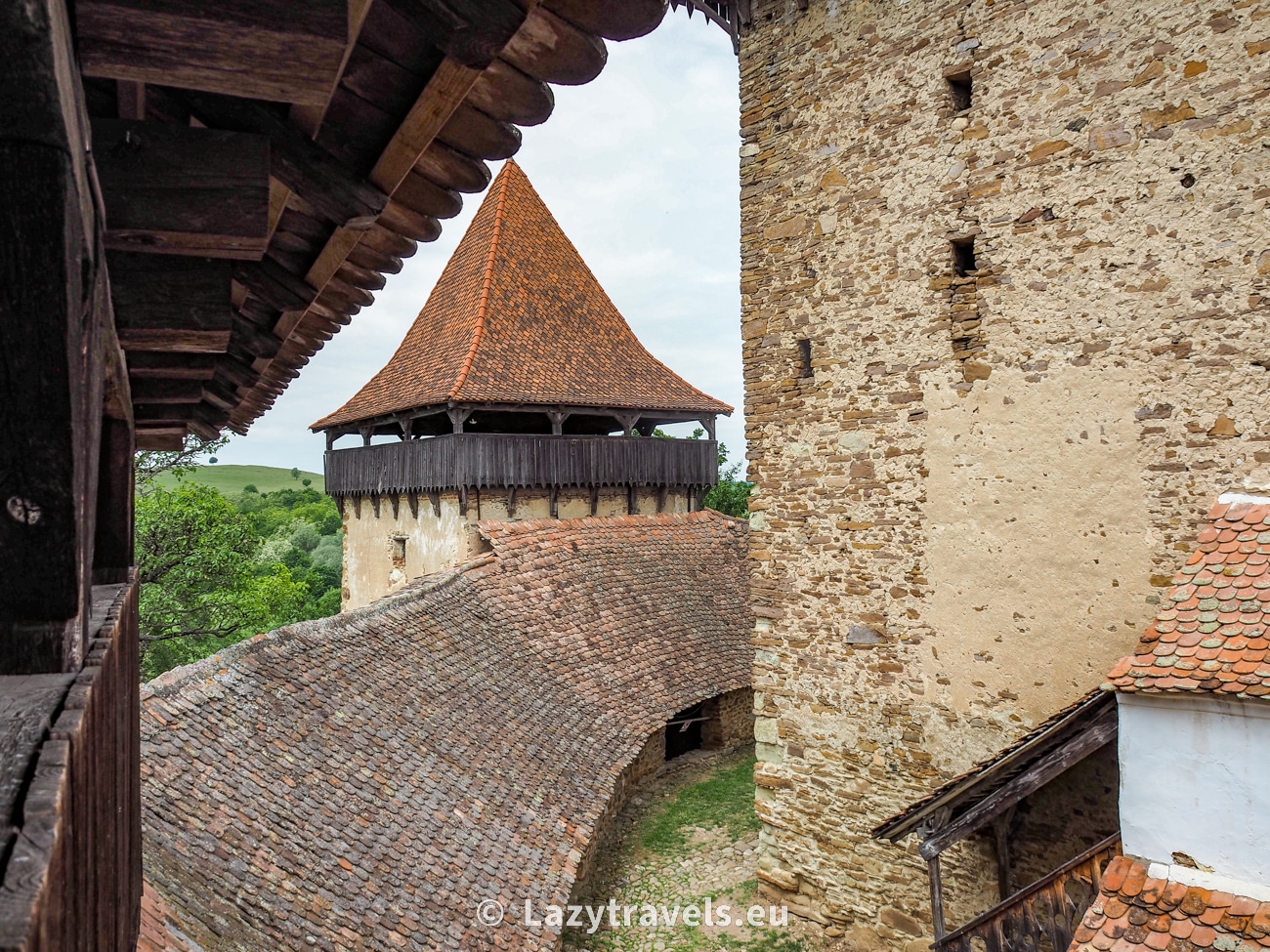
The church building took on its final shape as a stronghold at the end of the 15th century. At that time, battlements and the western tower were added. The double wall surrounding the church, which still exists today, was not built until the 16th and 17th centuries, so it is a fairly recent addition. It was built in a different location than the previously existing elliptical curtain wall. We know this from excavations carried out in the 1970s, which revealed many secrets of the church in Viscri.

It is worth noting that the fortified church built in Viscri is not particularly large. In fact, it is quite small! However, it perfectly met the needs of the local community, which, living far from the main economic centres, had to cope with threats and challenges. They built a stronghold tailored to their needs.
Visiting the fortified church in Viscri.
When I finally cross the fortification walls with my purchased ticket, I feel a certain dissonance! After all, what I would expect is austerity. Everything inside the fortifications should serve defence, should be austere and cold. But it turns out that as soon as I cross the gate, I see flower beds. It’s as if some grandmother had her home here and took care of the garden. I admit that it’s surprising and simply beautiful! And after all, you never get a second chance to make a first impression.
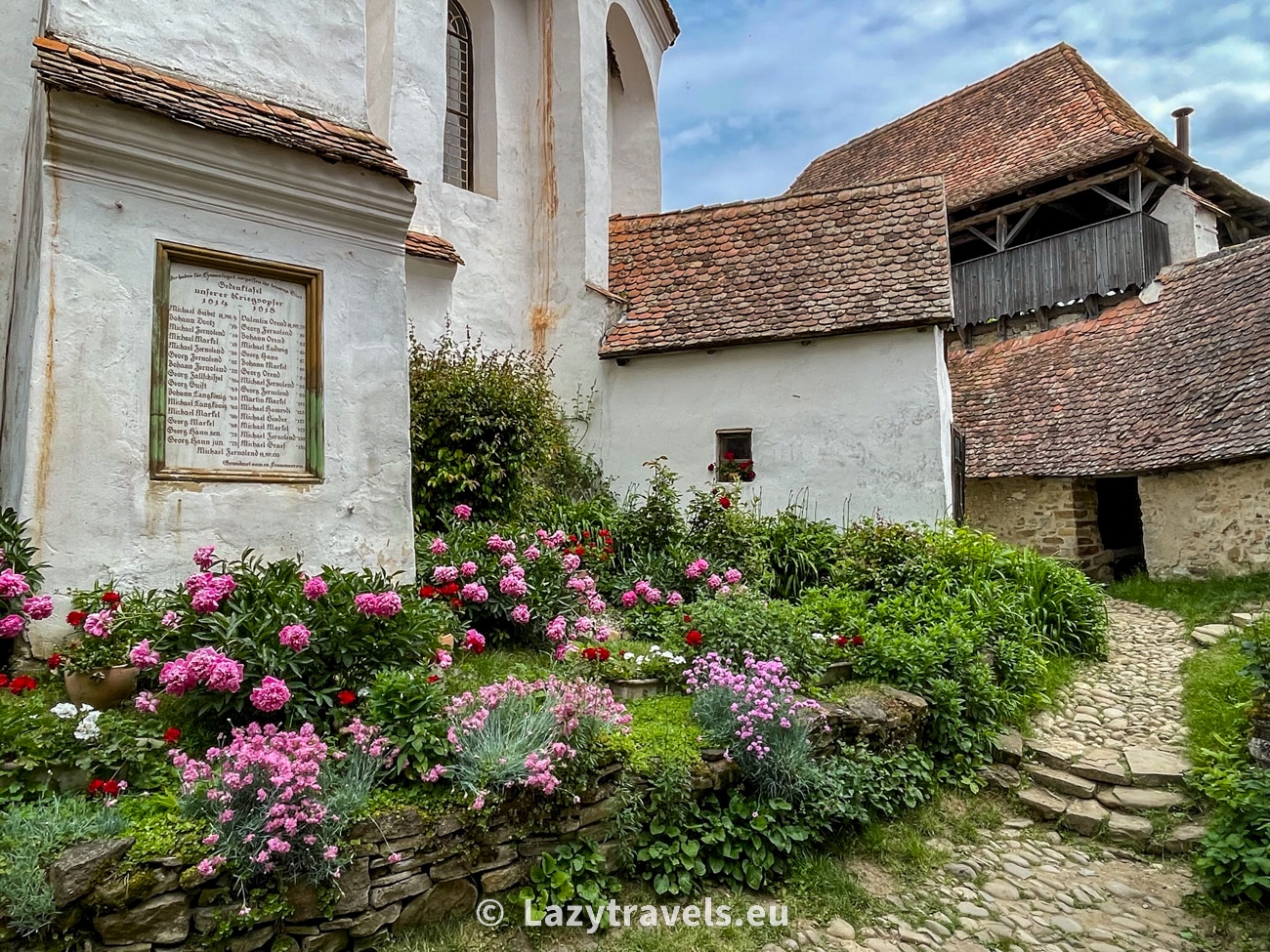
I head towards the church door because it is the heart of this stronghold, and the defensive walls were built to protect it. The interior is nothing special. There are no rich decorations, no spectacular furnishings have survived. Probably because there never were any. However, from the church, you can get to the higher parts of the fortifications, specifically the tower. Everything is always better seen from above, and this is the best possible perspective.
It turns out that to get to the top, you have to climb steep and narrow steps leading up a niche in the wall. Then you have to climb wooden structures to finally reach the coveted top of the tower. As you climb, it is worth paying attention to the walls, as you can see how laborious the work of the old masons was. The building material is stone slates, which were simply laid on top of each other layer by layer. Take a look into the proverbial mouse holes, because these are former rooms where necessary goods were stored.
I admit that walking on these wobbly wooden structures was an attraction in itself.
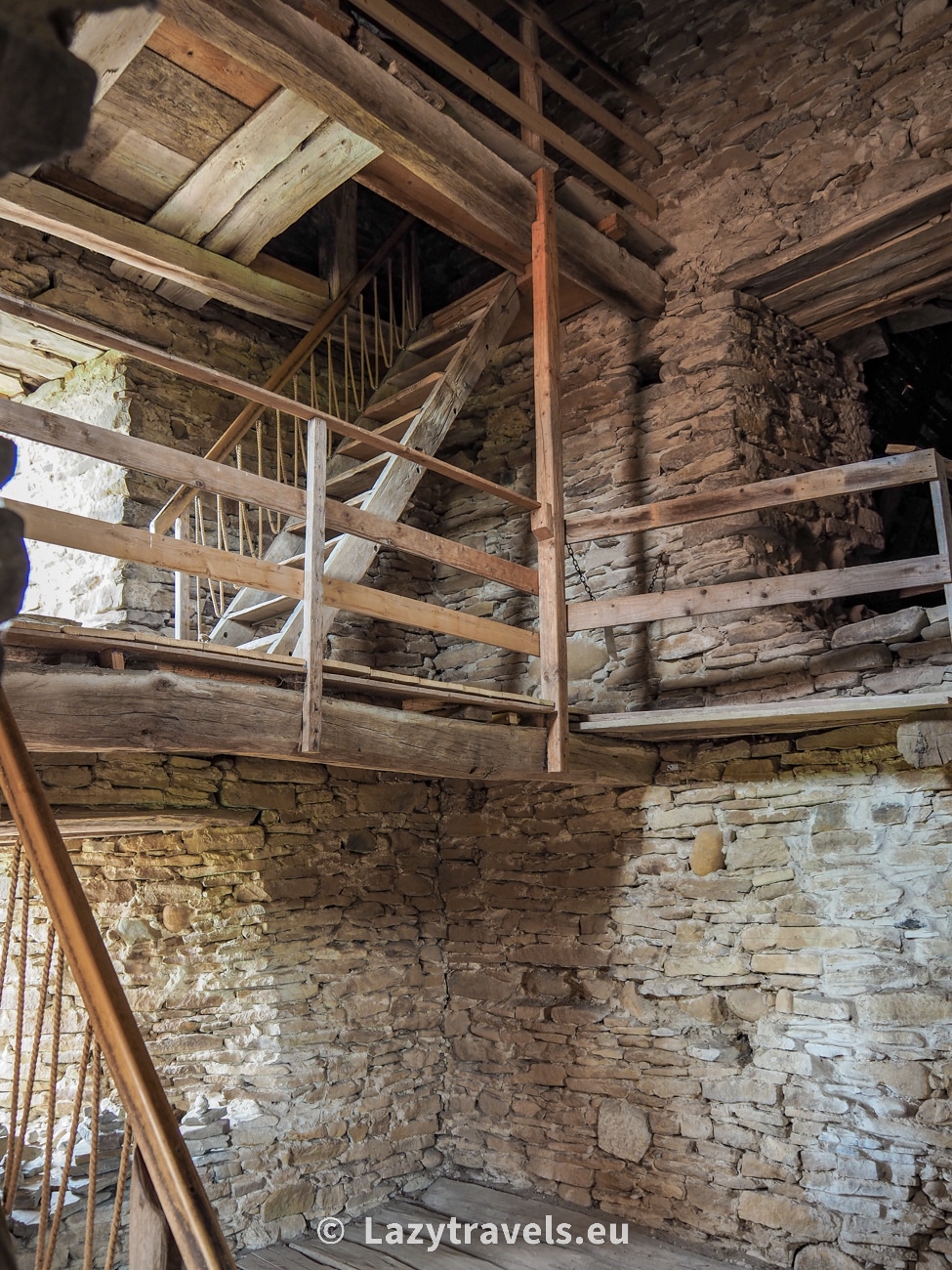
And when we finally climb through a wooden hole in the floor to reach the top and exit onto the gallery, we first have to bend down low, because the ceilings here are very low. This also allows us to see how the individual logs and boards were joined together. Very often without the use of nails, but only with wooden wedges. This is why I like such places, for such small details that increase the attractiveness of the monument for me.
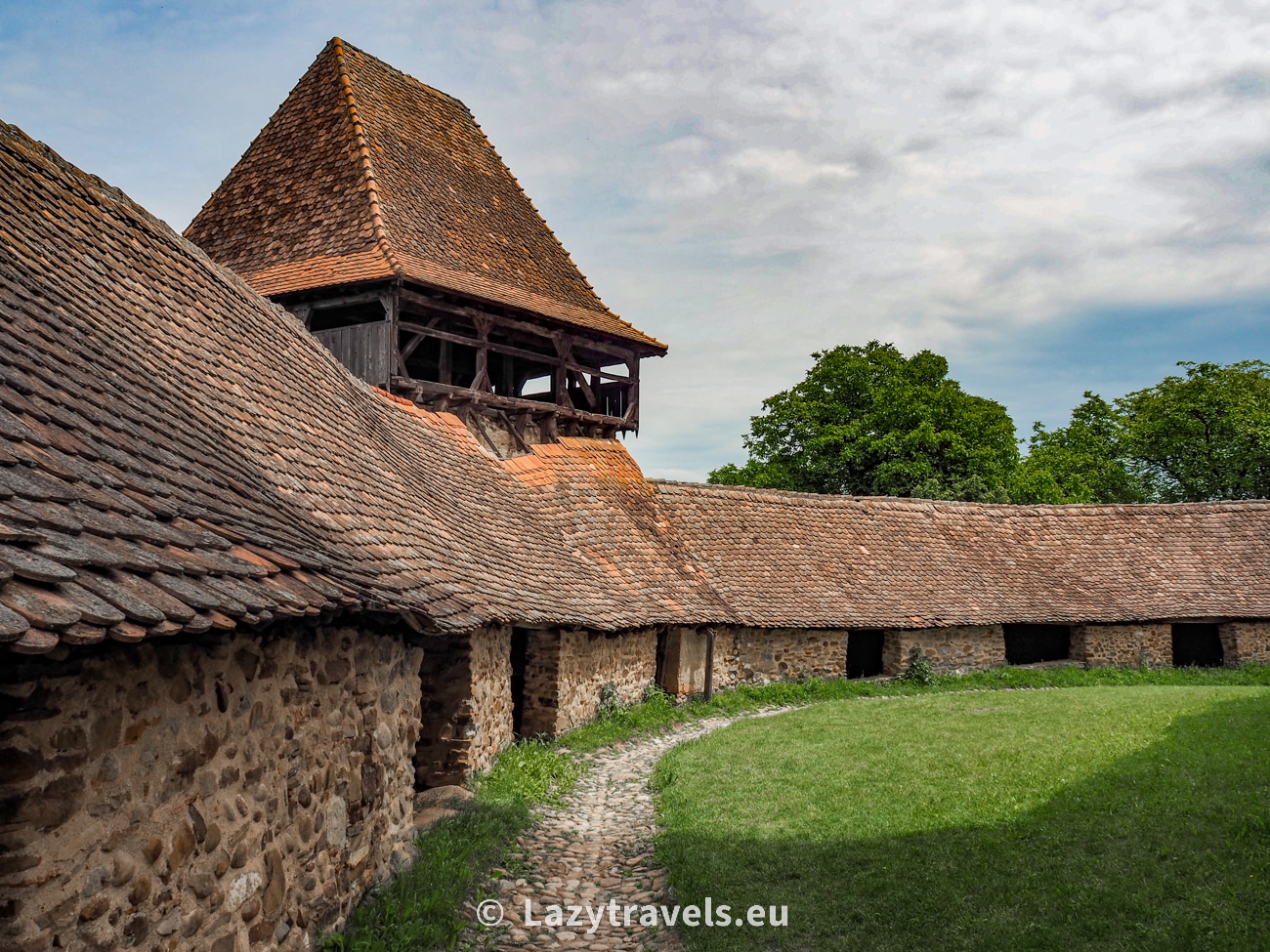
Something that is absolutely sensational is the view from this platform. On one side, there is an old village, and on the other, beautiful hills. I must admit that with such a view, I would gladly be a guard.
From this height, you can best see the beauty of the Romanian countryside. There are no unsightly chimneys on the horizon, no modern buildings, only coherent architecture and tradition. And that is probably why Romania is becoming increasingly popular as a country with many tourist attractions that have not been destroyed by modernity.
Museum in the fortress
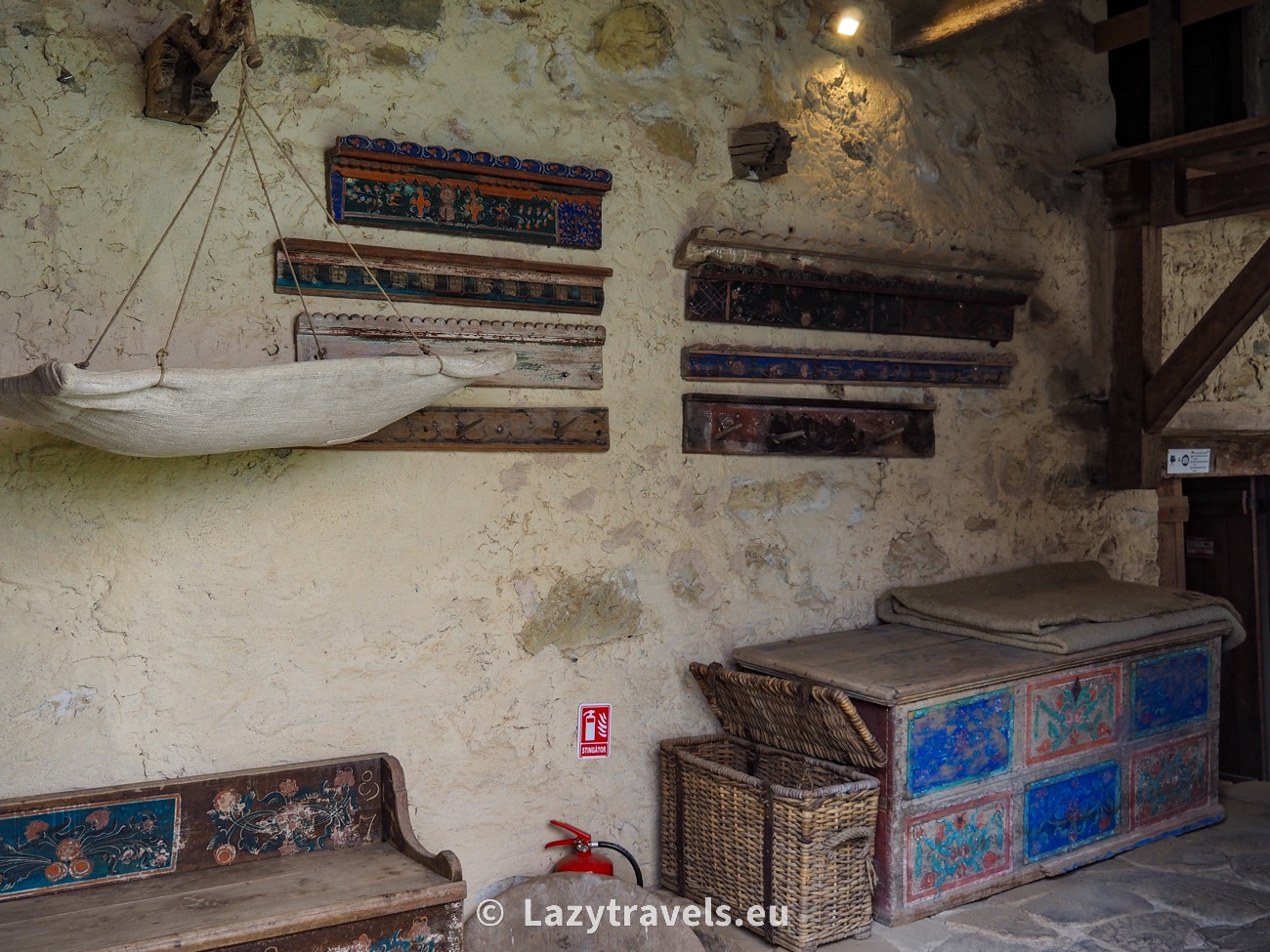
But the tower and the church aren’t the only things to see. When we come back down to earth, we can explore more mouse holes and rooms. Thanks to this, we will discover that a museum has been set up in the rooms of the former perimeter walls. The museum displays old equipment that has been used in Romania for centuries. Those who prepared the exhibitions also try to introduce visitors to the local culture. That is why there are descriptions of various rituals in the display cases.
Clearly, a lot of energy has been put into making the interiors interesting and keeping visitors engaged. This is evident in the variety of items on display, ranging from everyday objects to more luxurious items such as watches and old money. Money always evokes emotions, as is well known.

Interestingly, even the attic has been used to house an exhibition of beehives and beekeeping equipment. Although I must admit that some of the equipment could do with some renovation and a little attention, because, for example, the cart seems to be in no condition to go anywhere…
And then it was time to leave the hospitable interiors and walk around the church building one last time, admiring the craftsmanship of the old masters. Then I headed for the car, but before leaving, I couldn’t resist sitting down for a moment behind the walls to admire the view. I took a look at the white defensive walls topped with dark wood and red tiles. Honestly? Something tells me I’ll be back here!
Viscri – a beautiful village of the Transylvanian Saxons
But Viscri is not only a fortified church, the village is also, and perhaps above all, characterised by its distinctive buildings, which were once bustling with the lives of the people who fortified their church. Today, Viscri is a shadow of its former glory. All because of migration: the former Saxon inhabitants left for Germany, and a large number of houses stand abandoned. And although a local foundation is trying to breathe new life into their old walls, what is gone cannot be revived. That is why the village is trying to make use of what it has left: tourism. And it must be said that it is doing so quite successfully. It also has a powerful ally, King Charles himself (yes, the one from England), who has his residence in Viscri. Or perhaps it would be better to say that, as Prince Charles, he bought one of the Saxon cottages. Today, you can even buy accommodation here and… feel like a king.
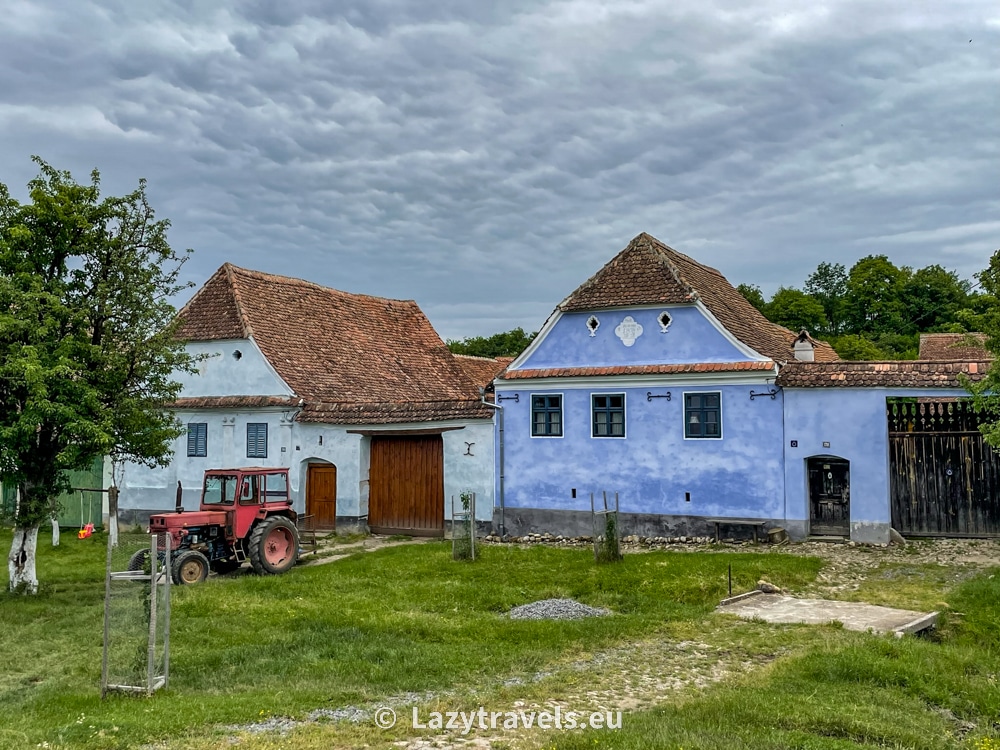
In the past, village life took place along a few streets. Walking along the main road, from which a road to the church branches off at the end, we can see buildings that cannot be confused with anything else. The buildings of the Transylvanian Saxons are very distinctive. The houses were built on a rectangular plan, with the side with windows facing the street. Right next to it is a large gate, behind which the daily life of the farmers is hidden. There were barns, cowsheds, and farm equipment was also stored there. Believe me, when travelling around Romania and visiting Transylvania with its churches and castles, all the old villages looked similar. The architectural layout is best seen from above, which is why we almost always climbed the church towers, if they were open to visitors.
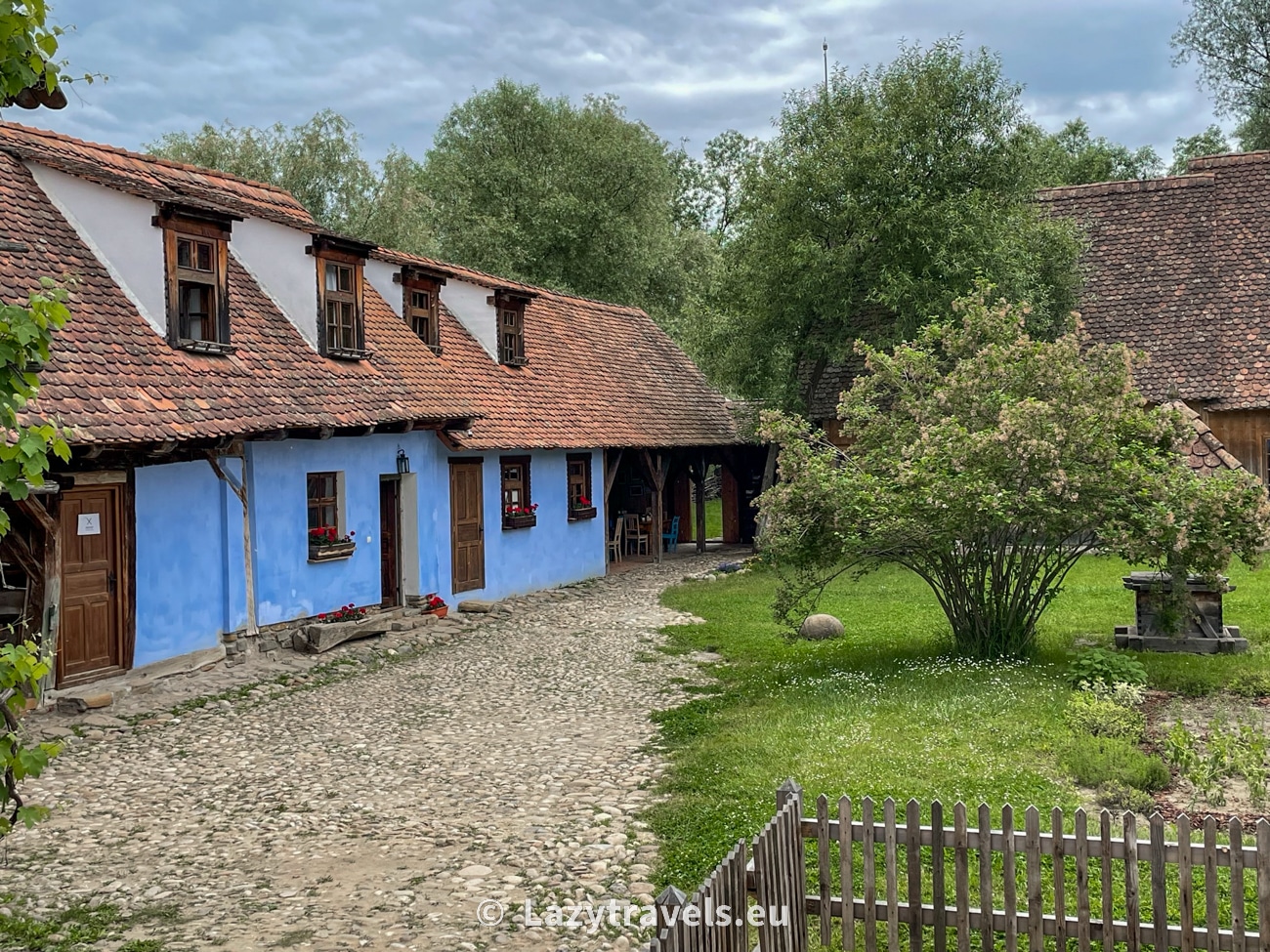
However, there is one very, very special farm in Viscri. Prince Charles (this one from England 😉 ) bought it in 2006, because he was committed to preserving the culture and architecture of old Romania. Apparently, as prince, he would fly to Romania every year for a few days and spend time at his residence. I don’t know if he still visits now that he has become King of England, but it would be quite a sensation. Because a king is not a prince, after all!
These days, though, you can visit the estate for a fee. If the king isn’t there, you can also book a place to stay. I’m not sure if you’ll feel like a king then, but it’s possible. Even if only by walking where the king himself walked.